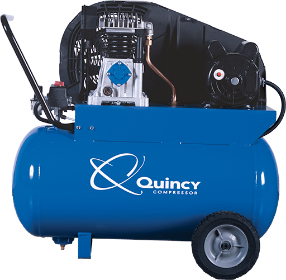

Electric Air Compressor
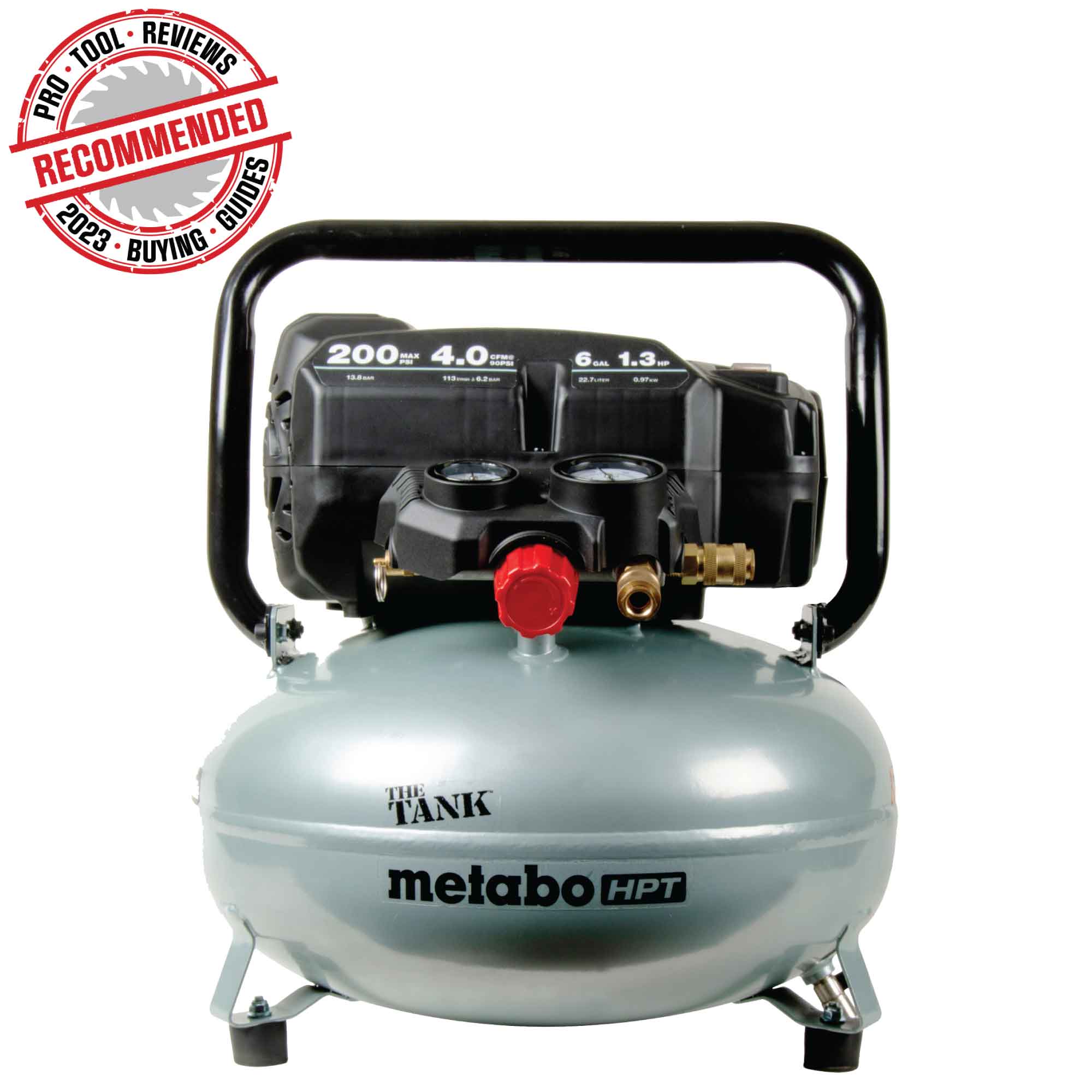
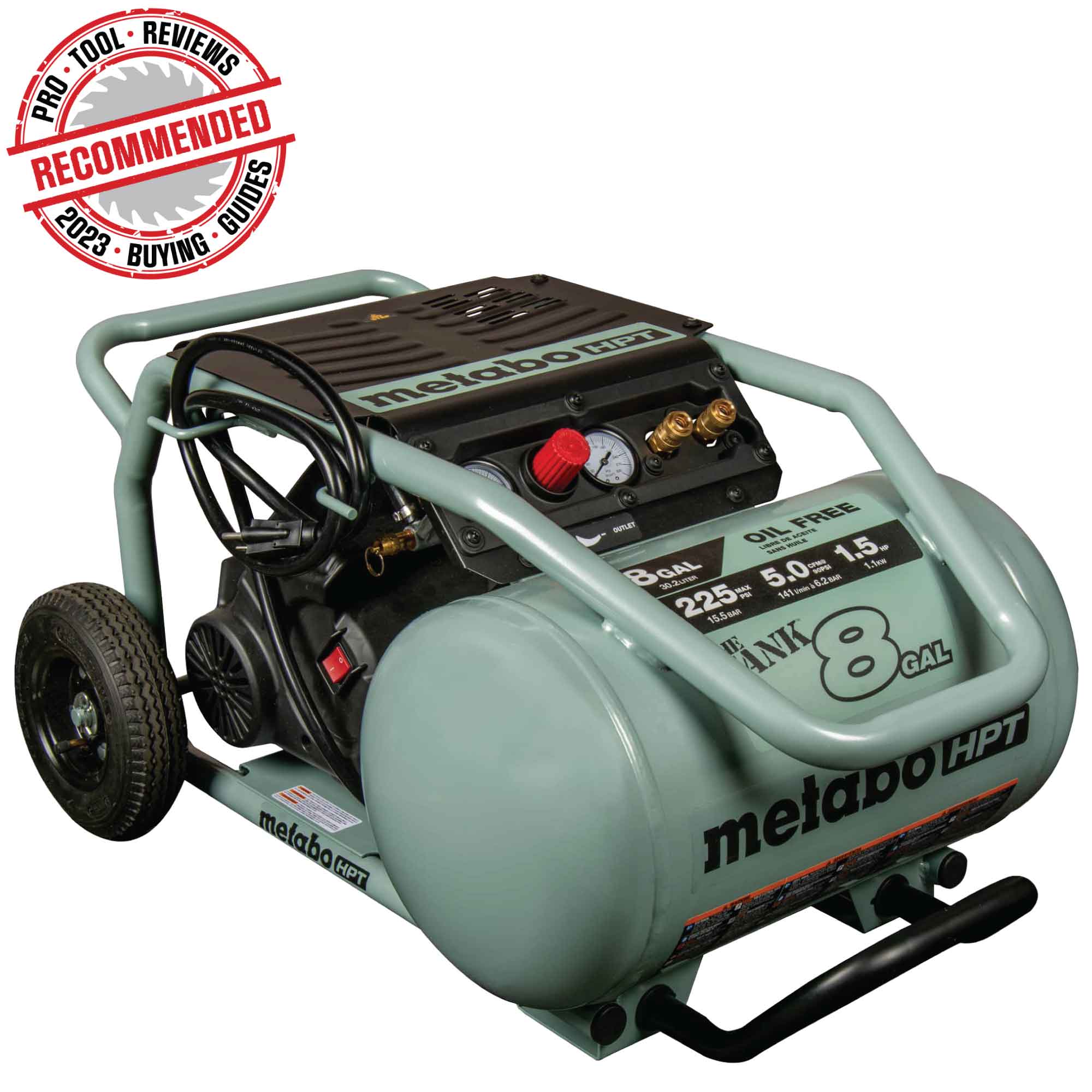
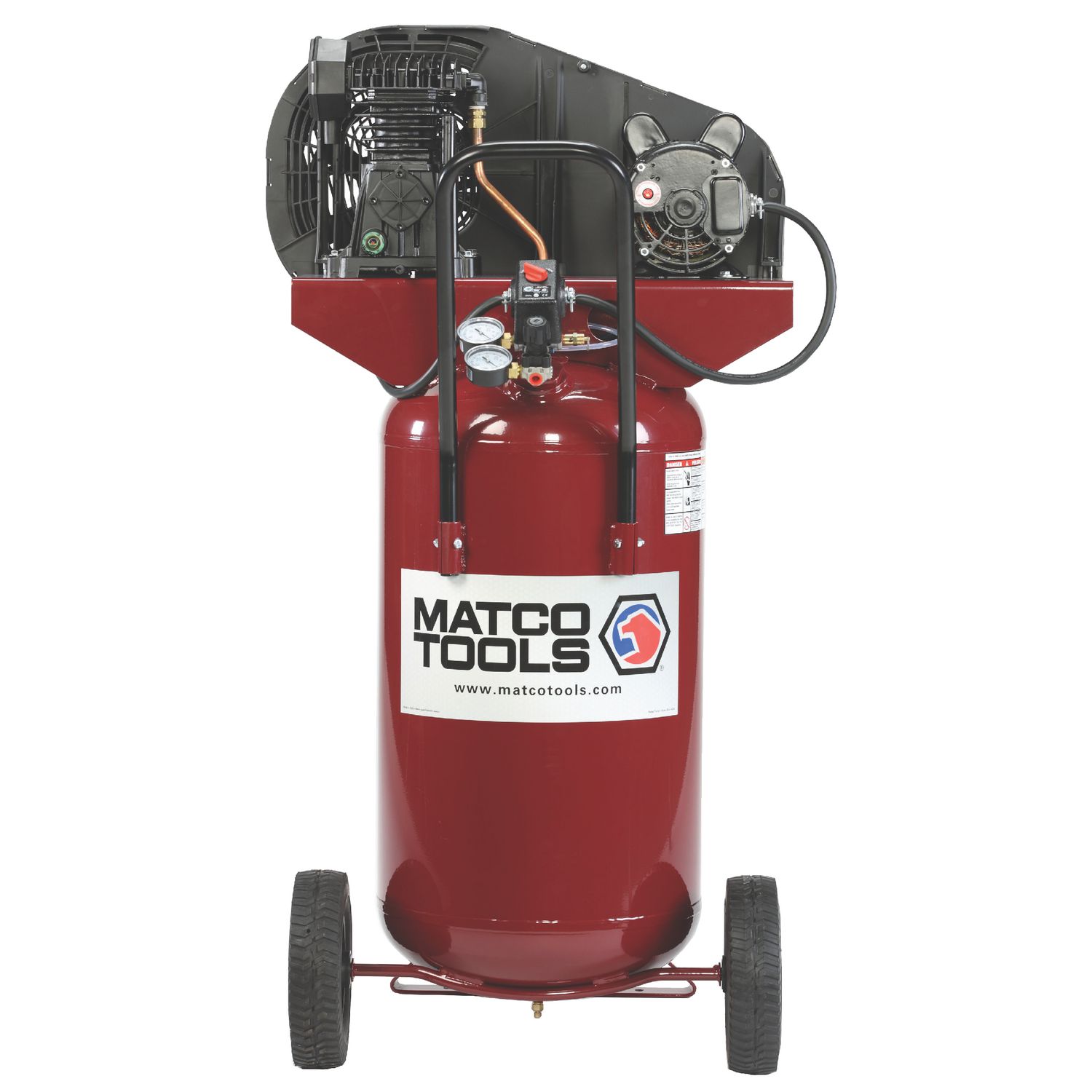
An electric air compressor converts grid electricity into compressed air for pneumatic tools, spray equipment and inflation. Because there is no engine exhaust, these units operate indoors and in occupied buildings where combustion-powered compressors cannot. Listed models span small portable units to industrial packages, with free air delivery from 3 to 987 cfm.
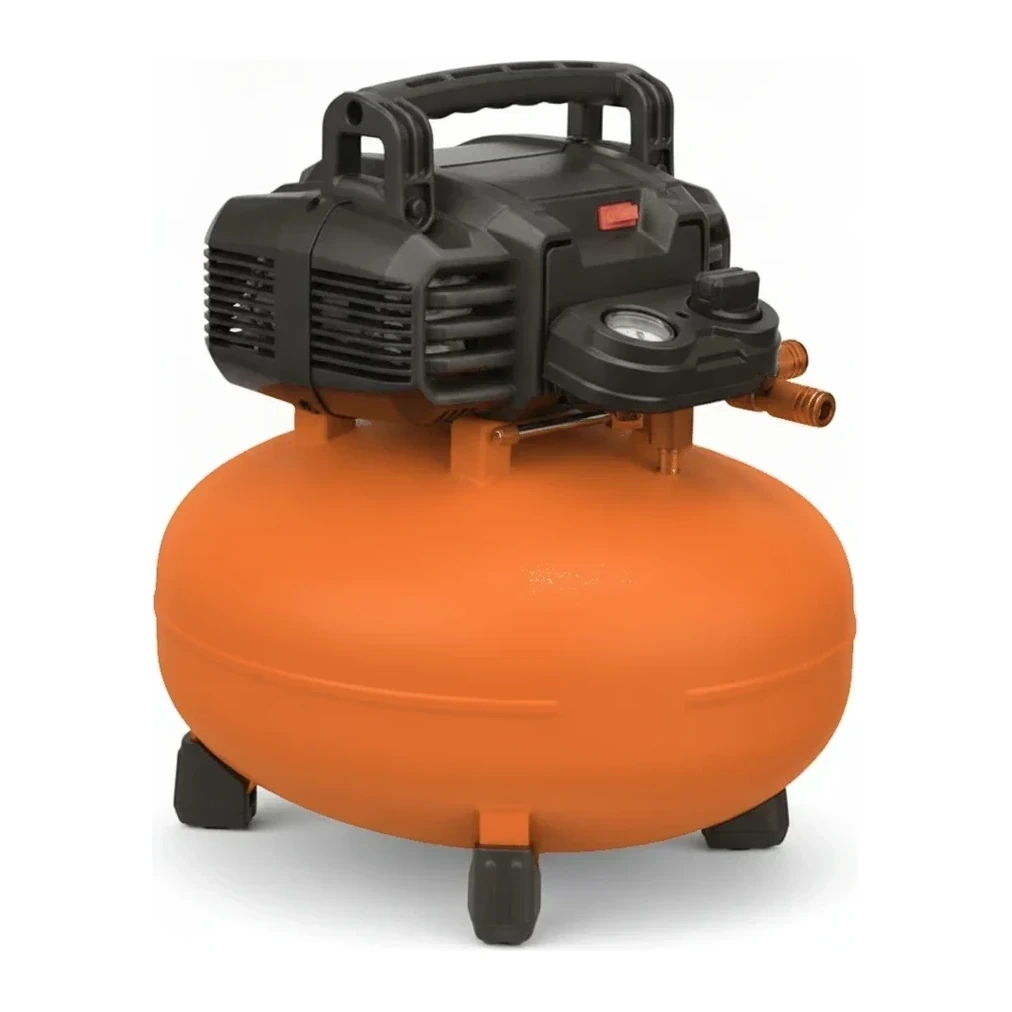
Cat classes
Elija una clase de tamaño — la capacidad y el alcance varían en la gama.
Cómo funciona
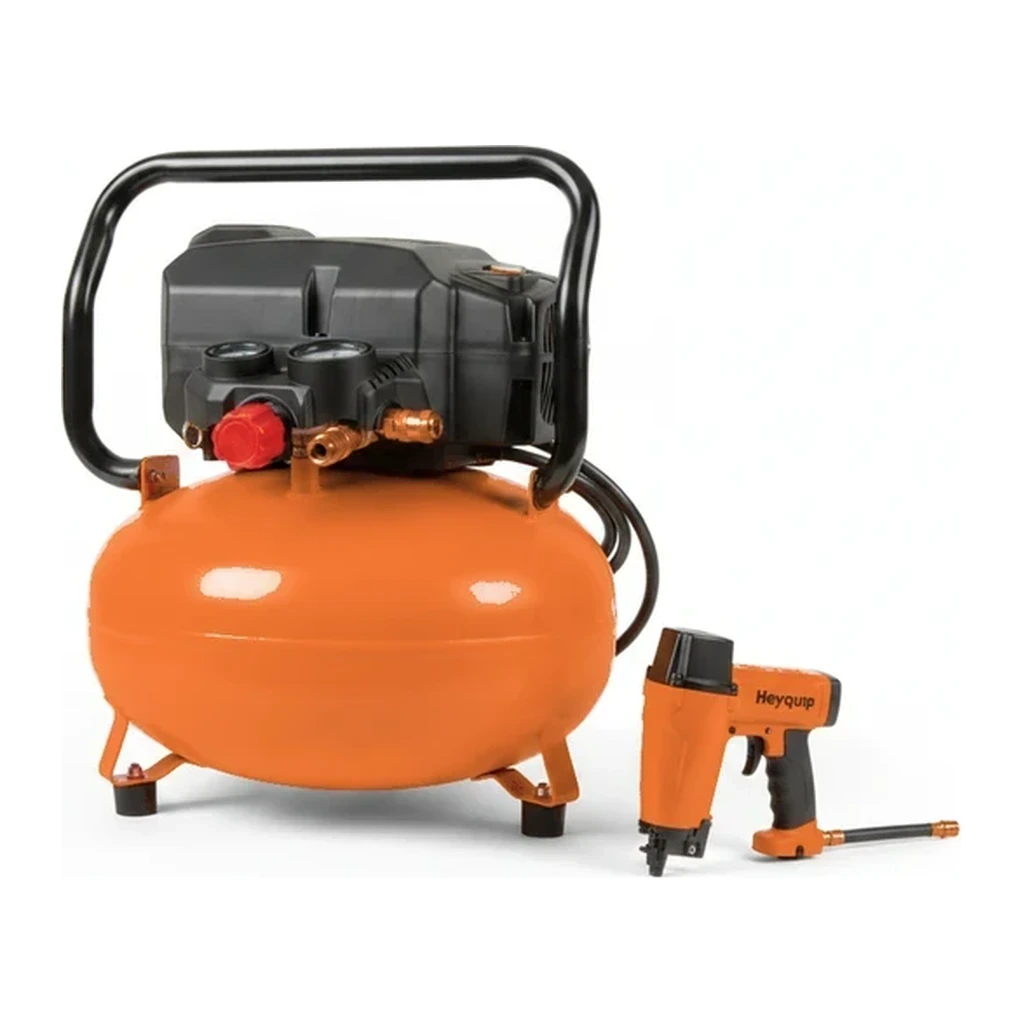
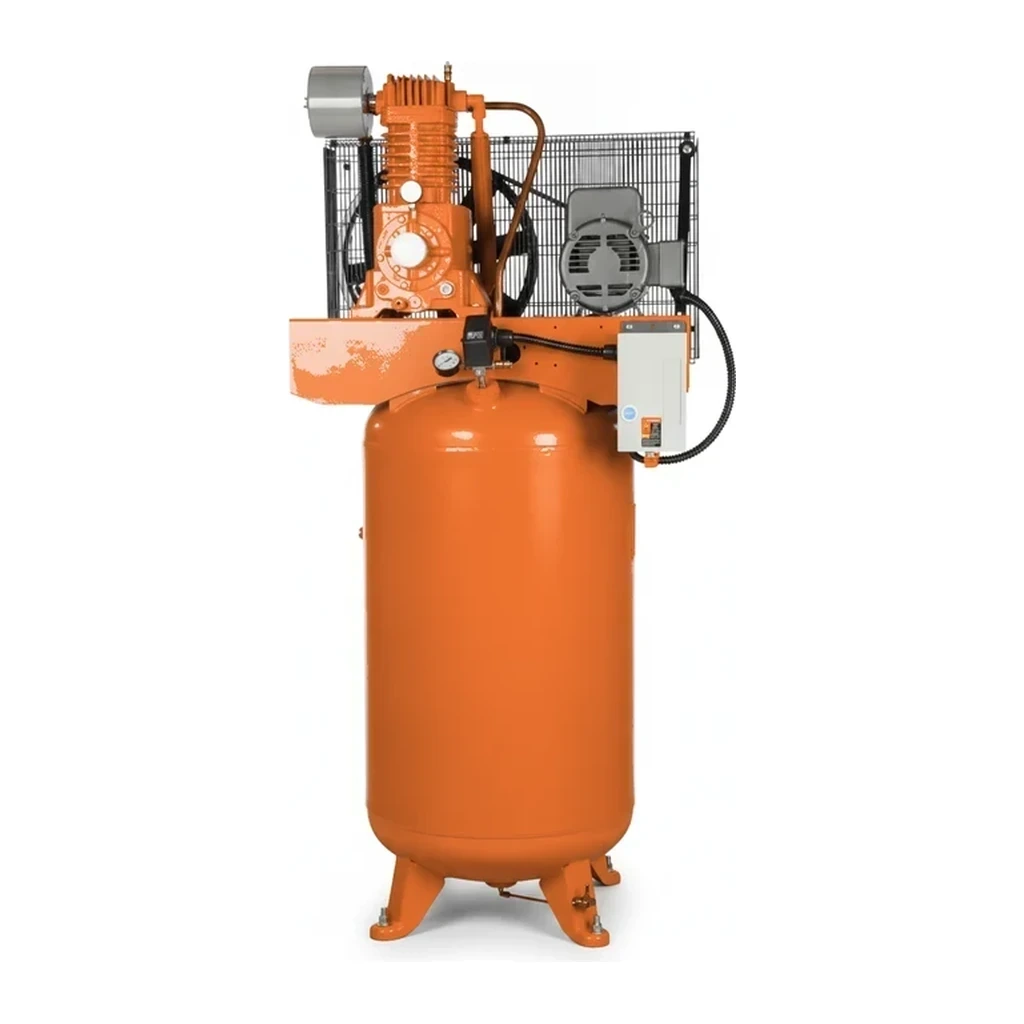
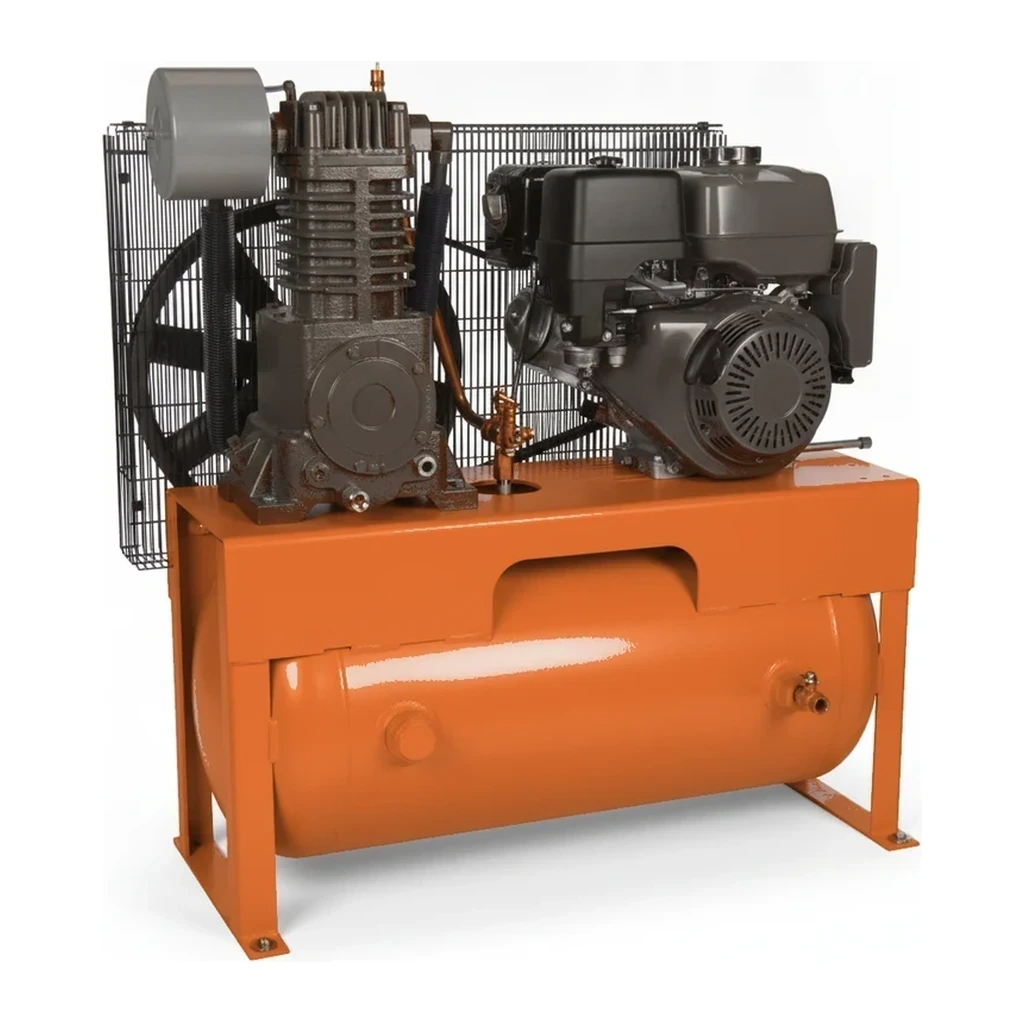
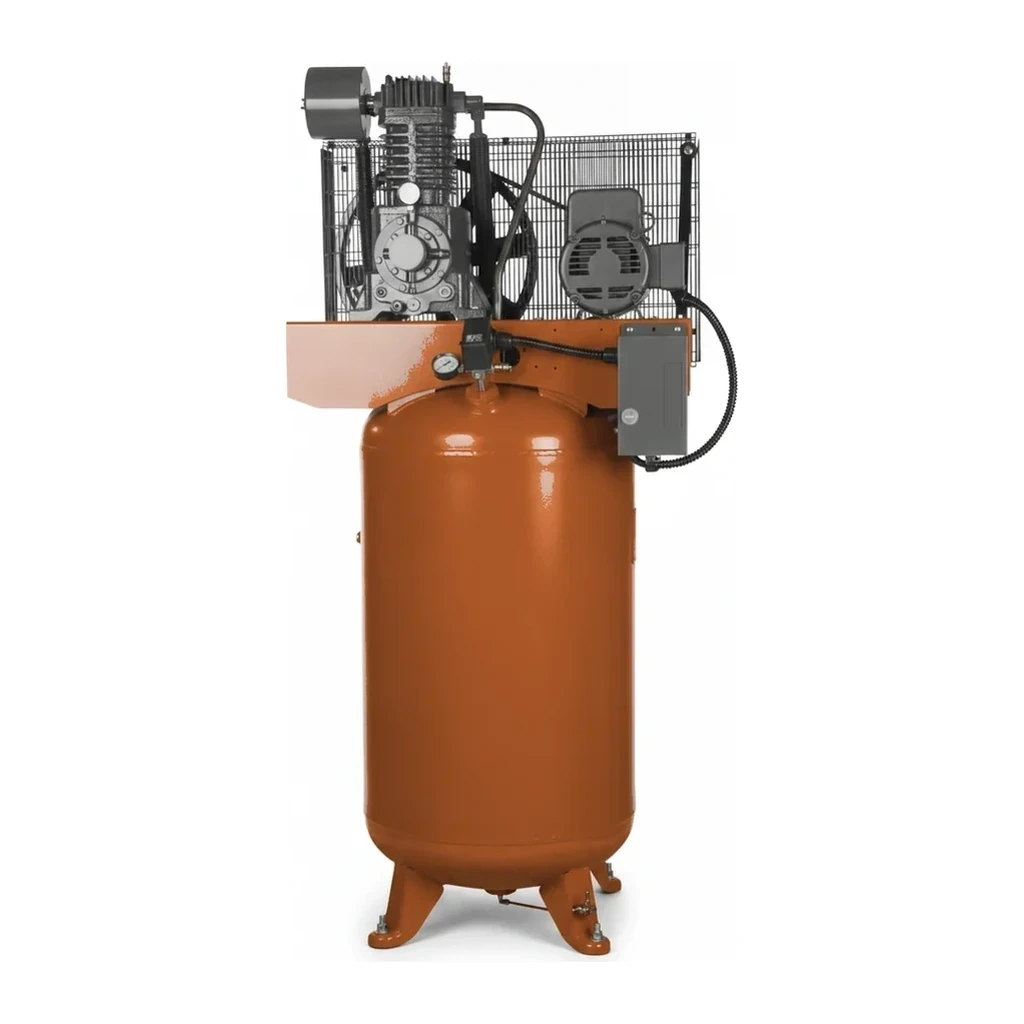
An electric motor drives a compression element — a reciprocating piston pump on most portable units, or a rotary screw element on larger industrial packages — that draws in atmospheric air and compresses it into a receiver tank or directly into the plant air line. A pressure switch or controller cycles the motor to hold system pressure inside a set band, so the compressor runs only when demand pulls pressure down. Portable units plug into standard receptacles, while larger industrial models require a dedicated three-phase feed. Tank-mounted models buffer demand in a receiver; the tank does not add output, but it reduces motor cycling when tools draw air in bursts.
Tipos y variantes
- Single-stage reciprocating
- One piston stroke per compression cycle; the common configuration for small portable and shop units at the lower end of the class.
- Two-stage reciprocating
- Compresses air twice through successively smaller cylinders for higher pressures and heavier duty cycles; listed units run one or two cylinders.
- Tank-mounted portable
- Compressor and receiver on one wheeled or carry frame; common in portable units across the class.
- Industrial electric package
- Large fixed units for plant and process air; listed models report motor powers up to 250 hp and voltages of 380-460 V.
- Low-noise units
- Enclosed or slow-turning designs at the quiet end of the listed 65-100 dB(A) sound range, suited to occupied and indoor spaces.
Especificaciones clave
| Especificación | Rango típico | Qué significa |
|---|---|---|
| Free air delivery | 3.0-987.0 cfm across listed models | The volume of air delivered per minute — the primary figure for matching a compressor to tool demand. |
| Engine power | 5.0-250.0 hp across listed models | Sets how fast the tank recovers and how heavy a continuous tool load the unit can sustain. |
| Max pressure | 110.0-225.0 psi across listed models | The operating pressure the unit delivers; most pneumatic tools require 90 psi, while specialty applications demand higher bands. |
| Voltage | 380.0-460.0 V on industrial models; lower voltages on portable units | Determines whether the unit runs from a standard receptacle or needs a dedicated three-phase feed. |
| Sound pressure level | 65.0-100.0 dB(A) across listed models | Governs whether a unit suits occupied indoor spaces and whether hearing protection applies nearby. |
Cómo la industria lo dimensiona
Electric compressors are sized by free air delivery in cfm: the combined draw of the tools that will run at the same time sets the requirement, and the compressor's delivered cfm must meet it with margin. Units up to 10 cfm handle trim and brad nailing, tire inflation and blowing down — one small tool, intermittent. The 10-20 cfm band covers a framing nailer or a small impact wrench. The 20-50 cfm range runs one air tool continuously — grinder, sander or ratchet. The 50-100 cfm band supports a 60 lb breaker or continuous grinding and cutting. Tank size matters secondarily: bigger receivers smooth burst demand but do not raise sustained output.
Aplicaciones
- Driving nail guns and staplers on framing and finish work
- Powering spray guns for painting and coating
- Running sanders, grinders and other pneumatic hand tools
- Supplying shop air for maintenance and assembly
- Inflating tires on vehicles and equipment
- Providing plant and process air indoors where engine exhaust is not permitted
Seguridad y operación
- The supply circuit must match the unit's nameplate; industrial models listing 380-460 V require installation by a qualified electrician.
- Receiver tanks collect condensate and are drained regularly; trapped water corrodes the tank from the inside and contaminates the airline.
- Hose couplings are secured with whip restraints before the system is pressurized.
- Listed sound levels reach 100 dB(A) at the top of the class, so hearing protection applies around continuously running units.
- Compressed air is never directed at skin or clothing for cleaning.
Normas y certificaciones
- OSHA · 29 CFR 1926.302(b)
- Pneumatic power tool and hose requirements for construction sites.
- ASME · Boiler and Pressure Vessel Code Section VIII
- Design and construction standard for compressor receiver tanks.
- CAGI · Compressed Air and Gas Institute data sheets
- Standardized performance reporting that allows delivered cfm and efficiency to be compared across manufacturers.
Preguntas frecuentes
What cfm does basic tool work need?
Does an electric compressor run on ordinary receptacles?
What does a bigger tank change?
How loud are electric compressors?
Comparar modelos populares
Buscar por especificación →Normalizado a las mismas unidades. Un guion significa que el valor no fue publicado.
| Modelo | Caudal de aire libre | Presión máx | Potencia del motor |
|---|---|---|---|
| Atlas Copco E-Air H250 VSD | 233 cfm | 174 psi | 50 hp |
| Atlas Copco E-Air H450 VSD | 445 cfm | 189 psi | 101 hp |
| Atlas Copco E-Air V1100 VSD | - | - | 279 hp |
| Atlas Copco E-Air H185 VSD | - | 174 psi | 35 hp |
| Chicago Pneumatic CPS 400E | 403 cfm | 150 psi | 97 hp |
| Chicago Pneumatic CPS 500E | 493 cfm | 150 psi | 140 hp |
Equipos relacionados
Explorar por fabricante
Fuentes
Cada especificación se verifica con los datos publicados por el fabricante, con la fuente enlazada como referencia.
Todos los modelos
185 modelos · Página 3 de 4 · Cada especificación citada a la fuente