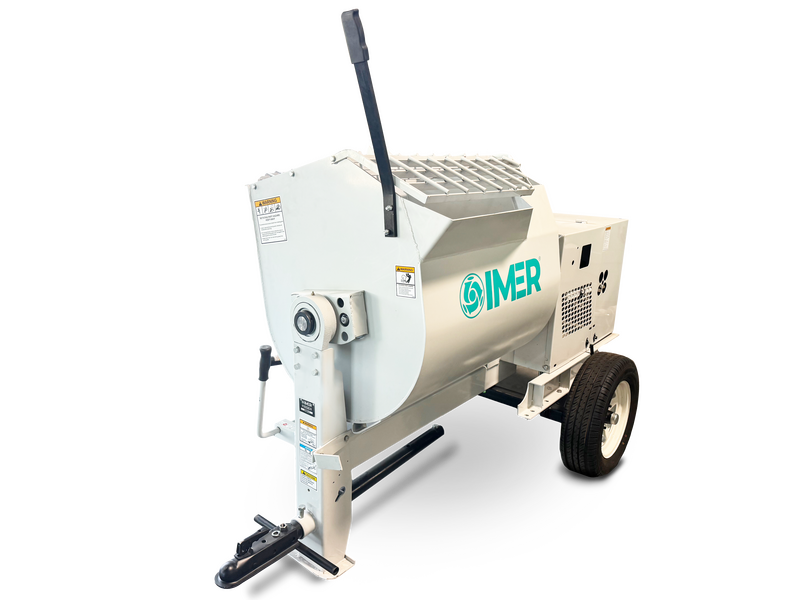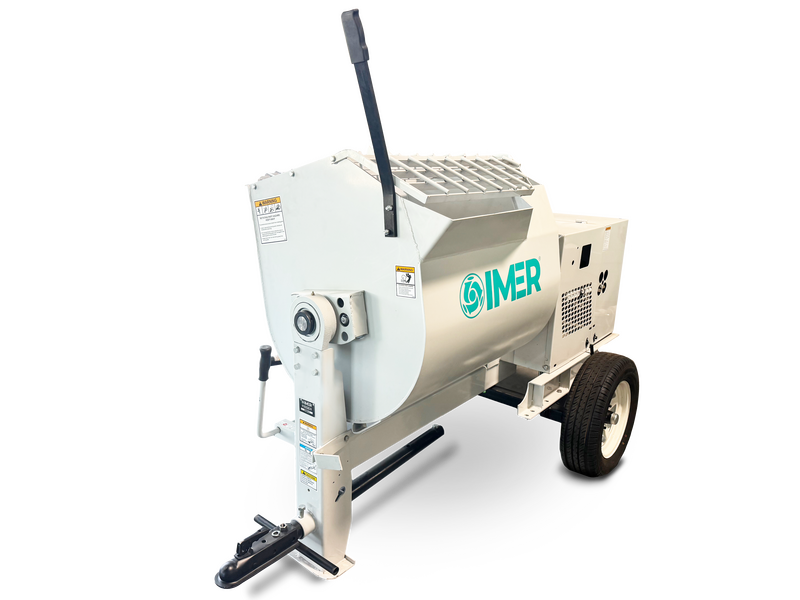

Mortar / Plaster Mixer
A mortar mixer, also known as a plaster mixer or paddle mixer, is a specialized mixing machine designed to blend mortar, stucco, grout, thinset, and other cementitious materials for masonry applications. Unlike drum-style concrete mixers, mortar mixers use paddle or auger action within a stationary drum or tub to create a smoother, more uniform consistency required for bricklaying, block work, and plastering. These machines are essential in masonry construction, providing consistent batches that supply masons throughout the workday.
Cómo funciona
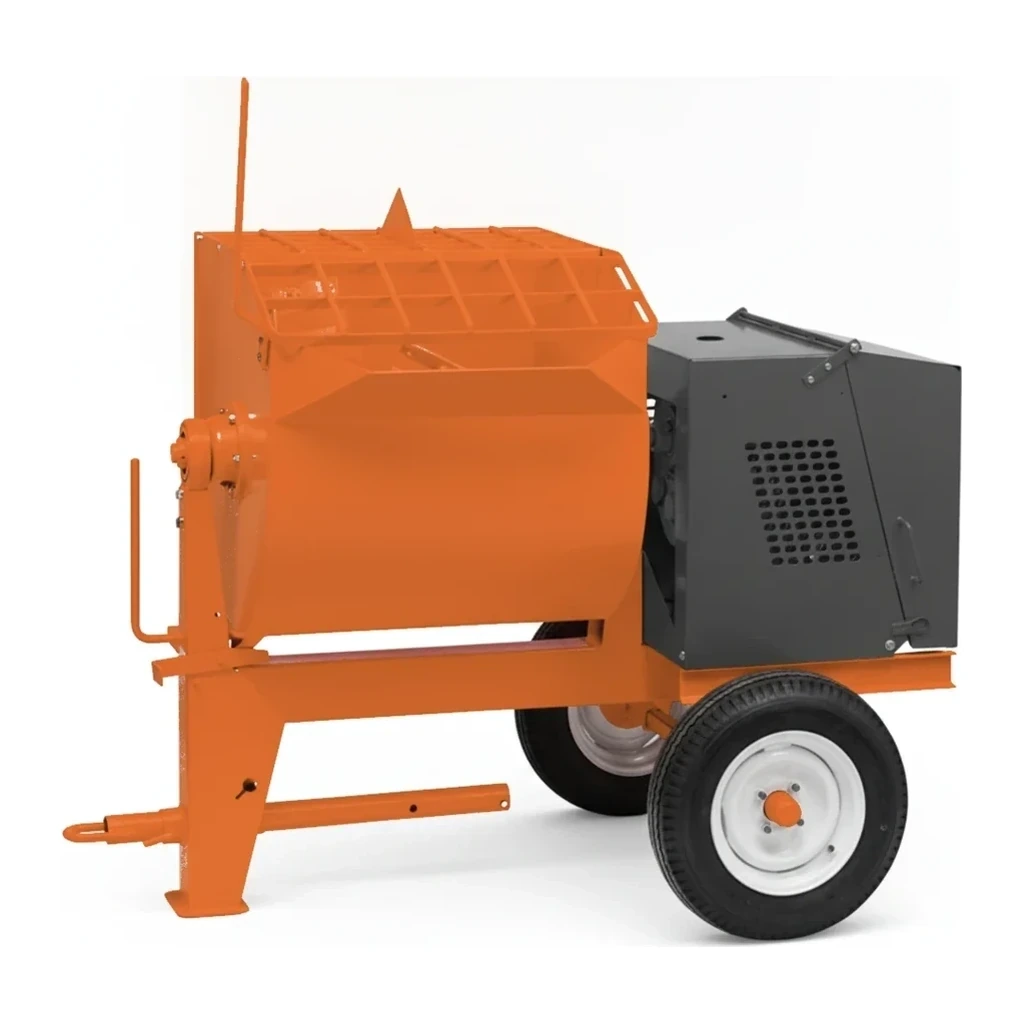
Mortar mixers operate using rotating paddles, augers, or ribbon blades mounted on a vertical or horizontal shaft inside a drum or open tub. Dry ingredients (cement, lime, sand) and water are loaded into the mixing chamber, and the paddle action folds and kneads the materials together rather than tumbling them. This gentle mixing method prevents over-aeration and produces the plastic, workable consistency needed for masonry work. Most models feature electric or gasoline engines driving the paddle assembly through a gearbox or direct drive system. The mixing drum typically remains stationary during operation, with discharge accomplished by tilting the drum, opening a bottom gate, or scooping material directly from an open tub design. Mixing times generally range from 3 to 8 minutes depending on batch size and material type.
Tipos y variantes
- Drum Mortar Mixer
- Enclosed drum with internal paddles and tilt or gate discharge; most common configuration for general mortar and stucco mixing on job sites.
- Open-Tub Paddle Mixer
- Open mixing tub with vertical paddle assembly; allows easy access for loading and scooping, commonly used for smaller batches and repair work.
- Ribbon Mixer
- Horizontal trough with helical ribbon blades for high-volume continuous mixing; used for large masonry projects and grout production.
- Portable Mortar Mixer
- Lightweight, compact units mounted on wheels or frames for easy transport around job sites.
- Colloidal Mixer
- High-shear paddle mixer for specialized grouts, self-leveling compounds, and materials requiring thorough particle suspension and uniform consistency.
Especificaciones clave
| Especificación | Rango típico | Qué significa |
|---|---|---|
| Drum Capacity | Varies by model | Volume of material the mixer can handle per batch; determines crew size the mixer can support. |
| Engine Power | 0.5-110.0 hp | Motor or engine output driving the paddle assembly; higher power handles stiffer mixes and larger batches. |
| Paddle Type | Single/dual paddle, auger, ribbon | Blade configuration affects mixing action, consistency, and material suitability. |
| Power Source | Electric (110V/220V) or gas | Electric models for indoor or near-power applications; gas engines for remote job sites. |
| Discharge Method | Tilt, gate, or manual scoop | How finished material exits the mixer; affects workflow and material handling. |
Cómo la industria lo dimensiona
The industry sizes mortar and plaster mixers by drum capacity measured in cubic feet (cu ft). Machines under 7 cu ft keep one or two masons supplied with mortar, stucco, or thinset. The 7-12 cu ft class represents the standard block-and-brick crew mixer where one tender feeds the wall. Units above 12 cu ft provide high-volume mortar and grout for large masonry walls and pump feed applications, often used on commercial high-rise or institutional projects. Selection depends on crew size, material consumption rate, and whether the mixer feeds workers directly or supplies a mortar pump or silo.
Aplicaciones
- Brick and block laying for residential, commercial, and institutional masonry construction
- Stucco and plaster application on exterior walls, facades, and architectural finishes
- Thinset and mortar mixing for tile installation and stone veneer work
- Grout production for masonry cell filling, anchor grouting, and structural reinforcement
- Repair mortar and patching compound preparation for restoration and maintenance projects
- Self-leveling underlayment and cementitious topping mix preparation for flooring applications
Seguridad y operación
- Ensure stable positioning on level ground and engage wheel locks or stabilizers before operation to prevent tipping during mixing or discharge
- Use appropriate personal protective equipment including eye protection, dust masks, and gloves when handling cementitious materials and during mixing operations
- Keep hands, tools, and clothing clear of rotating paddles and drive components; never reach into the mixer while the paddle is in motion
- Follow manufacturer load capacity limits to prevent motor overload, unbalanced mixing, and potential equipment failure
- Disconnect power or shut off the engine before cleaning, adjusting, or performing maintenance on the mixer
Normas y certificaciones
- OSHA · 29 CFR 1926 Subpart O
- General requirements for motor vehicles, mechanized equipment, and machine guarding on construction sites.
- ANSI · ANSI/ASME B15.1
- Safety standards for mechanical power transmission apparatus and machinery guarding applicable to mixer drive systems.
Preguntas frecuentes
What is the difference between a mortar mixer and a concrete mixer?
How is mortar mixer capacity sized for crew productivity?
Can the same mixer handle mortar, stucco, grout, and thinset?
What mixing time is typical for a batch of mortar?
Comparar modelos populares
Buscar por especificación →Normalizado a las mismas unidades. Un guion significa que el valor no fue publicado.
| Modelo | Potencia del motor | Peso operativo |
|---|---|---|
| Multiquip MS70 | - | - |
| Imer HSM 12 | - | 1,199 lb (544 kg) |
| Multiquip MS15 | - | - |
Equipos relacionados
Explorar por fabricante
Fuentes
Cada especificación se verifica con los datos publicados por el fabricante, con la fuente enlazada como referencia.
Todos los modelos
31 modelos · Cada especificación citada a la fuente