

Utility Tractor
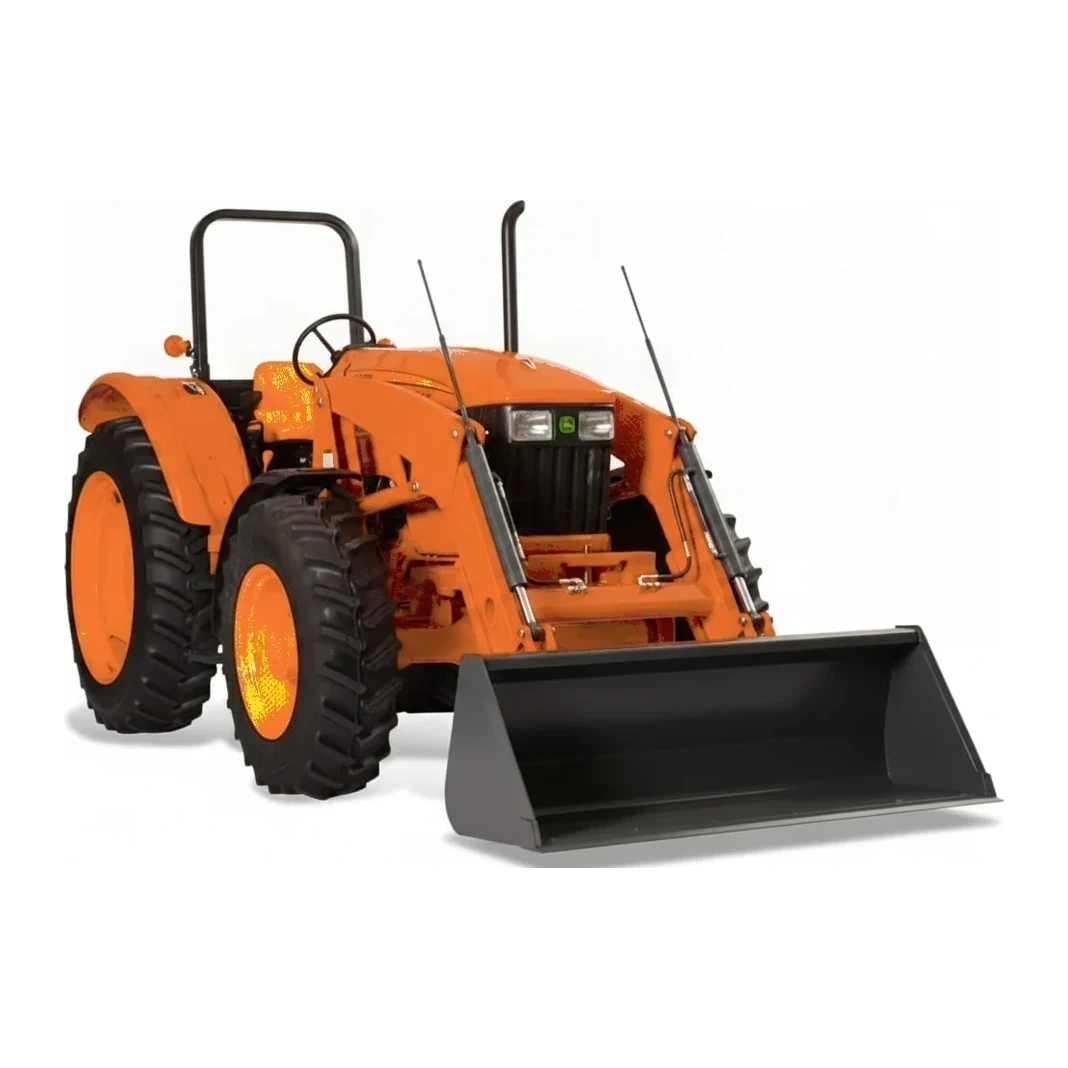
A utility tractor is a versatile, wheeled agricultural or industrial tractor designed for mowing, loader work, towing, and operating power take-off (PTO) implements. These tractors serve as multi-purpose workhorses in landscaping, municipal maintenance, earthmoving, and site development applications. Utility tractors typically feature front loader compatibility, three-point hitch systems, and mechanical front-wheel drive (MFWD) for traction.
Cómo funciona
Utility tractors transmit engine power through a transmission to the rear axle and, when engaged, to the front axle via mechanical front-wheel drive. The three-point hitch system uses hydraulic cylinders to raise, lower, and control draft load on rear-mounted implements, while the PTO shaft transfers rotational power from the engine to implements such as mowers, tillers, and augers. Front-end loaders attach via quick-hitch systems and operate through dedicated hydraulic circuits. Operators control ground speed through gear or hydrostatic transmission selection, engage the PTO independently of travel, and regulate hydraulic functions for loader and hitch operations. Engine horsepower determines the tractor's capacity for implement operation, towing loads such as scrapers or water wagons, and powering hydraulic systems under load.
Tipos y variantes
- Municipal/Landscape Tractor
- Compact utility tractors under 100 hp for right-of-way mowing, snow removal, and light material handling in municipal and grounds maintenance operations.
- Mid-Size Utility Tractor
- General-purpose tractors from 100-175 hp for tillage, heavy mowing, box blade work, and towing scrapers or water wagons on construction sites.
- High-Horsepower Utility Tractor
- Tractors above 175 hp for pulling earthmoving pans, large discs, and heavy towed equipment in reclamation, site development, and large-scale grading operations.
- Loader Tractor
- Utility tractors equipped with front-end loader attachments for material handling, stockpile work, and light excavation in addition to standard tractor functions.
- Row Crop Tractor
- Tractors with adjustable wheel spacing and high ground clearance for agricultural tillage and cultivation, increasingly used in land clearing and site preparation.
Especificaciones clave
| Especificación | Rango típico | Qué significa |
|---|---|---|
| Engine Horsepower | Ranges from under 100 hp to over 175 hp across 36 models | Primary sizing metric determining towing capacity, implement capability, and hydraulic power availability. |
| Drive Configuration | 2WD or MFWD (mechanical front-wheel drive) | MFWD provides improved traction and hillside stability for earthmoving and wet-condition applications. |
| Three-Point Hitch Category | Category I, II, or III | Defines the size and weight capacity of implements the tractor can lift and operate at the rear. |
| PTO Speed | 540 or 1000 RPM | Standardized power take-off speeds for driving rotary mowers, tillers, augers, and other powered implements. |
| Hydraulic Flow | Varies by horsepower class | Determines loader cycle times and the number of hydraulic functions that can operate simultaneously. |
Cómo la industria lo dimensiona
The industry sizes utility tractors by engine horsepower, which determines implement capacity, towing ability, and hydraulic performance. Tractors under 100 hp serve municipal and landscape applications including mowing and light material handling. Mid-size units from 100-175 hp handle heavy mowing, tillage, and towing scrapers or water wagons on construction sites. High-horsepower tractors above 175 hp pull earthmoving pans, large discs, and heavy equipment in reclamation and large-scale grading operations. Selection depends on the largest implement or towed load anticipated and the terrain conditions.
Aplicaciones
- Right-of-way and large-area mowing along highways, utilities, and municipal properties
- Towing scrapers, water wagons, and compaction equipment on earthmoving and grading sites
- Operating tillage implements including discs, rippers, and box blades for site preparation and reclamation
- Front-end loader work for material handling, stockpiling, and backfilling in construction applications
- Snow removal and ice management using blades, blowers, and broom attachments in municipal operations
- PTO-powered operations including trenching, augering, stump grinding, and hydraulic tool driving
Seguridad y operación
- Rollover protective structures (ROPS) and seatbelts must be used and maintained; ROPS should never be removed or folded without manufacturer authorization
- PTO shields and guards must remain in place during operation to prevent entanglement in rotating drivelines
- Loader operations require awareness of overhead clearances, tip-over capacity limits, and proper load distribution to prevent forward or side instability
- Slope operation demands MFWD engagement, appropriate ballasting, and awareness of lateral rollover risk on grades and when turning
- Implement attachment and detachment procedures must follow manufacturer specifications to prevent hydraulic system injury and attachment failure
Normas y certificaciones
- OSHA · 29 CFR 1928 Subpart C
- Agricultural tractor rollover protective structures and operator protection requirements for workplace operations.
- SAE · J2194
- Roll-over protective structures (ROPS) for wheeled agricultural tractors, defining performance and testing criteria.
- ASABE · S390.6
- Definitions and classifications for agricultural tractors including power take-off and hydraulic systems standardization.
- EPA · Tier 4
- Emissions standards for off-road diesel engines governing particulate matter and nitrogen oxide output in modern tractors.
Preguntas frecuentes
What is the difference between 2WD and MFWD tractors?
How is utility tractor horsepower rated?
What determines three-point hitch category selection?
Can utility tractors replace compact track loaders on earthmoving sites?
Equipos relacionados
Explorar por fabricante
Todos los modelos
36 modelos · Cada especificación citada a la fuente