

Radial Stacking Conveyor
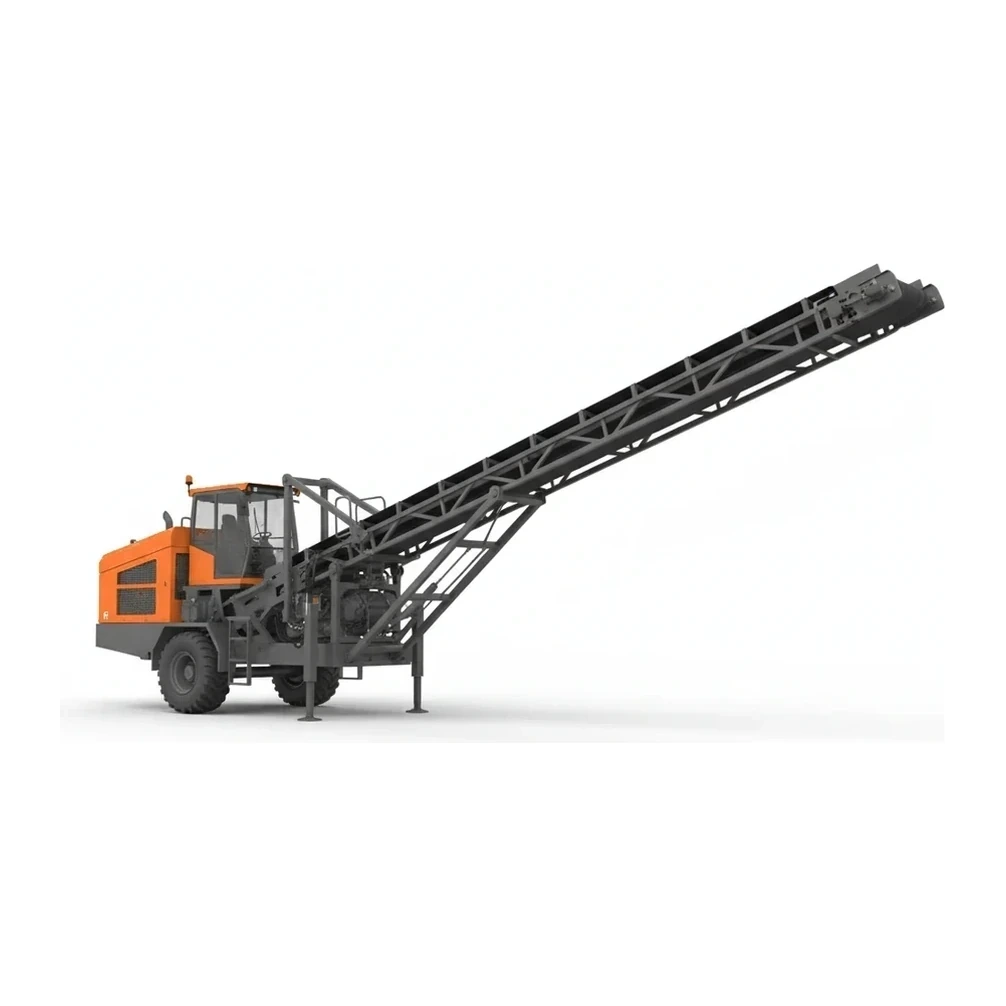
A radial stacking conveyor is a mobile belt conveyor system designed to receive material from crushers, screens, or other processing equipment and discharge it into conical stockpiles. The conveyor features a radial pivot mechanism that allows 180° to 360° rotation and often includes telescoping capability to adjust discharge height and reach. These machines are essential components in crushing and screening spreads, enabling continuous material flow without manual intervention.
Cómo funciona
Material is fed onto the conveyor belt at the receiving end, typically from a screen deck, crusher discharge, or feeder. The belt transports the material along an inclined or horizontal path to the discharge end, where it falls onto a growing stockpile. The radial mechanism allows operators to swing the conveyor head in an arc, distributing material evenly and building a conical pile without repositioning the machine. Many models feature hydraulic or electric controls for radial rotation and telescoping sections that extend or retract to adjust stockpile height and diameter. The conveyor frame is typically mounted on a wheeled or tracked chassis for portability between job sites. Power is provided by electric motors or diesel engines, with variable speed drives allowing operators to match belt speed to material flow rates. Advanced models include automated radial swing functions that rotate continuously or in programmed patterns to maximize stockpile capacity and shape.
Tipos y variantes
- Fixed-Length Radial Stackers
- Single-boom conveyors with fixed discharge height and reach, offering simple operation and lower cost for consistent stockpiling applications.
- Telescopic Radial Stackers
- Feature extending boom sections that adjust discharge height and reach, maximizing stockpile volume and adapting to site constraints.
- Track-Mounted Stackers
- Self-propelled units on crawler tracks for easy positioning and repositioning on uneven terrain without auxiliary equipment.
- Wheel-Mounted Stackers
- Portable units on pneumatic or solid tires, designed for frequent moves between sites or positions within a processing yard.
- High-Capacity Stackers
- Heavy-duty models with wide, reinforced belts and structural components designed for quarry and mining applications with high tonnage throughput.
Especificaciones clave
| Especificación | Rango típico | Qué significa |
|---|---|---|
| Length | 60-100 ft (standard range) | Determines discharge height and stockpile radius; sized by conveyor belt length in feet, the primary classification method in the industry. |
| Radial Swing | 180°: 360° | Arc of rotation available for material distribution; full 360° rotation allows complete circular stockpile building without machine repositioning. |
| Belt Width | 30": 48" | Conveyor belt width determines material capacity and throughput rate; wider belts handle higher volumes and larger material sizes. |
| Discharge Height | 20–60 ft (6.1–18.3 m) | Maximum height at which material is discharged; telescoping models offer variable height to optimize stockpile geometry and volume. |
| Throughput Capacity | 200-800 tph | Maximum material handling rate in tons per hour; varies with belt width, speed, and material characteristics. |
Cómo la industria lo dimensiona
The industry sizes radial stacking conveyors primarily by conveyor length in feet, which directly correlates to discharge height and stockpile reach. Conveyors under 60 ft serve small crushing operations and confined sites where compact stockpile footprints are required. The 60-100 ft range represents the standard workhorse class, providing the discharge height and radial reach needed to keep typical crushing and screening spreads running without constant loader attention to material management. Conveyors over 100 ft are deployed in high-volume quarries, mines, and material transfer facilities where maximizing stockpile capacity and minimizing rehandling are critical to operational efficiency.
Aplicaciones
- Stockpiling crushed aggregate downstream of jaw crushers, cone crushers, and impact crushers in stationary and portable plants
- Building sorted material piles from screening decks producing multiple size fractions in sand and gravel operations
- Aggregate stockpiling at asphalt plants, concrete batch plants, and ready-mix facilities for inventory management
- Transfer and temporary storage of topsoil, compost, mulch, and recycled materials at processing and distribution yards
- Quarry and mining operations requiring high-volume stockpile management with minimal equipment and labor
- Reclamation and recycling facilities processing C&D debris, asphalt millings, and reclaimed base materials
Seguridad y operación
- Maintain clearance zones around the radial swing path and beneath the conveyor to prevent personnel from entering the moving equipment envelope during operation
- Ensure the machine is positioned on stable, level ground and outriggers or stabilizers are deployed before operating radial or telescoping functions
- Install and maintain proper guarding on belt pinch points, drive components, and rotating mechanisms per manufacturer specifications
- De-energize and lockout/tagout electrical and hydraulic systems before performing maintenance on belt, rollers, or drive components
- Monitor material flow rates to prevent belt overload, spillage, and buildup that can cause tracking issues or structural stress
Normas y certificaciones
- MSHA · 30 CFR Part 56
- Safety and health standards for surface metal and nonmetal mines, including conveyor guarding and mobile equipment requirements.
- OSHA · 29 CFR 1926.555
- Construction industry conveyor safety standards addressing guarding, emergency stops, and safe work practices.
- CEMA · Conveyor Equipment Manufacturers Association
- Industry design, engineering, and safety standards for belt conveyors, including mobile and radial configurations.
- ANSI · ANSI/ASME B20.1
- Safety standard for conveyors and related equipment, covering guarding, controls, and operational safety features.
Preguntas frecuentes
What length stacker is needed for a portable crushing operation?
How does radial swing capability affect stockpile management?
What is the advantage of telescoping versus fixed-length stackers?
Can radial stackers handle different material types?
Equipos relacionados
Explorar por fabricante
Fuentes
Cada especificación se verifica con los datos publicados por el fabricante, con la fuente enlazada como referencia.
Todos los modelos
5 modelos · Cada especificación citada a la fuente