

Tow Tractor
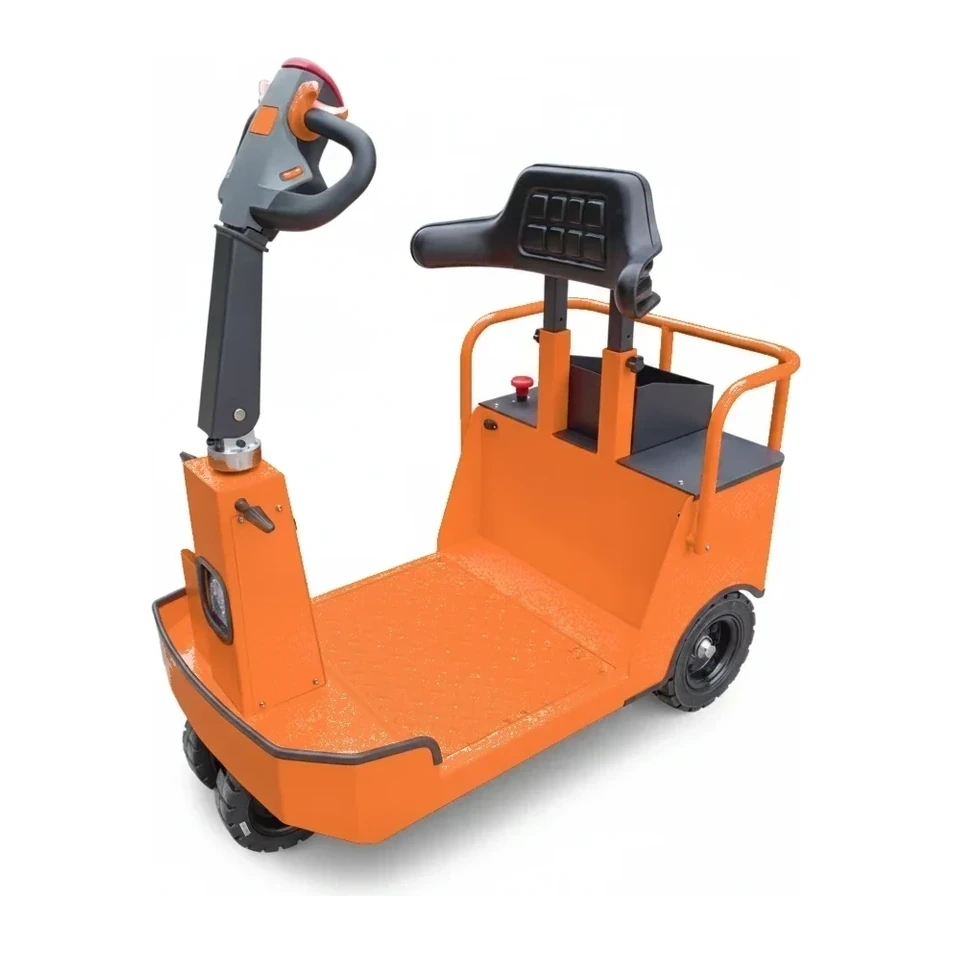
A tow tractor, commonly called a tugger or warehouse tug, is a powered vehicle designed to pull trains of carts, trailers, or other wheeled loads rather than lift them. These low-profile, compact machines move materials horizontally across warehouses, manufacturing floors, airports, and logistics yards. The equipment class is sized by drawbar pull capacity, typically ranging from light-duty models under 6,000 lb to heavy-duty units exceeding 15,000 lb.
Cómo funciona
Tow tractors operate with electric or internal combustion powertrains that transmit torque through drive wheels to generate pulling force at a rear-mounted hitch or tow bar. The operator sits or stands on the platform, controlling speed and direction via a steering wheel or tiller handle, with the hitch positioned low to the ground for coupling to carts, dollies, or trailers. Unlike forklifts, tow tractors have no lifting mechanism: all effort goes toward horizontal traction. Most models feature automatic or manual transmissions optimized for frequent stops and starts in confined spaces. Electric units dominate indoor applications for zero emissions and quiet operation, while combustion engines appear in outdoor or heavy-duty scenarios. Regenerative braking and traction control systems are common on higher-capacity machines to manage momentum when pulling multi-cart trains.
Tipos y variantes
- Walk-Behind Tugger
- Operator walks behind the unit using a tiller handle; compact design for tight aisles and light-duty cart trains in stockrooms and small facilities.
- Rider Tow Tractor (Sit-Down)
- Operator sits on an integrated seat; standard configuration for medium to heavy pulling applications across manufacturing and distribution centers.
- Stand-On Tugger
- Operator stands on a rear platform; combines maneuverability with higher capacity than walk-behind models for medium-distance runs.
- Burden Carrier
- Features a flat load bed behind the operator in addition to towing capability; used for simultaneous transport of parts or tools alongside cart trains.
- Airport Baggage Tractor
- Specialized heavy-duty unit designed for towing baggage carts and aircraft ground support equipment on tarmacs; often diesel-powered with high drawbar pull.
- Motrec-Style Industrial Tug
- Ruggedized electric or LP-gas models for outdoor yard work, pulling trailers, and moving heavy equipment across uneven surfaces.
Especificaciones clave
| Especificación | Rango típico | Qué significa |
|---|---|---|
| Drawbar Pull Capacity | 3,000-20,000+ lb | Maximum rated pulling force the tractor can exert; primary sizing metric for matching equipment to cart train weight and floor conditions. |
| Power Source | 24V-80V battery, LP-gas, diesel | Electric dominates indoor applications; combustion engines used for outdoor, heavy-duty, or extended-runtime scenarios. |
| Top Speed | 3-12 mph | Maximum travel speed; lighter units operate slower in tight spaces, while heavy-duty models reach higher speeds for yard work. |
| Turning Radius | 36–72 in (91.4–183 cm) | Minimum clearance required for U-turns; critical for navigating warehouse aisles and congested production areas. |
| Overall Length | 48–96 in (122–244 cm) | Compact footprint allows maneuvering in confined spaces; longer models accommodate larger batteries or operator compartments. |
Cómo la industria lo dimensiona
The industry sizes tow tractors by drawbar pull capacity, measured in pounds. Light-duty units under 6,000 lb handle short cart trains in stockrooms and small production areas. Mid-range models from 6,000 to 15,000 lb represent the standard tugger class, used for multi-cart milk runs between departments in manufacturing and distribution. Heavy-duty tractors above 15,000 lb tackle aircraft towing, loaded trailers, and outdoor yard work where substantial weight and rolling resistance must be overcome. Operators select capacity based on total train weight, floor surface, incline, and number of carts in the consist.
Aplicaciones
- Towing cart trains on manufacturing milk runs to deliver parts and materials to assembly stations
- Moving baggage carts and ground support equipment across airport tarmacs and terminals
- Pulling multiple trailers in distribution centers for order consolidation and cross-docking operations
- Transporting laundry carts, meal carts, and supply trains through healthcare facilities and hotels
- Towing scrap bins, finished goods, and work-in-process between production cells in automotive and industrial plants
- Moving heavy equipment, aircraft tugs, and maintenance trailers across shipyards and aerospace facilities
Seguridad y operación
- Operators must ensure cart trains are properly coupled and secured before movement to prevent separation and runaway loads
- Visibility is critical when pulling long trains; spotter assistance or mirrors may be required when backing or navigating blind corners
- Weight distribution and train balance affect braking distance; operators should account for loaded cart momentum, especially on inclines
- Electric models require battery maintenance and charging protocols to prevent power loss during operations
- Pedestrian awareness zones and designated tugger routes help prevent collisions in mixed-traffic warehouse environments
Normas y certificaciones
- OSHA · 1910.178
- Powered industrial truck standards apply to tow tractors; covers operator training, inspection, and safe operation requirements.
- ANSI · B56.2
- Safety standard for pedestrian and operator-controlled industrial trucks, including tow tractors and burden carriers.
- SAE · J2249
- Drawbar pull test procedure for determining tow tractor capacity under standardized conditions.
- EPA Tier Standards
- Emissions regulations govern diesel and LP-gas engines in combustion-powered tow tractors for outdoor use.
Preguntas frecuentes
How is drawbar pull capacity different from gross vehicle weight?
What factors reduce effective towing capacity in practice?
Can tow tractors operate on ramps and loading docks?
What is the difference between a tugger and a burden carrier?
Equipos relacionados
Explorar por fabricante
Fuentes
Cada especificación se verifica con los datos publicados por el fabricante, con la fuente enlazada como referencia.
Todos los modelos
33 modelos · Cada especificación citada a la fuente