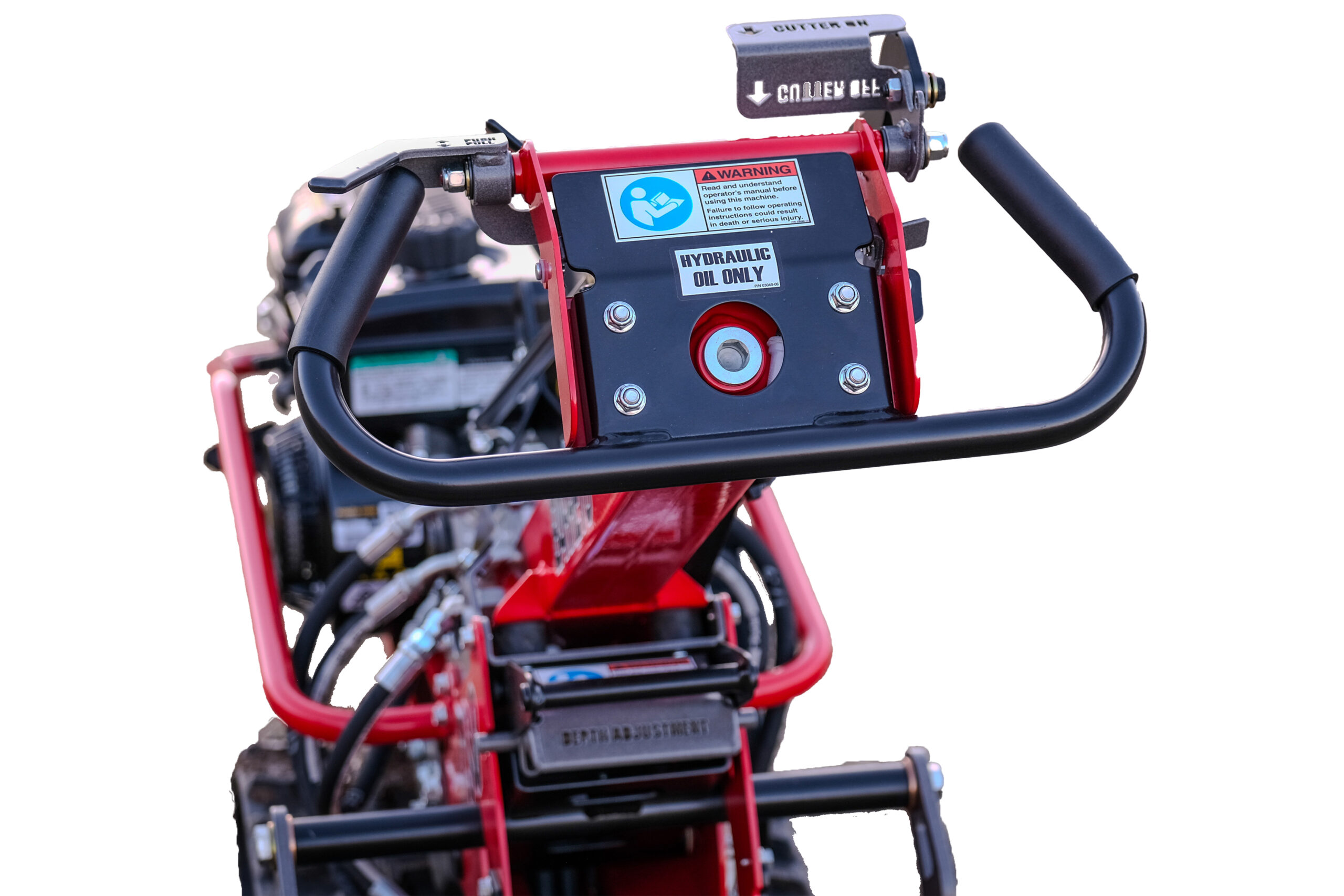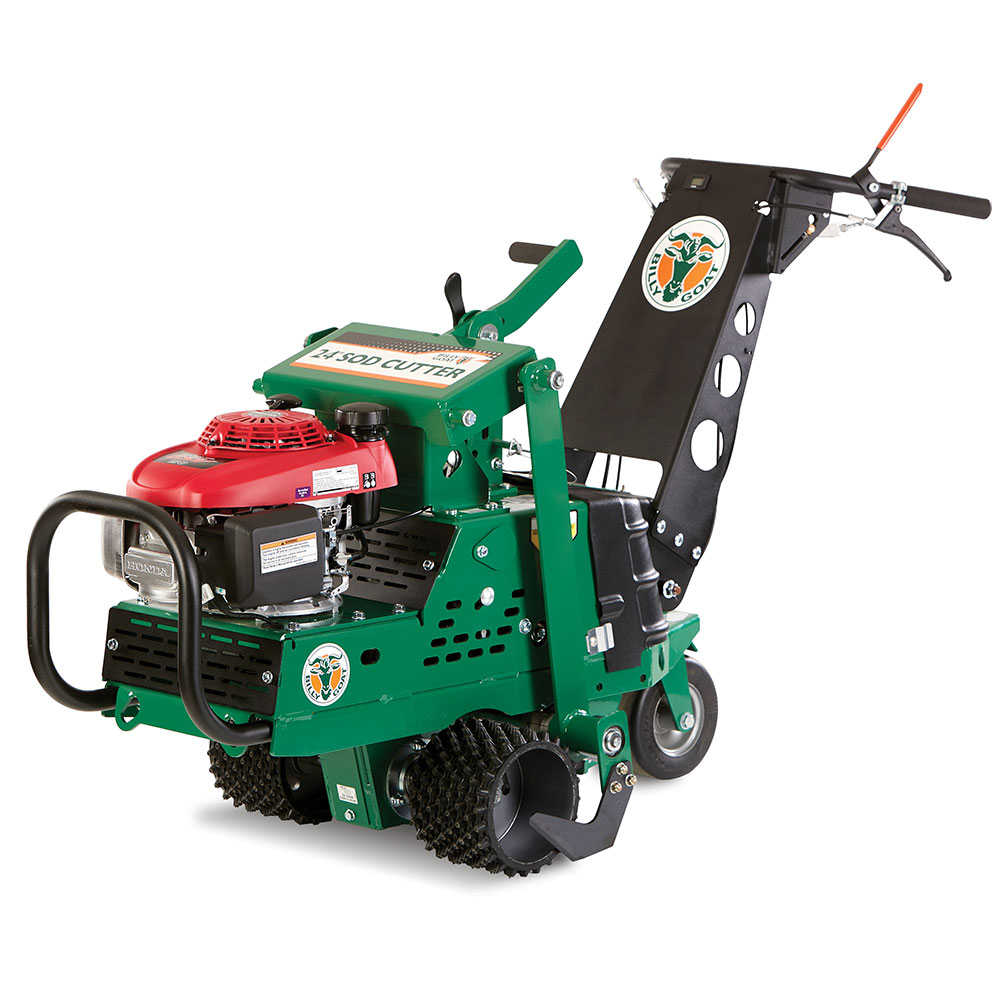

Sod Cutter
A sod cutter is a specialized landscape machine designed to remove existing turf by slicing horizontally beneath the root zone, producing rolled strips of grass and soil. The equipment enables efficient removal of lawn areas for renovation, landscaping changes, or preparation of planting beds. Sod cutters are classified by cutting width, measured in inches, with models ranging from 12 to 24 inches and wider.
Cómo funciona
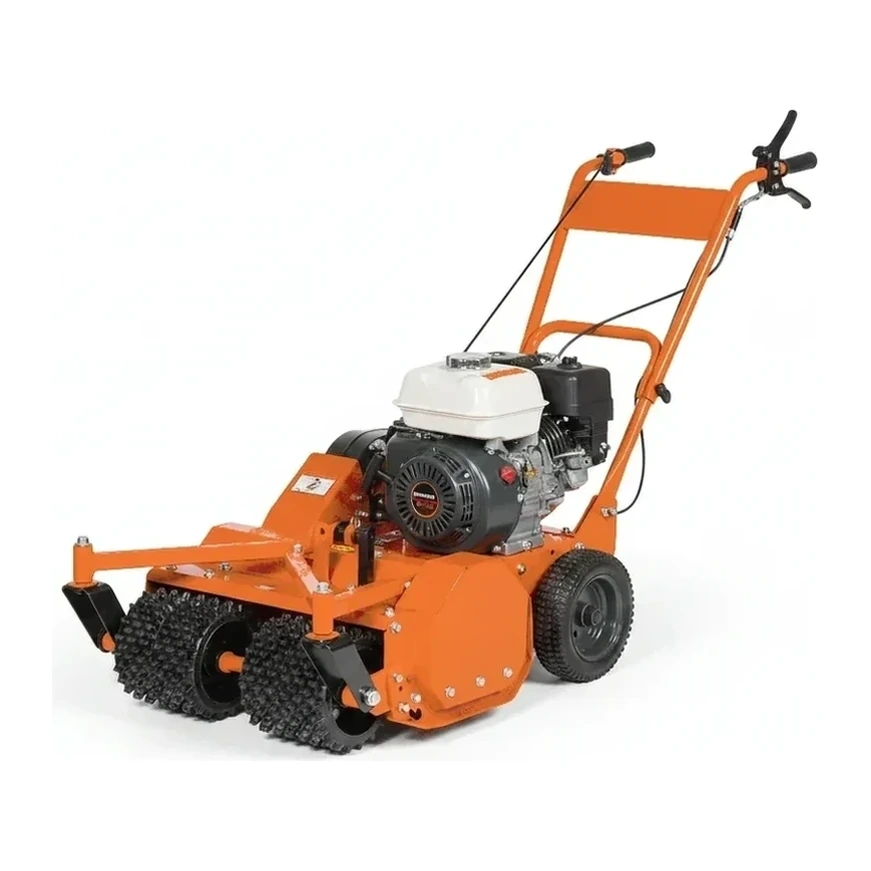
A sod cutter uses a sharp, horizontal blade positioned parallel to the ground surface, driven forward by either self-propelled wheels or manual force. The blade depth is adjustable, allowing cutting beneath the root mat while leaving subsoil intact. As the machine advances, the blade severs the turf in continuous strips of uniform width, which roll up naturally behind the cutter for easy removal. Most models feature a reciprocating or oscillating blade mechanism powered by gasoline engines. Walk-behind designs dominate the equipment class, with the operator controlling speed and direction while the machine's weight and cutting action provide traction. Larger models include hydrostatic transmissions for variable speed control and improved maneuverability on slopes or uneven terrain.
Tipos y variantes
- Manual Push Sod Cutter
- Operator-propelled models requiring physical effort to advance the machine; typically lighter weight and suited for small areas or intermittent use.
- Self-Propelled Walk-Behind
- Engine-driven wheel propulsion reduces operator effort; the standard configuration for professional landscape work and full-lawn removal.
- Hydraulic Sod Cutter
- Hydrostatic transmission provides infinite speed control and consistent cutting force; preferred for large-scale turf removal and challenging terrain.
- Narrow-Cut Models
- 12-inch cutting width machines designed for tight access areas, garden bed edges, and repairs where portability and strip handling are critical.
- Wide-Cut Commercial Units
- 24-inch and wider models that maximize productivity on open areas, sports fields, and large renovation projects by reducing the number of passes required.
Especificaciones clave
| Especificación | Rango típico | Qué significa |
|---|---|---|
| Cutting Width | 12, 18, or 24 in | Determines strip size, pass count, and handling characteristics; 18 inches is the most common specification in the industry. |
| Cutting Depth | Adjustable, typically 0.5-2.5 in | Controls how much soil is removed with the root system; deeper cuts include more soil weight but ensure complete removal. |
| Machine Weight | Varies by model and width | Provides downforce for blade penetration and affects maneuverability and transport requirements. |
| Blade Type | Reciprocating or oscillating steel | Reciprocating blades move back-and-forth to slice through roots and soil; must be kept sharp for clean cuts. |
Cómo la industria lo dimensiona
The rental industry sizes sod cutters by cutting width, measured in inches. Machines up to 14 inches produce 12-inch strips for small repairs and tight areas; one person can roll and carry the sod. The 18-inch width represents the industry standard for lawns, new beds, and irrigation trench preparation. Models 24 inches and wider serve full renovations and sports turf, requiring fewer passes and producing fewer seams.
Aplicaciones
- Complete lawn removal for landscape renovation or regrading projects
- Preparation of new planting beds and garden areas requiring turf elimination
- Irrigation system installation and utility trench preparation through existing lawns
- Athletic field and sports turf renovation or replacement
- Removal of damaged or diseased turf sections for repair and replacement
- Site preparation for hardscape installation including patios, walkways, and retaining walls
Seguridad y operación
- Blade guard and deadman controls are standard safety features; guards must remain in place and functional throughout operation.
- The horizontal cutting blade presents a severe hazard to feet and lower extremities; steel-toed boots and maintaining proper stance behind the machine are essential.
- Sod cutters generate significant vibration during operation; prolonged use may require breaks to prevent hand-arm vibration syndrome.
- Hidden obstacles including sprinkler heads, utility lines, and buried debris can damage blades or cause sudden machine reactions; site survey and utility marking are necessary before cutting.
- Wet or saturated soil conditions increase strip weight substantially and may cause the machine to bog down or lose traction on slopes.
Normas y certificaciones
- ANSI · B71.4
- Commercial turf care equipment standard addressing safety requirements for walk-behind powered machinery.
- OPEI · Safety Guidelines
- Outdoor Power Equipment Institute publishes safety and maintenance guidelines for professional turf equipment operations.
Preguntas frecuentes
What determines the correct cutting width for a sod removal project?
How do soil conditions affect sod cutter performance and blade depth settings?
What maintenance considerations affect blade performance and cut quality?
How does cutting width relate to the total linear footage removed per hour?
Equipos relacionados
Explorar por fabricante
Fuentes
Cada especificación se verifica con los datos publicados por el fabricante, con la fuente enlazada como referencia.
Todos los modelos
22 modelos · Cada especificación citada a la fuente