
Drain Cleaning Machine
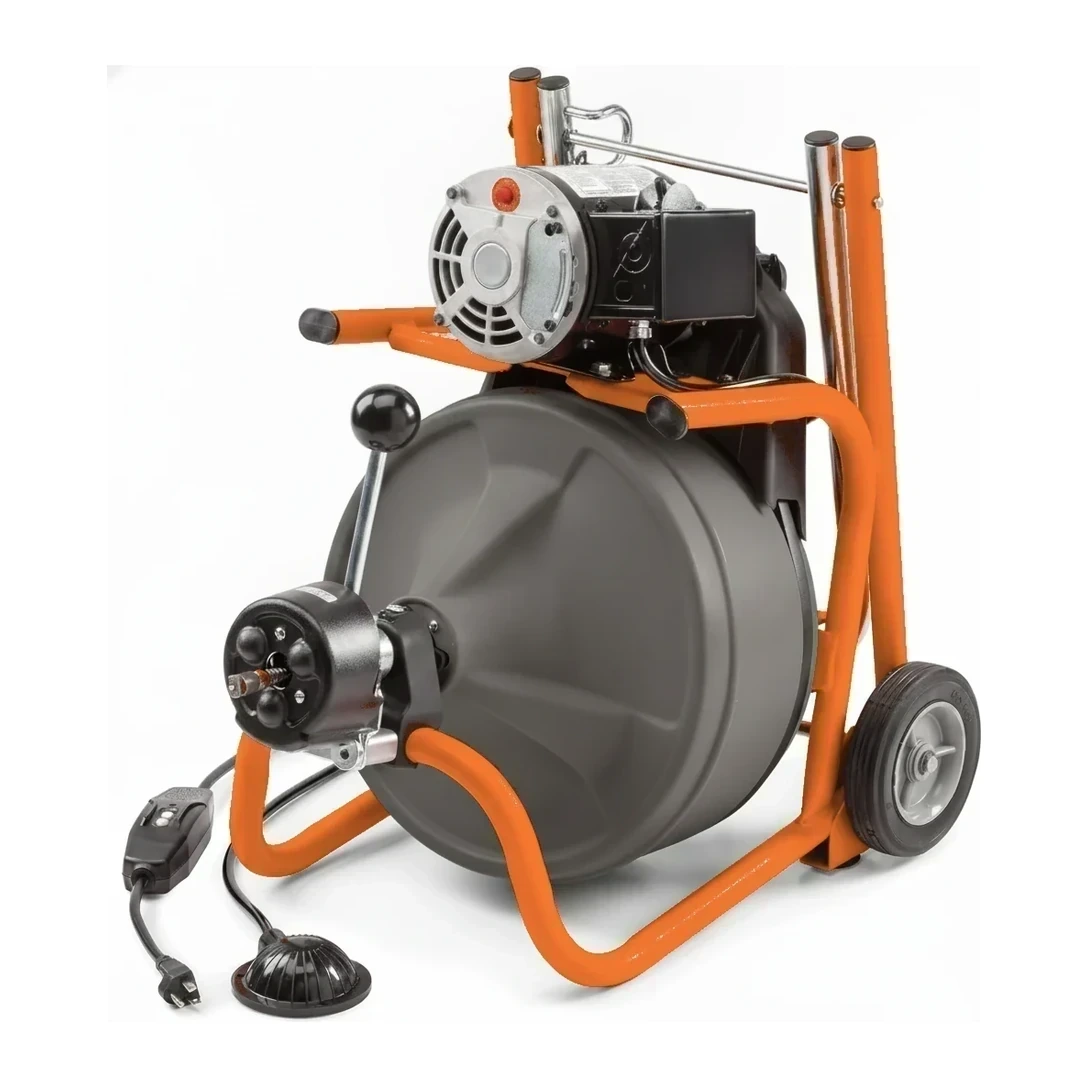
A drain cleaning machine is a motorized device that uses rotating cable or sectional rods to break up and remove obstructions from drains, sewers, and pipes. These machines range from compact hand-held units for residential fixtures to heavy-duty sectional machines for municipal sewer mains. The industry commonly refers to them as drain snakes, sewer snakes, drain augers, rooters, or cable machines depending on configuration and application.
Cómo funciona
The machine feeds a flexible steel cable or series of sectional rods into the drain line while rotating the tooling at the cable's end. As the cable spins, cutting heads, root saws, or retrieval tools at the tip break through clogs, cut roots, or hook debris. The operator controls feed rate and rotation speed, advancing and retracting the cable as the obstruction clears. Drum machines wind cable inside a rotating drum, while sectional machines use interlocking rod sections stored separately and connected as needed. Both types transmit torque through the cable to the cutting tool, with larger machines providing greater torque and cable length for longer, larger-diameter runs.
Tipos y variantes
- Hand-Held Drum Machine
- Compact portable units for sinks, tubs, and small branch lines up to 2 inches, operated by one person.
- Standard Drum Machine
- Wheeled units with enclosed cable drum for 2-4 inch lines, the most common configuration for everyday drain work.
- Sectional Cable Machine
- Uses interlocking rod sections instead of a drum, offering easier transport and cable changes for 4-6 inch and larger lines.
- Heavy-Duty Sectional Machine
- Large-capacity machines for 6-10+ inch municipal sewer mains, typically requiring two operators.
- Closet Auger
- Specialized short-cable tool designed specifically for toilet traps and bends.
- Power Feed Machine
- Features automatic cable feed and retrieval, reducing operator fatigue on long runs.
Especificaciones clave
| Especificación | Rango típico | Qué significa |
|---|---|---|
| Pipe Capacity | Sized in inches: 0-2", 2-4", 4-6", 6-10"+ | Maximum pipe diameter the machine is designed to clean, determines machine size class. |
| Cable Diameter | 1/4" to 1-1/4" depending on machine class | Thicker cable provides more strength and torque transmission for larger obstructions. |
| Cable Length | 25 ft to 400+ ft depending on application | Determines maximum distance the machine can reach into the drain system. |
| Motor Type | Electric (corded or battery) or gas-powered | Power source affects portability, torque delivery, and suitability for indoor/outdoor use. |
Cómo la industria lo dimensiona
The industry sizes drain cleaning machines primarily by the diameter of pipe they are designed to clean, measured in inches. Machines for 0-2 inch lines handle sinks, tubs, and small branch lines with hand-held or compact drum units. The 2-4 inch class covers everyday branch lines and floor drains with wheeled drum machines. Machines rated for 4-6 inch pipes tackle building mains and laterals from cleanouts to the street. Heavy-duty equipment for 6 inches and larger addresses municipal sewer mains, typically using sectional cable systems. Cable diameter, length, and motor torque scale with pipe capacity.
Aplicaciones
- Clearing clogs from residential sinks, tubs, showers, and lavatory drains
- Opening obstructed floor drains, branch lines, and waste stacks in commercial buildings
- Removing root intrusion from building sewer laterals and service lines
- Clearing mainline stoppages in municipal sewer systems
- Maintenance cleaning of restaurant grease lines and food service drains
- Removing scale, debris, and buildup from industrial process drains
Seguridad y operación
- Operators must maintain secure footing and body position to control cable kickback and torque reaction.
- Gloves and eye protection are essential due to cable rotation, flying debris, and wastewater exposure.
- Electric machines require GFCI protection in wet environments and proper cord management to prevent entanglement.
- Cable must be inspected for kinks, fraying, and damage before each use; damaged cable can break under load.
- Two-person operation is standard for heavy sectional machines due to equipment weight and torque forces.
Normas y certificaciones
- OSHA · 29 CFR 1926.441
- Electrical safety requirements for power tools in construction and maintenance environments.
- ANSI · B175.1
- Safety requirements for gasoline-powered equipment including portable drain cleaning machines.
- CSA · C22.2
- Canadian electrical safety standards for motor-operated drain cleaning equipment.
- IAPMO
- Plumbing industry standards organization providing guidance on drain cleaning procedures and equipment.
Preguntas frecuentes
What is the difference between drum and sectional machines?
How is drain cleaning machine size matched to pipe diameter?
What cutting tools are used with drain cleaning machines?
Why do larger machines require two operators?
Equipos relacionados
Explorar por fabricante
Fuentes
Cada especificación se verifica con los datos publicados por el fabricante, con la fuente enlazada como referencia.
Todos los modelos
50 modelos · Página 2 de 2 · Cada especificación citada a la fuente