

Combination Roller
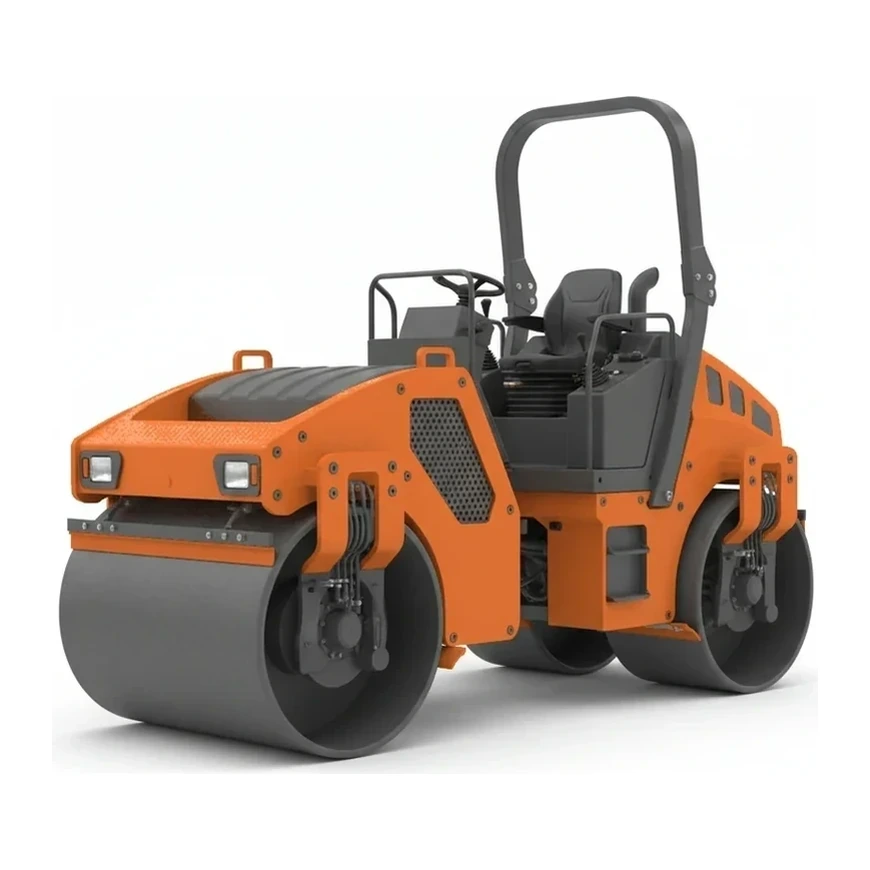
A combination roller is a tandem ride-on compaction machine featuring a smooth steel drum on one end and a set of pneumatic tires on the other, designed to perform both breakdown compaction and surface finishing in asphalt paving operations. This dual-purpose design allows a single machine to deliver the kneading action of a tire roller and the sealing properties of a smooth drum roller. The class is widely known in the industry as combi rollers or drum-and-tire rollers.
Fonctionnement
The combination roller operates with a smooth steel drum at the front (or rear, depending on configuration) that provides initial compaction and breaks down the asphalt mat, while the opposite end employs multiple pneumatic tires arranged across the width to knead and finish the surface. The operator can reverse direction to apply either compaction method as needed during different stages of the paving process. Vibratory systems in the drum assembly enhance compaction efficiency, while the pneumatic tires apply a kneading action that closes the surface texture and seals the aggregate. This dual mechanism eliminates the need for multiple roller passes with separate machines, streamlining the paving workflow on smaller projects and tight sites.
Types et variantes
- Small Combination Roller
- Compact machines under 54 inches wide suited for patch work, parking lots, and tight access areas where a single versatile compactor is needed
- Full-Width Combination Roller
- 54-inch and wider machines designed for street paving and highway work, providing both drum breakdown and tire finishing across full lane widths
- Vibratory Drum / Pneumatic Tire
- Configuration with vibratory drum forward and pneumatic tires aft, common for breakdown and finishing sequences
- Reversible Configuration
- Machines designed for bidirectional operation to apply drum or tire compaction as the leading edge depending on paving stage
Spécifications clés
| Spécification | Plage typique | Signification |
|---|---|---|
| Drum Width | Measured in inches; determines coverage area and suitability for lane widths | Primary sizing dimension for matching roller to paving width and project scale |
| Operating Weight | Varies by machine size; determines compaction force and mat density achievable | Total machine mass distributed between drum and tire assemblies for effective compaction |
| Number of Pneumatic Tires | Typically 3 to 5 tires across rear axle; affects kneading coverage and surface finish | More tires provide wider coverage and more uniform kneading action on the asphalt surface |
| Vibratory Frequency | Measured in vibrations per minute (VPM); influences compaction depth and efficiency | Drum vibration settings adjust compaction intensity for different lift thicknesses and material types |
Comment l'industrie le dimensionne
The industry sizes combination rollers primarily by drum width, measured in inches, which determines the machine's effective compaction coverage and suitability for project scale. Machines under 54 inches wide serve patch work, parking lots, and confined areas where maneuverability and versatility are prioritized. Rollers 54 inches and wider are classified as full-width machines for street and highway paving, where the drum width matches typical lane widths to efficiently break the mat and finish the surface in coordinated passes.
Applications
- Asphalt parking lot construction and repair requiring both compaction and surface sealing
- Municipal street paving where dual-action compaction reduces equipment needs
- Patch work and utility cut restoration in confined urban settings
- Small to mid-scale highway resurfacing projects with limited staging area
- Residential subdivision roadway construction with tight access constraints
- Combination breakdown and finish rolling on thin asphalt lift applications
Sécurité et opération
- Operators must maintain awareness of the machine's dual-action design and ensure bystanders remain clear of both drum and tire zones during reversing operations
- Proper ballasting and weight distribution settings are critical to prevent over-compaction or surface damage, particularly on thin lifts
- Hot asphalt contact with both drum and tires requires adherence to manufacturer guidelines for operating temperatures and release agent application
- Sloped grade operation demands careful attention to stability given the differing traction characteristics of steel drum versus pneumatic tires
- ROPS and FOPS protection, along with backup alarms and visibility mirrors, are essential given the machine's bidirectional operation
Normes et certifications
- ANSI/ITSDF · B114.1
- Earth-moving machinery safety standard covering operational controls and protective structures for ride-on compaction equipment
- OSHA · 1926.602
- Construction industry requirements for material handling equipment including operator training and machine guarding for rollers
- SAE · J1040
- Performance terminology and test procedures for compaction equipment, standardizing vibration and compaction force measurement
- EPA · Tier 4
- Diesel engine emission standards applicable to combination roller power plants in current production
Questions fréquentes
What distinguishes a combination roller from running separate drum and tire rollers?
How does drum width relate to paving lane coverage?
Which end of a combination roller typically leads during finishing passes?
What factors determine whether a project specifies a combination roller over dedicated drum or tire machines?
Équipements connexes
Parcourir par fabricant
Sources
Chaque spécification est vérifiée par rapport aux données publiées par le fabricant, avec la source liée pour référence.
Tous les modèles
1 modèles · Chaque spécification citée à la source