Asphalt Paver
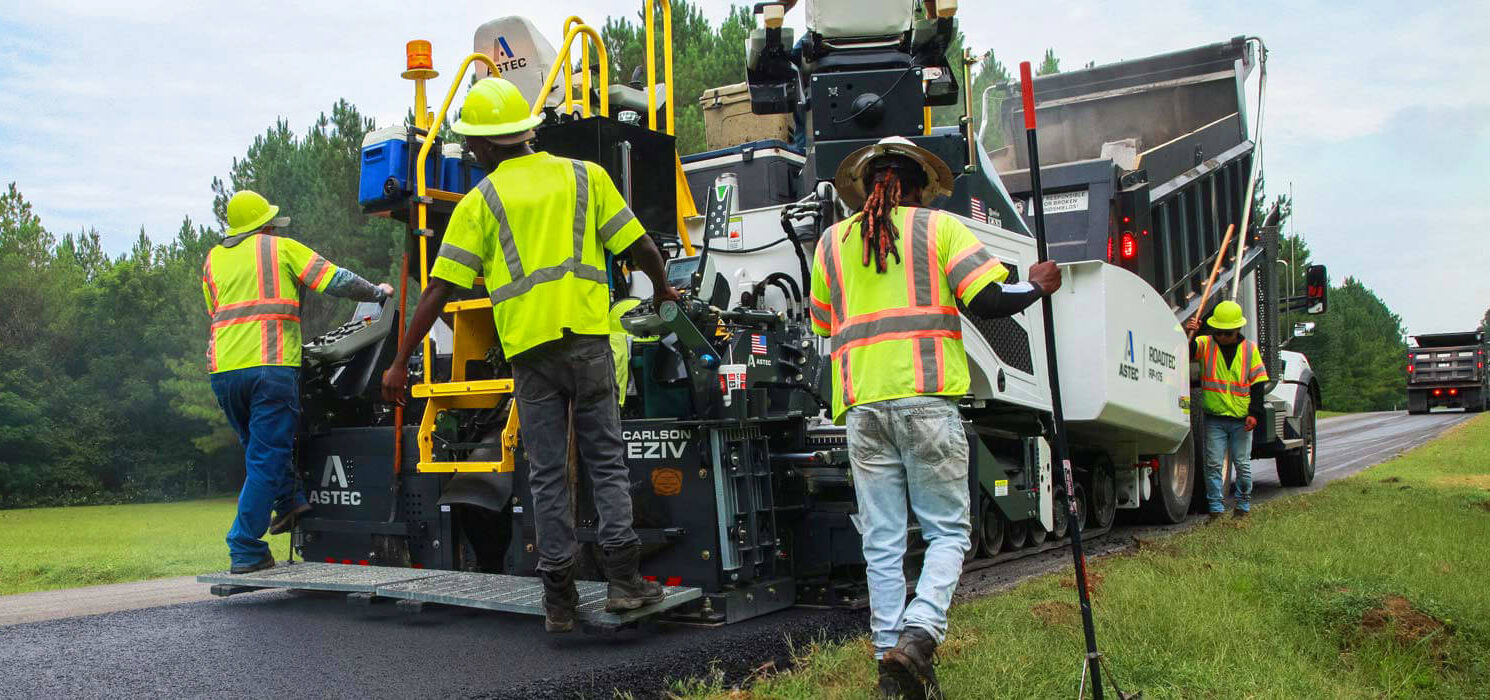
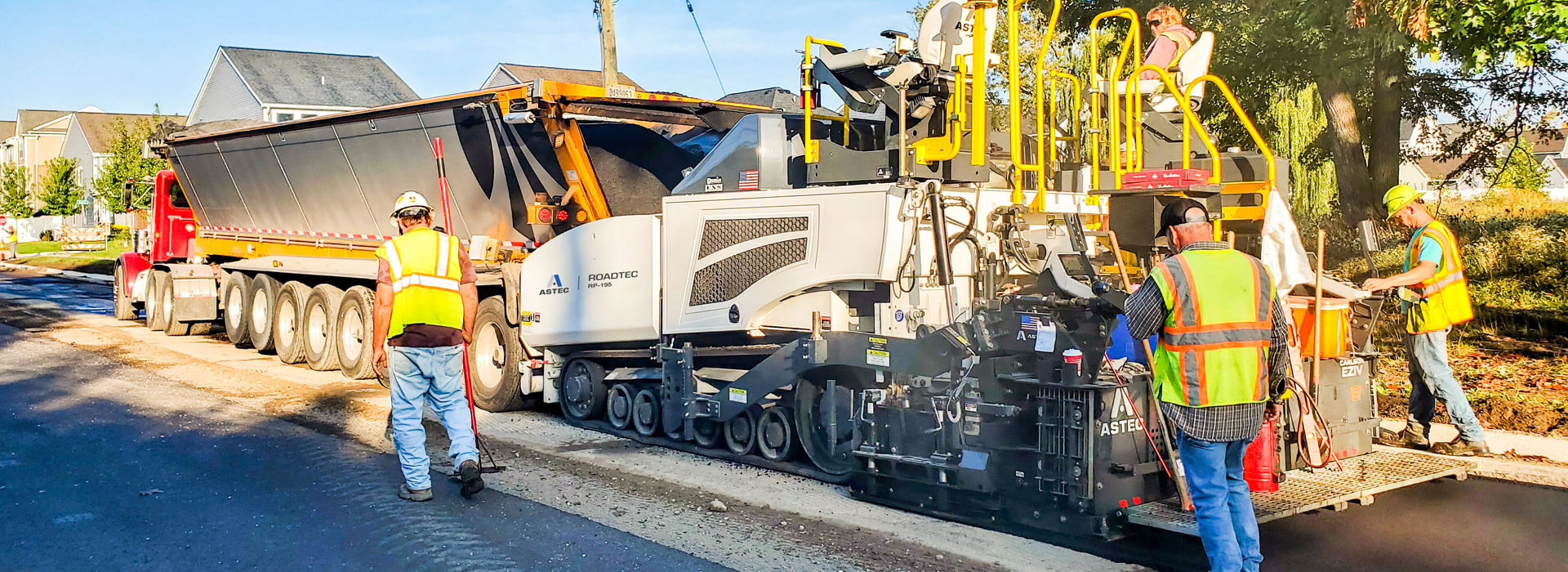
An asphalt paver is a track-mounted or wheeled machine that receives hot-mix asphalt, distributes it across a prepared surface, and levels it to a specified grade and cross-slope using a heated screed. These machines are the primary tool for constructing asphalt pavements on roads, parking lots, driveways, and paths. Pavers are sized by maximum paving width, ranging from compact mini pavers for narrow applications to highway-class units with extendable screeds.
Fonctionnement
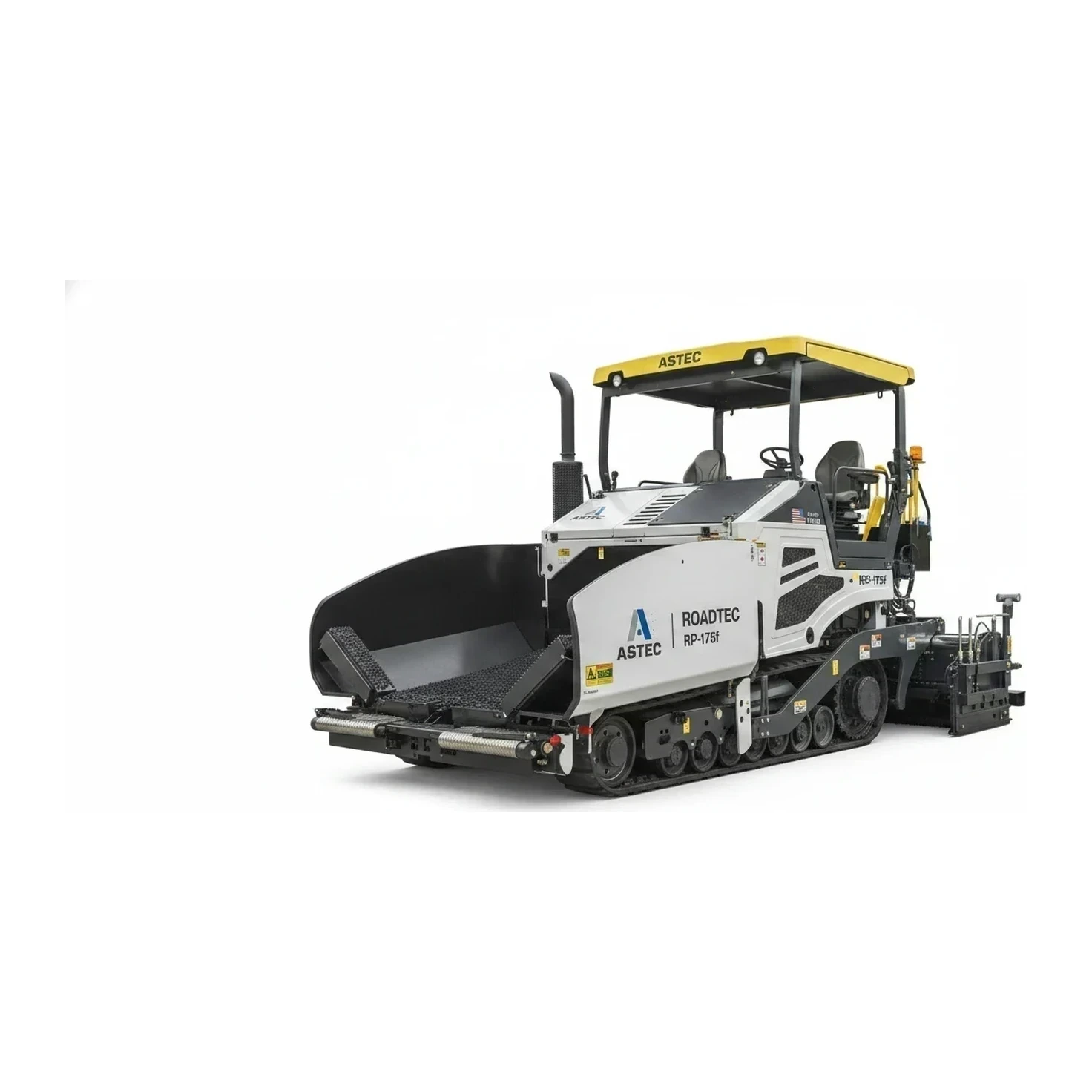
Material is loaded into a receiving hopper at the front of the paver, either by dump trucks or through a material transfer vehicle. Internal augers and conveyors distribute the asphalt evenly across the width of the screed, which sits at the rear of the machine. The heated screed consolidates and smooths the asphalt mat to the desired thickness and profile as the paver moves forward at controlled speeds, typically 20 to 70 feet per minute. Operators control grade using automatic leveling systems referenced from stringlines, ski sensors, or grade lasers. The screed can be mechanically or hydraulically extended to increase paving width. Tamper bars and vibrators within the screed provide initial compaction before separate rollers complete the compaction process behind the paver.
Types et variantes
- Track Paver
- Crawler-mounted unit offering superior traction and stability on soft or uneven base material; most common in commercial and highway applications.
- Wheeled Paver
- Rubber-tired variant providing higher travel speeds and maneuverability; often preferred for parking lot work and urban paving with frequent moves.
- Mini Paver
- Compact, narrow-width paver for paths, driveways, trails, and shoulder work where access or width constraints exist; typically under 8 feet wide.
- Highway-Class Paver
- Large-capacity unit with extendable screeds capable of laying 13 feet or wider in a single pass; designed for mainline roadway construction.
- Rubber-Track Paver
- Track paver equipped with rubber belts instead of steel, reducing surface damage on sensitive substrates while maintaining traction advantages.
Spécifications clés
| Spécification | Plage typique | Signification |
|---|---|---|
| Paving Width | 0-20+ ft | Maximum width the screed can lay in a single pass; often hydraulically extendable in 1- or 2-foot increments on larger models. |
| Hopper Capacity | Varies by model | Volume of asphalt the receiving hopper can hold, affecting the frequency of truck exchanges and paving continuity. |
| Screed Type | Tamping bar or vibratory | Consolidation mechanism; tamping bar screeds use reciprocating action, while vibratory screeds use high-frequency vibration for compaction. |
| Maximum Paving Thickness | Varies by model | Deepest lift the paver can place in one pass; base course applications may require 6-8 inches, surface courses 1.5-3 inches. |
Comment l'industrie le dimensionne
The rental industry sizes asphalt pavers primarily by maximum paving width, measured in feet. Units under 8 feet are considered mini or compact pavers suited for paths, driveways, and single-lane shoulder work. The 8- to 13-foot range represents everyday commercial pavers used on parking lots, subdivision streets, and urban roadways. Highway-class pavers exceed 13 feet and feature extendable screeds that can reach 20 feet or more, accommodating mainline paving operations behind material transfer vehicles. Width categorization directly correlates with production capacity, machine weight, and the scale of paving projects.
Applications
- Highway and interstate roadway construction and resurfacing
- Municipal street paving and reconstruction
- Parking lot installation and overlay
- Residential subdivision streets and cul-de-sacs
- Airport runway, taxiway, and apron paving
- Multi-use trails, bike paths, and recreational pathways
Sécurité et opération
- Hot-mix asphalt temperatures range from 275-325°F, requiring heat-resistant gloves and awareness of burn hazards around the hopper and screed.
- Maintain clear communication between paver operator, screed operator, and truck drivers during material transfer to prevent collisions and hopper overfills.
- Asphalt fumes contain volatile organic compounds and potential carcinogens; work in well-ventilated areas and consider respiratory protection on enclosed projects.
- Track and wheeled pavers have significant blind spots; use spotters and audible alarms when backing or maneuvering in congested work zones.
- Grade control sensors and stringlines present trip and entanglement hazards; mark reference systems clearly and maintain safe distances from moving machinery.
Normes et certifications
- OSHA · 29 CFR 1926 Subpart O
- Covers motor vehicle and mechanized equipment safety on construction sites, including paver operation and traffic control.
- ANSI/ASSE · A10.32
- Fall protection and prevention standard applicable when operators access elevated platforms or hoppers on pavers.
- EPA · Tier 4
- Emissions standards for off-road diesel engines; modern pavers comply with Tier 4 Final regulations reducing particulate matter and NOx.
- NAPA
- National Asphalt Pavement Association publishes best practices for paving operations, crew safety, and quality control procedures.
Questions fréquentes
What determines the correct paving width for a project?
How does a material transfer vehicle affect paver operation?
What is the difference between tamping bar and vibratory screeds?
How is paver grade control typically achieved?
Comparer les modèles populaires
Chercher par spécification →Normalisé aux mêmes unités. Un tiret signifie que la valeur n'a pas été publiée.
| Modèle | Puissance moteur | Poids en service |
|---|---|---|
| Astec Roadtec RP-175f Highway Class Asphalt Paver | 173 hp | 32,501 lb (14,742 kg) |
| Astec Roadtec RP-195f Highway Class Asphalt Paver | 230 hp | 39,220 lb (17,790 kg) |
Parcourir par fabricant
Sources
Chaque spécification est vérifiée par rapport aux données publiées par le fabricant, avec la source liée pour référence.
Tous les modèles
2 modèles · Chaque spécification citée à la source