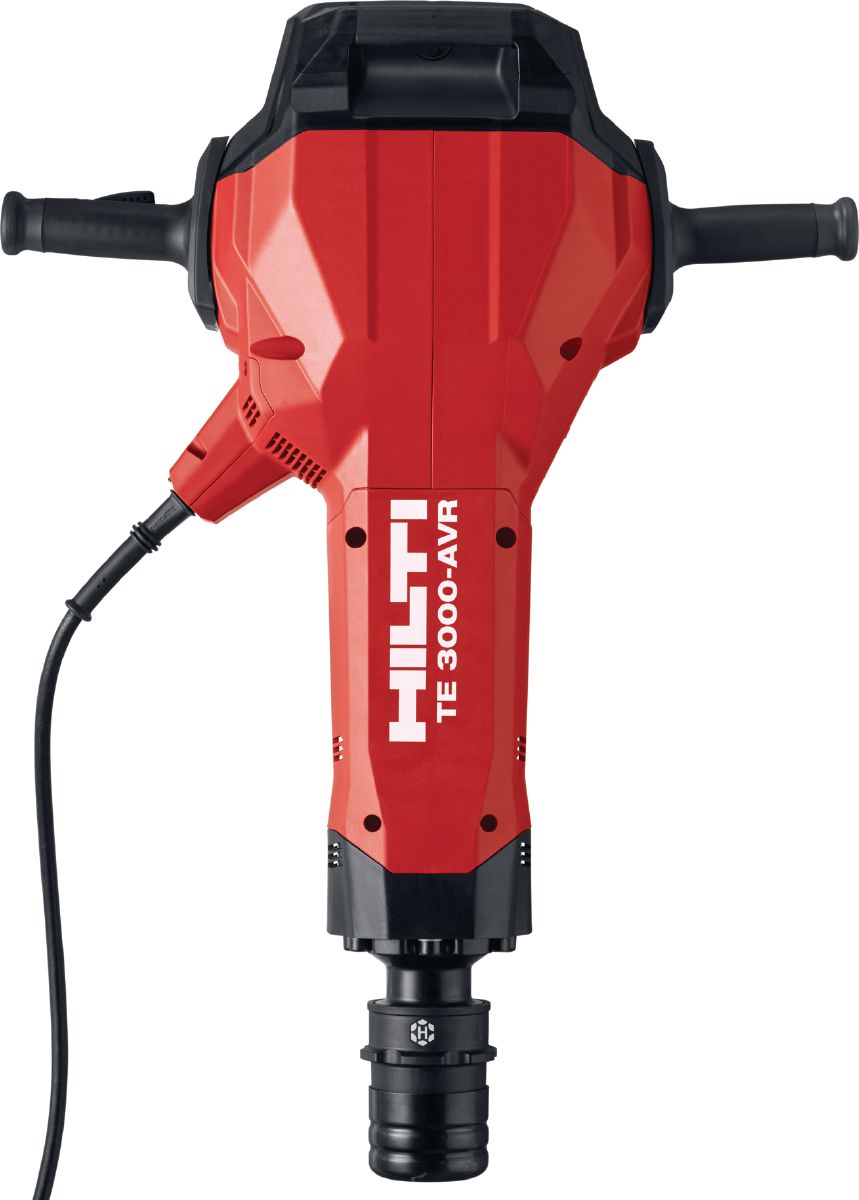
Electric Demolition Hammer
An electric demolition hammer is a corded impact tool designed to break, chip, and demolish concrete, masonry, and other hard materials using electrically powered percussion. These tools provide a cleaner, quieter alternative to pneumatic breakers in confined or indoor environments where air compressors are impractical. The rental industry stocks electric demolition hammers in weight classes ranging from lightweight chipping tools to heavy 60-70 lb units capable of foundation work.
Fonctionnement
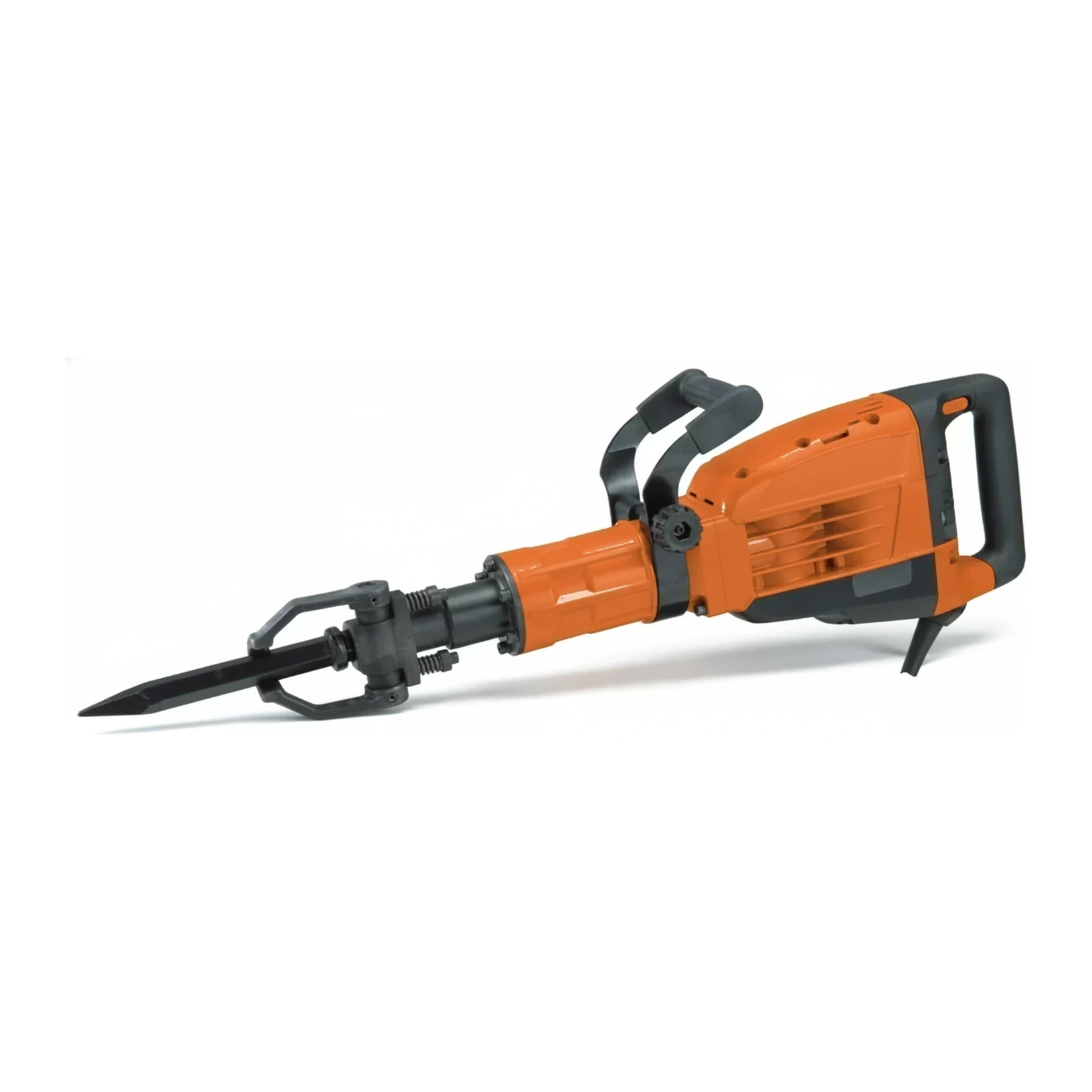
Electric demolition hammers use an electric motor to drive a piston that strikes a striker plate, generating repetitive impact energy transmitted through a chisel or point bit. Most models use either electro-pneumatic mechanisms (where the motor drives a piston through air compression in a sealed chamber) or electro-mechanical systems with cam or wobble-plate designs. The tool requires only a standard electrical outlet (typically 120V or 240V depending on size), eliminating the need for air hoses and compressors. The operator positions the bit against the work surface and applies downward pressure while the hammer delivers impacts at rates typically between 1,000 and 3,000 blows per minute. Power is controlled via trigger, and most units feature automatic shutoff when not pressed against material. Bit retention systems vary by brand, with SDS-Max and hex shank systems being the most common in heavier models.
Types et variantes
- Lightweight Chipping Hammer
- Under 20 lb tools for one-hand or light two-hand work on tile, stucco, thin slabs, and surface preparation tasks.
- Mid-Weight Demolition Hammer
- 20-45 lb class representing the everyday electric breaker for slab, curb, wall, and general concrete demolition where pneumatic equipment is impractical.
- Heavy-Duty Electric Breaker
- 60-70 lb units delivering impact energy comparable to medium pneumatic breakers, used for thick slab and foundation work while maintaining cord portability.
- SDS-Max Hammer
- Tools using the SDS-Max bit retention system, common in mid to heavy weights, allowing quick bit changes and compatibility across major brands.
- Hex Shank Breaker
- Heavier demolition hammers utilizing 1-1/8 inch hex shank tooling, typical in the heaviest electric models for maximum power transmission.
Spécifications clés
| Spécification | Plage typique | Signification |
|---|---|---|
| Weight | 12–70 lb (5.4–31.8 kg) | Primary sizing factor determining impact energy, operator fatigue, and application suitability across the weight classes. |
| Impact Energy | 5-63 ft-lb | Measure of breaking power per blow; heavier units deliver higher impact energy for thicker, harder demolition work. |
| Blow Rate | 1,000-3,000 BPM | Impacts per minute; higher rates suit chipping and surface work while lower rates with higher energy suit heavy breaking. |
| Voltage | 120V or 240V | Power supply requirement; heavier models typically require 240V circuits for adequate motor performance. |
| Bit Retention | SDS-Max or 1-1/8" Hex | Shank system determines bit compatibility; SDS-Max dominates mid-weight while hex is common in heaviest breakers. |
Comment l'industrie le dimensionne
The industry sizes electric demolition hammers primarily by weight, measured in pounds, which directly correlates to impact energy and application capability. Lightweight models under 20 lb handle chipping, tile removal, and light surface work. The 20-45 lb range represents the workhorse category for everyday slab, curb, and wall demolition in indoor or confined spaces. Heavy-duty units in the 60-70 lb class compete with pneumatic breakers for thick slab and foundation work, offering corded convenience without sacrificing breaking power. Manufacturers may also reference impact energy in joules or foot-pounds, but weight remains the standard sizing convention across the 44 models available from major brands including Makita, Hilti, Dewalt, Bosch, Metabo HPT, Wacker Neuson, Milwaukee, and Multiquip.
Applications
- Interior concrete slab and floor demolition where exhaust-free electric operation is required
- Breaking curbs, steps, and walls in confined areas without space for air compressor setup
- Chipping and surface preparation of concrete, removing thin overlays or leveling high spots
- Foundation and footing removal on residential and light commercial demolition projects
- Tile, stucco, and masonry veneer removal during renovation and remodeling work
- Trenching and channeling in existing concrete for utility and conduit installation
Sécurité et opération
- Wear hearing protection, safety glasses, respirator, and steel-toed boots; electric breakers generate significant noise, vibration, and airborne silica dust
- Ensure electrical supply matches tool voltage requirements and circuits are properly grounded with GFCI protection in wet or outdoor conditions
- Monitor for hand-arm vibration syndrome (HAVS) by limiting continuous operation time and using anti-vibration gloves per manufacturer guidance
- Inspect power cords and plugs before each use for damage; damaged cords present shock and fire hazards in demolition environments
- Secure work area and warn nearby personnel of flying debris and falling material during breaking operations
Normes et certifications
- OSHA · 29 CFR 1926.302
- Covers power-operated hand tool safety requirements including guarding, electrical safety, and operator training for construction applications.
- OSHA · 29 CFR 1926.1153
- Respirable crystalline silica standard requiring exposure controls, dust suppression, and respiratory protection during concrete work.
- ANSI · B186.1
- American National Standard for portable pneumatic and electric tools, establishing safety and performance criteria for demolition hammers.
- NIOSH
- Provides guidance on hand-arm vibration exposure limits and engineering controls to reduce vibration-related injury risk from prolonged hammer use.
Questions fréquentes
How do electric demolition hammers compare to pneumatic breakers in breaking power?
What determines whether an application requires a 20 lb or 60 lb electric hammer?
Why do some electric hammers use SDS-Max while others use hex shanks?
What electrical service is required for different size classes of electric demolition hammers?
Parcourir par fabricant
Sources
Chaque spécification est vérifiée par rapport aux données publiées par le fabricant, avec la source liée pour référence.
Tous les modèles
45 modèles · Chaque spécification citée à la source