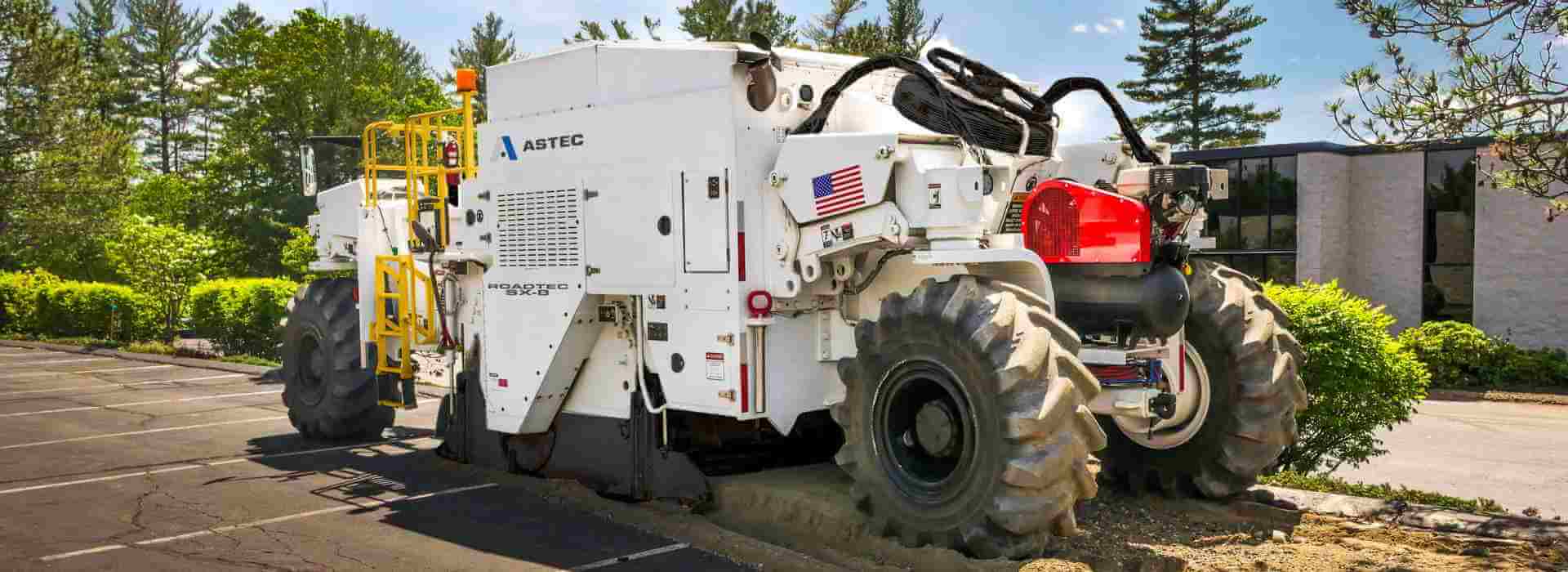
Soil Stabilizer / Reclaimer
A soil stabilizer/reclaimer is a self-propelled earthmoving machine equipped with a rotating drum fitted with cutting tools that pulverizes existing pavement or soil while simultaneously mixing in stabilizing additives such as cement, lime, or asphalt emulsion. These machines are used primarily in road construction and reconstruction to improve the load-bearing capacity of subgrade materials or to recycle existing pavement in place. The equipment class encompasses both shallow soil mixing machines and full-depth reclamation (FDR) units capable of processing deteriorated asphalt roads.
Fonctionnement
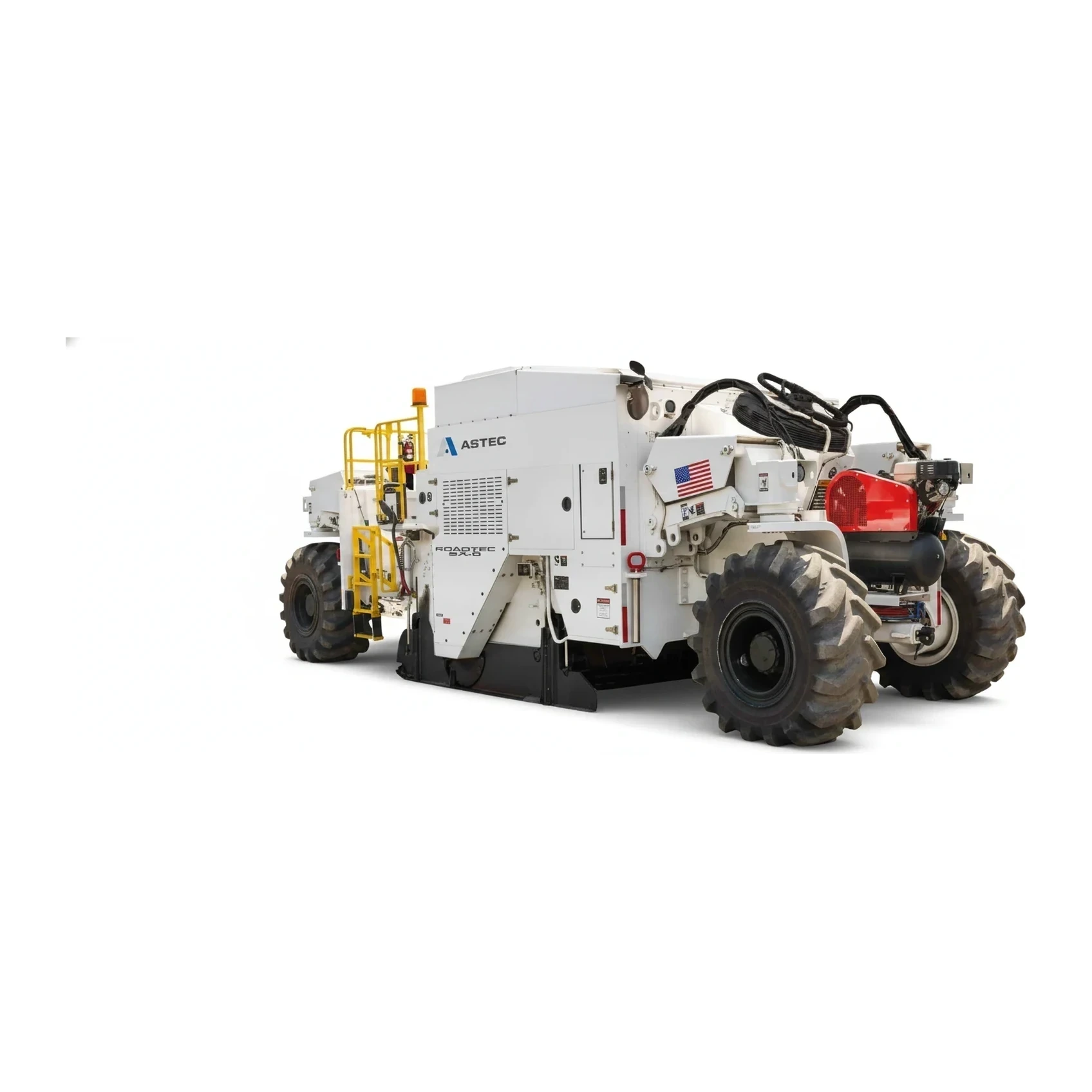
The machine's rotating drum, positioned between the front and rear axles, contains carbide-tipped cutting teeth arranged in a spiral pattern. As the unit advances, the drum rotates to pulverize the existing material to a specified depth while rear-mounted mixing paddles blend the pulverized material with stabilizing agents delivered through an integrated spray system or mixed from pre-spread material. The stabilized mixture is then graded by rear moldboards or followed by a separate grading operation. The operator controls depth of cut, forward speed, drum rotation speed, and additive application rate from the cab. Most units feature articulated steering for maneuverability and automated grade control systems that maintain consistent processing depth. The pulverized and stabilized material is left in place, ready for compaction and finishing operations.
Types et variantes
- Soil Stabilizer
- Lighter machines designed to mix lime, cement, or fly ash into native soil or base materials for parking lots, building pads, and subdivision roads
- Full-Depth Reclaimer
- Heavy-duty units with greater horsepower and robust cutting drums capable of pulverizing deteriorated asphalt and underlying base material in a single pass for complete road reconstruction
- Cold-In-Place Recycler
- Specialized reclaimers that add asphalt emulsion or foamed asphalt during the pulverization process to create a recycled asphalt base course without heating
- Cement/Lime Stabilizer
- Units equipped with dry material delivery systems and precision metering to mix powdered cement or lime uniformly into soil for maximum strength gain
Spécifications clés
| Spécification | Plage typique | Signification |
|---|---|---|
| Engine Power | varies by model | Determines the machine's ability to pulverize hard materials and maintain productivity in varying soil conditions |
| Mixing Depth | varies by model | Maximum depth to which the machine can effectively pulverize and mix material in a single pass |
| Working Width | varies by model | The width of the cutting/mixing drum, which determines coverage area and typically matches one traffic lane |
| Operating Weight | varies by model | Affects traction, stability, and transport requirements; heavier machines handle harder materials and greater depths |
| Rotor Speed | varies by model | Variable rotation speed of the cutting drum affects particle size reduction and mixing uniformity |
Comment l'industrie le dimensionne
The industry sizes soil stabilizers and reclaimers primarily by engine horsepower. Units under 400 hp mix lime or cement into subgrade material approximately 12 inches deep for parking lots, subdivision roads, and building pad preparation. Machines above 400 hp are full-depth reclamation units designed to grind and rebuild existing asphalt roads, processing deteriorated pavement and base material in a single pass. Working width and maximum mixing depth are secondary considerations that help match equipment to specific project requirements and lane configurations.
Applications
- Full-depth reclamation of deteriorated asphalt roadways, grinding and mixing existing pavement with base material and stabilizing agents
- Soil-cement or lime stabilization of native subgrade materials to create improved base courses for new road construction
- Parking lot and commercial paving base preparation, mixing stabilizers into soil to increase bearing capacity
- Airport runway and taxiway rehabilitation, recycling existing pavement in place to minimize material costs and environmental impact
- Subdivision and residential street construction, treating clay or expansive soils with lime to improve stability
- Cold-in-place recycling of asphalt surfaces, pulverizing and mixing with emulsion to create recycled base layers
Sécurité et opération
- Operators must maintain awareness of underground utilities, as the cutting drum can damage buried pipes, cables, and conduits
- Dust suppression systems and proper ventilation are essential when working with cement, lime, or pulverized materials to prevent respiratory exposure
- The rotating drum presents serious entanglement and crushing hazards; all personnel must remain clear of the cutting chamber during operation
- Proper personal protective equipment including respirators, eye protection, and hearing protection is required due to dust, noise, and chemical additives
- Transport of oversized machines requires escort vehicles, permits, and adherence to width and weight restrictions on public roads
Normes et certifications
- OSHA · 29 CFR 1926.602
- Establishes safety requirements for operation of earth-moving equipment including operator protections and machine guarding
- EPA · Tier 4
- Emissions standards governing diesel engines in non-road equipment, affecting engine technology in modern soil stabilizers
- ASTM · D6951
- Standard test method for evaluating in-place mechanical pulverization and chemical modification of soils, relevant to stabilizer performance
Questions fréquentes
What is the difference between a soil stabilizer and a full-depth reclaimer?
How does a soil stabilizer differ from a cold planer or milling machine?
What types of stabilizing agents are commonly used with these machines?
What factors determine the appropriate mixing depth for a stabilization project?
Équipements connexes
Parcourir par fabricant
Sources
Chaque spécification est vérifiée par rapport aux données publiées par le fabricant, avec la source liée pour référence.
Tous les modèles
2 modèles · Chaque spécification citée à la source