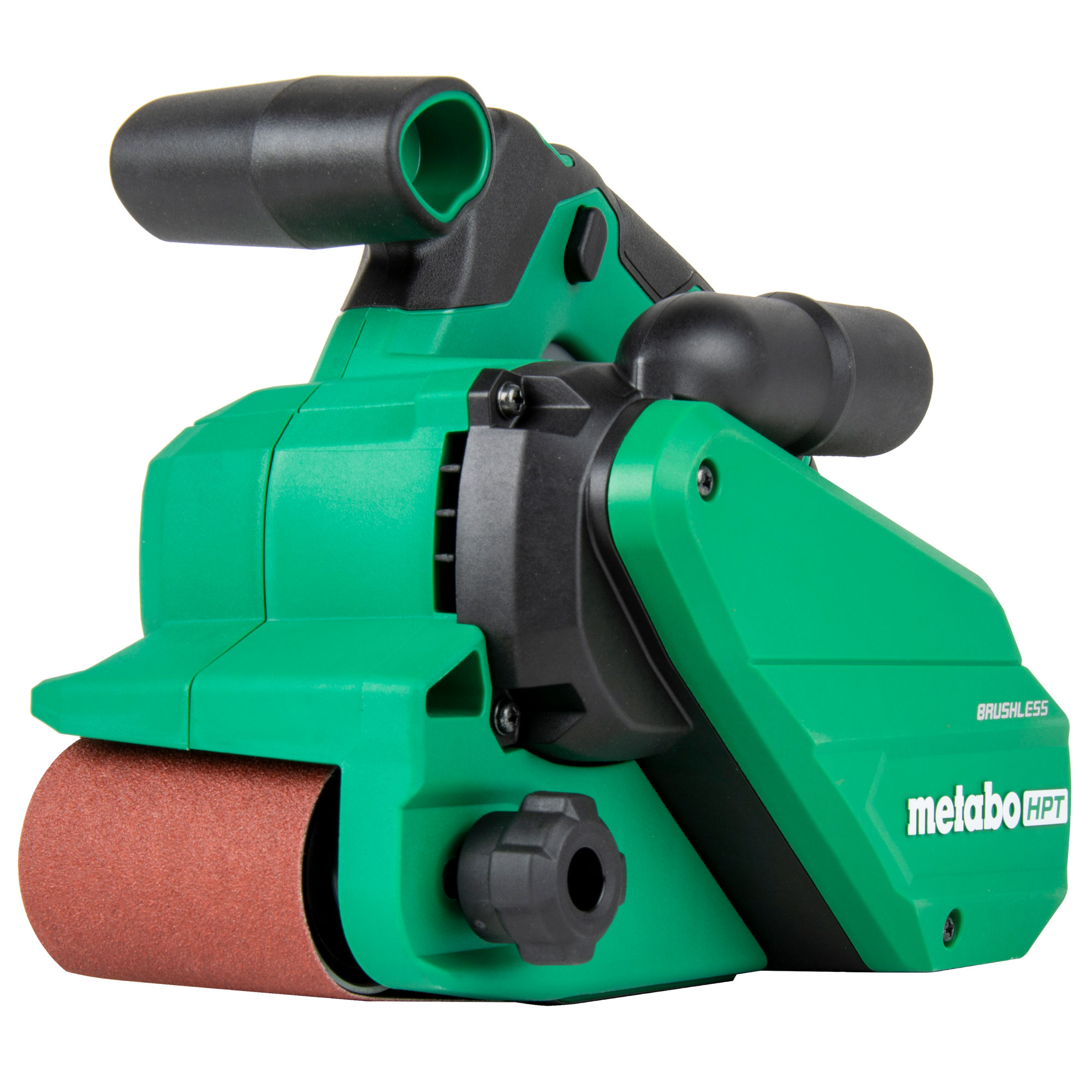
Belt Sander
A belt sander is a portable power tool that uses a continuous loop of abrasive belt rotating between two drums to remove material from surfaces. Primarily used in woodworking and metalworking applications, belt sanders excel at rapid stock removal, surface leveling, and smoothing flat workpieces. The tool's aggressive cutting action makes it the standard choice for resurfacing wood floors, flattening lumber, and removing paint or finish.
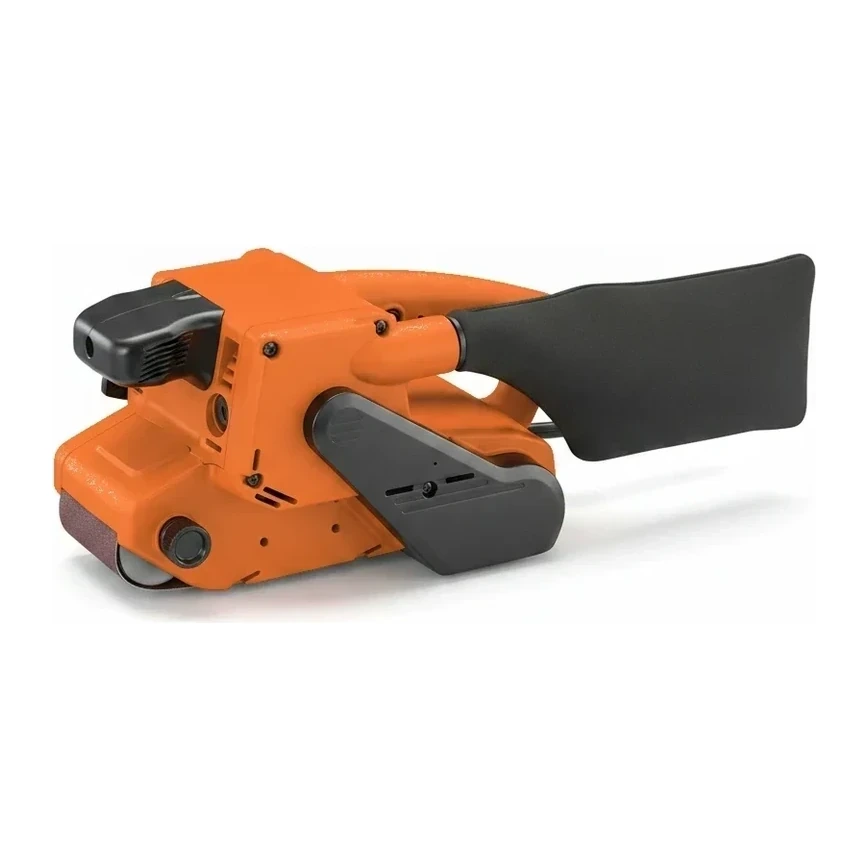
Fonctionnement
The belt sander operates by driving a continuous abrasive belt around two cylindrical drums: a front roller and a rear drive roller powered by an electric motor. The motor spins the rear drum at speeds typically ranging from 2,500 to 10,000 surface feet per minute (SFPM), pulling the abrasive belt across the workpiece in a linear motion. An adjustable platen or flat backing plate between the drums supports the belt during operation, creating a firm, consistent sanding surface. The operator guides the tool across the material while applying downward pressure, allowing the moving abrasive to shave away material. Most models feature adjustable belt tracking mechanisms to keep the belt centered on the drums and prevent wandering. Dust collection ports connect to vacuums or dust bags to manage debris, while adjustable front handles and trigger switches enable controlled operation across horizontal and vertical surfaces.
Types et variantes
- 3×21 Belt Sander
- Compact handheld configuration using 3-inch wide by 21-inch circumference belts; standard for general woodworking, cabinetry, and detail work requiring maneuverability
- 4×24 Belt Sander
- Full-size handheld model with 4-inch wide by 24-inch belts; provides wider sanding path and more aggressive material removal for framing, floor edging, and large surface prep
- Variable Speed Belt Sander
- Features electronic speed control allowing adjustment of belt speed to match material type and finish requirements; prevents burning on softer woods and enables precision on hardwoods
- Stationary Belt Sander
- Bench-mounted or floor-standing configuration with larger belts and worktables; designed for shop use where workpieces are brought to the tool
- Frame-Type Belt Sander
- Industrial floor sanding machine with operator-guided frame and large drum-driven belts; specialized for surface preparation and refinishing of wood flooring
Spécifications clés
| Spécification | Plage typique | Signification |
|---|---|---|
| Belt Width and Length | 3×21 in or 4×24 in | Defines sanding surface area; wider belts cover more material per pass and determine compatibility with available abrasive grits |
| No-Load Speed | 2,500-10,000 SFPM | Belt surface speed in feet per minute; higher speeds increase material removal rate but may cause burning on soft materials |
| Net Weight | 1.4-2.1 kg (3.1-4.6 lb) | Tool mass affects operator fatigue during extended use and influences downward pressure applied to the workpiece |
| Overall Length | 275-380 mm (10.8-15 in) | Front-to-rear dimension impacts maneuverability in tight spaces and balance during operation |
| Motor Power | 6-12 amp / 720-1,440 W | Electrical draw correlates with sustained torque under load; higher amperage maintains belt speed during aggressive material removal |
Comment l'industrie le dimensionne
The belt sander class is characterized by a single operational focus, fast stock removal on flat surfaces, and is not subdivided into formal size bands. Belt dimensions (width × length) inherently track the tool size, with 3×21-inch models representing compact handheld units and 4×24-inch models serving as full-size portable sanders. Operators select models based on the specific belt size suited to the application, with wider belts offering greater coverage and narrower belts providing enhanced control in confined areas. Because the belt width directly determines sanding capacity and tool footprint, no separate sizing decision is required beyond choosing the appropriate belt configuration.
Applications
- Smoothing and leveling rough-sawn lumber and reclaimed wood in carpentry and millwork
- Removing old paint, varnish, or finishes from wood surfaces prior to refinishing
- Flattening glued-up panels, tabletops, and edge-joined boards in furniture fabrication
- Surface preparation of metal components, including deburring and rust removal in fabrication shops
- Edging and detail work on hardwood floors adjacent to walls and in corners during refinishing operations
- Shaping and smoothing curved or contoured wooden parts when used with contact drums or specialized attachments
Sécurité et opération
- Operators should secure workpieces with clamps or vises to prevent movement during sanding and reduce risk of tool kickback or loss of control
- Eye protection and respiratory equipment are essential due to high-volume dust generation and potential for airborne particulates
- Belt tracking must be inspected and adjusted before operation to prevent belt slippage, which can cause abrasive failure or tool damage
- The tool should be switched on before contacting the workpiece and lifted clear before switching off to avoid gouging or uneven surface damage
- Prolonged use generates vibration exposure; operators should follow manufacturer guidelines and industry best practices to minimize hand-arm vibration syndrome (HAVS) risk
Normes et certifications
- ANSI · B7.1
- Safety requirements for portable and stationary woodworking machinery, including belt sanders used in commercial and industrial settings
- OSHA · 29 CFR 1910.243(a)(3)
- General requirements for portable powered tools, including guarding, grounding, and safe operation practices applicable to belt sanders
- UL · UL 45
- Standard for safety of portable electric tools, covering electrical construction, motor protection, and insulation requirements for handheld belt sanders
Questions fréquentes
What is the difference between a belt sander and an orbital sander?
How is belt grit selection determined for different materials?
What causes belt tracking issues and how are they corrected?
Can belt sanders be used on vertical or overhead surfaces?
Équipements connexes
Parcourir par fabricant
Sources
Chaque spécification est vérifiée par rapport aux données publiées par le fabricant, avec la source liée pour référence.
Tous les modèles
34 modèles · Chaque spécification citée à la source