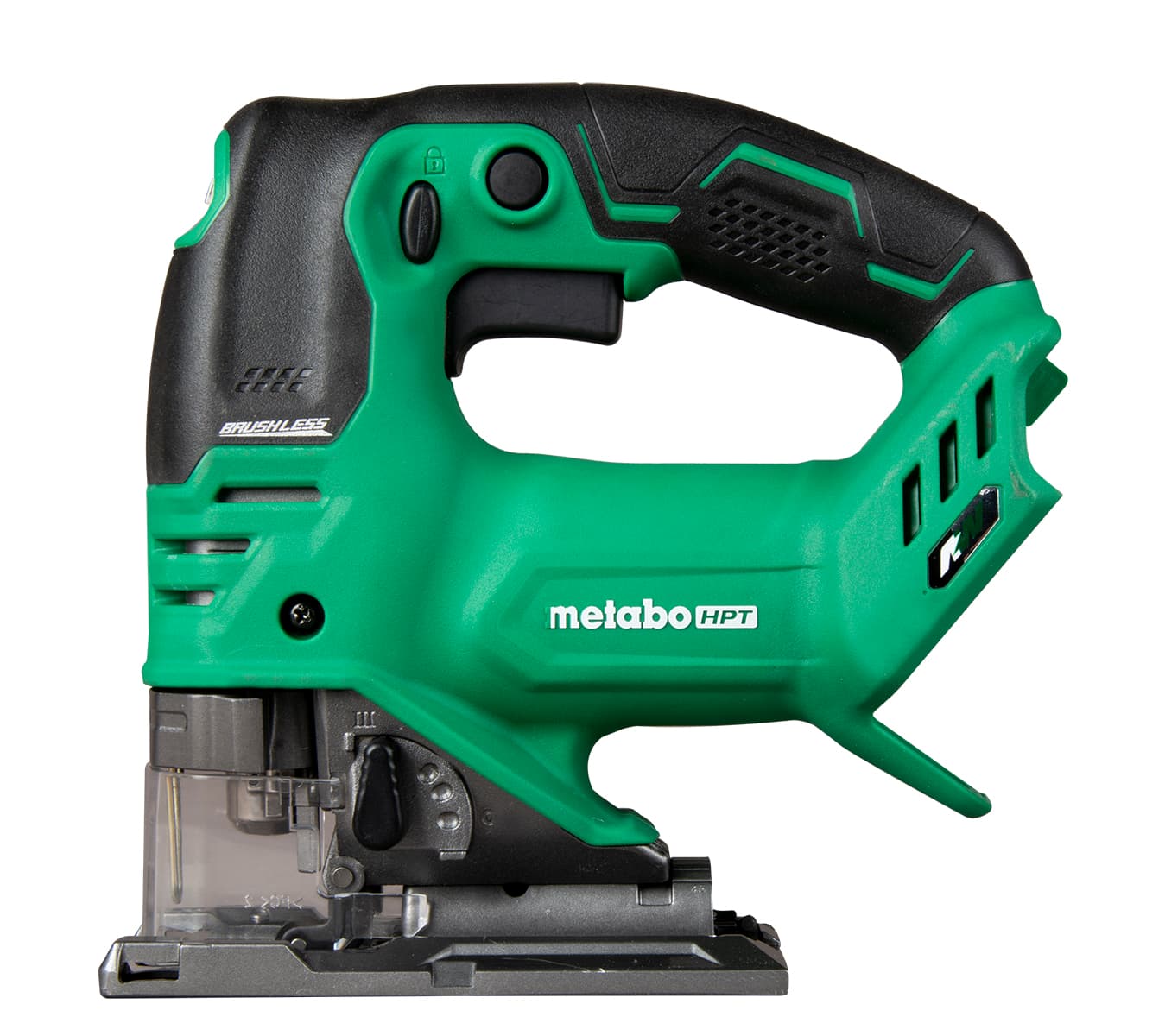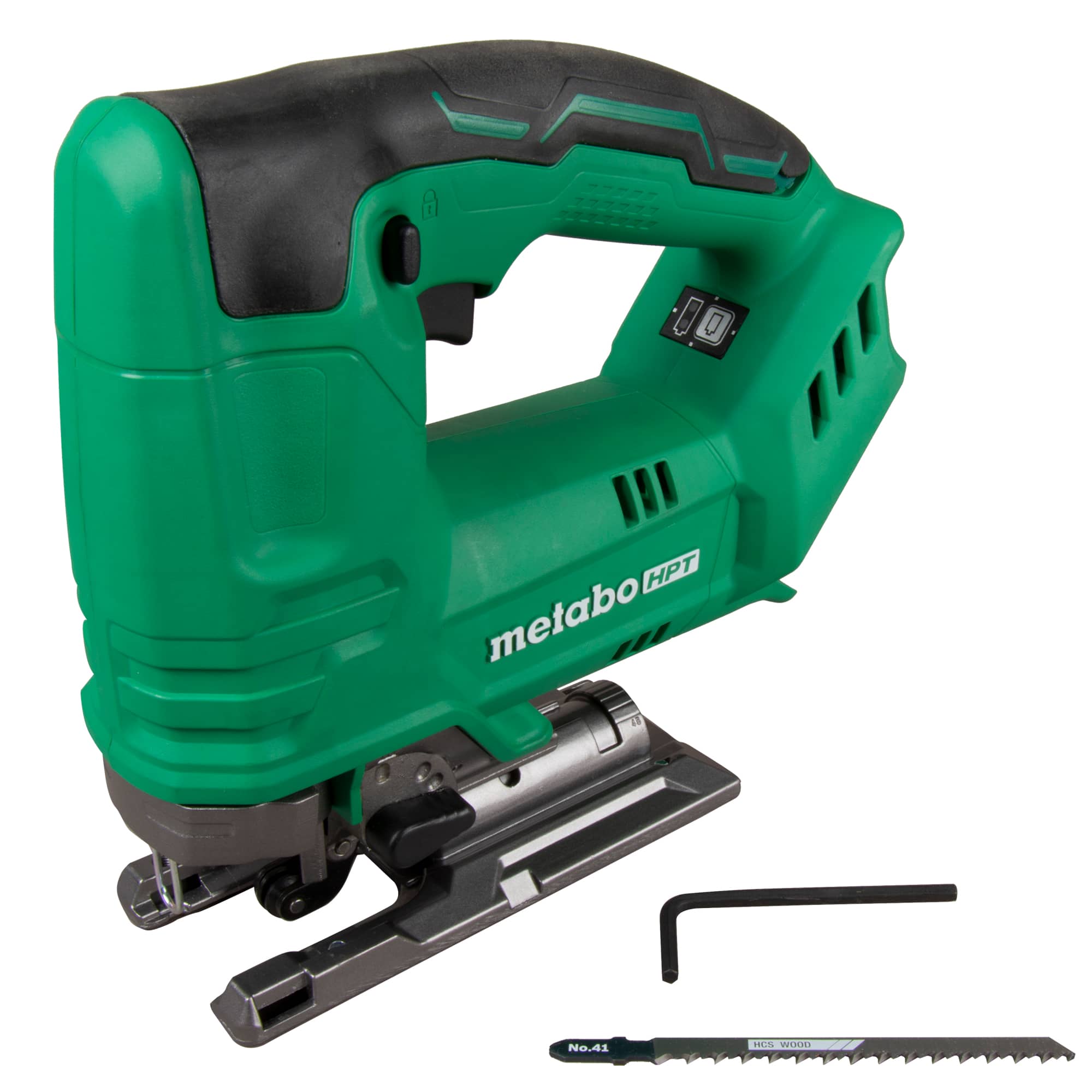

Jig Saw
A jig saw is a hand-held saw that drives a narrow blade in an up-and-down stroke, letting it steer through curves and start cuts inside a panel. It is the tool of choice for cutouts, scribes, and shaped work.
Fonctionnement
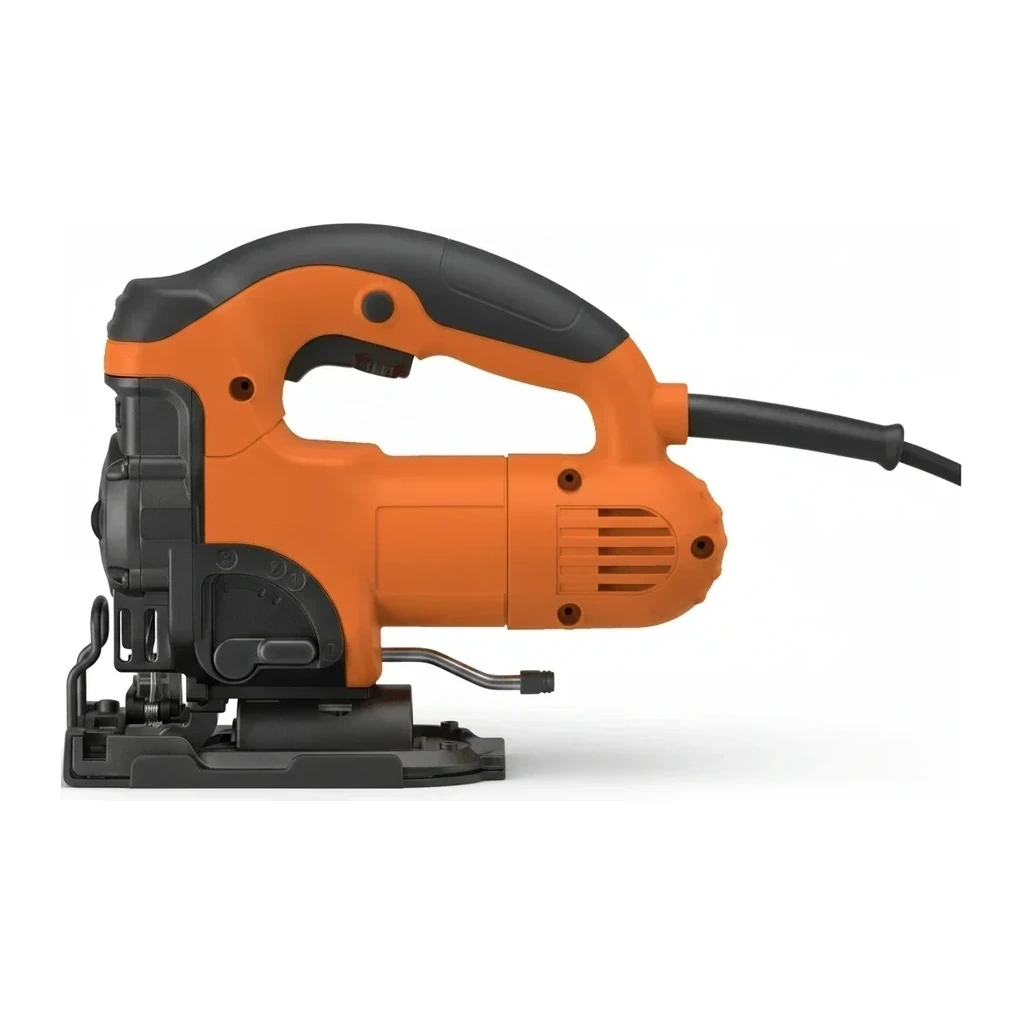
A motor converts rotation to a reciprocating stroke of roughly 0.75-1.0 in, and most models add an orbital action that rocks the blade forward on the upstroke for faster wood cutting. The narrow blade cuts on the upstroke, pulling the work against the shoe. Blade changes swap the saw between wood, metal, and plastic duty in seconds.
Types et variantes
- Top-handle jig saws
- The common D-handle layout for general site work.
- Barrel-grip jig saws
- Low grip close to the work, favored for precise curve tracking.
- Cordless jig saws
- Battery models for cutouts away from power.
Spécifications clés
| Spécification | Plage typique | Signification |
|---|---|---|
| Stroke length | 0.8–1 in (19.0–25.4 mm) | Longer strokes clear chips faster and cut thicker stock more efficiently. |
| Orbital settings | Varies by model | More orbit means faster, rougher wood cuts; zero orbit for metal and clean lines. |
| Blade shank | T-shank common | T-shank blades dominate and allow tool-free changes. |
Comment l'industrie le dimensionne
Models differ by grip style, stroke, and power source rather than a size band. Speed figures recorded for this class conflict across sources and are not reliable; blade choice matters more than motor spec for most work.
Applications
- Sink, outlet, and vent cutouts in countertops and panels
- Curved cuts in plywood, trim, and stair parts
- Scribing cabinets and finish work to walls
- Light metal and plastic cutting with fine-tooth blades
Sécurité et opération
- The blade protrudes beneath the work; the cut line must be clear of supports, cords, and hands below.
- Let the blade stop before lifting the saw, or the exposed stroke can snag and chatter across the surface.
- Clamp thin sheet to limit vibration, which causes blade breakage and loss of control.
Normes et certifications
- OSHA · 29 CFR 1926.304
- Woodworking tool requirements apply to portable powered saws.
- UL · UL 62841
- Safety standard for hand-held motor-operated electric tools.
Questions fréquentes
Why does the cut wander from vertical?
Can a jig saw cut metal?
How is a plunge cut started?
Équipements connexes
Parcourir par fabricant
Sources
Chaque spécification est vérifiée par rapport aux données publiées par le fabricant, avec la source liée pour référence.
Tous les modèles
27 modèles · Chaque spécification citée à la source