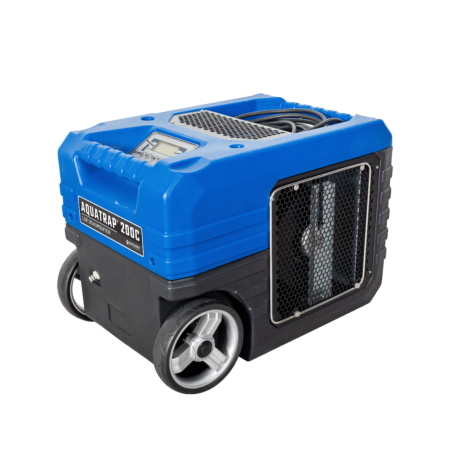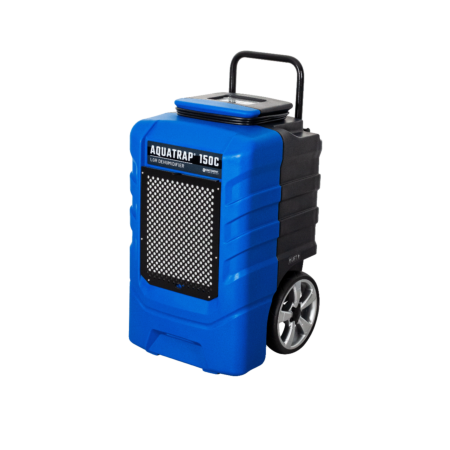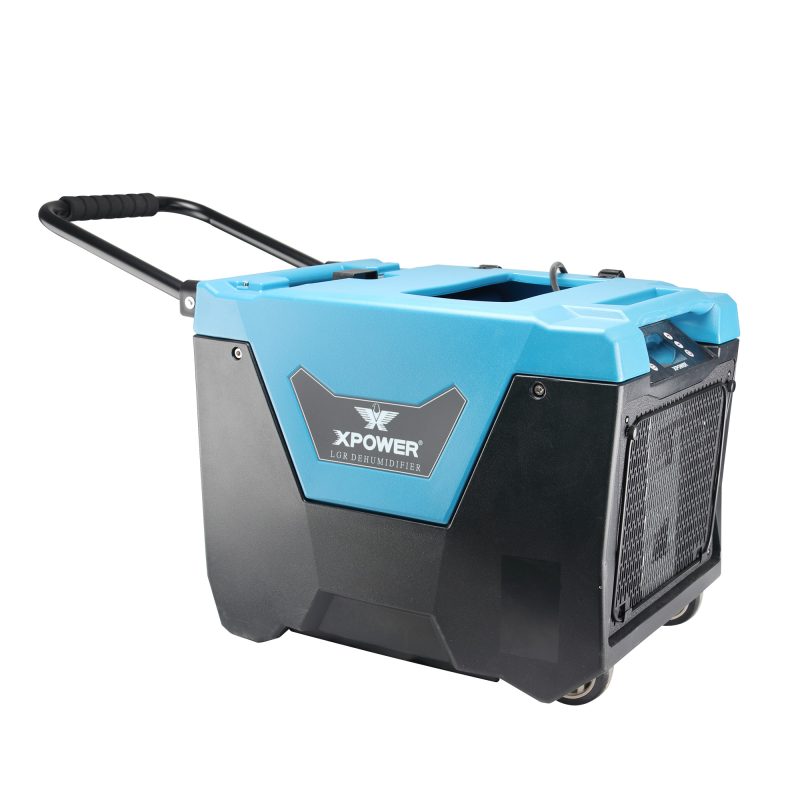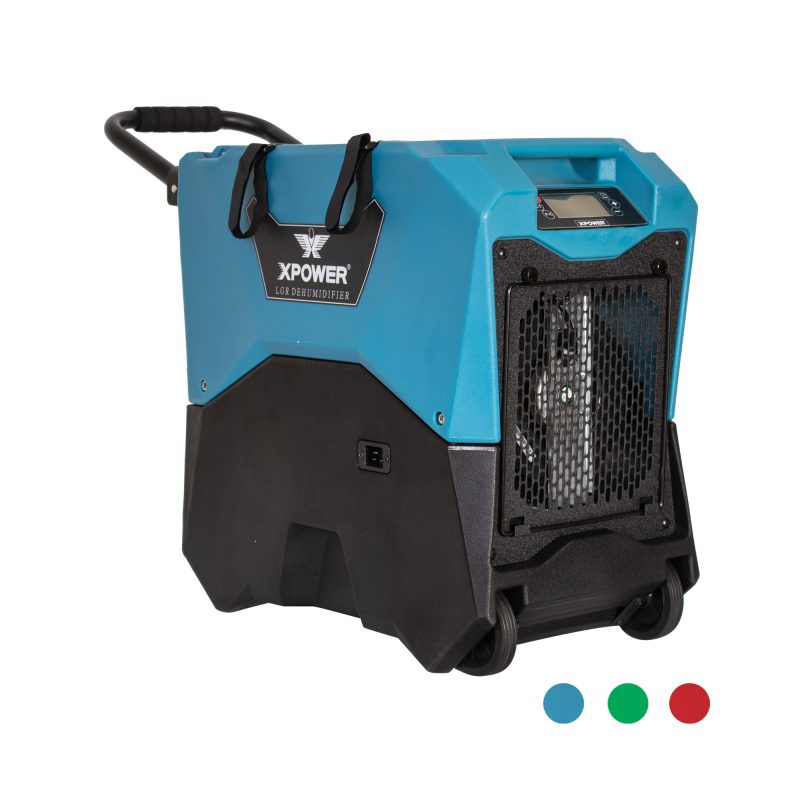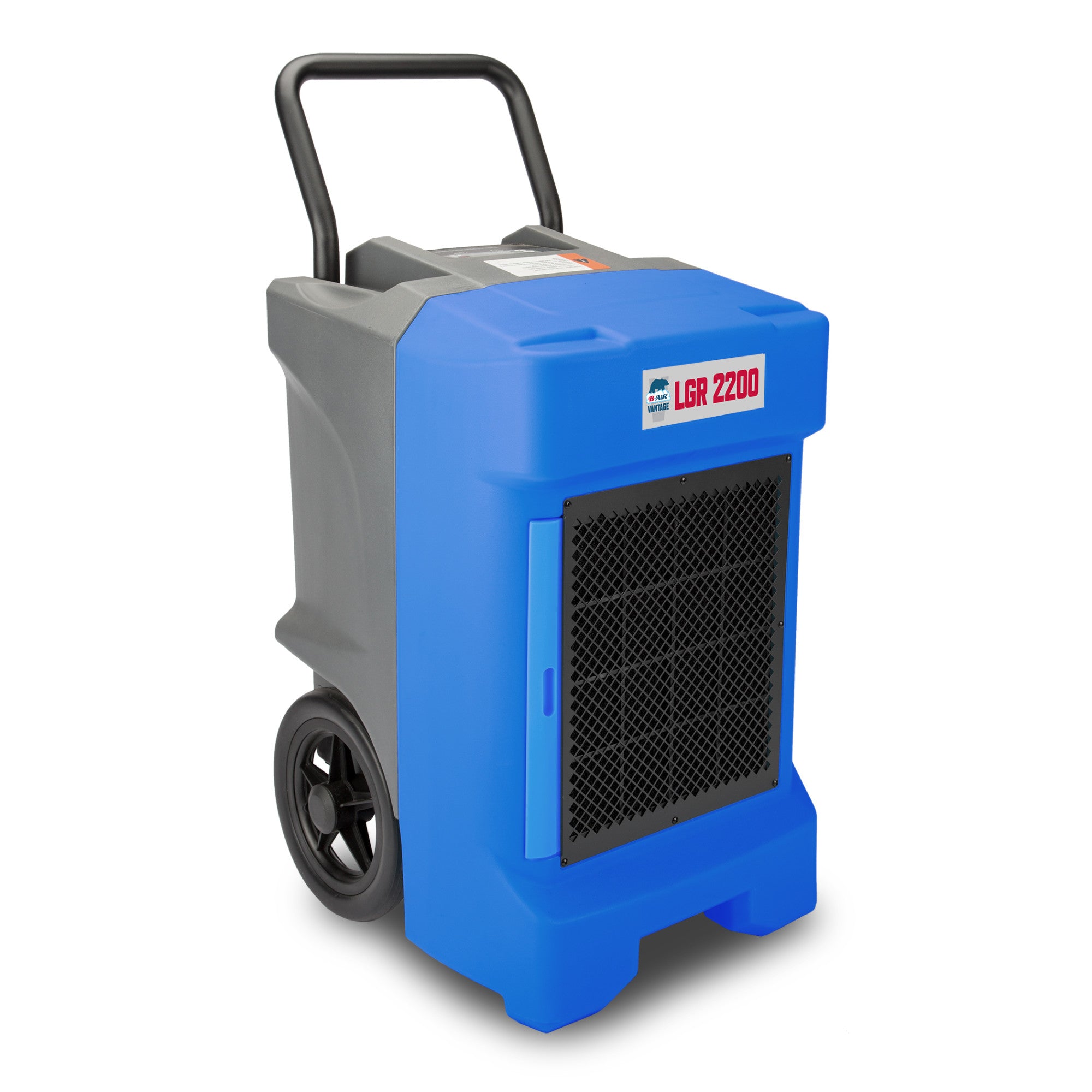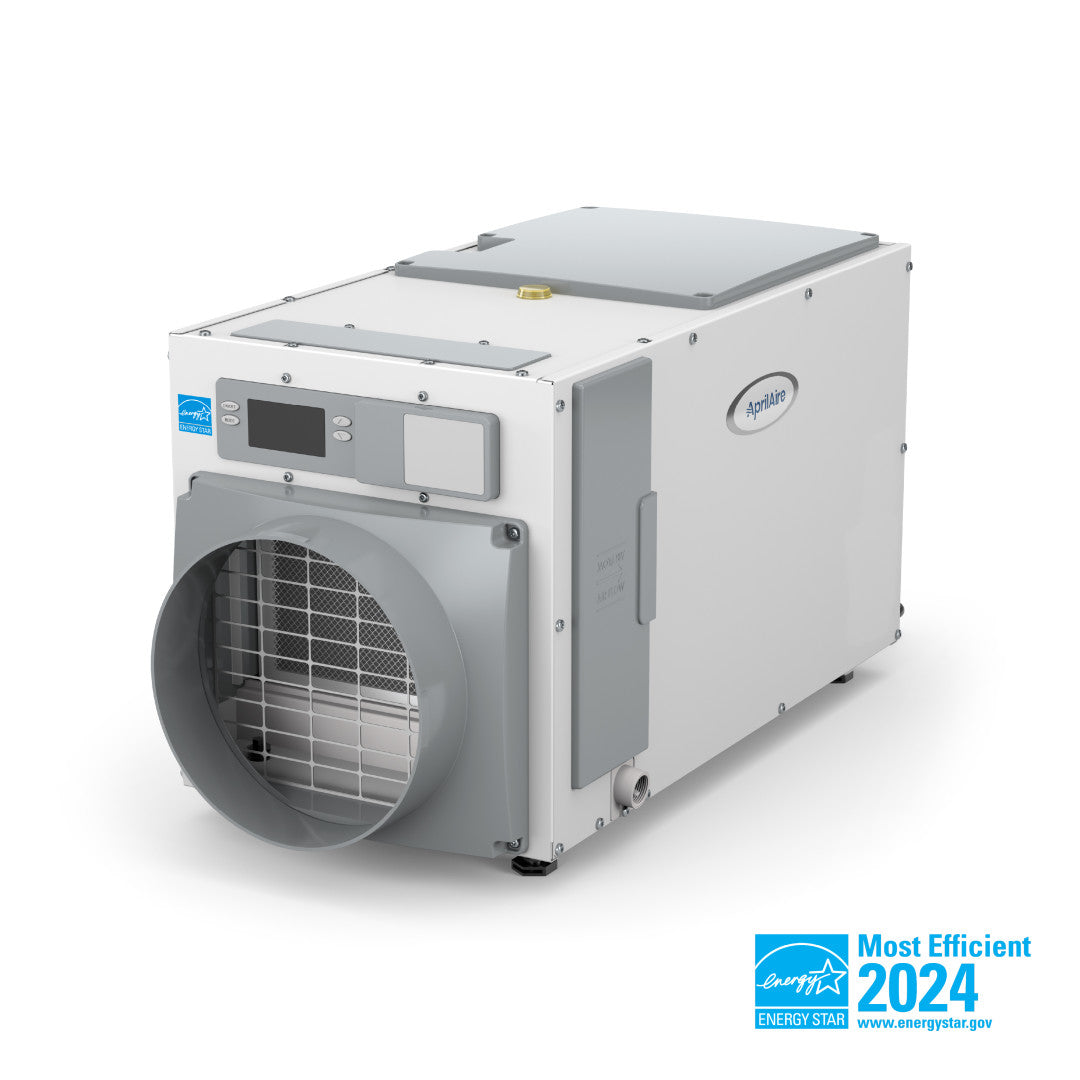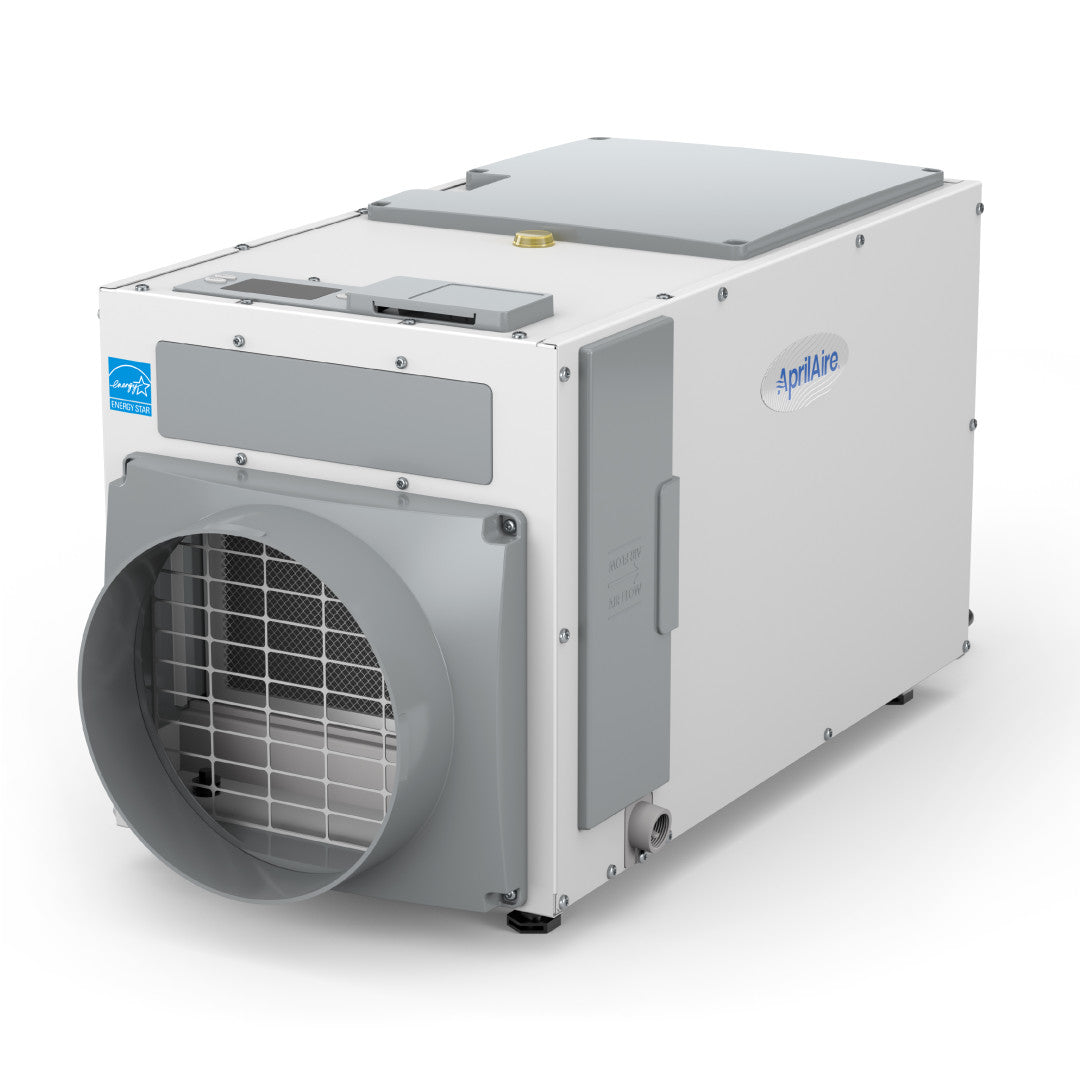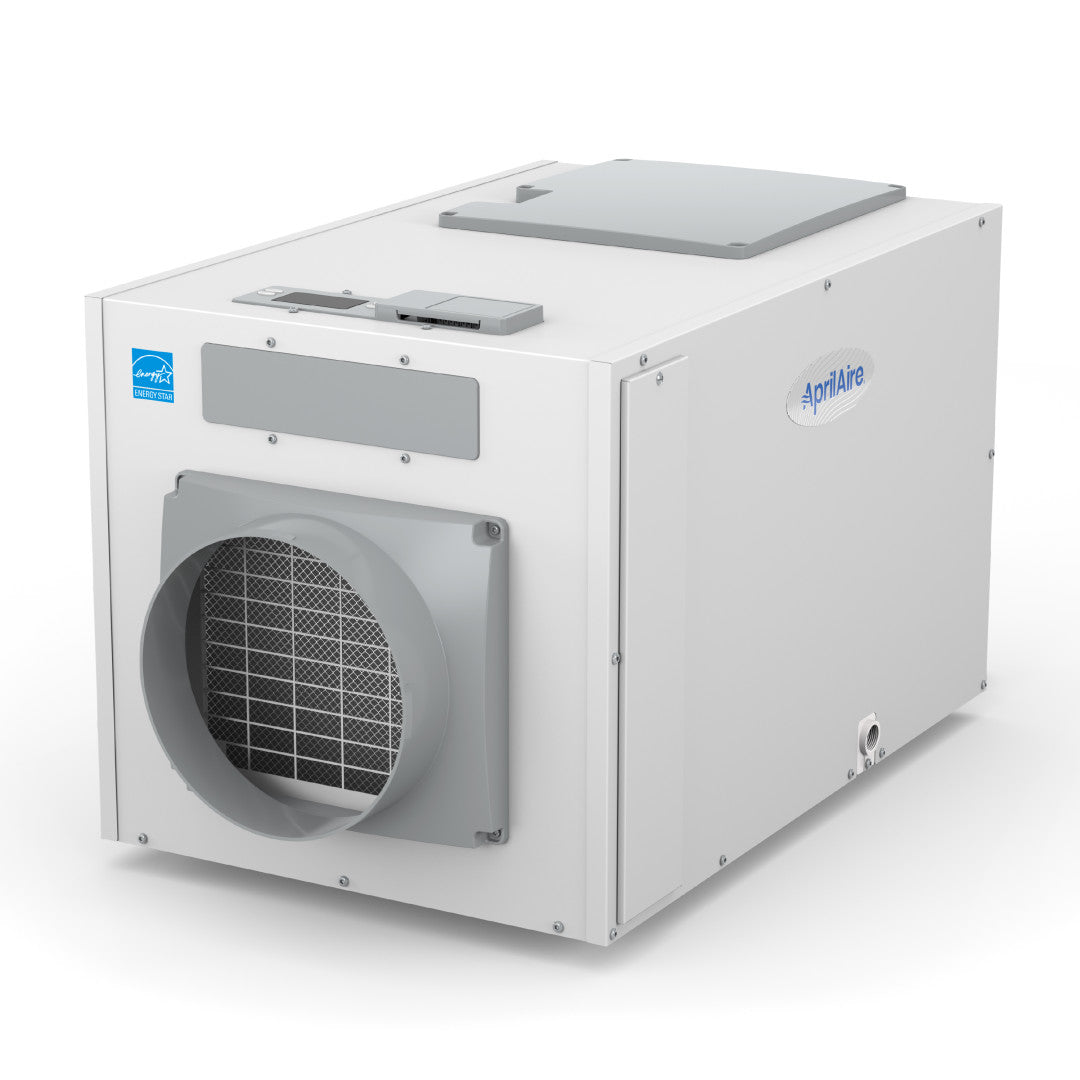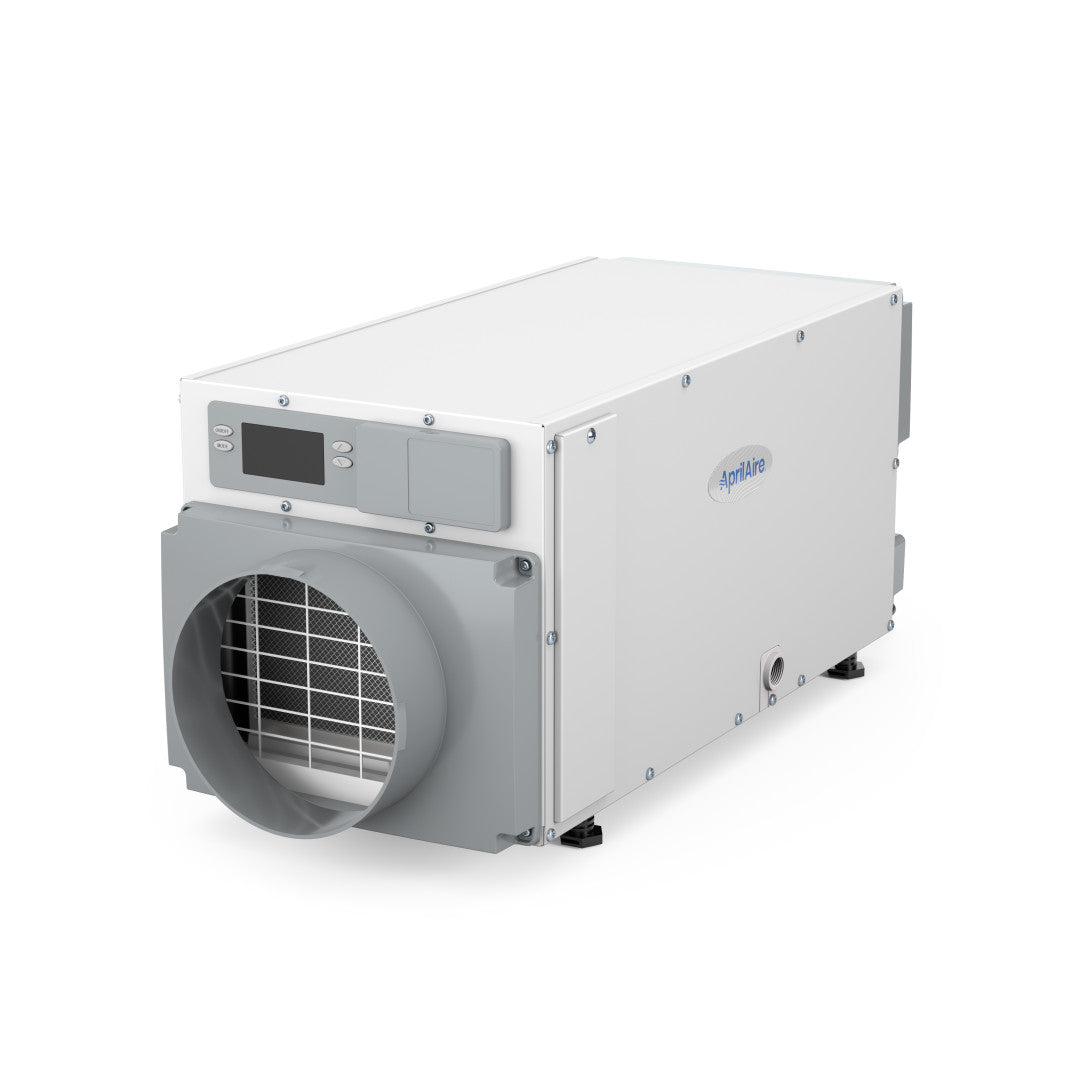

Refrigerant Dehumidifier (LGR)
A low grain refrigerant (LGR) dehumidifier condenses moisture from air on refrigerated coils, with a pre-cooling stage that keeps extraction efficient even in the drier late stages of a job: the standard drying machine of water damage restoration. The catalog lists 41 models from brands including Phoenix, Aprilaire, Trotec, AlorAir, XPOWER and Friedrich.
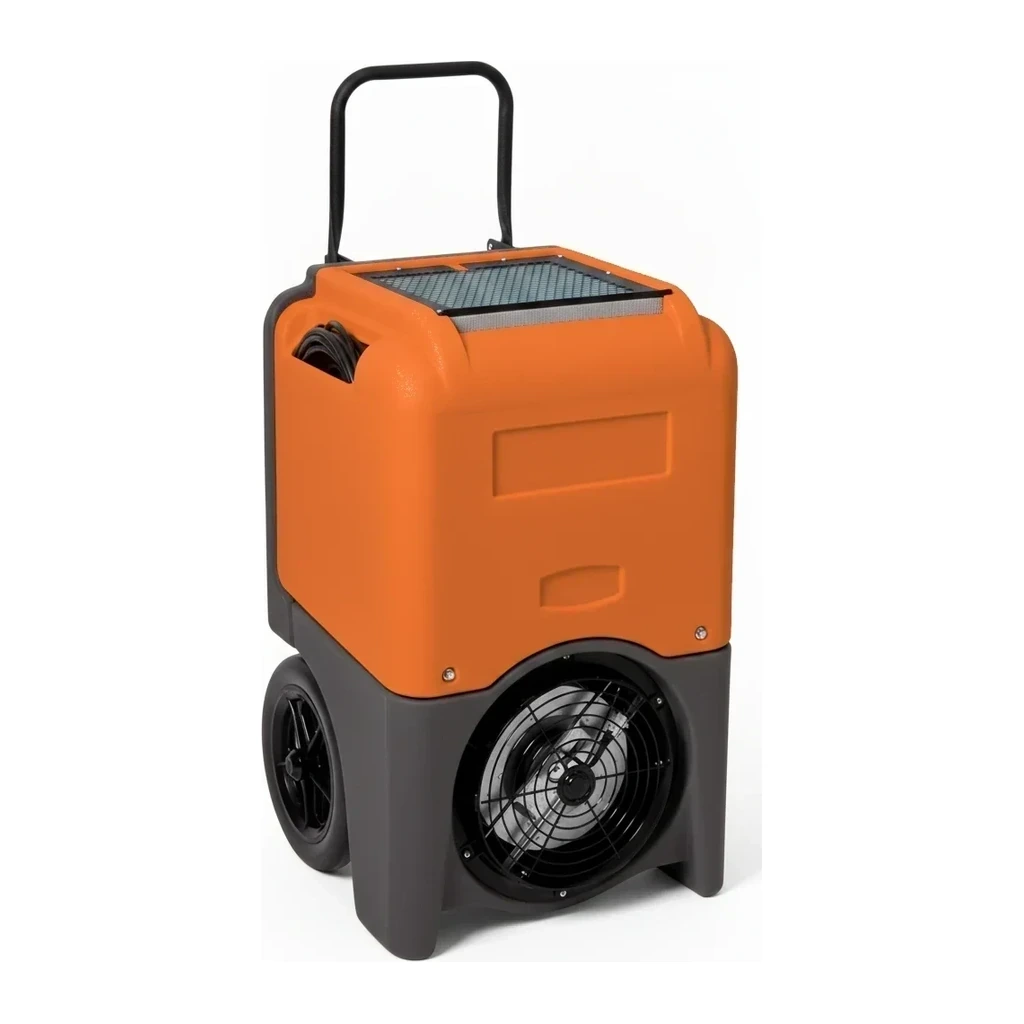
Fonctionnement
Process air is pre-cooled, typically by an air-to-air heat exchanger against the cold coil, before hitting the evaporator, pushing it further below dewpoint so more water condenses per pass than a conventional refrigerant unit manages. Collected water pumps out through a condensate line, and warm, dry air discharges back into the space. In a closed drying chamber with air movers, the LGR continuously harvests the moisture evaporated off wet materials until goals are met.
Types et variantes
- Compact LGR units
- Small-footprint dryers for residential losses and tight spaces.
- Mid-size restoration LGRs
- The mainstream class balancing extraction and portability.
- Large-capacity LGRs
- High-extraction units for big losses and commercial floors.
- Ducted and crawlspace configurations
- Units set up to serve enclosed cavities and chambers.
Spécifications clés
| Spécification | Plage typique | Signification |
|---|---|---|
| Process airflow | 120 to 415 cfm across the catalog size classes; documented 170 to 476 cfm on listed models | Airflow through the coil drives how much air is dried per hour. |
| Water removal (AHAM) | Documented per model listing | Pints per day at standard conditions: the comparable extraction figure. |
| Operating range | Documented per model listing | LGR efficiency holds into drier air, but cold spaces still favor desiccants. |
| Condensate pump lift | Documented per model listing | Determines how far and high the unit can push collected water unattended. |
Comment l'industrie le dimensionne
LGR dehumidifiers are sized by process airflow and rated extraction against the chamber volume and moisture load; the catalog groups them into 120-235 and 235-415 cfm classes. Restoration practice calculates unit count from chamber volume and the applicable drying standard, then verifies with daily readings.
Applications
- Structural drying after floods and pipe losses
- Closed-chamber drying with air movers in residences and offices
- Crawlspace and basement moisture control
- Post-construction drying before flooring and finishes
- Humidity support during mold remediation
Sécurité et opération
- Electrical safety in wet structures comes first: circuits are verified isolated before equipment deploys.
- Condensate lines are routed to drains and checked; a failed pump quietly re-wets the space.
- Refrigerant circuits are serviced only by EPA Section 608 certified technicians.
- Units in occupied homes are placed and corded to avoid trip hazards.
Normes et certifications
- ANSI/IICRC · S500
- Water damage restoration standard governing dehumidifier sizing and drying verification.
- AHAM · DH-1
- Dehumidifier rating standard behind comparable pints-per-day figures.
- EPA · Section 608 (40 CFR Part 82)
- Refrigerant service certification.
Questions fréquentes
What does low grain mean?
How many units does a loss need?
LGR or desiccant on a given job?
Équipements connexes
Parcourir par fabricant
Sources
Chaque spécification est vérifiée par rapport aux données publiées par le fabricant, avec la source liée pour référence.
Tous les modèles
45 modèles · Chaque spécification citée à la source