
Evaporative Cooler
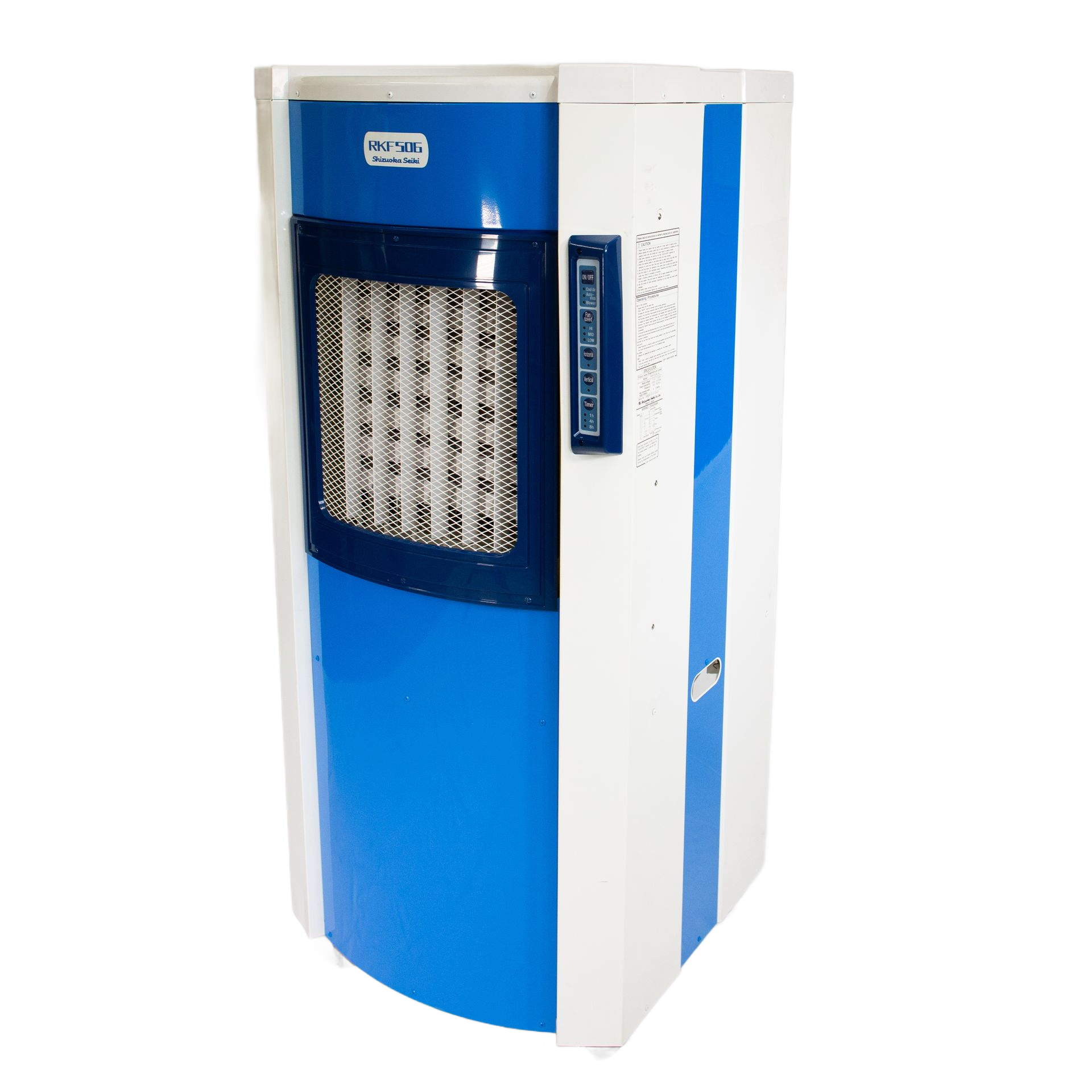
An evaporative cooler is a portable cooling device that lowers air temperature through the evaporation of water, effective primarily in low-humidity environments. Also known as swamp coolers, these units provide cost-effective spot cooling for work sites, warehouses, and outdoor venues in dry climates. Unlike refrigerated air conditioning, evaporative coolers add moisture to the air while consuming significantly less energy.
Fonctionnement
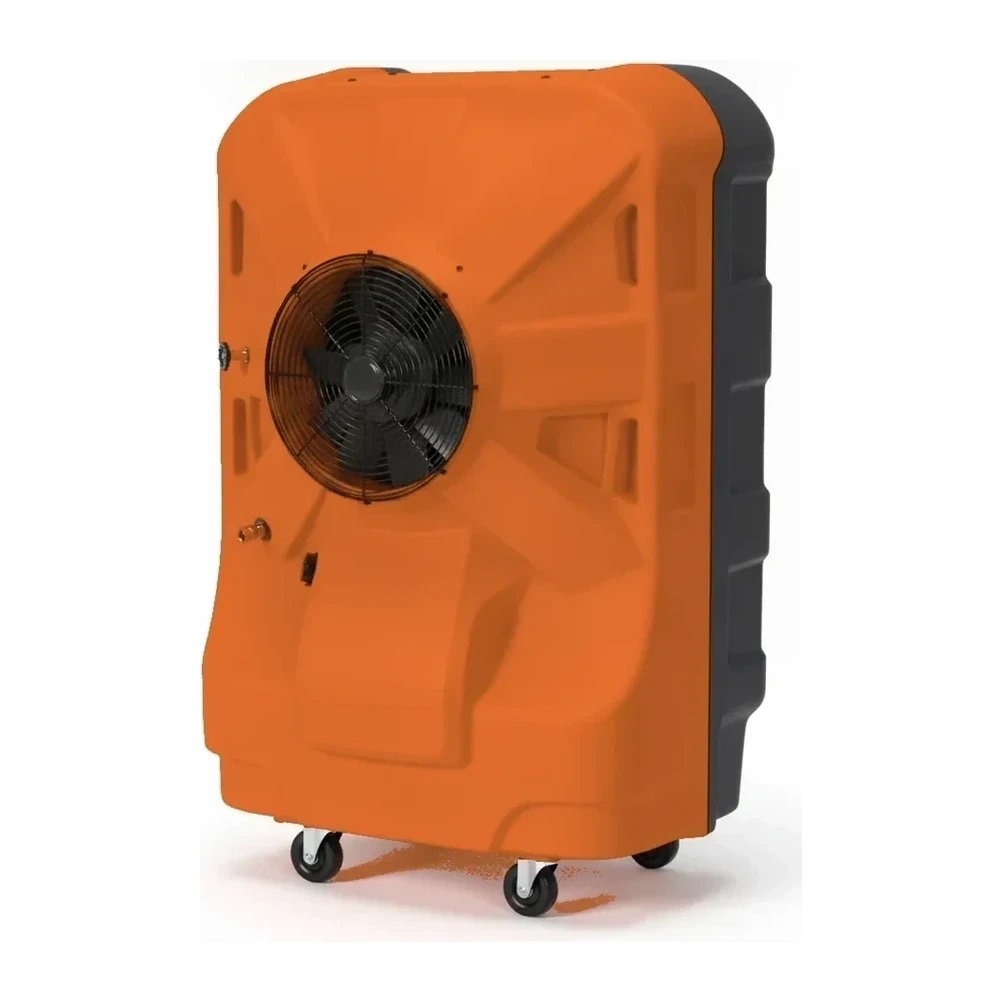
Evaporative coolers draw warm, dry air through water-saturated pads or media using an electric fan. As the air passes through the wet pads, water evaporates and absorbs heat from the air, resulting in a temperature drop that can range from 10 to 30 degrees Fahrenheit depending on ambient humidity. The cooled, humidified air is then blown into the space, while the unit continuously circulates water from a reservoir over the evaporative media. Portable units require a water source, either a direct connection or manual refill of an onboard tank, and work best in open or semi-open environments where humid exhaust air can escape. Effectiveness diminishes significantly when relative humidity exceeds 50-60%, making these units ideal for arid and semi-arid regions but unsuitable for humid climates.
Types et variantes
- Direct Evaporative Cooler
- The most common type, drawing air directly through wetted pads and discharging cooled, humidified air into the space.
- Portable Misting Fan
- Combines fan airflow with a fine water mist spray, offering flexible positioning without ducting requirements.
- Industrial Swamp Cooler
- High-capacity units designed for large open spaces, often featuring heavy-duty construction and larger water reservoirs.
- Spot Cooler with Evaporative Media
- Compact units designed to cool individual work stations or small zones with focused airflow.
- Two-Stage Evaporative Cooler
- Uses both indirect and direct evaporative cooling stages to achieve greater temperature drops with less humidity addition.
Spécifications clés
| Spécification | Plage typique | Signification |
|---|---|---|
| Airflow | 1,180-3,020 cfm | Volume of air moved through the unit per minute; primary sizing metric for coverage area and cooling capacity. |
| Water Tank Capacity | 10-50 gallons | Reservoir size determines runtime between refills when not connected to a continuous water supply. |
| Water Consumption | 2-10 gallons/hour | Rate of water evaporation and use, varying with airflow, temperature, and humidity conditions. |
| Power Requirements | 115V, 2-8 amps | Electrical draw is significantly lower than refrigerated cooling systems of comparable coverage. |
| Effective Coverage | 300-1,500 sq ft | Area that can be effectively cooled, dependent on ceiling height, ambient conditions, and ventilation. |
Comment l'industrie le dimensionne
The industry sizes evaporative coolers primarily by airflow capacity measured in cubic feet per minute (cfm). Units up to 5,000 cfm drop the temperature at one work station or a small shop in dry heat only. Models from 5,000 to 12,000 cfm cool a bay, a tent, or a patio and require a water supply and open air to exhaust into. Units above 12,000 cfm serve large open shops, warehouses, and outdoor venues in dry climates. Effectiveness depends heavily on climate; evaporative coolers work best in regions with relative humidity below 50%. Sizing also considers air changes per hour, with industrial applications typically requiring 20-40 air changes per hour for effective cooling in open environments.
Applications
- Spot cooling for welding stations, assembly areas, and equipment operator positions in hot, dry environments
- Climate control in warehouses, manufacturing facilities, and distribution centers without enclosed HVAC systems
- Temporary cooling for construction sites, outdoor events, and open-air work areas in arid regions
- Agricultural applications including greenhouse cooling, livestock facilities, and processing areas
- Supplemental cooling in open-door loading docks, auto repair bays, and semi-enclosed workspaces
- Emergency or temporary cooling during HVAC system failures or in facilities without air conditioning
Sécurité et opération
- Units must be positioned to prevent water spillage on walking surfaces, electrical equipment, or materials sensitive to moisture
- Electrical connections require GFCI protection when operating near water sources or in wet conditions
- Regular maintenance of water pads and reservoirs prevents mold, mildew, and bacterial growth that can affect air quality
- Adequate ventilation must be maintained to allow humid air to exhaust; operation in enclosed spaces reduces effectiveness and increases humidity to uncomfortable levels
- Water supply lines and connections should be inspected for leaks to prevent slip hazards and water damage
Normes et certifications
- ASHRAE · Standard 133
- Method of testing direct evaporative air coolers for rating and certification purposes.
- UL · UL 507
- Safety standard for electric fans, which applies to the fan components of evaporative coolers.
Questions fréquentes
What climate conditions are required for effective evaporative cooling?
How does airflow (cfm) relate to the area that can be cooled?
What distinguishes an evaporative cooler from a standard fan?
What maintenance is required for evaporative cooler operation?
Équipements connexes
Parcourir par fabricant
Sources
Chaque spécification est vérifiée par rapport aux données publiées par le fabricant, avec la source liée pour référence.
Tous les modèles
38 modèles · Chaque spécification citée à la source