

Lawn Roller
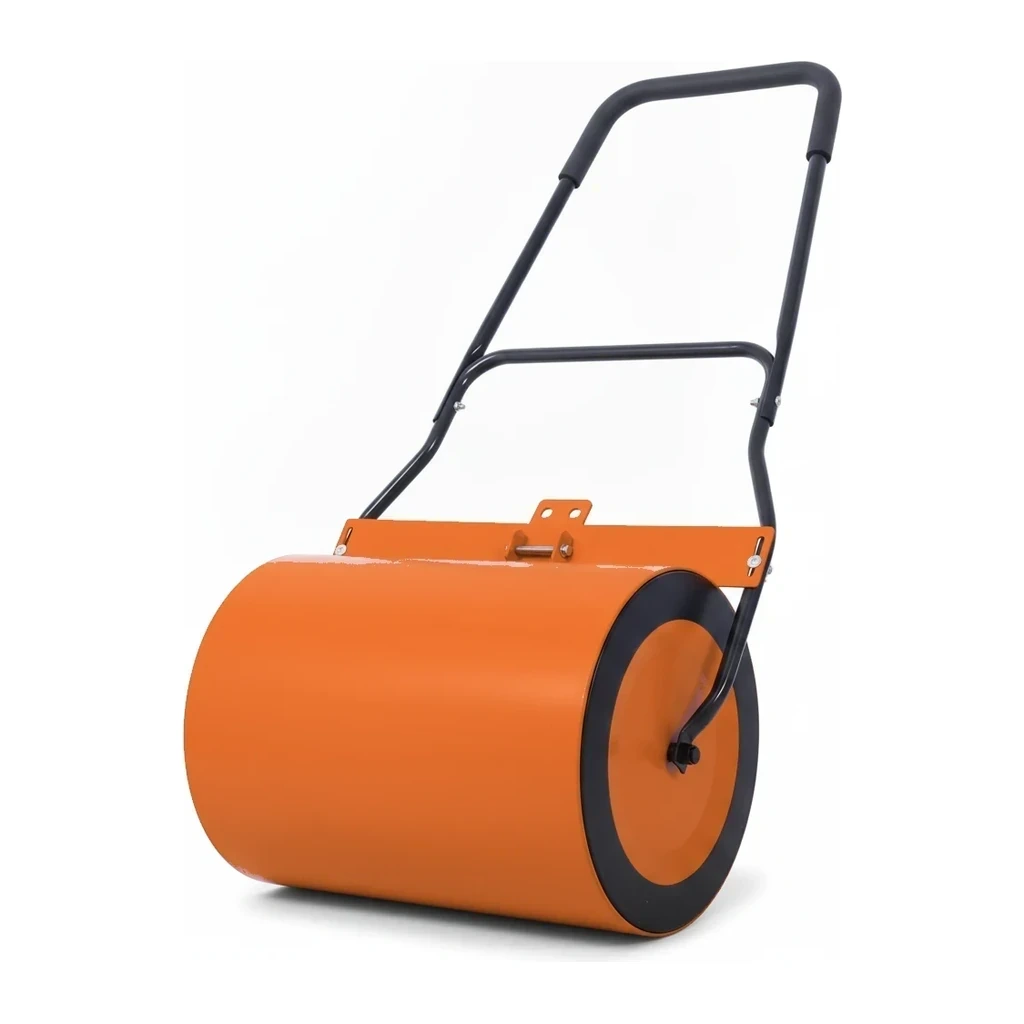
A lawn roller is a cylindrical drum equipment used to compact soil and press seed or sod into firm contact with the ground surface. The equipment consists of a hollow or weighted steel drum that can be filled with water or sand for ballast, mounted on an axle with a tow bar or push handle. Lawn rollers are essential in turf establishment, seedbed preparation, and smoothing uneven lawn surfaces.
Fonctionnement
The roller operates by applying downward pressure across the turf surface as the drum is pushed or towed. Most models feature hollow steel drums that can be filled with water (typically to 200-400 pounds total weight) or sand for heavier applications, allowing operators to adjust weight based on soil conditions and job requirements. The drum rotates freely on its axle as it moves, distributing weight evenly to compact soil particles and eliminate air pockets beneath seed or sod. Push models are manually guided across the lawn, while tow-behind units attach to lawn tractors, ATVs, or zero-turn mowers via a universal hitch pin. Some models include scrapers or brushes to prevent soil buildup on the drum surface during operation. Weight adjustment is critical: overfilling can cause excessive compaction that inhibits root growth and drainage.
Types et variantes
- Push Roller
- Manual walk-behind units typically 18-24 inches wide, designed for small residential lawns and garden beds where access is limited or towing equipment is unavailable.
- Tow-Behind Roller
- The most common type, ranging from 24 to 60 inches wide, pulled behind lawn tractors or utility vehicles for efficient coverage of larger turf areas.
- Greens Roller
- Precision rollers designed for golf course putting greens and high-quality sports turf, featuring smooth drums and adjustable weight for controlled compaction without damage.
- Water Ballast Roller
- Hollow-drum models designed to be filled and drained via a threaded plug, offering variable weight adjustment and easy empty-weight transport and storage.
- Sod Roller
- Heavy-duty models with reinforced drums and higher weight capacities, purpose-built for pressing newly laid sod into contact with the soil bed on installation projects.
Spécifications clés
| Spécification | Plage typique | Signification |
|---|---|---|
| Drum Width | 18–60 in (45.7–152 cm) | Primary sizing dimension; determines coverage area per pass and suitability for push operation or towing. |
| Drum Diameter | 12–24 in (30.5–61.0 cm) | Affects rolling resistance and contact pressure; larger diameters roll more easily over uneven terrain. |
| Weight (Empty/Filled) | 50-150 lb empty, 200-600 lb filled | Adjustable weight via water or sand ballast controls compaction intensity for different soil types and applications. |
| Fill Capacity | 10-40 gallons | Volume of water or sand the drum can hold; determines maximum operating weight and ballast options. |
| Hitch Type | Universal pin hitch or T-handle | Connection method for tow-behind models; universal pin hitches fit most lawn tractors and ATVs. |
Comment l'industrie le dimensionne
The rental industry sizes lawn rollers by drum width measured in inches, which directly correlates to coverage efficiency and application scale. Units under 30 inches are typically push models suited for residential lawn patches and seed pressing. The 30-42 inch range represents standard tow-behind rollers for general lawn maintenance and new-seed firming behind tractors or zero-turn mowers. Models 42 inches and wider are deployed on sports fields, commercial sod installations, and large seeding operations where coverage area justifies the investment in wider equipment and heavier towing vehicles.
Applications
- Pressing grass seed into firm soil contact after overseeding or new lawn establishment
- Smoothing and leveling minor surface irregularities in existing turf areas
- Compacting soil around newly laid sod to eliminate air pockets and promote root-to-soil contact
- Firming seedbeds before planting to improve seed-to-soil contact and germination rates
- Rolling sports fields and golf course fairways to create uniform playing surfaces
- Repairing frost heave damage and settling uneven ground after winter thaw cycles
Sécurité et opération
- Verify hitch pin engagement and safety clip installation on tow-behind models before operation to prevent separation during use
- Avoid overfilling drums beyond manufacturer specifications, as excessive weight can damage turf, compact soil excessively, or stress towing equipment
- Operate on slopes with caution; push rollers can become difficult to control on inclines, and tow-behind units may cause tractor instability on steep grades
- Ensure proper footing when pushing manual rollers, especially on wet grass or uneven terrain where traction is reduced
- Drain water-filled rollers completely before storage in freezing conditions to prevent drum rupture from ice expansion
Normes et certifications
- ASABE · S390.6
- Defines terminology and classification for turf care equipment including rollers and compaction devices used in landscape maintenance.
- ANSI/OPEI · B71 series
- Safety standards for outdoor power equipment; applies to powered towing vehicles used with lawn rollers and attachment safety.
- ASTM International · F1936
- Standard specification for equipment and procedures used in maintaining natural turf sports fields, including rolling practices.
- OSHA · General Duty Clause
- Employers must provide safe equipment and operating procedures for workers using lawn rollers in commercial landscaping operations.
Questions fréquentes
What is the difference between water and sand ballast for lawn rollers?
How is lawn roller width selected for a given application?
When should rolling be avoided to prevent turf damage?
Can lawn rollers be used on newly seeded areas?
Équipements connexes
Parcourir par fabricant
Tous les modèles
39 modèles · Chaque spécification citée à la source