
Sewer Jetter
A sewer jetter is a high-pressure water cleaning system designed to clear blockages, roots, grease, and scale from drain and sewer lines. The equipment propels specialized nozzles through pipes using pressurized water streams that cut through obstructions and flush debris. Sewer jetters range from portable electric units for residential drains to trailer-mounted systems for municipal infrastructure.
Fonctionnement
The jetter pumps water at high pressure (typically 1,500 to 4,000 PSI) through a flexible hose fitted with a specialized nozzle. Rear-facing jets on the nozzle propel it forward through the pipe while simultaneously blasting debris backward toward the entry point. Forward-facing and angled jets cut through blockages, roots, and buildup on pipe walls. Operators feed the hose into the drain or sewer line, allowing water pressure to advance the nozzle while monitoring progress. Different nozzle configurations address specific conditions: penetrating nozzles for roots and ice, flushing nozzles for grease, and rotating nozzles for scale. The dislodged material is flushed back through the pipe to an access point for removal.
Types et variantes
- Electric Jetter
- Compact, plug-in units for indoor use on residential and light commercial drain lines, typically under 6 GPM with lower pressure ratings for smaller diameter pipes.
- Gas-Powered Cart Jetter
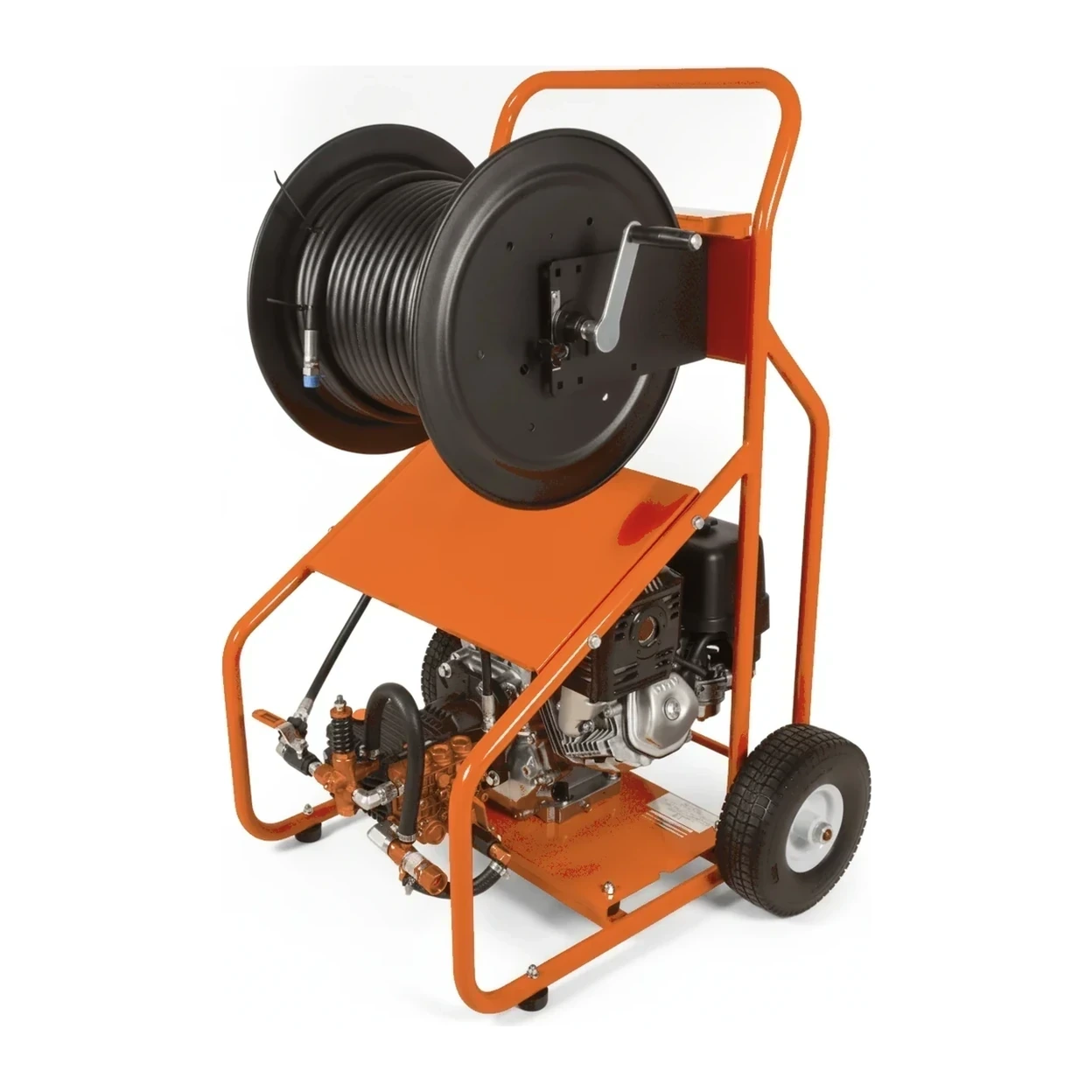
- Mobile wheeled units with gasoline engines, offering mid-range flow and pressure for building mains, laterals, and outdoor applications without electrical access.
- Skid-Mounted Jetter
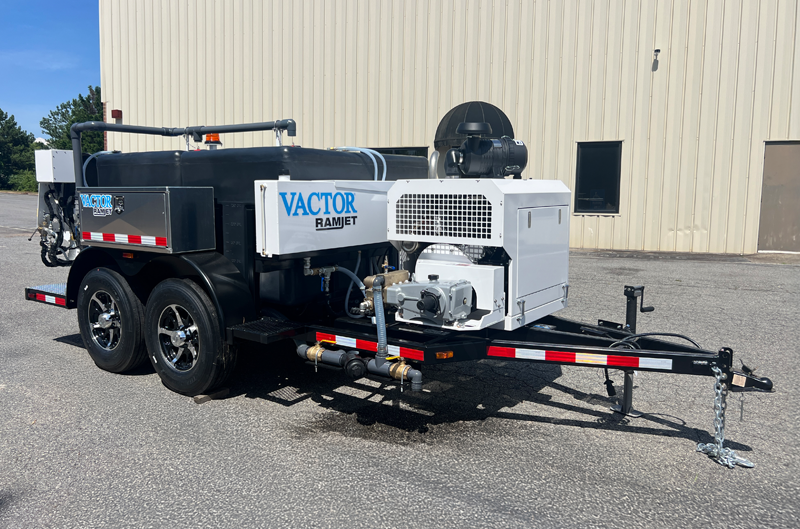
- Truck or trailer-bed mounted systems with integral water tanks, delivering higher flow rates for commercial and municipal service work on larger diameter lines.
- Trailer Jetter
- Self-contained towable units with large water capacity and high-output pumps for municipal sewer maintenance, storm drains, and long-run applications.
- Hot Water Jetter
- Heated water systems that improve grease cutting and cleaning efficiency in food service and industrial applications where fats and oils accumulate.
Spécifications clés
| Spécification | Plage typique | Signification |
|---|---|---|
| Flow Rate (GPM) | 3-18 GPM typical range | Water volume delivered per minute; primary sizing specification that determines pipe diameter capacity and cleaning effectiveness. |
| Pressure (PSI) | 1,500-4,000 PSI operating range | Water pressure at the pump; higher pressure cuts harder materials but must match hose and nozzle ratings. |
| Hose Length | 100-500 ft standard | Maximum reach into drain or sewer systems; longer hoses require higher flow to maintain effective pressure at the nozzle. |
| Hose Diameter | 1/4 in to 1/2 in | Internal diameter of pressure hose; must balance flexibility for navigation with flow capacity and pressure retention. |
| Water Tank Capacity | 50-500 gallons | Onboard water storage on self-contained units; larger tanks extend operating time between refills on remote jobs. |
| Engine Power | 5-35 HP | Drive motor or engine output for the high-pressure pump; determines maximum achievable flow and pressure combination. |
Comment l'industrie le dimensionne
The industry sizes sewer jetters primarily by flow rate (GPM), which correlates directly to the diameter and type of pipe the equipment can effectively clean. Units under 6 GPM handle residential and light commercial lines from 1.5 to 4 inches, addressing grease and soft blockages. Mid-range jetters from 6 to 12 GPM serve 4- to 8-inch building mains and laterals, capable of cutting roots and hard scale. Trailer-mounted systems above 12 GPM tackle 8-inch and larger municipal sewer and storm lines. Pressure (PSI) and hose specifications complement flow rating but do not drive primary classification.
Applications
- Clearing grease, soap, and organic buildup from restaurant and commercial kitchen drain lines
- Removing tree roots from residential sewer laterals and building service connections
- Cleaning municipal sanitary sewer mains and storm drain systems
- Descaling pipe interiors prior to CCTV inspection or rehabilitation work
- Opening frozen or ice-blocked drain and sewer lines in cold climates
- Maintaining industrial process lines, cooling systems, and wastewater infrastructure
Sécurité et opération
- High-pressure water streams can cause serious injection injuries; operators maintain safe distance from hose, nozzle, and discharge points during operation
- Proper personal protective equipment includes eye protection, waterproof gloves, and protective clothing to guard against contaminated wastewater spray
- Hose condition must be inspected before each use for cuts, abrasion, or coupling damage that could cause failure under pressure
- Operators verify electrical grounding on electric units and maintain ventilation for gas-powered equipment used in confined spaces
- Nozzle selection and pressure settings must match pipe material and condition to prevent damage to older or compromised infrastructure
Normes et certifications
- OSHA · 29 CFR 1910.146
- Confined space entry requirements apply when accessing manholes, vaults, and underground sewer structures for jetting operations.
- OSHA · 29 CFR 1910.1030
- Bloodborne pathogens standard addresses exposure risks from wastewater contact during sewer and drain cleaning work.
- ANSI · ANSI/ISEA Z87.1
- Eye and face protection standards for operators working with high-pressure water and potential splash hazards.
- EPA
- Wastewater discharge regulations govern disposal of flushed debris and contaminated water recovered during jetting operations.
Questions fréquentes
What is the difference between a sewer jetter and a drain snake?
How does GPM rating determine which pipe sizes a jetter can handle?
Can sewer jetters damage pipes?
What nozzle types are used for different blockage conditions?
Équipements connexes
Parcourir par fabricant
Sources
Chaque spécification est vérifiée par rapport aux données publiées par le fabricant, avec la source liée pour référence.
Tous les modèles
17 modèles · Chaque spécification citée à la source