
Submersible Pump
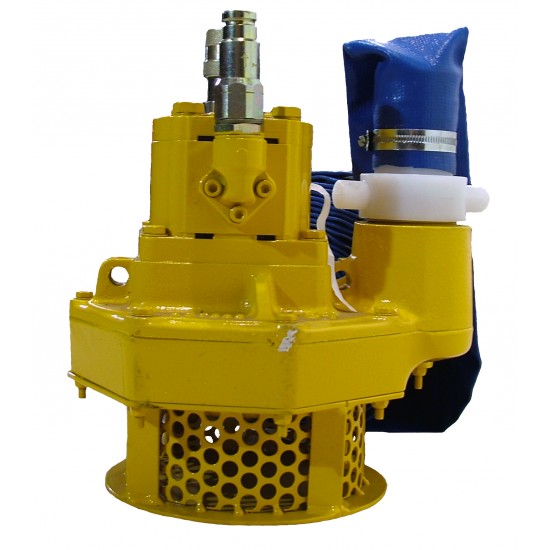
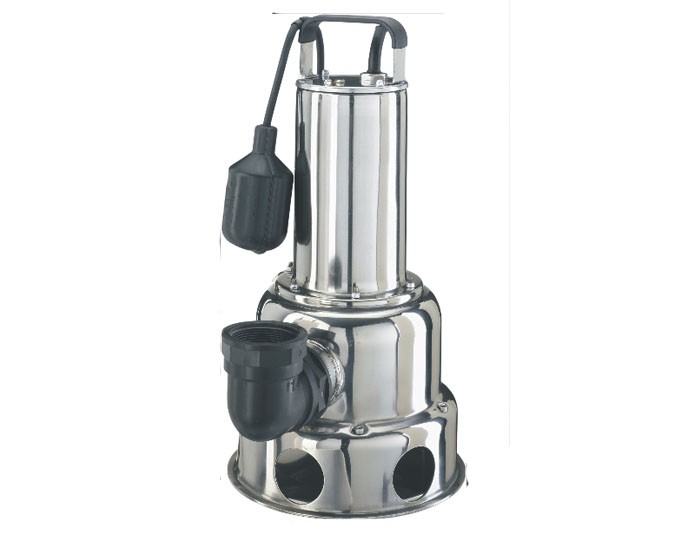
A submersible pump operates fully underwater, pushing water up a discharge hose rather than pulling it through a suction line. Because the motor and impeller sit in the water they never lose prime, making submersibles the simplest reliable choice for sumps, pits, and flooded areas. Most portable units are electric, powered by site power or a generator.
Cat classes
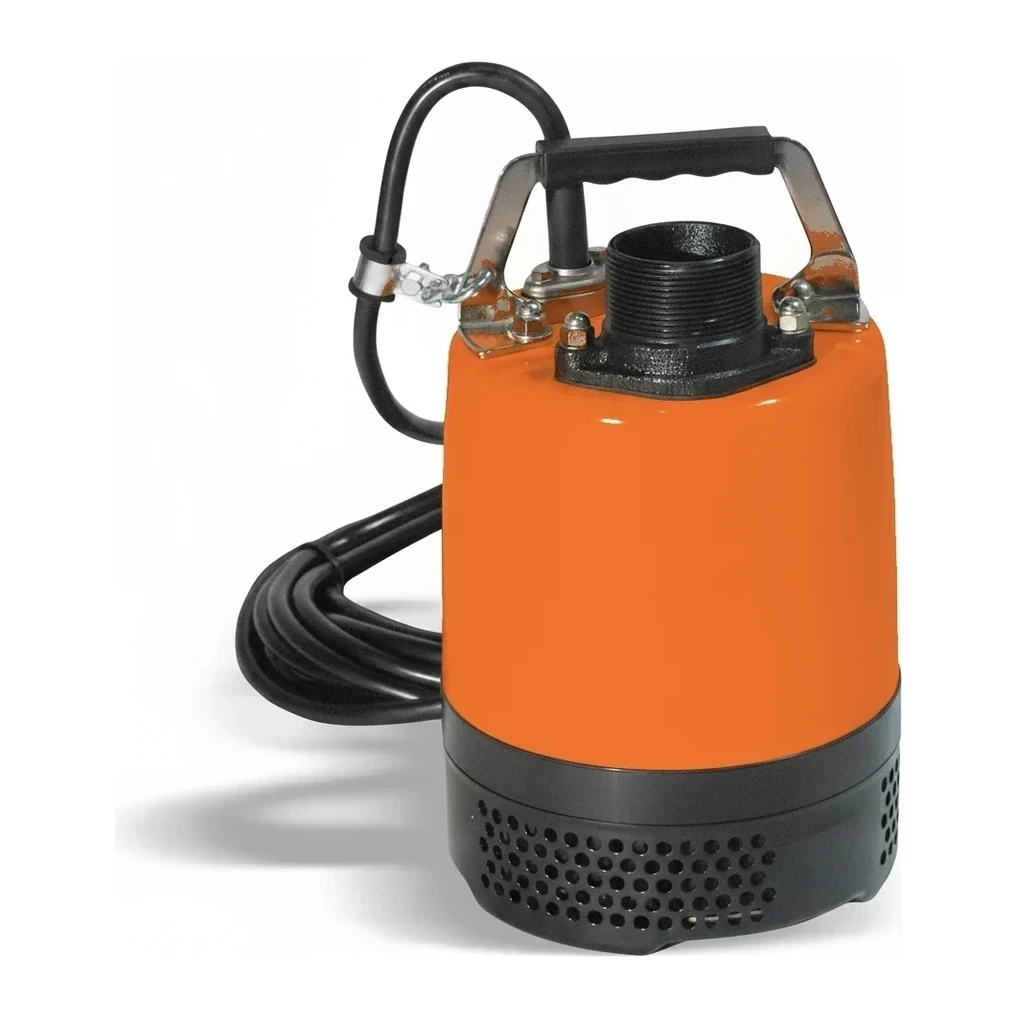
Choisissez une classe de taille — la capacité et la portée varient selon la gamme.
Fonctionnement
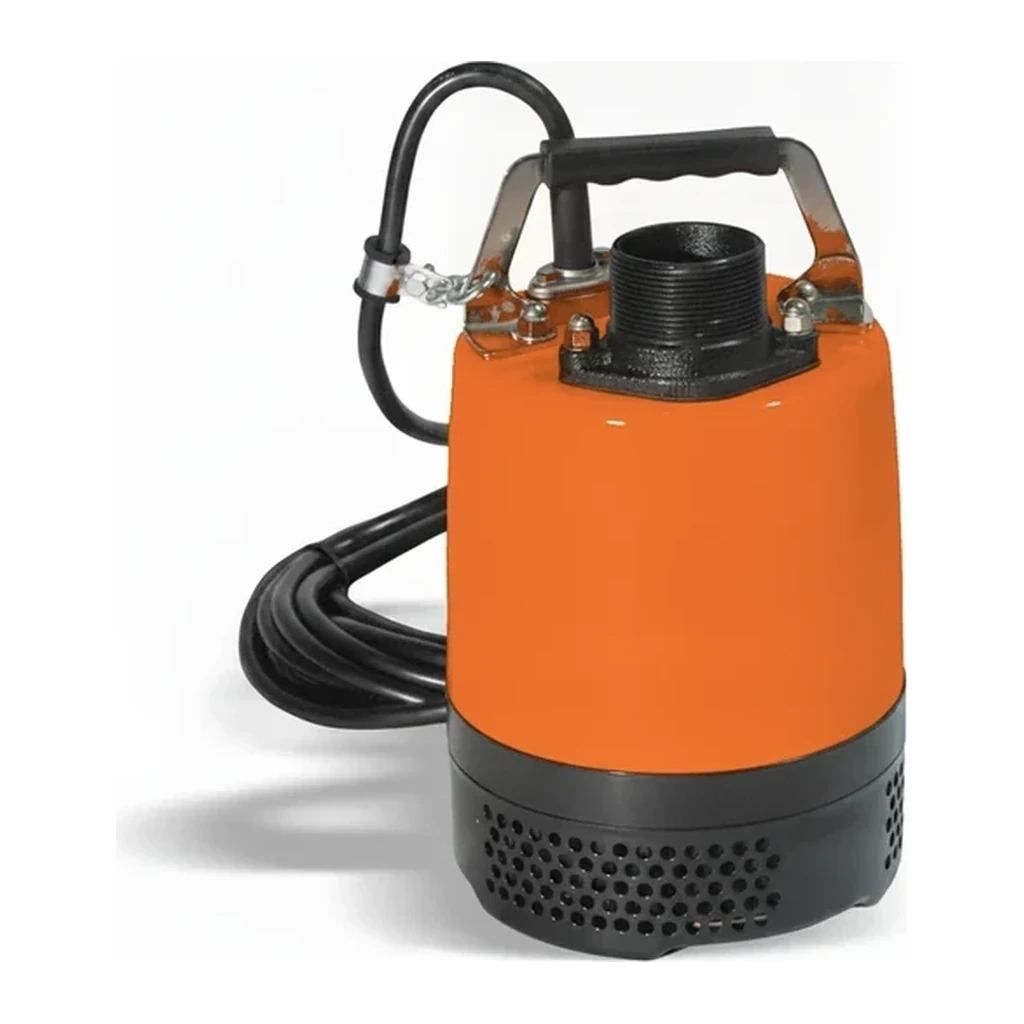
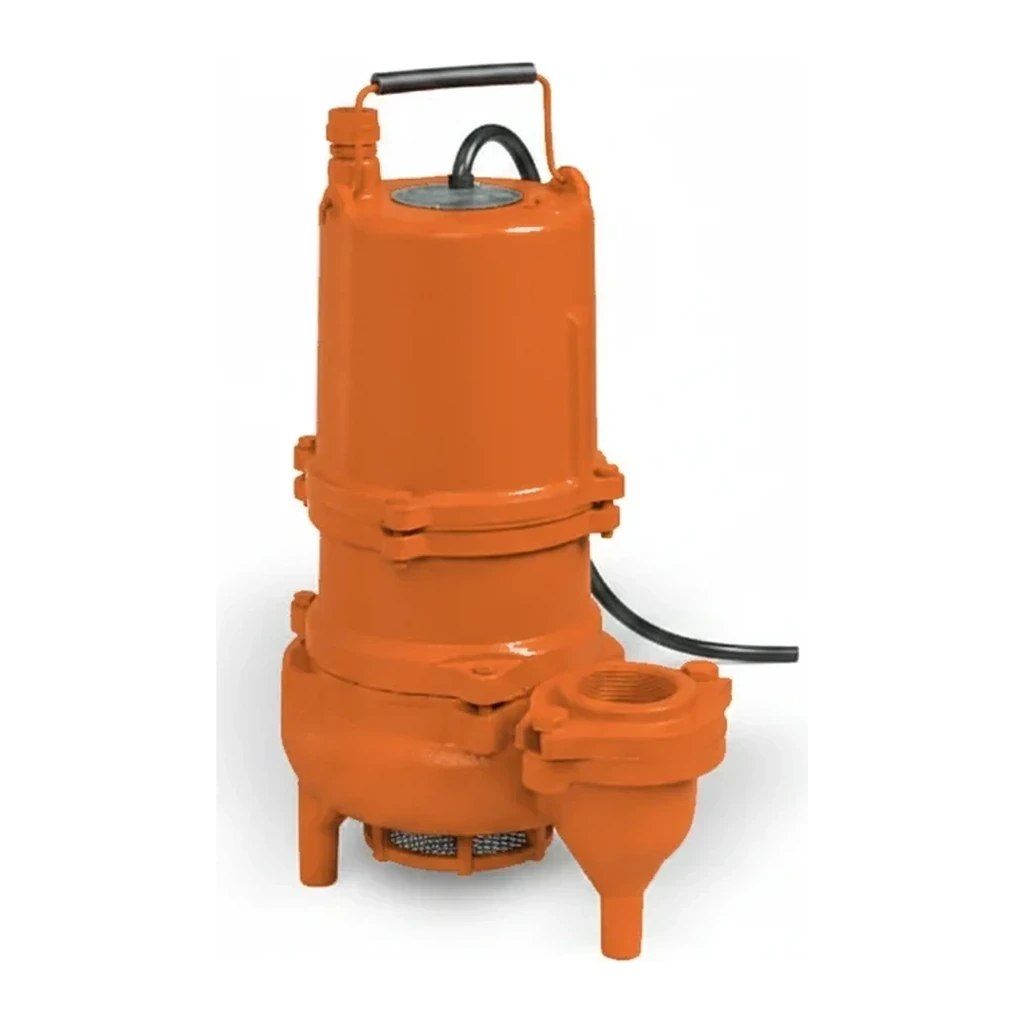
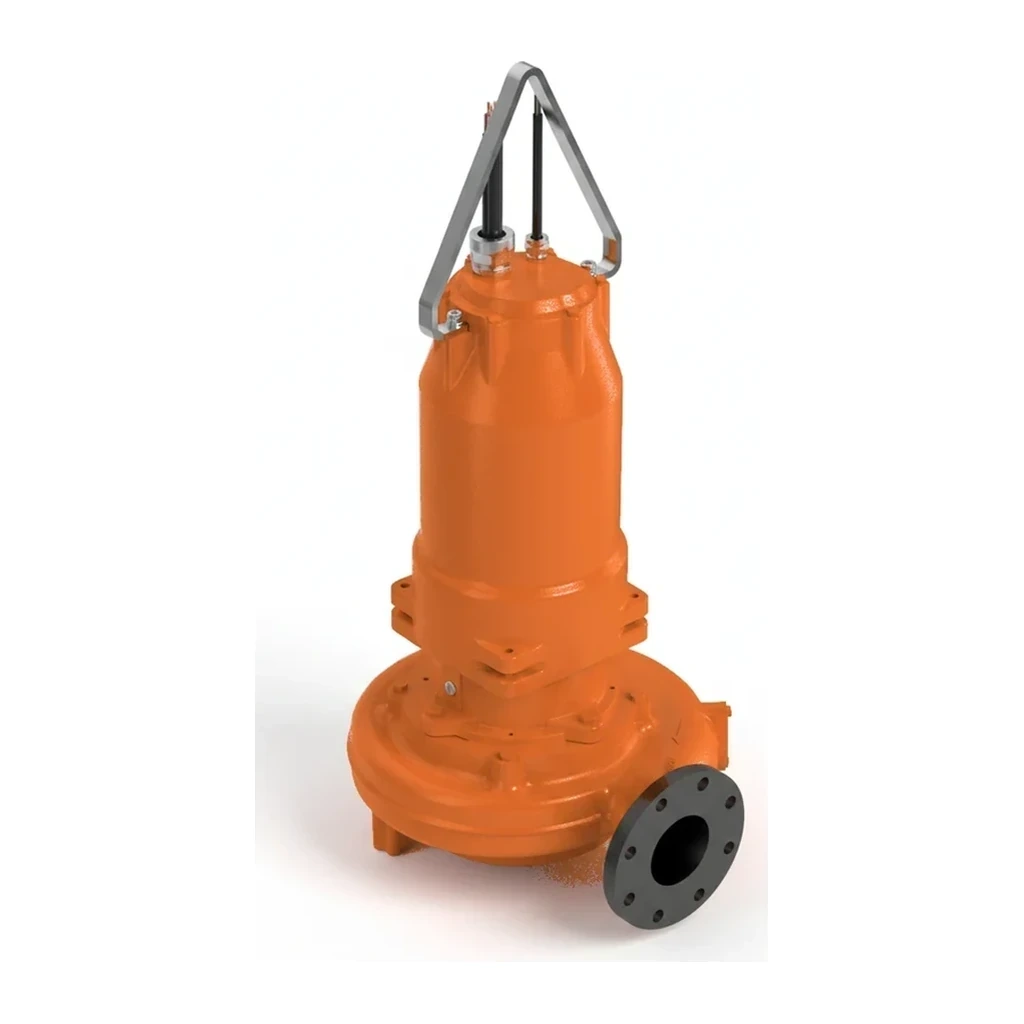
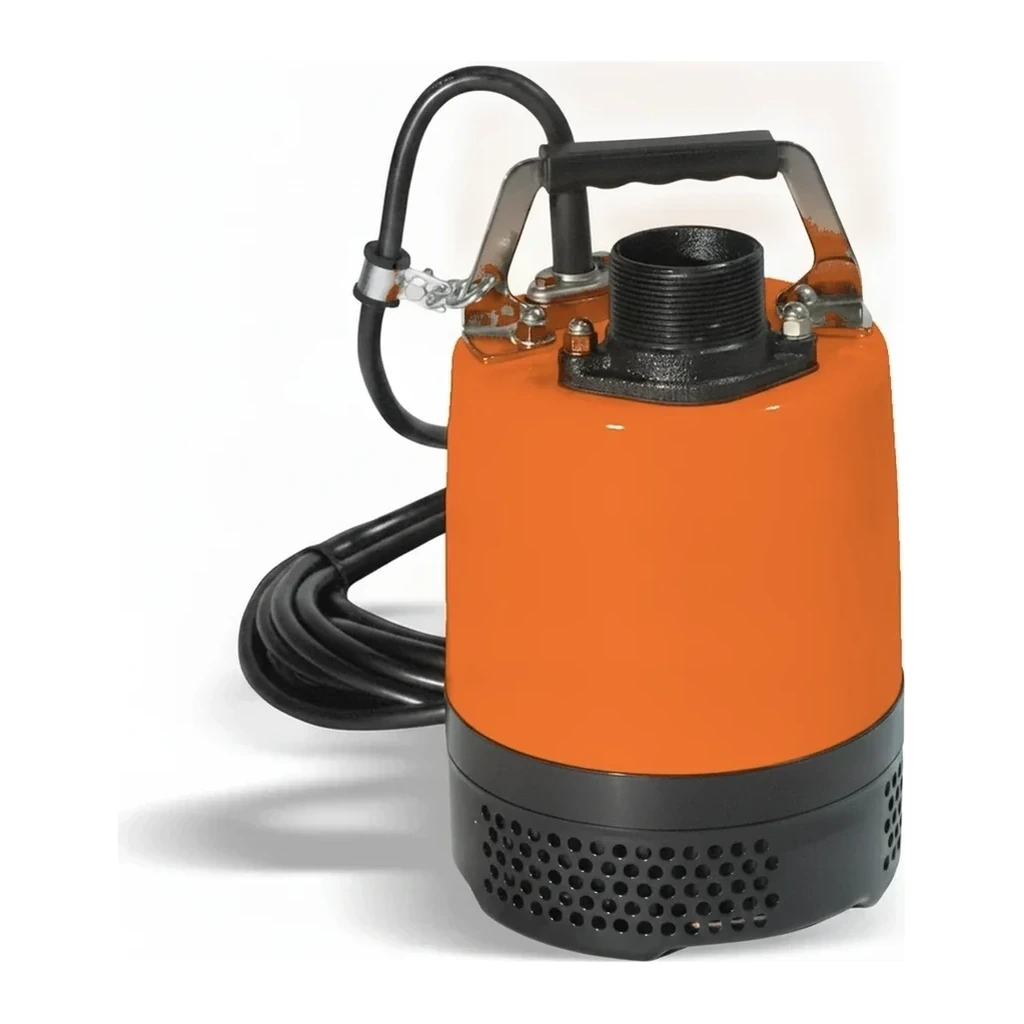
A sealed electric motor drives an impeller at the bottom of the unit. Water enters through a strainer base, is accelerated by the impeller, and is pushed up through the discharge outlet. Since the pump pushes rather than sucks, suction-lift limits do not apply; performance depends only on discharge head and hose friction. The surrounding water cools the motor, so most models require minimum submergence to run continuously. Float switches on many units start and stop the pump automatically as water levels change.
Types et variantes
- Standard dewatering submersible
- Handles clear to lightly silted water in sumps, pits, and excavations.
- Trash / solids-handling submersible
- Vortex or channel impellers pass sand, gravel, and small debris.
- Sludge and slurry submersible
- Agitator-equipped units re-suspend settled solids and pump dense mixtures.
- Automatic (float-switch) models
- Cycle on and off with the water level for unattended duty.
Spécifications clés
| Spécification | Plage typique | Signification |
|---|---|---|
| Flow rate (gpm) | 10–3,250 gpm across cataloged models | Sets how fast standing water is drawn down; match to inflow with margin. |
| Max head (ft) | 15–249 ft across cataloged models | The vertical lift plus friction loss the pump can push against; deep pits and long hose runs need higher head ratings. |
| Discharge diameter (in) | Cataloged models span multiple size bands | Larger diameters carry higher flows with less friction loss. |
| Motor power (hp) | 5.0–50.0 hp on cataloged electric models | Drives the flow-head capability and determines generator sizing. |
| Unit weight (kg) | 11–124 kg on cataloged models | Determines whether one person can place the pump by hand or a sling and hoist is needed. |
Comment l'industrie le dimensionne
Submersible pumps are sized by discharge diameter and flow at the required head. Units under 2 in drop into a sump, a manhole, or a flooded elevator pit and plug into a standard outlet. 2–4 in pumps keep a trench or a small excavation dry unattended on site power. 4–6 in sizes handle large sump and shaft dewatering, requiring a three-phase feed and a lifting point. 6 in and larger units perform deep shaft, quarry, and mine dewatering, often remaining in place for months. Electrical supply is part of sizing: motor power dictates the circuit or generator capacity needed.
Applications
- Dewatering excavations, footings, and utility trenches
- Sump and elevator-pit drainage in buildings
- Flood cleanup in basements and below-grade structures
- Pond, tank, and vault draw-down
- Standby nuisance-water control on active sites
Sécurité et opération
- Power electric submersibles through a GFCI; the pump operates surrounded by water.
- De-energize before handling a submerged unit or clearing the strainer.
- Support the pump by its handle or lifting bail, never by the power cable.
- Maintain minimum submergence to avoid overheating motors on continuous duty.
Normes et certifications
- OSHA · 29 CFR 1926.651(h)
- Excavation water control is the primary regulatory driver for dewatering pump use.
- NFPA · NFPA 70 (NEC), Art. 590
- Temporary power installations feeding site pumps require GFCI protection.
Questions fréquentes
Why choose a submersible over a surface pump?
Can a submersible pump run dry?
What power supply do these pumps need?
Comparer les modèles populaires
Chercher par spécification →Normalisé aux mêmes unités. Un tiret signifie que la valeur n'a pas été publiée.
| Modèle | Débit | Hauteur manométrique max | Puissance moteur |
|---|---|---|---|
| Wacker Neuson PS2 800 | 84 gpm | - | 1 hp |
| Wacker Neuson PST2 400 | 53 gpm | - | 1 hp |
| Multiquip SP118 | - | - | 12 hp |
| Multiquip SP1E16A | - | - | 5 hp |
| Multiquip SP2-CE | - | - | - |
| Multiquip PS4030 | - | - | 31 hp |
Équipements connexes
Parcourir par fabricant
Sources
Chaque spécification est vérifiée par rapport aux données publiées par le fabricant, avec la source liée pour référence.
Tous les modèles
251 modèles · Page 3 sur 6 · Chaque spécification citée à la source