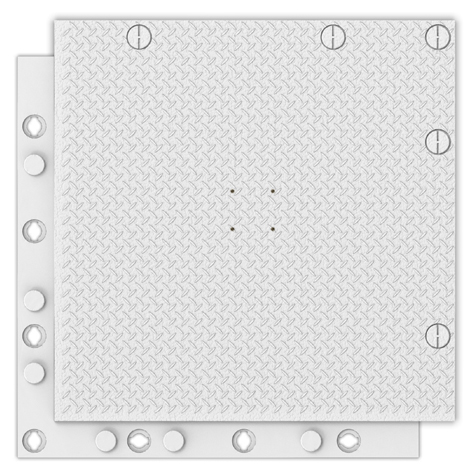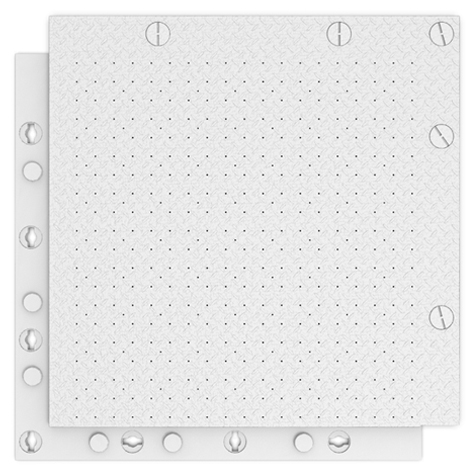

Ground Protection Mat
Ground protection mats are temporary load-bearing panels placed over turf, pavement, or soft terrain to distribute equipment weight and prevent surface damage during construction and events. Available in composite, timber, and steel-reinforced configurations, these mats create stable access roads, crane pads, and work platforms. The industry commonly refers to them as track mats, crane mats, access mats, or by brand names such as AlturnaMAT and Dura-Base.
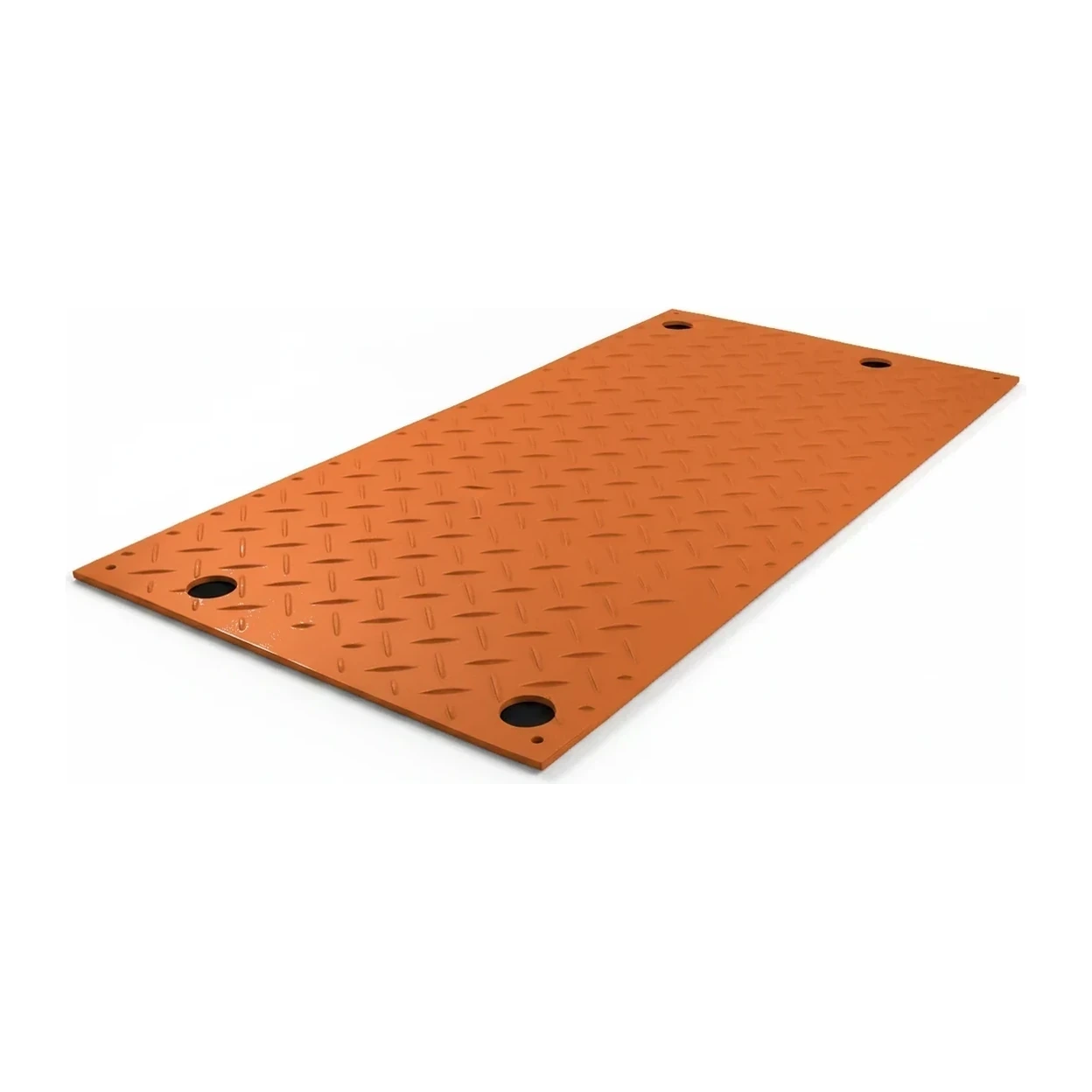
Fonctionnement
Ground protection mats distribute concentrated point loads across a wider surface area, reducing ground pressure and preventing rutting, compaction, or surface failure. Composite mats typically feature high-density polyethylene or similar materials with tread patterns for traction, while timber and steel mats use laminated hardwood beams or steel-reinforced cores to handle heavier loads. Mats interlock via tongue-and-groove edges, pin connections, or overlap configurations to form continuous roadways or staging areas. The bearing surface transfers equipment weight through the mat structure into the ground below, while anti-slip surfaces maintain traction for vehicles and machinery. Load capacity depends on mat thickness, material composition, and ground-bearing conditions beneath the installation.
Types et variantes
- Composite Mats
- Lightweight polyethylene or recycled plastic mats, typically 3x8 ft or 4x8 ft, handling lighter equipment and protecting turf, common in events and utility work
- Timber Mats
- Laminated hardwood beam construction, commonly 8x14 ft to 8x20 ft, providing high load capacity for crane outrigger pads and heavy equipment access
- Steel-Reinforced Mats
- Composite or timber mats with embedded steel channels or plates, offering enhanced strength for tracked equipment and concentrated loads
- Interlocking Track Mats
- Modular panels with tongue-and-groove or pin-connection systems, designed for quick assembly into temporary roadways and large work platforms
- Outrigger Pads
- Compact, high-capacity mats specifically sized for crane and lift outriggers, distributing point loads over soil or pavement
Spécifications clés
| Spécification | Plage typique | Signification |
|---|---|---|
| Mat Dimensions | 3x8 ft to 8x20 ft | Physical footprint determining coverage area and load distribution per panel |
| Load Capacity | 441–1,764 lb (200–800 kg) | Maximum weight the mat can support under standard ground conditions without failure |
| Mat Height/Thickness | 4–8 ft (1.2–2.4 m) | Profile height affecting load-bearing strength and ground clearance transitions |
| Material | HDPE composite, laminated hardwood, steel-reinforced | Core construction determining weight, durability, and load performance characteristics |
| Weight per Mat | 20-500 kg depending on size and material | Individual mat weight affecting handling requirements and transportation logistics |
Comment l'industrie le dimensionne
The industry sizes ground protection mats primarily by length in feet. Composite mats up to 10 ft (typically 3x8 ft and 4x8 ft) protect turf and sidewalks under lifts and light vehicles. Mats from 10 to 16 ft, commonly 8x14 ft, form temporary roads and crane pads for tracked machines and trucks. Mats 16 ft and longer, including 8x20 ft timber and steel configurations, serve as outrigger pads and haul roads under the heaviest construction equipment. Load capacity ratings and material type further differentiate sizing within each dimensional category.
Applications
- Temporary access roads across soft terrain, wetlands, and turf for construction vehicles and equipment
- Crane outrigger pads distributing point loads from mobile cranes, aerial lifts, and boom trucks
- Staging areas and work platforms for heavy machinery operations on sensitive surfaces
- Event and utility work ground protection preventing damage to lawns, golf courses, and parks
- Pipeline and transmission line construction providing stable pathways in remote locations
- Emergency access routes for disaster response and recovery operations over compromised ground
Sécurité et opération
- Verify ground-bearing capacity and mat load rating match equipment weight and ground conditions to prevent mat failure or soil collapse
- Inspect mats for cracks, splintering, or delamination before each deployment, removing damaged units from service
- Use proper lifting equipment and rigging when handling heavy timber and steel mats to prevent crush injuries
- Ensure mat connections are fully engaged and secured to prevent separation or trip hazards during operations
- Transition edges with beveled ramps or tapered mats to reduce trip hazards and vehicle impacts during access
Normes et certifications
- OSHA · 1926 Subpart P
- Excavation and trenching standards requiring adequate support and access where ground protection applies
- ANSI · A10.48
- Crane safety standards addressing outrigger support surfaces and load-bearing requirements
- ASTM · D6638
- Standard for composite mat material properties and performance testing in load-bearing applications
Questions fréquentes
What is the difference between composite and timber ground protection mats?
How is mat load capacity determined for different ground conditions?
What size mat is appropriate for crane outrigger support?
How are ground protection mats connected to form continuous roadways?
Comparer les modèles populaires
Chercher par spécification →Normalisé aux mêmes unités. Un tiret signifie que la valeur n'a pas été publiée.
| Modèle | Capacité de charge | Hauteur max |
|---|---|---|
| Signature Systems MegaDeck HD+ | 600 gal | 0.3 ft (0.1 m) |
| Signature Systems SignaRoad | 400 gal | 0.2 ft (0.1 m) |
| Signature Systems DuraDeck | 200 gal | - |
| Signature Systems DiamondTrack | 800 gal | 0.3 ft (0.1 m) |
| Signature Systems OmniDeck HD | 600 gal | 0.1 ft (0.0 m) |
| Signature Systems OmniDeck LD | 200 gal | 0.1 ft (0.0 m) |
Équipements connexes
Parcourir par fabricant
Sources
Chaque spécification est vérifiée par rapport aux données publiées par le fabricant, avec la source liée pour référence.
Tous les modèles
13 modèles · Chaque spécification citée à la source