
Delineator and Channelizer Drum
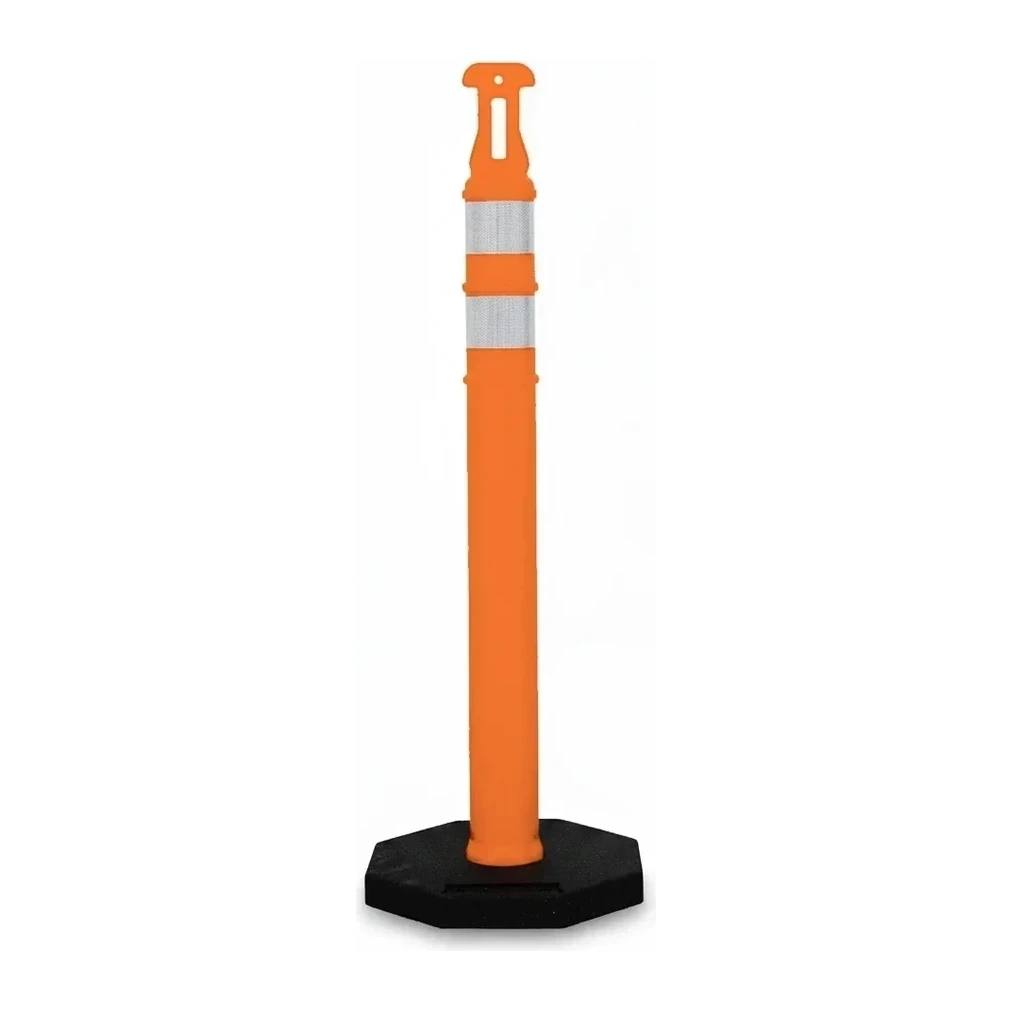
Delineators and channelizer drums are portable traffic control devices used to direct vehicles and delineate roadway boundaries in work zones, lane closures, and temporary traffic patterns. These highly visible markers range from tubular posts to full-size drums, typically constructed from impact-resistant plastic with retroreflective sheeting. They serve as visual guidance devices that separate traffic flow from hazardous areas without creating rigid barriers.
Fonctionnement
These devices function through passive visual guidance, relying on high-contrast colors (typically orange and white) and retroreflective banding to alert motorists to lane shifts, closures, or hazards. Most designs incorporate a weighted base, either integral ballast chambers filled with water or sand, or separate rubber bases, to provide stability against wind and minor impacts while allowing the device to yield or self-right when struck by vehicles. The retroreflective sheeting returns headlight illumination to drivers, maintaining visibility during nighttime and low-light conditions. Larger drums (36 inches and above) often feature spring-mounted or flexible designs that allow them to deflect upon impact and return to upright position, reducing damage to both the device and impacting vehicles. Smaller tubular markers rely on flexible materials and low profiles for similar deflection characteristics.
Types et variantes
- Tubular Markers
- Flexible vertical posts typically 18-36 inches tall, used for edge delineation, lane shifts, and short-term applications where space is limited or lower profile is desired.
- Traffic Drums (36-42 in)
- Full-size cylindrical channelizers meeting MUTCD standards for highway work zones, featuring wide reflective bands and weighted bases for high-speed roadway applications.
- Spring-Mounted Channelizers
- Drums with spring-loaded bases that allow the device to tilt and self-right after vehicle contact, commonly used in long-term work zones.
- Stackable Drums
- Nested design allowing multiple units to stack for efficient storage and transport, popular for contractors managing large traffic control inventories.
- Vertical Panel Delineators
- Flat or slightly curved panels with retroreflective strips, offering narrower profiles than drums while maintaining visibility for edge marking and restricted-width applications.
Spécifications clés
| Spécification | Plage typique | Signification |
|---|---|---|
| Height | 18–42 in (45.7–107 cm) | Determines visibility distance and regulatory compliance; MUTCD requires minimum 36 in for most highway work zones |
| Retroreflective Sheeting | Type III or Type IV (ASTM D4956) | Higher types provide greater nighttime visibility; Type IV common for high-speed roadways |
| Base Weight Capacity | 20-50 lb (filled) | Ballast capacity affects wind resistance and stability; larger drums require more weight for highway conditions |
| Band Configuration | 4-6 in alternating orange/white | Band width and spacing determined by MUTCD for conspicuity and regulatory compliance |
| Material | HDPE, LDPE, or polyethylene | Impact-resistant plastics withstand vehicle strikes and UV exposure in outdoor environments |
Comment l'industrie le dimensionne
The industry sizes delineators and channelizers primarily by height, measured in inches from base to top. Devices under 36 inches are classified as tubular markers or low-profile delineators, suited for short-term lane shifts, edge marking, and lower-speed environments. Units 36 inches and taller meet MUTCD requirements for highway work zones and higher-speed applications, with these larger drums often incorporating self-righting features when struck. Diameter and profile width serve as secondary sizing considerations, particularly when space constraints or clearance envelopes dictate device selection.
Applications
- Highway and roadway work zone channelization and lane closures
- Temporary traffic pattern delineation during construction or maintenance
- Edge marking and shoulder drop-off warnings
- Parking lot and facility traffic flow guidance during events or construction
- Pedestrian and vehicle separation in shared-use areas
- Road race, marathon, and special event course marking
Sécurité et opération
- Ensure adequate ballast weight to prevent tip-over in wind conditions common to the deployment location
- Verify retroreflective sheeting condition and cleanliness before deployment to maintain nighttime visibility
- Space devices according to MUTCD guidelines based on roadway speed limit and taper requirements
- Inspect bases and mounting hardware for cracks or damage that could affect stability or self-righting function
- Deploy and retrieve devices from behind barriers or with proper traffic control to protect workers from active lanes
Normes et certifications
- MUTCD · Part 6 (Temporary Traffic Control)
- Establishes minimum size, color, and retroreflectivity requirements for channelizing devices in work zones
- NCHRP 350 · Test Level 1
- Crash testing standard for work zone traffic control devices to ensure breakaway characteristics and minimal vehicle damage
- ASTM D4956
- Specifies retroreflective sheeting types and performance levels for traffic control devices
- ANSI/ISEA 107
- While primarily for apparel, influences color and reflectivity expectations for high-visibility traffic control equipment
Questions fréquentes
What is the difference between a delineator and a channelizer drum?
When are 36-inch drums required versus smaller tubular markers?
What ballast material provides the best stability?
How does retroreflective sheeting type affect device selection?
Équipements connexes
Parcourir par fabricant
Sources
Chaque spécification est vérifiée par rapport aux données publiées par le fabricant, avec la source liée pour référence.
Tous les modèles
14 modèles · Chaque spécification citée à la source