

Toe Jack
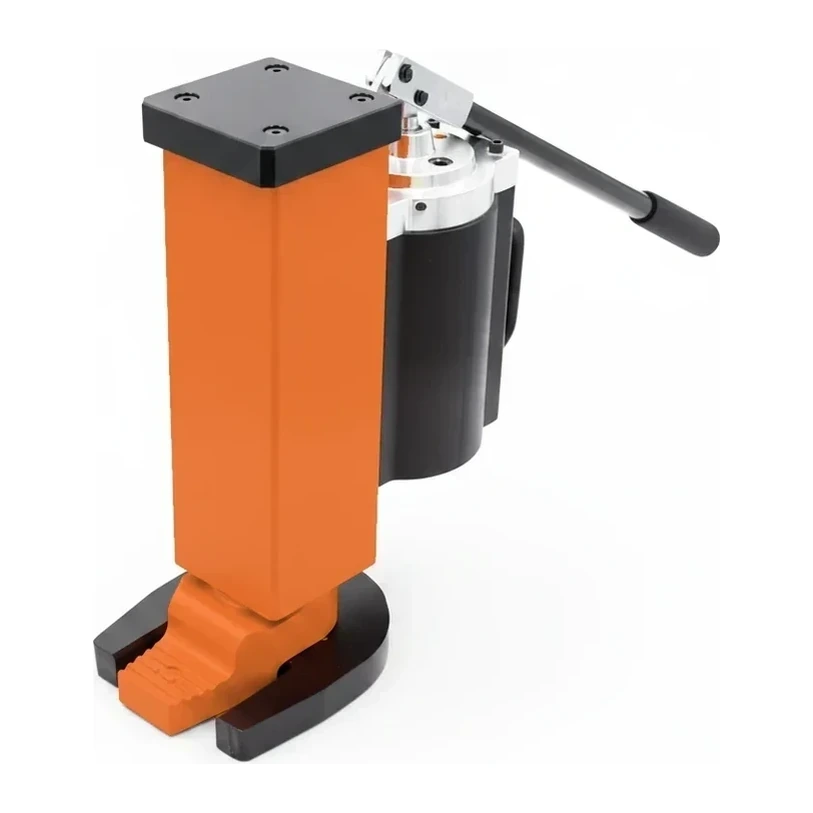
A toe jack is a specialized hydraulic jack with a low-profile toe that slides under heavy machinery, equipment, or structural loads where vertical clearance is limited. These jacks are essential tools in rigging and machinery moving operations, enabling operators to lift loads just high enough to insert blocking, skates, or rollers. The compact toe design allows access beneath machinery bases, press frames, and equipment with minimal ground clearance.
How it works
The toe jack features a flat, reinforced toe plate that extends horizontally from the jack body and slides beneath the load. Once positioned, hydraulic pressure is applied via a manual pump handle, causing the toe to rise vertically and lift the load. The jack's design concentrates lifting force on a small contact area directly under the load edge. Most toe jacks incorporate a three-stage or two-stage hydraulic cylinder that provides extended lift height despite the compact body. The pump handle drives a hydraulic piston that forces fluid into the lifting cylinder, raising the toe incrementally. A release valve controls the descent rate when lowering the load back onto blocking or support structures.
Types & variants
- Standard Toe Jack
- The most common design with a horizontal toe extending from a vertical body; typically 5-10 ton capacity for general machinery moving and maintenance work.
- Heavy-Duty Toe Jack
- Reinforced construction rated for 15-25 ton capacities; used for industrial presses, heavy plant equipment, and structural rigging applications.
- Low-Profile Toe Jack
- Extra-thin toe design for accessing loads with extremely limited clearance; trades some capacity for reduced insertion height, typically under 1 inch.
- Track Jack
- Specialized toe jack designed for lifting and moving tracked equipment and rail-mounted machinery; features a wider toe plate for distributing load across track structures.
- Aluminum Toe Jack
- Lightweight construction for portability in field rigging operations; typically lower capacities but easier to transport and position in confined spaces.
Key specifications
| Specification | Typical range | What it means |
|---|---|---|
| Capacity | Industry data available for 20 models across 5-25 ton range | Maximum safe load the jack can lift; the industry sizes toe jacks primarily by ton capacity. |
| Toe Height | 0.5-1.5 inches collapsed | Minimum vertical clearance required to insert the toe under the load; critical for access in tight spaces. |
| Lift Height | 4-8 inches extended | Maximum vertical travel of the toe; determines how high blocking or skates can be inserted beneath the load. |
| Toe Length | 3-6 inches | Horizontal reach of the toe from the jack body; affects how far under the load the jack can position lifting force. |
| Toe Width | 2-4 inches | Contact surface width; wider toes distribute load pressure and reduce point loading on machinery bases. |
How the industry sizes it
The industry sizes toe jacks by capacity measured in tons. Light-duty models in the 2-5 ton range handle getting skates or blocking under lighter machinery. The 5-10 ton class represents the standard machinery-moving jack, commonly used to lift one corner of a press or CNC machine. Heavy-duty units at 10-25 ton per corner serve industrial plant machinery and structural rigging operations. Selection depends on the weight per lifting point, required lift height, and the available clearance for toe insertion. Operators typically use multiple jacks simultaneously, positioning one at each corner or support point to maintain load stability.
Applications
- Positioning machinery skates or rollers beneath industrial equipment for relocation within facilities
- Lifting presses, stamping machines, and CNC equipment for leveling, foundation work, or maintenance access
- Inserting blocking or cribbing under heavy loads during rigging and installation operations
- Raising structural beams, tanks, or fabricated assemblies for temporary support during construction
- Moving heavy plant equipment such as generators, compressors, and process machinery in confined spaces
- Track maintenance and adjustment on rail-mounted equipment and overhead crane systems
Safety & operation
- Always verify load weight and distribute across multiple jacks to prevent exceeding individual jack capacity
- Inspect the toe and body for cracks, deformation, or hydraulic leaks before each use; damaged jacks can fail catastrophically under load
- Position jacks on solid, level surfaces and ensure the toe makes full contact with the load bearing surface to prevent slipping
- Insert blocking or cribbing immediately after lifting; toe jacks are lifting devices, not load-holding supports for extended periods
- Maintain clear zones around jacks during operation and never place body parts under suspended loads or near pinch points
Standards & certifications
- ASME · B30.1
- Safety standard for jacks, industrial rollers, air casters, and hydraulic gantries; covers construction, inspection, and operational requirements.
- OSHA · 1926.305
- Requirements for jacks used in construction; addresses load ratings, blocking, and safe operating procedures for lifting equipment.
- ANSI · ASME PALD
- Performance standard for below-the-hook lifting devices; addresses design factors, testing, and capacity marking for rigging jacks.
- Manufacturers
- Leading brands include JUNG, Hilman, Vestil, Simplex, and Enerpac, each providing load charts and operational guidelines specific to their jack designs.
Frequently asked
How is toe jack capacity different from total machine weight?
What determines the minimum clearance needed under a load?
Why use toe jacks instead of standard hydraulic jacks for machinery?
How many toe jacks are typically used for a single lift?
Related equipment
Browse by manufacturer
Sources
Every specification is verified against the manufacturer's published data, with the source linked for reference.
All models
20 models · Every spec cited to source