

Pumps
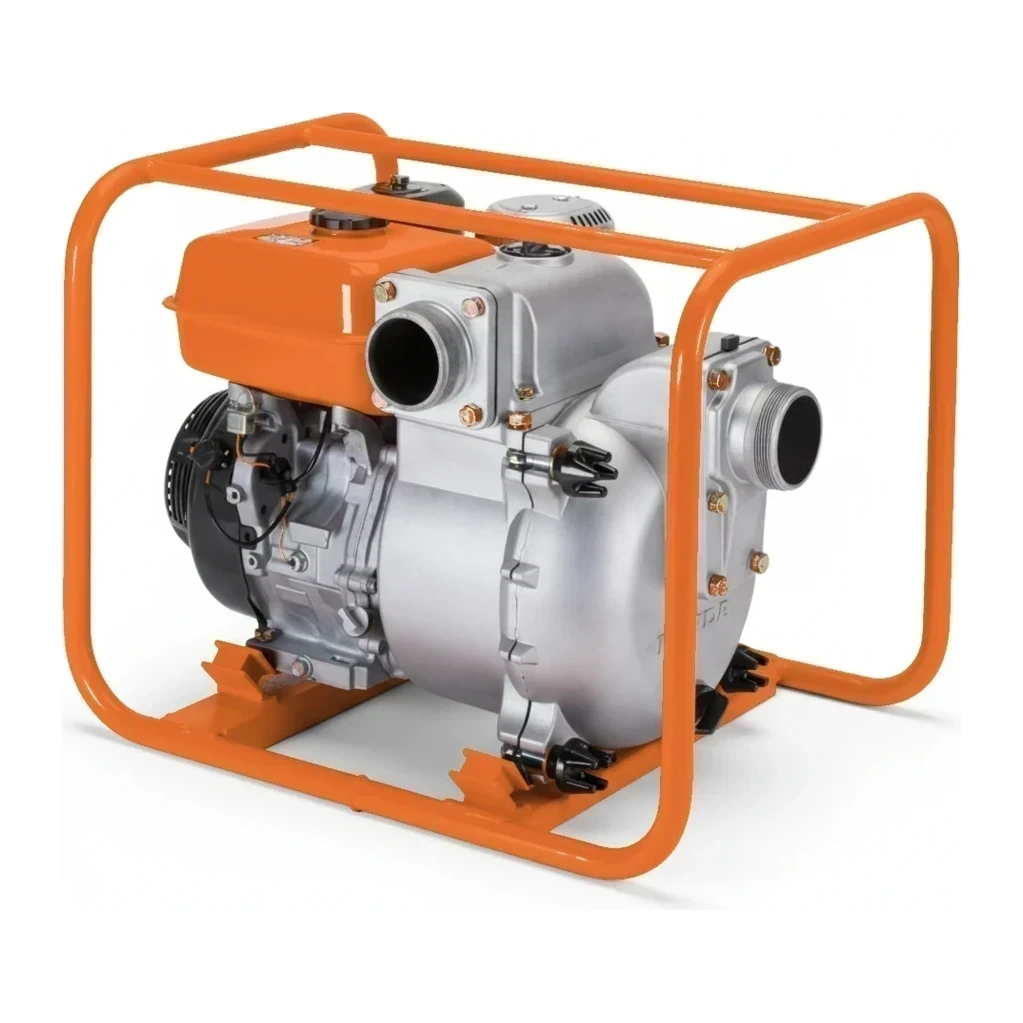
Pumps move water on and off sites — from nuisance water in a footing to full groundwater control on deep excavations. The category splits portable pumps from the large dewatering class, with trash and centrifugal designs the biggest groups.
How it works
All pumps trade flow against head: an impeller or diaphragm imparts energy that lifts water and pushes it through discharge lines. The liquid dictates the design — solids take trash pumps and diaphragms, clean transfer takes standard centrifugal, deep sources take submersibles, and drawdown systems take vacuum-capable wellpoint pumps.
Types & variants
- Portable Pumps
- Trash, submersible, diaphragm, and centrifugal pumps for site water.
- Large Dewatering Pumps
- High-capacity pumps for major dewatering, bypass, and wellpoint systems.
How to choose
Three questions size any pump: how much water (gpm), how high and far (total head), and how dirty (solids content). Portable classes handle routine site water; sustained groundwater, bypass, and shaft work move to the large dewatering class with redundancy as standard practice.
Standards & certifications
- Hydraulic Institute · ANSI/HI series
- Industry standards for pump definitions, testing, and application practice.