

Restroom Trailer
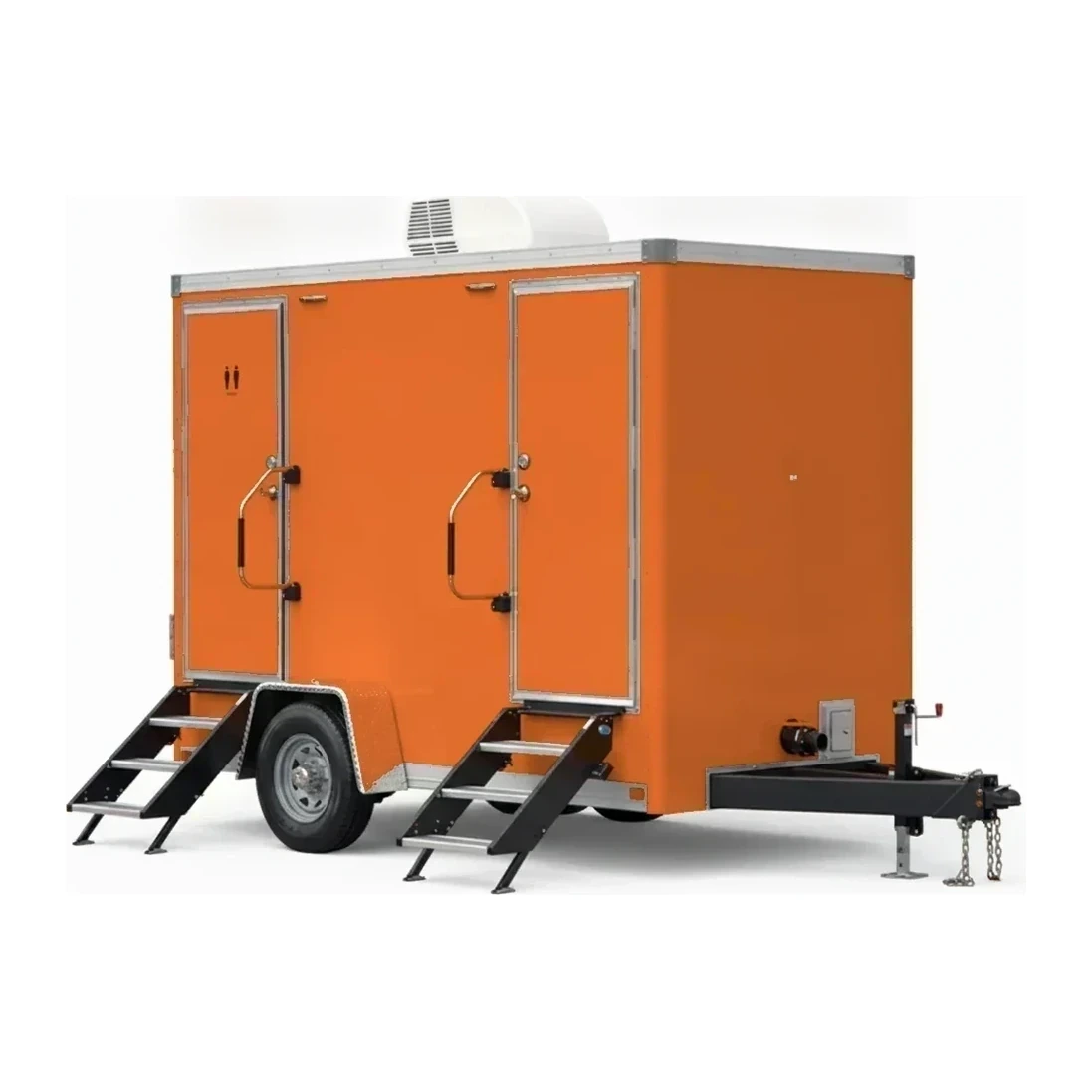
A restroom trailer is a towable, self-contained sanitation unit with flushing toilets, sinks and interior finishes closer to a building washroom than a portable cabin. Onboard fresh and waste tanks let it run without sewer hookup. The catalog lists 103 models from Ameri-Can Engineering, Royal Restrooms, Portable Restroom Trailers, Satellite Industries, Luxury Flush and NuConcepts.
How it works
The trailer arrives by tow vehicle, is leveled on stabilizer jacks, and connects to shore power or a generator for lighting, ventilation and climate control. Fresh water comes from an onboard tank or a site hose connection; waste collects in under-floor holding tanks pumped out on a service schedule. Inside, separate stalls or suites flush like conventional fixtures. Listed units run 12-34 ft in box length with total lengths of 19.6-40.6 ft, widths of 72-102 in and heights of 11-12 ft.
Types & variants
- Two- and three-stall trailers
- Compact units for mid-size gatherings and site offices, short boxes and single axles at the light end.
- Multi-suite event trailers
- Larger floor plans with separate entrances and climate control for weddings and public events.
- Shower-combination trailers
- Restroom floor plans paired with shower stalls for camps and long-duration deployments.
- ADA-accessible trailers
- Ramp-equipped units with accessible stalls meeting accessibility standards at public events.
Key specifications
| Specification | Typical range | What it means |
|---|---|---|
| Box length | 12–34 ft (3.7–10.4 m) | Body length sets stall count and interior layout; the primary size driver. |
| Total length | 19.6–40.6 ft (6.0–12.4 m) | Overall length with tongue: the figure that matters for towing and placement planning. |
| Total axle weight | 7,000–20,700 lbs (3,175–9,389 kg) | Determines the tow vehicle class and the bearing surface the parked trailer needs. |
| Width | 72–102 in (183–259 cm) | Trailer body width; 102 in is the common highway maximum without permits. |
| Height | 11–12 ft (3.4–3.7 m) | Overall travel height: checked against gates, canopies and tree lines on the delivery route. |
How the industry sizes it
Restroom trailers are sized by stall count, which tracks box length: listed units run 12-34 ft. Event planning works backward from peak attendance and duration to a stall count, then to a trailer size; site placements must also absorb the total length (19.6-40.6 ft), the 7,000-20,700 lb axle weight on the parking surface, and service truck access for pump-outs.
Applications
- Weddings and upscale outdoor events
- Long-duration construction site facilities
- Facility renovations where building washrooms close
- Disaster relief and emergency base camps
- Film production and remote workforce support
Safety & operation
- Trailers are leveled and stabilized on jacks before use: an unlevel trailer strains plumbing, doors and ramps and can shift underfoot.
- Shore power connections run through properly rated, GFCI-protected circuits; generators are positioned so exhaust stays clear of intakes and entries.
- Steps and ramps are deployed with handrails secured; entries are lit after dark.
- Towing at 7,000-20,700 lb axle weights demands a correctly rated tow vehicle, functioning trailer brakes and a breakaway system.
Standards & certifications
- OSHA · 29 CFR 1926.51
- Construction sanitation requirements that trailers satisfy at a higher service level.
- NFPA · NFPA 70 (NEC)
- Electrical code governing shore power hookups and distribution to the trailer.
- DOJ · 2010 ADA Standards
- Accessibility standards applied when trailers serve public events.
Frequently asked
What does a restroom trailer need on site?
How is a restroom trailer different from porta potties?
What size tow vehicle do these trailers take?
Related equipment
Browse by manufacturer
Sources
Every specification is verified against the manufacturer's published data, with the source linked for reference.
All models
100 models · Page 3 of 3 · Every spec cited to source