
Surface Drill Rig
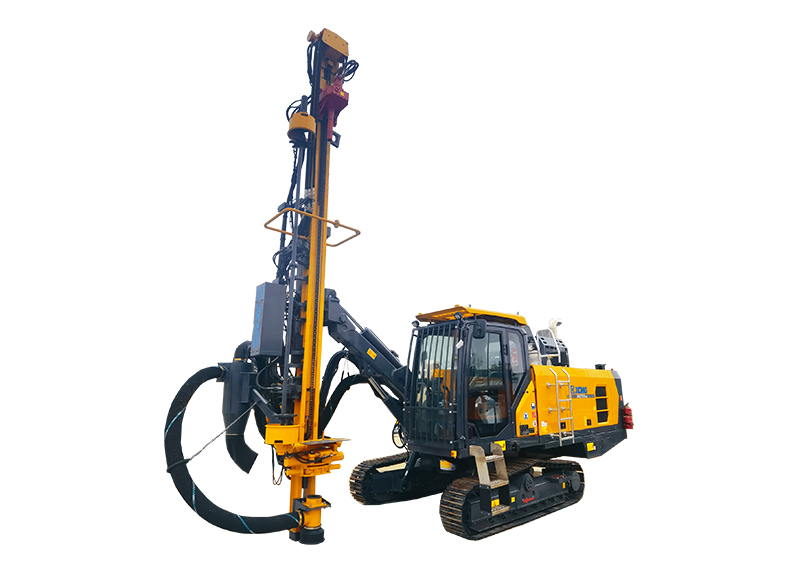
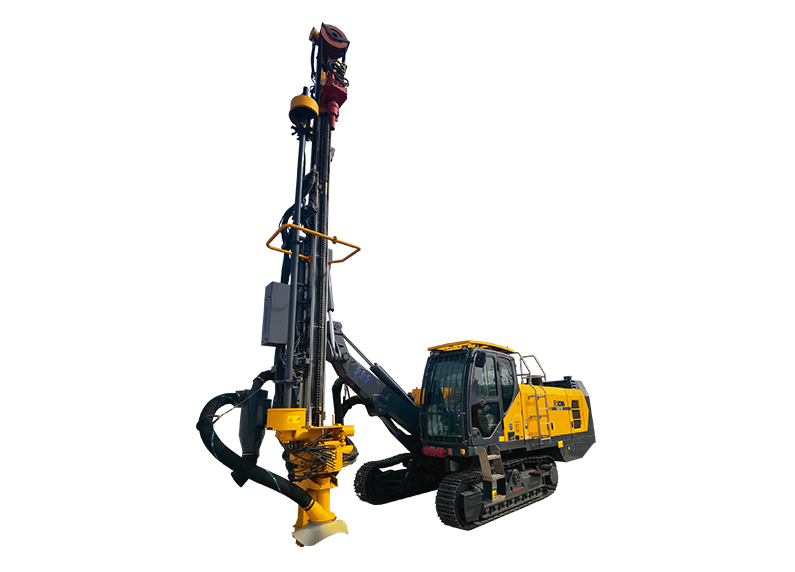
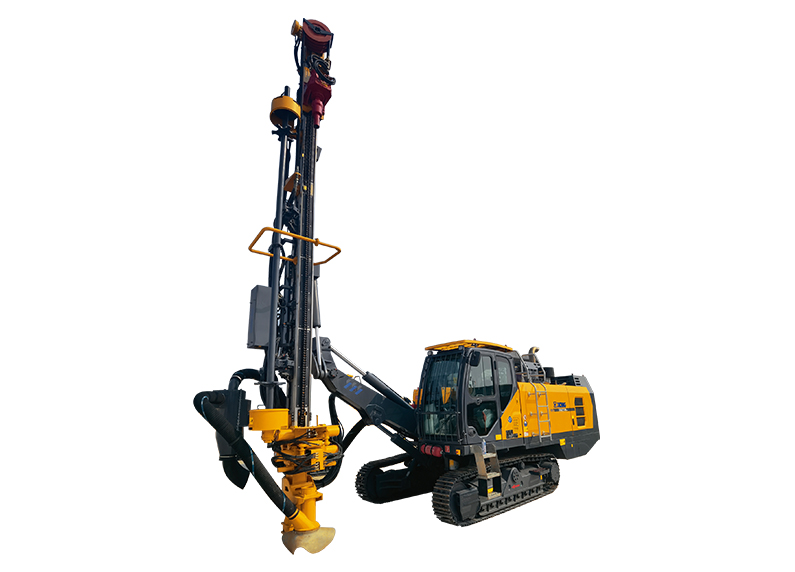
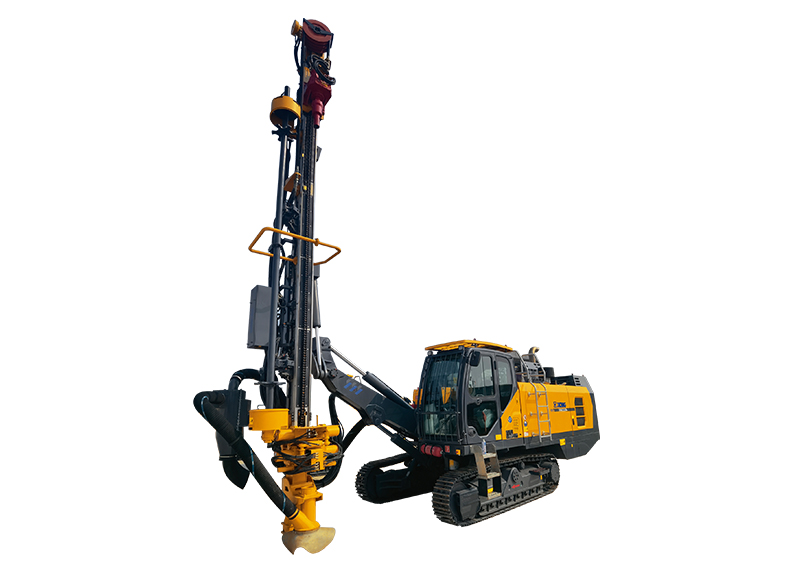
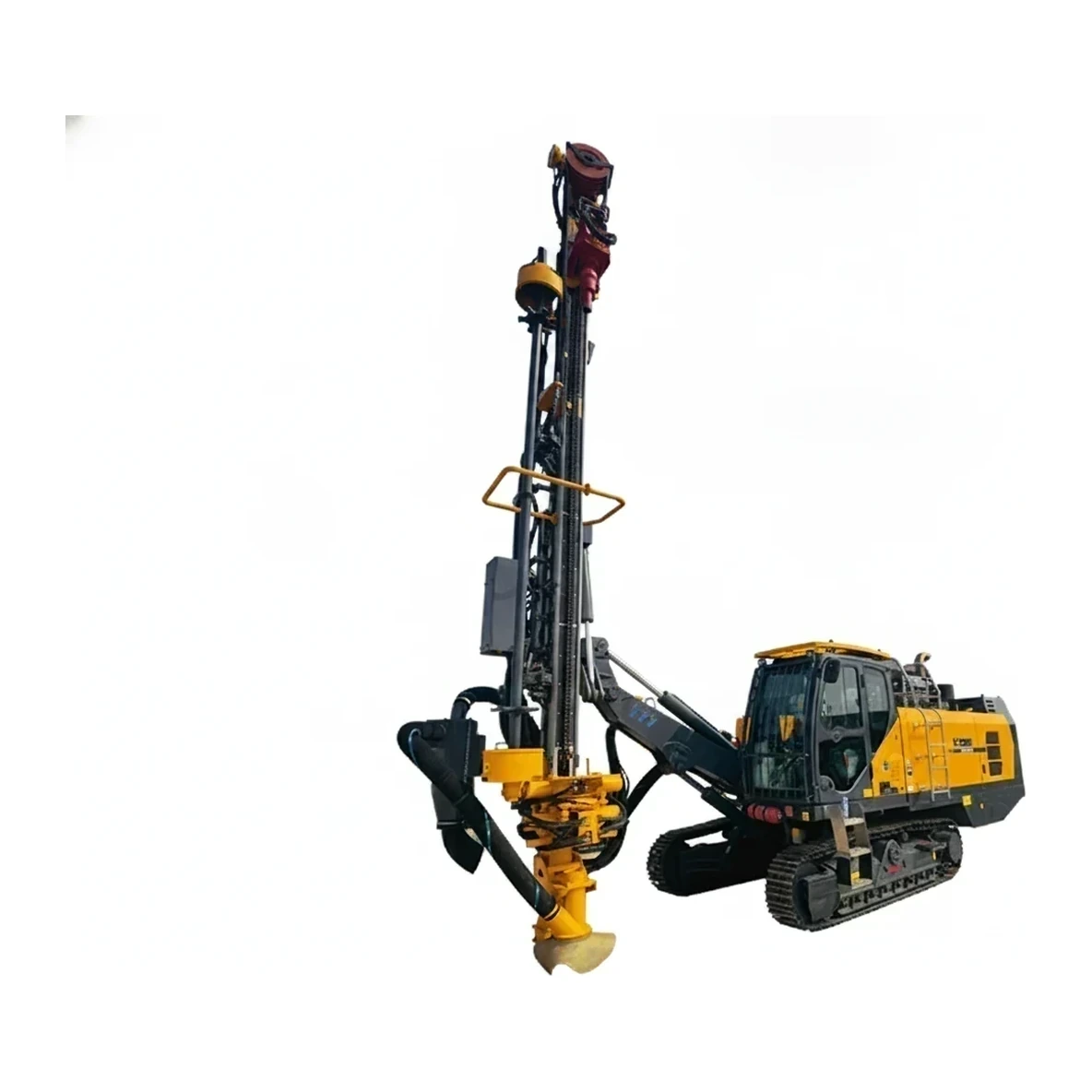
A surface drill rig is a track-mounted or wheeled drilling machine designed to bore vertical or angled holes into rock formations. These rigs are primarily used in quarries, mines, and construction sites to create blastholes for controlled rock fragmentation. The equipment employs either down-the-hole (DTH) hammer or top hammer percussion drilling methods to penetrate hard rock efficiently.
How it works
Surface drill rigs use compressed air or hydraulic power to drive a percussive hammer mechanism that repeatedly strikes the drill bit while rotating. In top hammer systems, the hammer is located at the surface and transmits impact energy through the drill string. DTH (down-the-hole) systems position the hammer at the bit, delivering energy directly to the cutting face with minimal loss through the drill string. The rig advances the drill by applying both rotation and down-pressure while simultaneously flushing cuttings from the hole using compressed air or water. Operators control drilling parameters such as rotation speed, percussion frequency, and feed pressure from an onboard cab. Most modern rigs feature automated systems for hole alignment, depth measurement, and drill pattern navigation across the bench or work area.
Types & variants
- Top Hammer Drill Rig
- Percussion hammer mounted at surface; efficient for shallow to medium-depth holes in moderate rock, common in smaller quarry operations.
- Down-the-Hole (DTH) Drill Rig
- Hammer positioned at bit depth; maintains impact energy in deep holes, preferred for larger-diameter blastholes and harder formations.
- Track-Mounted Rig
- Crawler undercarriage provides stability and maneuverability on uneven quarry benches and rough terrain without site preparation.
- Wheel-Mounted Rig
- Truck or chassis-mounted configuration offering higher mobility between sites and faster repositioning on prepared surfaces.
- Hydraulic Drill Rig
- Fully hydraulic percussion and rotation systems; modern standard offering precise control and lower maintenance versus pneumatic systems.
Key specifications
| Specification | Typical range | What it means |
|---|---|---|
| Hole Diameter | Sized in inches; 0-4 in, 4-6 in, 6+ in | Determines blasthole size and rock fragmentation capability; drives bit selection and drilling method. |
| Drilling Depth | Typically 10-100 ft depending on method and rig class | Maximum achievable hole depth; top hammer limited by energy loss, DTH extends deeper capability. |
| Compressor Capacity | Commonly 600-1,500 CFM at 150-350 psi | Air volume and pressure required for hammer operation and cuttings removal; critical for DTH efficiency. |
| Percussion Energy | Measured in foot-pounds or joules per blow | Impact force delivered to bit; higher energy improves penetration rate in hard rock formations. |
| Rotation Torque | Varies by rig size and rock hardness requirements | Rotational force applied to drill string; must match bit design and formation characteristics for optimal cutting. |
How the industry sizes it
The industry sizes surface drill rigs primarily by hole diameter capacity, measured in inches. Small-hole rigs (0-4 in) handle trench rock breaking, shallow foundations, and secondary fragmentation. Mid-range rigs (4-6 in) represent the quarry standard for production bench blasting in aggregate operations. Large-diameter rigs (6+ in) drill blastholes for major quarry benches and mining applications requiring significant powder factors. Secondary sizing considerations include drilling depth, compressor output, and whether the rig employs top hammer or DTH technology.
Applications
- Bench blasthole drilling in aggregate quarries and dimensional stone operations
- Production drilling for mine development and overburden removal
- Foundation rock excavation preparation for heavy civil construction
- Secondary rock breaking and boulder reduction in quarry faces
- Trench rock pre-splitting and controlled blasting for utility corridors
- Anchor hole drilling for slope stabilization and retaining wall tie-backs
Safety & operation
- Operators must maintain awareness of overhead powerlines and establish minimum clearance distances before raising mast assemblies
- Ground conditions and bench stability require evaluation before positioning; rigs generate significant vibration and thrust loads during drilling
- Hearing protection and respiratory protection are mandatory due to noise levels and airborne rock dust during drilling operations
- Lockout/tagout procedures must be followed during bit changes and maintenance; compressed air systems retain hazardous stored energy
- Site blasting protocols require drill rigs to evacuate to safe distances before detonation of drilled holes
Standards & certifications
- MSHA · 30 CFR Part 56/57
- Mine Safety and Health Administration regulations governing surface and underground drilling operations in mining environments.
- OSHA · 29 CFR 1926 Subpart S
- Occupational safety requirements for tunneling, shafts, and excavation drilling in construction applications.
- SAE · J1166
- Performance test procedure for rock drills defining standardized measurement of penetration rate and energy efficiency.
- EPA · Tier 4
- Diesel engine emission standards applicable to mobile drilling equipment; phased requirements based on engine horsepower.
Frequently asked
What determines the choice between top hammer and DTH drilling methods?
How does hole diameter relate to blasting efficiency?
What distinguishes quarry drill rigs from geotechnical or water well drills?
What operational factors most impact drilling productivity?
Browse by manufacturer
Sources
Every specification is verified against the manufacturer's published data, with the source linked for reference.
All models
4 models · Every spec cited to source