Aftercooler / Dryer / Separator
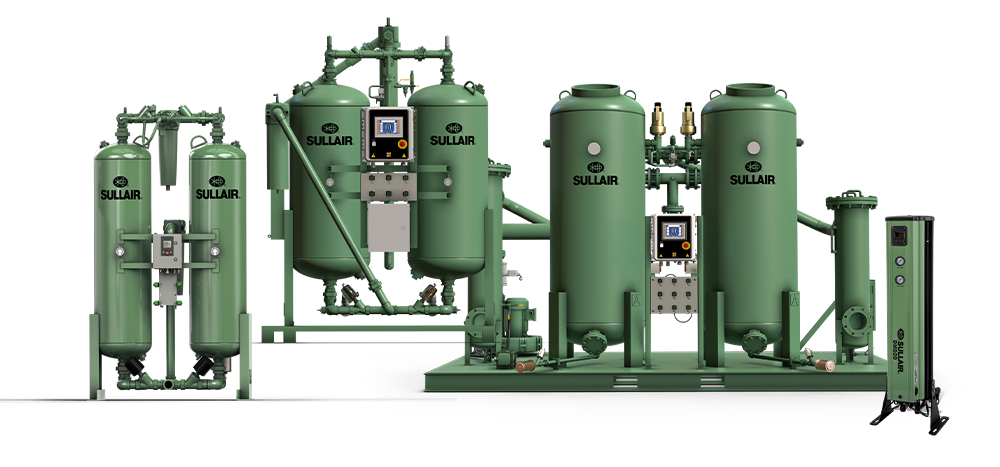
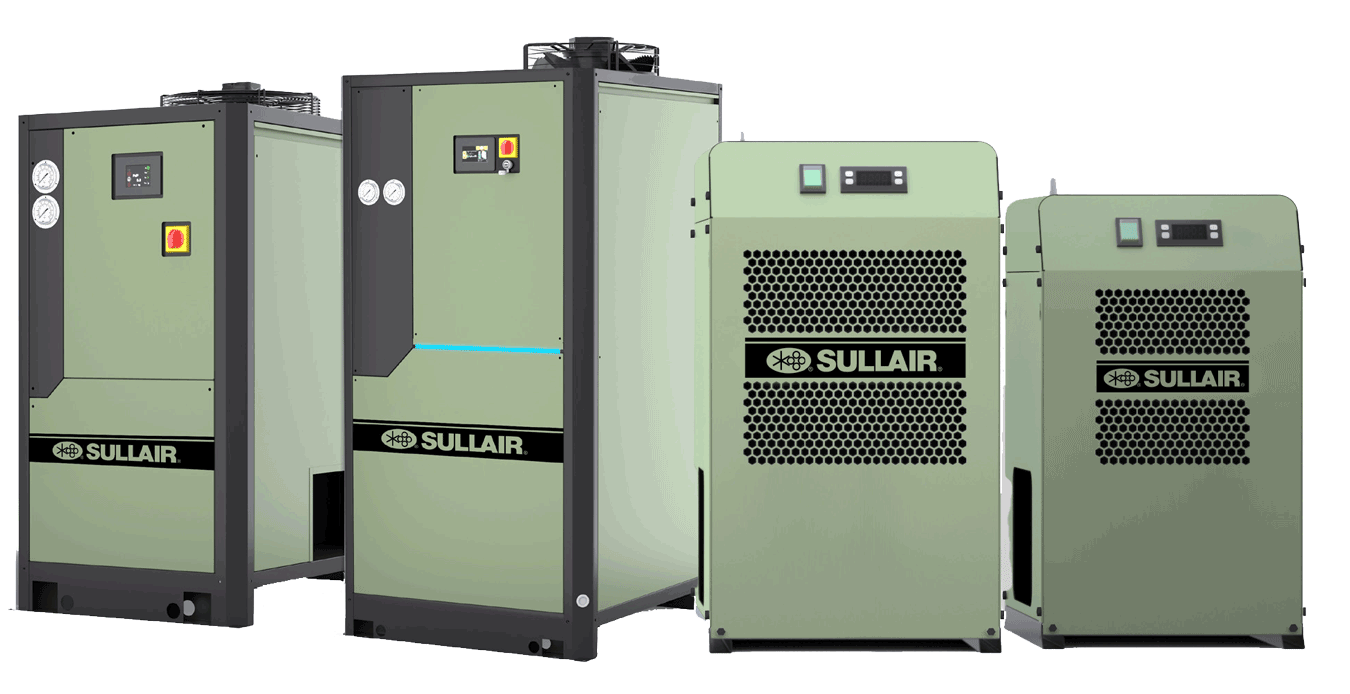
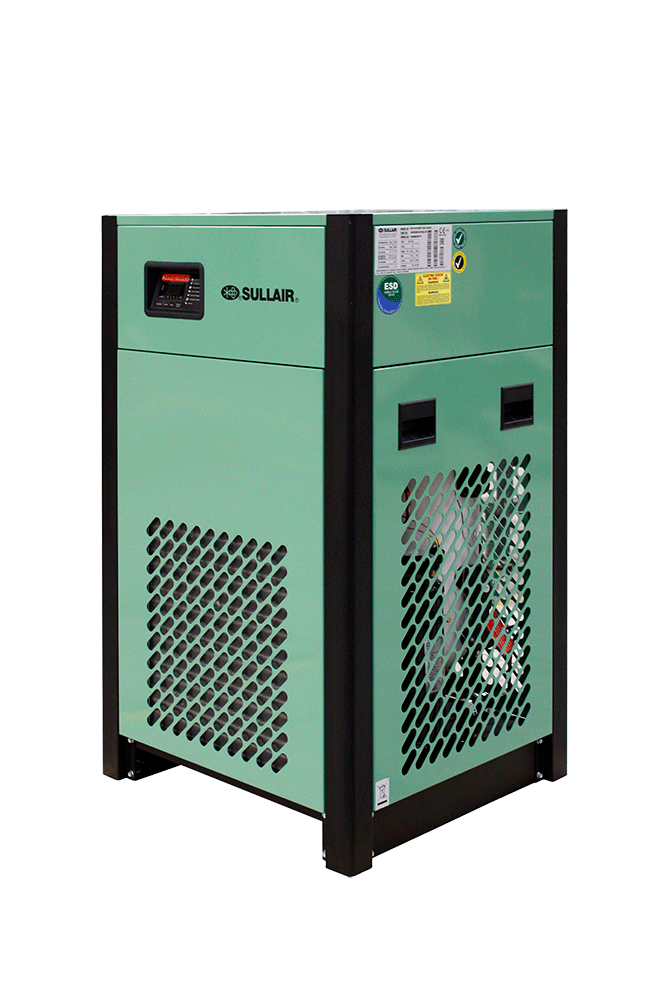
An aftercooler / dryer / separator is air treatment equipment installed downstream of a compressor to cool compressed air, remove moisture, and filter contaminants before delivery to pneumatic tools or processes. These units prevent water and oil carryover that can damage tools, ruin finishes, and compromise air-powered equipment. The equipment class encompasses integrated or standalone systems that condition compressed air to industry-acceptable quality standards.
Cómo funciona
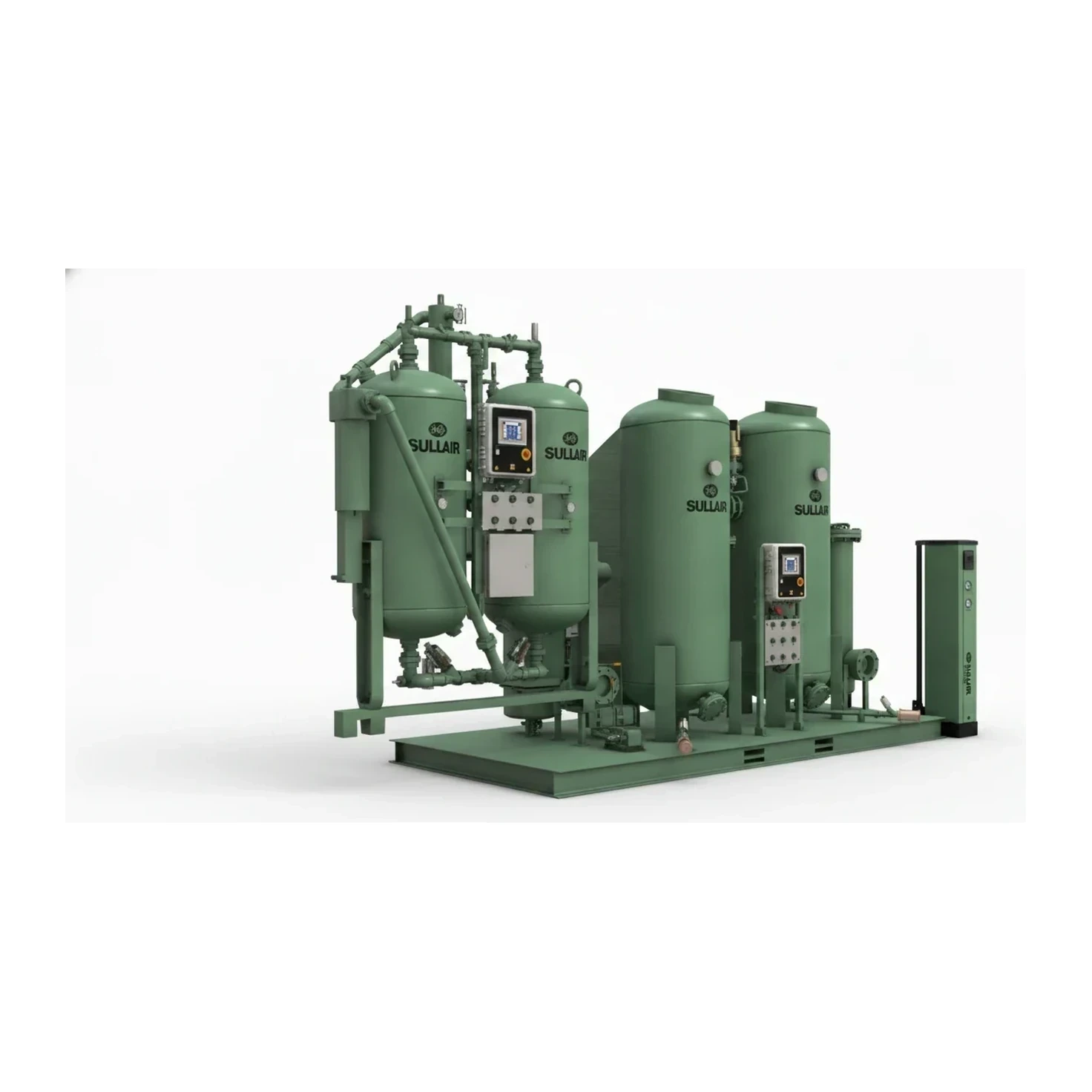
Compressed air exits the compressor at elevated temperatures (often 200-300°F) carrying water vapor, oil mist, and particulates. The aftercooler stage uses ambient air or water circulation to reduce air temperature, causing moisture to condense. Separators then use centrifugal force, baffles, or coalescing filters to remove liquid droplets and aerosols. Dryer stages, typically desiccant or refrigerant types, further reduce dewpoint by adsorbing or condensing remaining moisture, with automatic or manual drain valves purging accumulated liquids. Integrated units combine these functions in a single package matched to compressor output. Desiccant dryers use dual towers with moisture-absorbing media that regenerates on timed cycles, achieving very low dewpoints for critical applications. Refrigerant dryers chill air to condense moisture before reheating to prevent downstream condensation, suitable for general industrial use where moderate dewpoints suffice.
Tipos y variantes
- Aftercooler Only
- Heat exchanger that cools compressed air and removes bulk moisture through condensation, typically the first stage in air treatment.
- Desiccant Dryer
- Uses moisture-absorbing media in twin towers with regeneration cycles to achieve very low dewpoints, essential for instrument air and critical processes.
- Refrigerant Dryer
- Chills compressed air to condense moisture, then reheats it; achieves moderate dewpoints suitable for general shop and construction air.
- Moisture Separator
- Mechanical device using centrifugal or coalescing filtration to remove liquid water and oil droplets without active drying.
- Integrated Dryer Package
- Complete air treatment system combining aftercooling, separation, drying, and filtration in a single skid-mounted or cabinet unit.
Especificaciones clave
| Especificación | Rango típico | Qué significa |
|---|---|---|
| Flow Capacity (cfm) | 100-1,500 cfm typical range | Volumetric airflow the unit can treat; must match or exceed compressor output at rated pressure. |
| Maximum Pressure | 75-230 psi | Operating pressure range the vessel and components are rated to handle safely. |
| Dewpoint | -40°F to +38°F depending on type | Temperature to which air can be cooled before moisture condenses; lower values indicate drier air. |
| Pressure Drop | 3-10 psi across unit | Pressure loss through the treatment stages; affects downstream tool performance and compressor sizing. |
| Power Requirement | 115V-460V, varies by dryer type | Electrical supply needed for refrigerant compressors, heaters, controls, and regeneration blowers. |
Cómo la industria lo dimensiona
Aftercoolers, dryers, and separators are sized by cfm capacity, matched to the compressor output at operating pressure. The industry selects units based on required air quality (dewpoint), flow rate, and application sensitivity to moisture. Small units (up to ~400 cfm) serve portable compressors for blasting and painting where moisture degrades work quality. Mid-range units (400-900 cfm) pair with towable or skid compressors on job sites. Large systems (900-1,800 cfm and above) handle industrial and pipeline compressors where continuous, dry air is critical. Pressure rating, ambient conditions, and duty cycle further refine selection.
Aplicaciones
- Abrasive blasting operations requiring dry air to prevent media clumping and surface contamination
- Spray painting and coating applications where moisture causes finish defects and adhesion failures
- Pneumatic tool operation in humid environments to prevent rust and extend equipment life
- Instrument air supply for control systems and pneumatic actuators requiring low dewpoints
- Pipeline and industrial construction with large compressors needing continuous air treatment
- Sandblasting and surface preparation where moisture compromises abrasive effectiveness
Seguridad y operación
- Drain condensate regularly to prevent overflow and water carryover; automatic drains reduce manual intervention but require monitoring
- Ensure pressure ratings exceed maximum compressor output; inspect relief valves and pressure gauges before operation
- Allow adequate ventilation around refrigerant dryers to dissipate heat; obstructed airflow causes overheating and shutdowns
- Handle desiccant media as directed; some types generate heat during regeneration and require cool-down before servicing
- Monitor pressure drop across filters and separators; excessive restriction indicates clogging and necessitates element replacement
Normas y certificaciones
- ASME · Section VIII
- Pressure vessel code governing design and fabrication of dryer and separator pressure vessels.
- ISO · 8573
- Defines compressed air quality classes for particulates, water, and oil content used in specifying treatment requirements.
- OSHA · 1910.169
- Air receiver regulations applicable to integrated dryer packages with pressure vessels requiring inspection and relief devices.
- CGA · G-7.1
- Compressed Gas Association standard for commodity specification of air, relevant to high-purity applications.
Preguntas frecuentes
What dewpoint is required for blasting and painting applications?
How is an aftercooler different from a dryer?
Why do desiccant dryers have two towers?
Can a moisture separator replace a dryer?
Equipos relacionados
Explorar por fabricante
Fuentes
Cada especificación se verifica con los datos publicados por el fabricante, con la fuente enlazada como referencia.
Todos los modelos
3 modelos · Cada especificación citada a la fuente