

Aftercoolers, Filters, Separators & Dryers
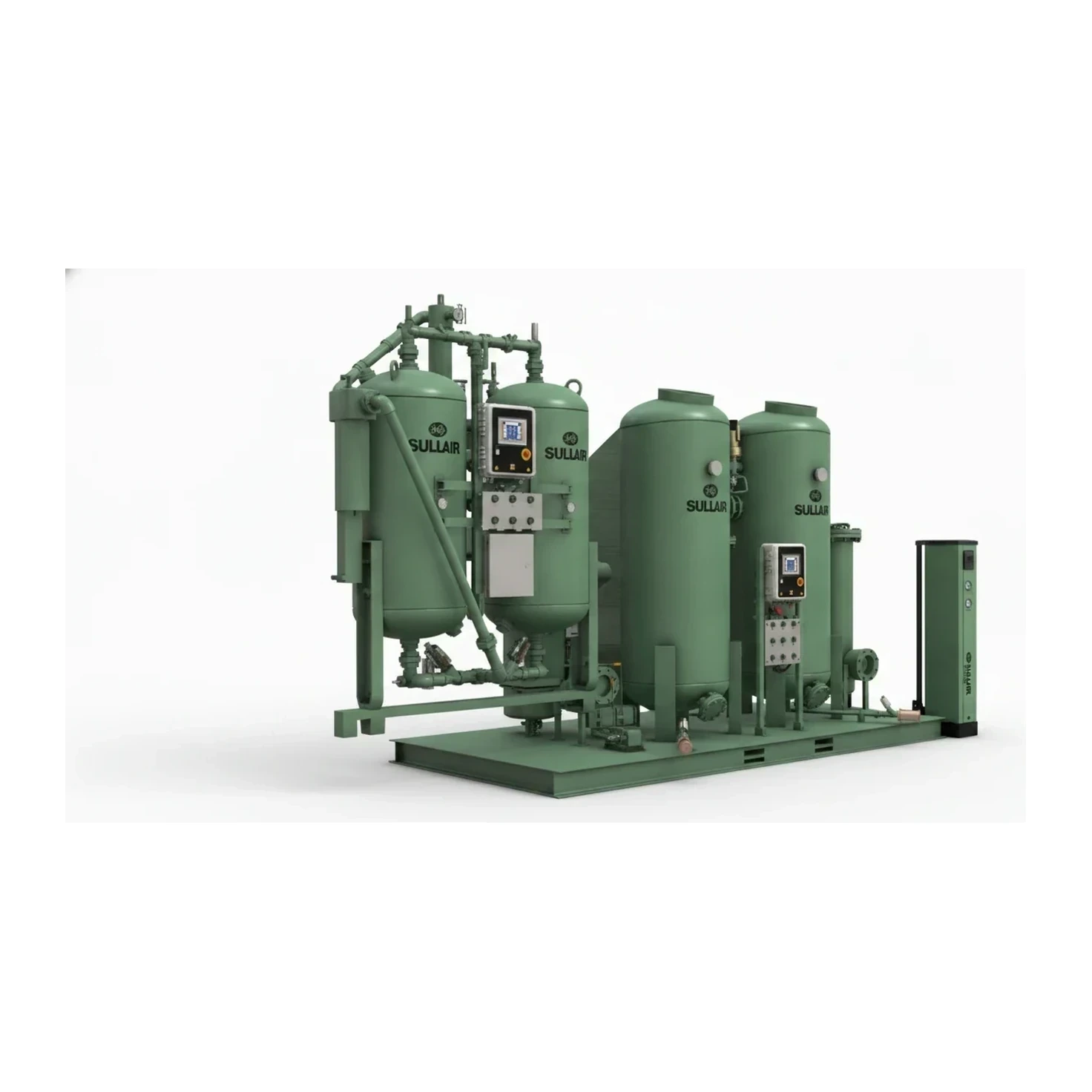
Cómo funciona
These devices treat compressed air through sequential processes of cooling, separation, filtration, and drying. Aftercoolers reduce air temperature immediately after compression, causing water vapor to condense for removal. Separators use centrifugal force or baffles to remove liquid water and oil droplets from the air stream. Filters capture solid particulates and aerosols through mechanical media. Dryers employ refrigeration, desiccant adsorption, or membrane technology to reduce dew point and achieve specified moisture levels. Many units combine multiple treatment stages in integrated housings, with automatic or manual drain systems to discharge collected contaminants.
Tipos y variantes
- Aftercooler / Dryer / Separator
- Integrated multi-stage units that combine aftercooling, moisture separation, and air drying functions in a single assembly, typically featuring heat exchangers, coalescent media, and refrigerant or desiccant dryer stages
Normas y certificaciones
- ISO · ISO 8573
- Compressed air purity classes defining allowable levels of particulates, water, and oil for different application requirements
- CAGI · Compressed Air & Gas Institute Standards
- Performance and testing standards for compressed air treatment equipment and system components
- ASME · B19.3
- Safety standard for compressors and compressed air system components including air treatment devices
Preguntas frecuentes
What determines the required air quality class for compressed air treatment?
Application requirements dictate air quality class based on ISO 8573 standards, which specify maximum allowable levels of particulates, moisture, and oil. Critical applications like food processing, medical equipment, and spray painting require Class 1-2 air, while general construction pneumatics may accept Class 5-6. Treatment equipment is selected and configured to achieve the target purity class.
How does dew point relate to compressed air dryer selection?
Pressure dew point indicates the temperature at which moisture condenses from compressed air. Refrigerated dryers typically achieve +35°F to +39°F dew points suitable for most applications, while desiccant dryers reach -40°F to -100°F for applications requiring extremely dry air or operating in freezing conditions. Lower dew points require more energy and maintenance but prevent moisture-related problems in sensitive systems.
What maintenance intervals apply to compressed air treatment systems?
Maintenance schedules vary by technology and operating conditions. Separator drains require daily to weekly attention, coalescent filters need element replacement every 1,000-8,000 operating hours depending on contamination levels, and desiccant dryers require media replacement or regeneration system service annually or based on dew point monitoring. Heat exchangers benefit from periodic cleaning to maintain efficiency.
Can aftercoolers eliminate the need for separate dryers?
Aftercoolers alone reduce moisture content by 50-75% through temperature reduction and condensation removal, but cannot achieve the low dew points required by many applications. They serve as the first treatment stage, improving efficiency of downstream dryers and filters. Most compressed air systems require both aftercooling and dedicated drying equipment to meet ISO air quality standards.