

Bull Float and Finishing Tool
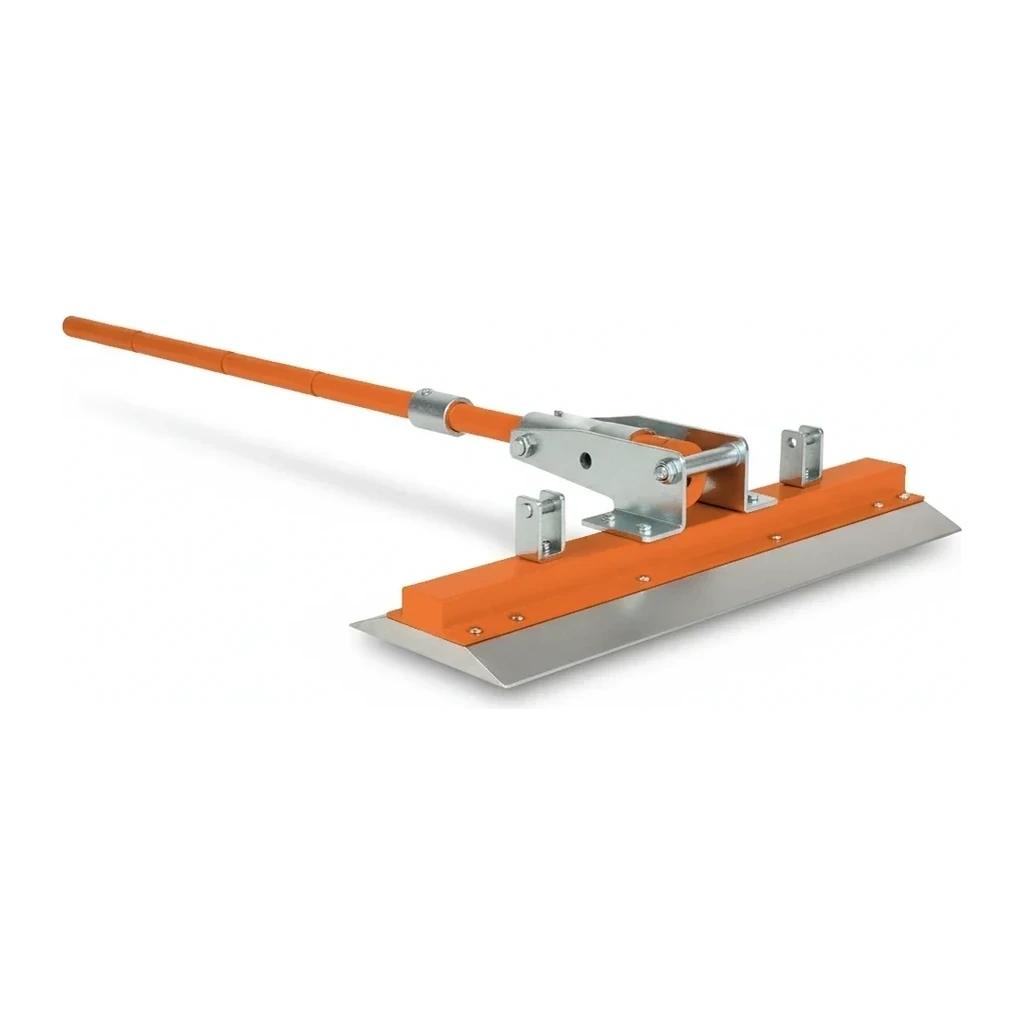
Bull floats and finishing tools are hand-operated implements used to smooth, level, shape, and finish wet concrete surfaces. These tools range from long-handled bull floats that work large flatwork areas to short-handled edgers, groovers, and hand trowels that detail edges, joints, and final surface texture. The equipment class encompasses the full suite of manual concrete finishing implements used between screeding and final curing.
Cómo funciona
Bull floats and fresnos consist of a wide, flat blade (typically wood, magnesium, or aluminum) attached to a long handle, enabling operators to smooth and level concrete from a standing position without walking on the surface. The blade is worked back and forth across wet concrete to embed aggregate, remove high spots, and fill voids, producing a level surface ready for further finishing. Hand trowels, edgers, and groovers are shorter-handled tools operated while kneeling or walking on the slab. Edgers round and compact edges along forms; groovers cut control joints; hand trowels provide final smoothing and densification. Each tool's blade shape, material, and curvature are optimized for specific stages of the finishing process as the concrete sets.
Tipos y variantes
- Bull Float
- Long-handled, wide rectangular blade (typically magnesium or aluminum) used for initial smoothing of large flatwork areas from a standing position
- Fresno Trowel
- Long-handled finishing tool with curved blade used for intermediate smoothing and densification on larger slabs
- Hand Trowel
- Short-handled rectangular or pointed steel blade for final smoothing, densification, and texture application in close-quarters work
- Edger
- Curved-blade tool that shapes and compacts rounded edges along forms and perimeters to prevent chipping
- Groover
- Tool with a raised fin that cuts control joints into the concrete surface at specified intervals to control cracking
- Magnesium Float
- Lightweight float blade (hand or long-handled) that produces a smoother finish than wood and resists wear from abrasive concrete
Especificaciones clave
| Especificación | Rango típico | Qué significa |
|---|---|---|
| Handle Length | Tool-specific | Determines reach across the slab; longer handles cover more area but require greater control and strength |
| Blade Width | Tool-specific | Wider blades cover more surface area per pass; narrower tools provide better control in confined spaces |
| Blade Material | Magnesium, aluminum, wood, or steel | Material affects weight, durability, and finish quality; magnesium is lightweight and produces smooth surfaces |
| Tool Weight | Material-dependent | Lighter tools reduce fatigue; heavier tools provide greater surface compaction and aggregate embedment |
Cómo la industria lo dimensiona
The industry does not classify bull floats and finishing tools into formal size bands. Handle length and blade width are selected to match the specific pour dimensions, concrete mix, and finishing stage. A typical flatwork job requires multiple tools of varying lengths and blade types as the concrete progresses from initial floating through final troweling.
Aplicaciones
- Initial smoothing and leveling of freshly placed concrete slabs and flatwork
- Embedding aggregate and removing surface voids after screeding
- Creating rounded, compacted edges along forms and slab perimeters
- Cutting control joints at specified intervals to manage shrinkage cracking
- Final densification and polishing of concrete surfaces before curing
- Texture application for slip-resistant walkways and decorative finishes
Seguridad y operación
- Maintain secure footing on stable ground or properly supported knee boards when working on wet concrete
- Use proper lifting and ergonomic techniques when handling long-handled tools to prevent back strain and repetitive motion injuries
- Wear waterproof gloves and boots to prevent cement burns from prolonged contact with wet concrete
- Ensure adequate ventilation when finishing in enclosed spaces to avoid carbon monoxide exposure from power equipment operating nearby
- Inspect tool handles and connections for integrity before use to prevent failure during operation
Normas y certificaciones
- ACI · ACI 302.1R
- Guide for concrete floor and slab construction, including finishing procedures and tool techniques
- OSHA · 29 CFR 1926 Subpart Q
- Concrete and masonry construction safety standards covering worker protection during finishing operations
Preguntas frecuentes
What determines the sequence of finishing tools used on a concrete slab?
How does blade material affect the finished concrete surface?
What handle length is appropriate for different slab sizes?
Why are both long-handled and short-handled tools necessary for most flatwork?
Equipos relacionados
Explorar por fabricante
Fuentes
Cada especificación se verifica con los datos publicados por el fabricante, con la fuente enlazada como referencia.
Todos los modelos
1 modelos · Cada especificación citada a la fuente