Vibratory Power Screed
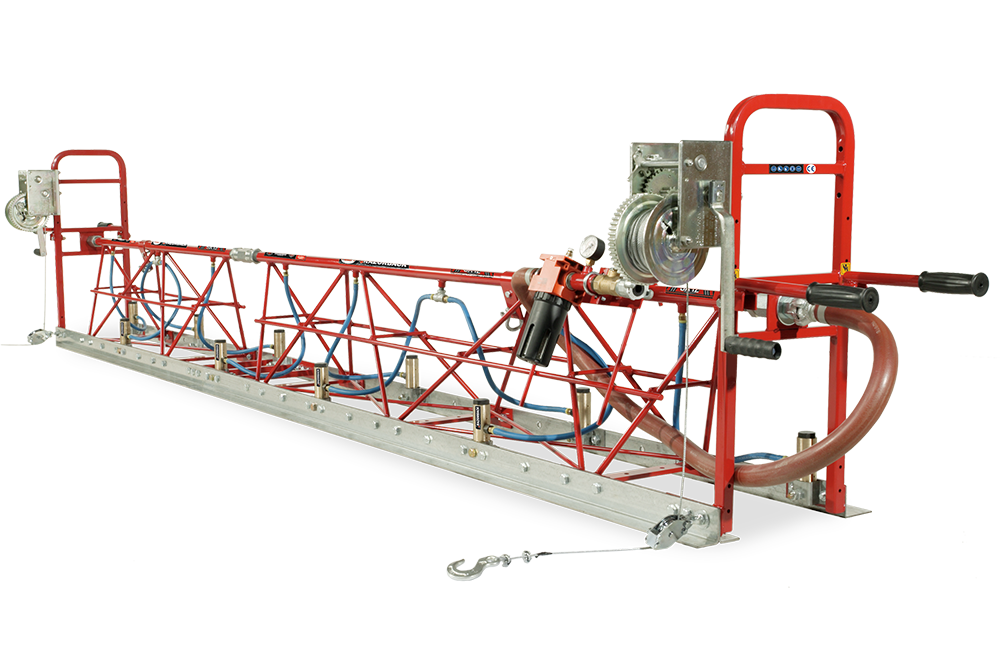
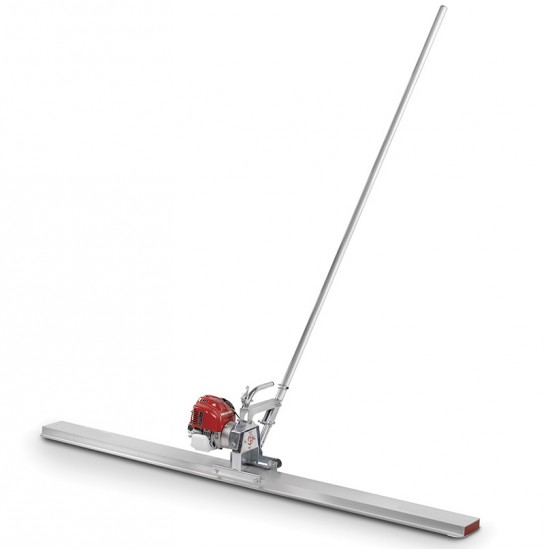
A vibratory power screed is an engine-driven beam that strikes off freshly placed concrete to grade while vibrating it, consolidating the surface zone in the same pass. Vibration settles the aggregate and draws paste to the top, leaving a flat, closed surface ready for floating and finishing.
Cómo funciona
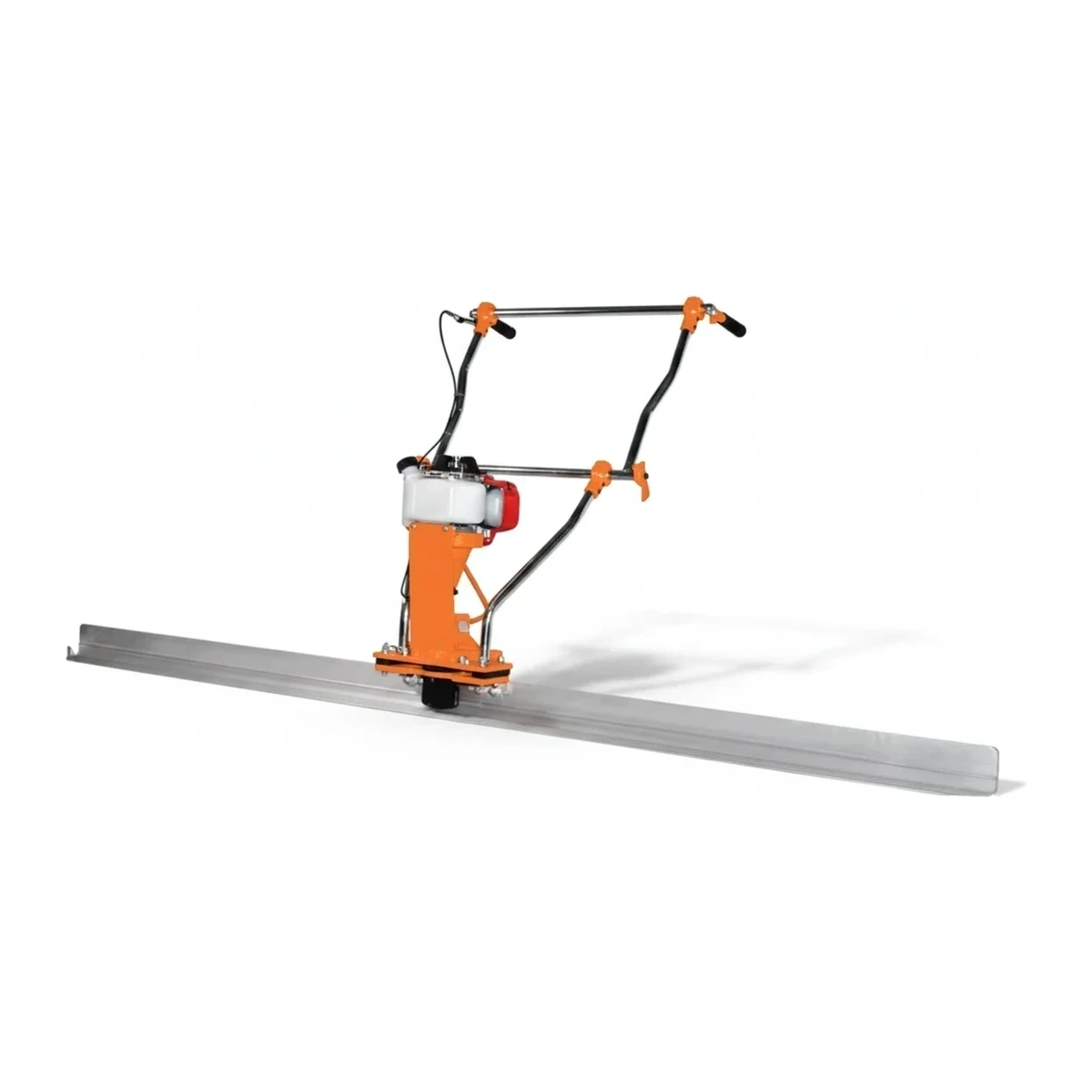
An eccentric weight spun by a small engine vibrates the screed bar or truss as the crew draws it across the placement, riding on wet screed guides, forms or pipe rails. The vibration momentarily liquefies the top layer, letting the bar cut high spots and fill lows while consolidating the surface. Listed engine ratings in the class run 6.7-24.4 hp; larger engines drive longer or heavier beam sections across wider placements in a single pull.
Tipos y variantes
- Wet screed (float screed)
- One-operator bar screed worked directly on the wet surface without forms or rails: fast setup for slabs at moderate flatness demands.
- Truss screed
- Sectional triangular truss spanning between forms or rails, vibrated along its length; the format for wide paving and high-spec floors.
- Roller screed
- Rotating tube strikes off the surface with minimal vibration: suited to low-slump mixes and pervious concrete.
- Magnesium bar screed
- Light hand-drawn vibrating bar for small placements, patches and confined pours.
Especificaciones clave
| Especificación | Rango típico | Qué significa |
|---|---|---|
| Engine power | 6.7-24.4 hp on listed units | Sets how long and heavy a beam the drive can vibrate effectively, which fixes maximum placement width per pass. |
| Beam length | assembled from sections; varies by model | Must span the placement between supports; sectional trusses extend to match pour width. |
| Vibration drive | engine-driven eccentric | Vibration intensity governs consolidation depth of the surface zone and how the screed handles stiffer mixes. |
Cómo la industria lo dimensiona
Screeds are sized by the width of placement they must strike off in one pass. Handheld wet screeds cover narrow slabs and strips; truss screeds assemble from sections to span wide placements between rails, with engine power scaled to beam length. Crews size the screed to the formed width so passes run continuously without cold joints between strips.
Aplicaciones
- Slab-on-grade pours
- Driveways, sidewalks and patios
- Parking lot paving
- Roadway and highway paving strips
- Warehouse and industrial floor placements
- Bridge deck and topping strike-off
Seguridad y operación
- Screed crews work bent over at the fresh-concrete edge; footing on wet grade and rebar mats is the routine slip-and-trip exposure.
- Engine and eccentric assemblies transmit vibration to the handles; rotation among crew members limits hand-arm vibration exposure on long pours.
- Truss sections are assembled and moved by multiple workers; pinch points at section joints and rail supports are controlled with planned lifts.
Normas y certificaciones
- ACI · 302.1R
- Floor and slab construction guide: strike-off, consolidation and the finishing sequence that follows screeding.
- OSHA · 29 CFR 1926.300
- General power-tool guarding requirements applicable to engine-driven screed drives.
Preguntas frecuentes
What does a vibratory screed do that a straightedge does not?
When is a truss screed used instead of a wet screed?
What follows the screed in the finishing sequence?
Comparar modelos populares
Buscar por especificación →Normalizado a las mismas unidades. Un guion significa que el valor no fue publicado.
| Modelo | Potencia del motor | Peso operativo |
|---|---|---|
| Wacker Neuson P35A | 1 hp | 35.3 lb (16 kg) |
| Multiquip DIS-185SSI4F | 49 hp | - |
| Multiquip JWN24HTCSL | - | - |
| Multiquip DIS100SSK4F | 24 hp | 1,631 lb (740 kg) |
Equipos relacionados
Explorar por fabricante
Fuentes
Cada especificación se verifica con los datos publicados por el fabricante, con la fuente enlazada como referencia.
Todos los modelos
33 modelos · Cada especificación citada a la fuente