

Vacuum Excavators
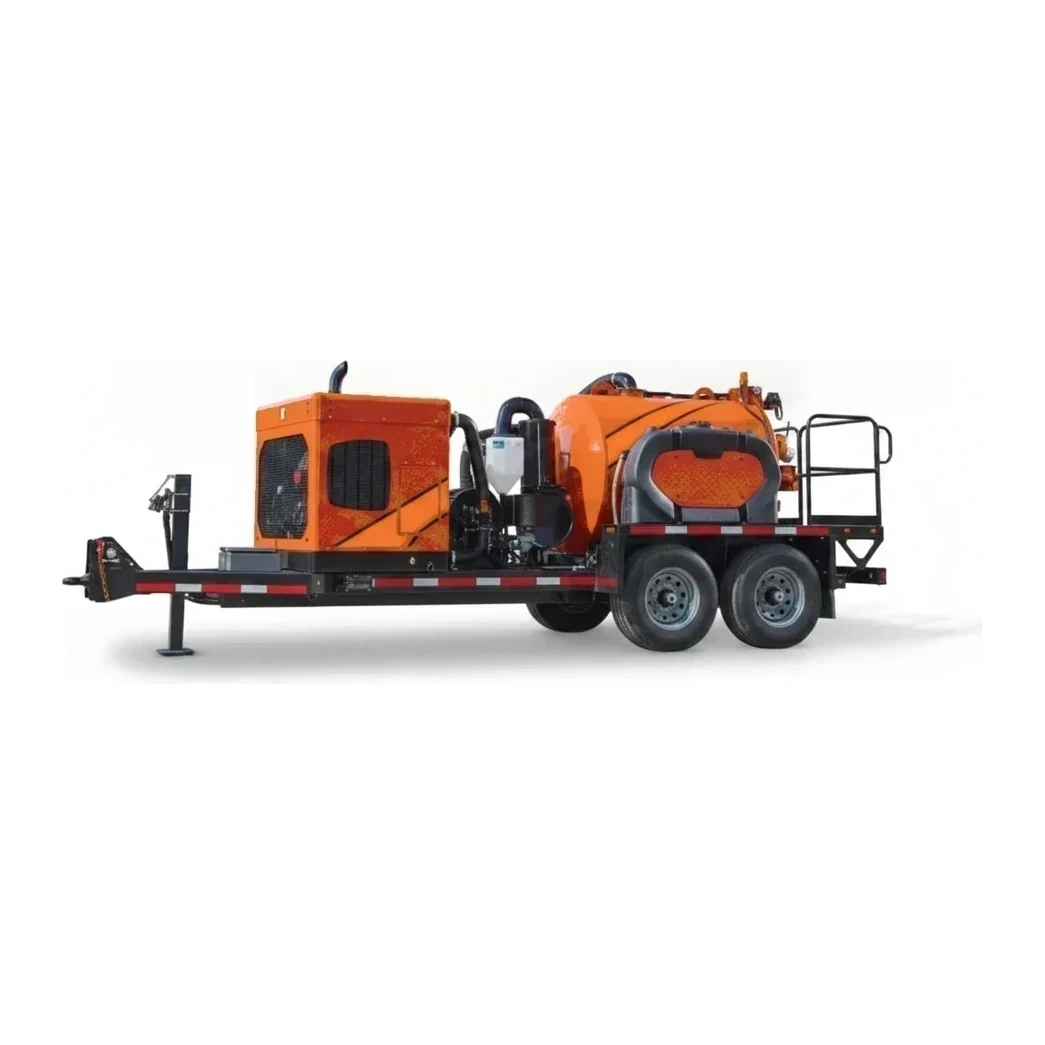
Vacuum excavators expose buried utilities and excavate precisely using suction with air or water. The class covers trailer and truck units across a range of spoil-tank and vacuum capacities.
Cómo funciona
A wand delivers water jets or air lances that loosen soil at the dig face while a high-cfm vacuum lifts the material through a hose into the debris tank. Water cuts faster in most soils; air leaves dry, reusable spoil. Excavation proceeds in a controlled column, exposing utilities undamaged.
Tipos y variantes
- Vacuum Excavator
- Suction unit that exposes buried utilities with air or water instead of digging teeth.
Cómo elegir
Selection turns on spoil capacity, vacuum power, and water volume against the number and depth of holes. Small trailer units handle potholing and valve-box cleanouts; large truck units support slot trenching and remote-spoil work. Air suits jobs where spoil returns to the hole; hydro suits hard or cohesive soils.
Normas y certificaciones
- Common Ground Alliance
- Damage-prevention best practices, including 811 notification before any excavation.
- OSHA · 29 CFR 1926 Subpart P
- Excavation rules; protective systems are required in trenches 5 ft (1.5 m) or deeper.