

Up to 5,500 lb Manual Pallet Jack
The up to 5,500 lb manual pallet jack is the industry-standard hand-powered unit for moving palletized loads on level warehouse and loading-dock floors. With capacities typically ranging from 726 to 2,268 kg (roughly 1,600 to 5,000 lb) and lift heights from 3.2 to 19.7 feet, this class handles the vast majority of routine horizontal pallet transport. For loads exceeding 5,500 lb or applications requiring greater stability with heavy goods, the 5,500+ lb manual pallet jack is the appropriate step up.
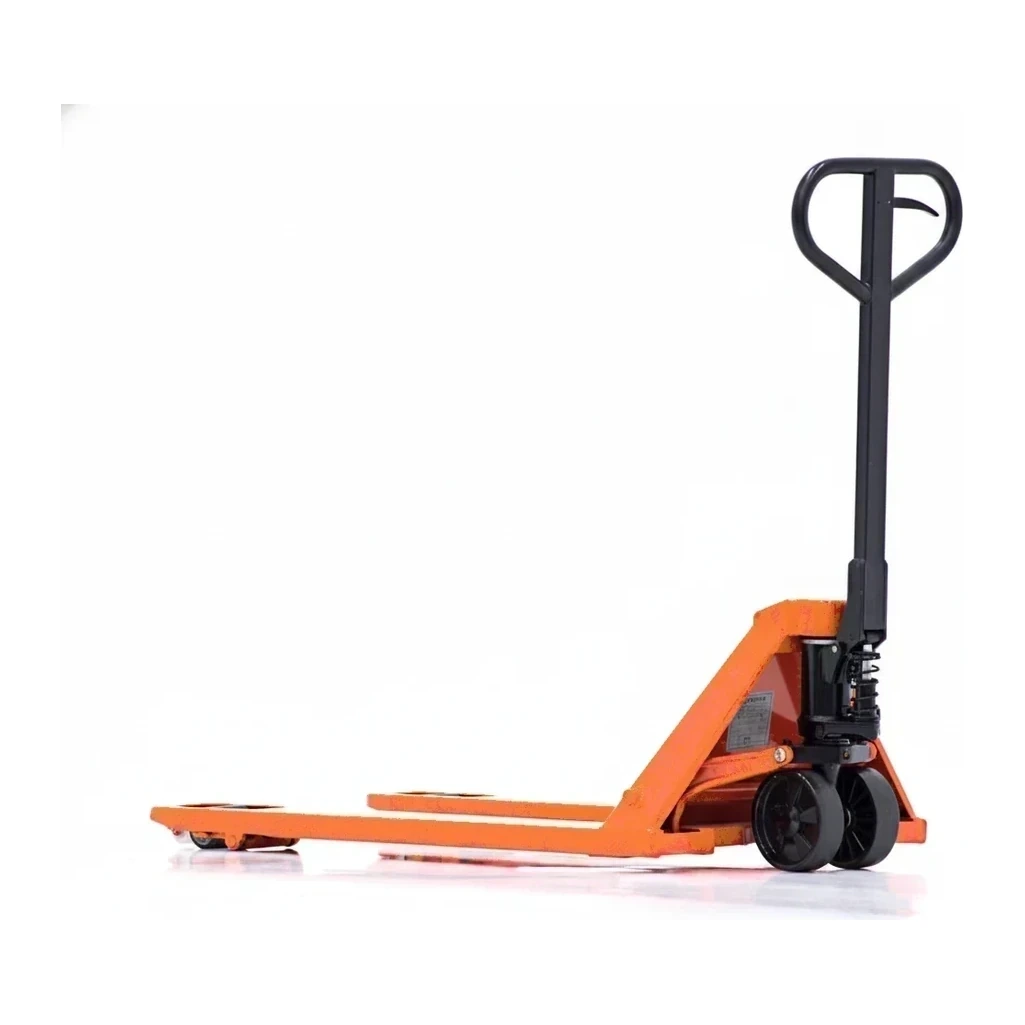
Cat classes
Elija una clase de tamaño: la capacidad y el alcance varían en la gama.
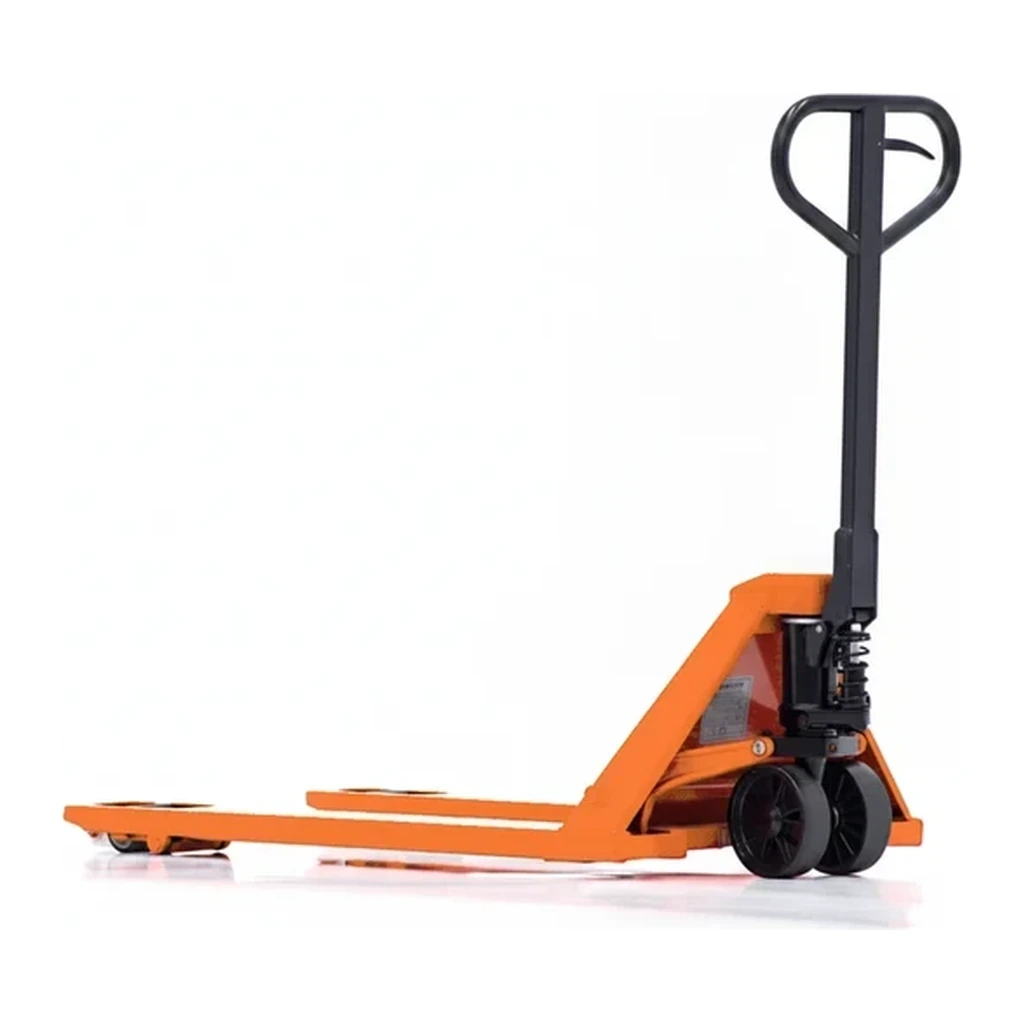
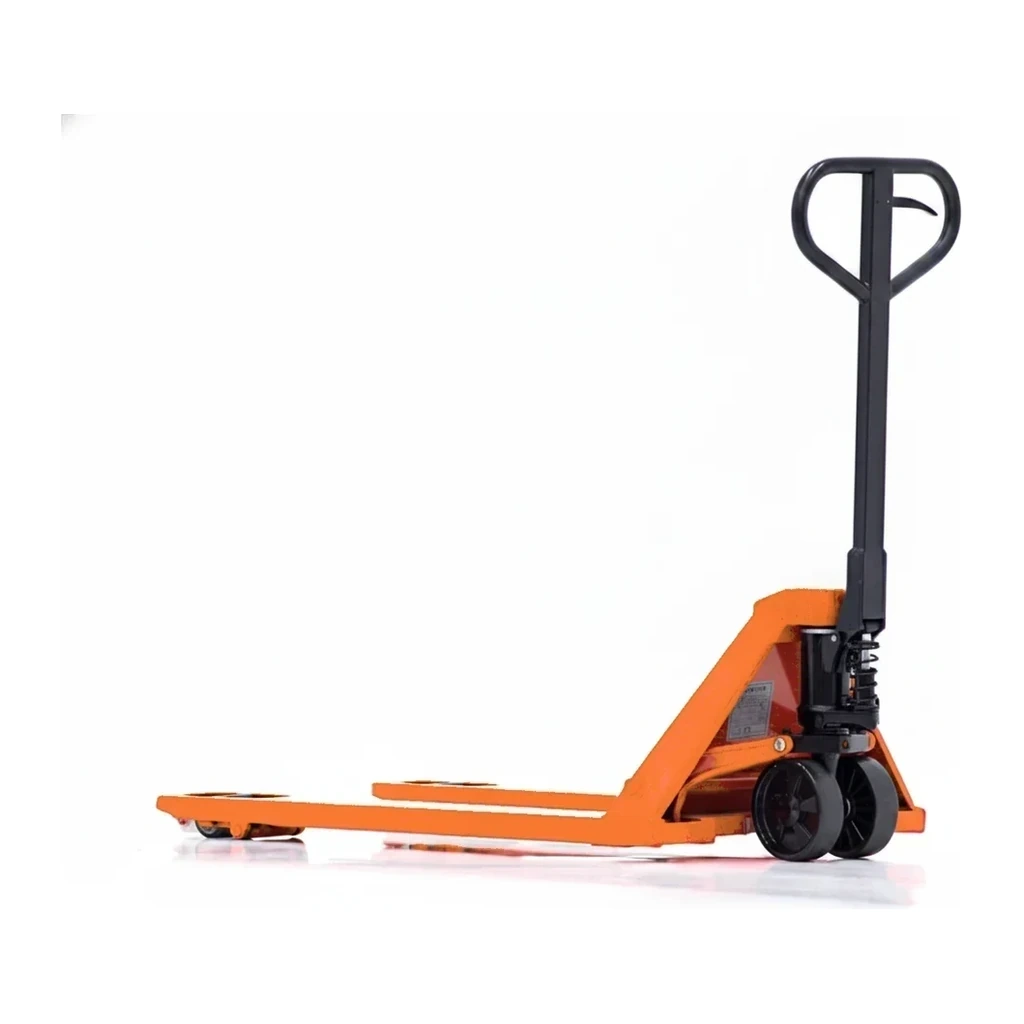
Especificaciones clave
| Especificación | Rango típico | Qué significa |
|---|---|---|
| Load capacity | 726-2,268 kg (1,600-5,000 lb) | Maximum safe load for the hydraulic pump and fork structure; most units cluster near the 5,500 lb upper limit. |
| Lift height | 3.2–19.7 ft (1.0–6.0 m) | Vertical travel from ground contact to maximum fork elevation; high-lift models approach 20 feet for order-picking tasks. |
| Fork length | 42–48 in (107–122 cm) | Standard dimensions to accommodate 40×48 in and 48×40 in GMA pallets with adequate support. |
Cómo elegir
This size class is appropriate for standard GMA pallets, IBC totes, and skidded materials up to about 2.5 tons on smooth concrete or asphalt. It suits warehouse aisles, truck loading docks, and retail backrooms where loads remain within the 5,500 lb threshold and the floor is reasonably level. When total load weight, pallet plus product, exceeds 5,500 lb, or when handling dense materials like metal coils or machinery components, the 5,500+ lb Manual Pallet Jack offers the reinforced frame and larger-diameter wheels necessary for safe operation and extended service life.
Lo que maneja este tamaño
- Moving boxed consumer goods from receiving dock to warehouse racking
- Transporting bagged cement or aggregates on smooth warehouse floors
- Loading and unloading 48×40 in pallets from delivery trucks
- Repositioning IBC totes of liquids in food processing facilities
- Shifting cartons of automotive parts in distribution centers
- Order-picking elevated stock with high-lift scissor-frame models
Seguridad y operación
- Operator must verify total load weight, pallet plus cargo, remains within the unit's rated capacity to prevent hydraulic failure or frame damage
- Smooth, level floors are essential; even minor slopes or surface irregularities can cause the load to shift or the jack to roll uncontrolled
- Proper hand and foot positioning during pumping and travel prevents crush injuries between the handle and fixed objects
- Load must be centered on forks and stable; overhanging or unbalanced cargo increases tip-over risk during turns
Transporte y logística
- Compact footprint allows storage on delivery trucks or in service vans; most units weigh 150-250 lb and fit through standard doorways
- No trailer required; units are typically delivered by hand-truck or rolled directly off a liftgate-equipped vehicle
- Fork-over design permits nesting for multi-unit transport in larger box trucks
Alimentación
- Purely manual hydraulic operation; no electrical connection, battery charging, or fuel required
- Operator pumps the handle to raise forks via an internal hydraulic cylinder; release valve lowers the load by gravity
- Zero emissions and silent operation suit indoor use in temperature-controlled or noise-sensitive environments
Preguntas frecuentes
What distinguishes a standard manual pallet jack from a high-lift model in this weight class?
Can this size class operate on outdoor asphalt or gravel surfaces?
How does load capacity relate to fork length and width?
Comparar modelos populares
Buscar por especificación →Normalizado a las mismas unidades. Un guion significa que el valor no fue publicado.
| Modelo | Capacidad de carga | Altura de elevación | Potencia del motor |
|---|---|---|---|
| EP Equipment EPT12-F3H | 2,646 lb (1,200 kg) | 3.2 ft (1.0 m) | - |
| Hyster P30UT | 3,300 lb (1,497 kg) | 7.5 ft (2.3 m) | - |
| Hyster W45ZHD | 4,500 lb (2,041 kg) | 8.4 ft (2.6 m) | - |
| Jungheinrich EJC 110/112 | - | - | - |
| Jungheinrich EJC 212z-220z | - | 19.7 ft (6.0 m) | - |
| Mitsubishi PBF20N3DR | - | - | - |
Equipos relacionados
Explorar por fabricante
Fuentes
Cada especificación se verifica con los datos publicados por el fabricante, con la fuente enlazada como referencia.
Up to 5,500 lb Manual Pallet Jack
50 modelos · Página 2 de 2 · Cada especificación citada a la fuente