

Platform Cart
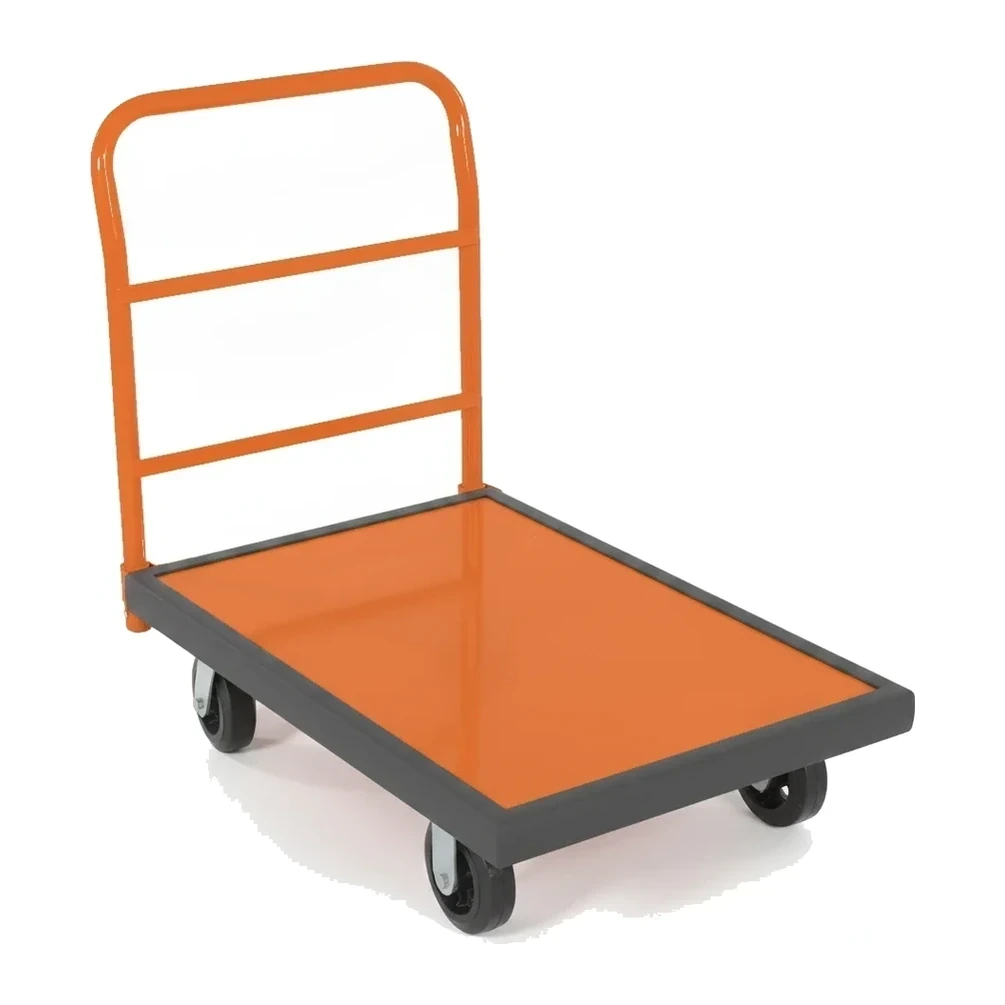
A platform cart is a wheeled material handling vehicle consisting of a flat deck mounted on a frame with four wheels, designed to be pushed or pulled manually for transporting goods, tools, and materials. Also known as platform trucks, warehouse carts, or stock carts, these devices are fundamental equipment in warehousing, manufacturing, retail, and service industries. Platform carts provide a simple, non-powered solution for moving loads across floors without requiring lifting.
Cat classes
Elija una clase de tamaño — la capacidad y el alcance varían en la gama.
Cómo funciona
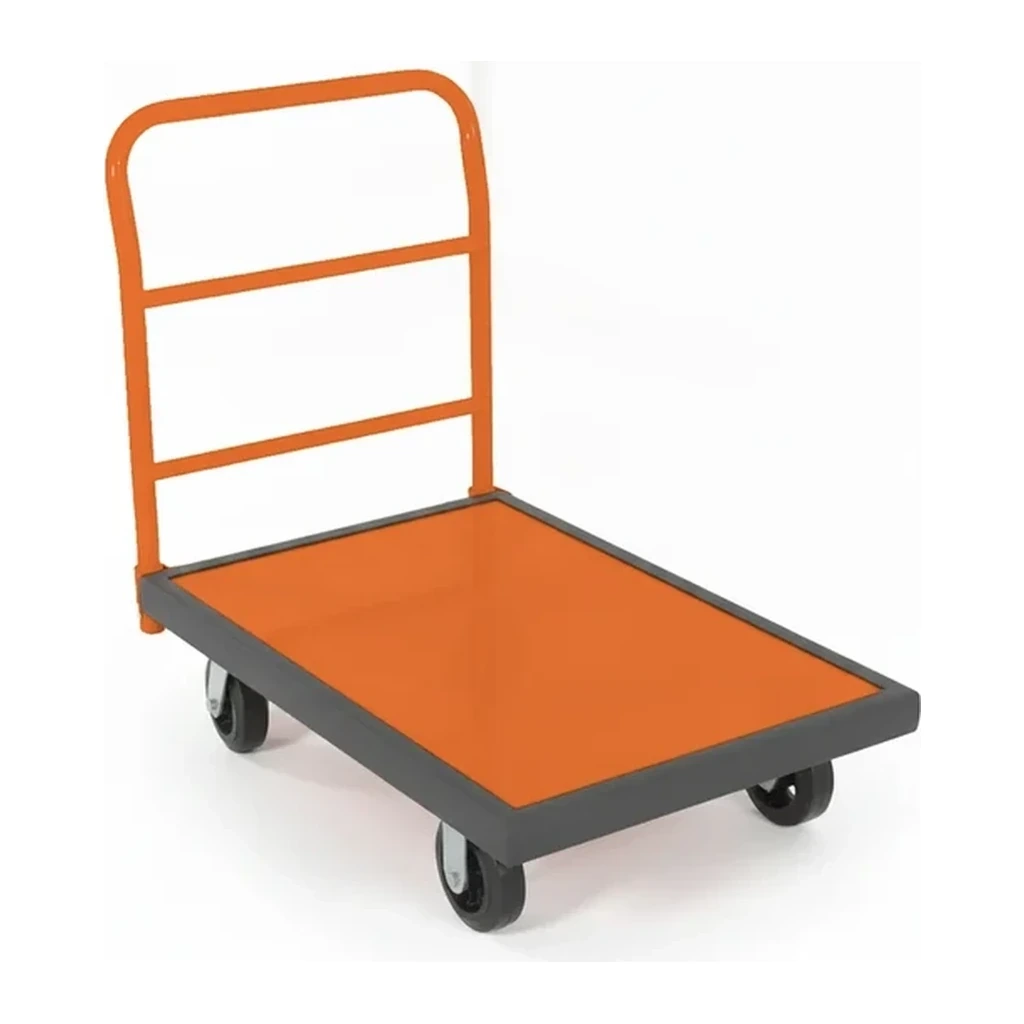
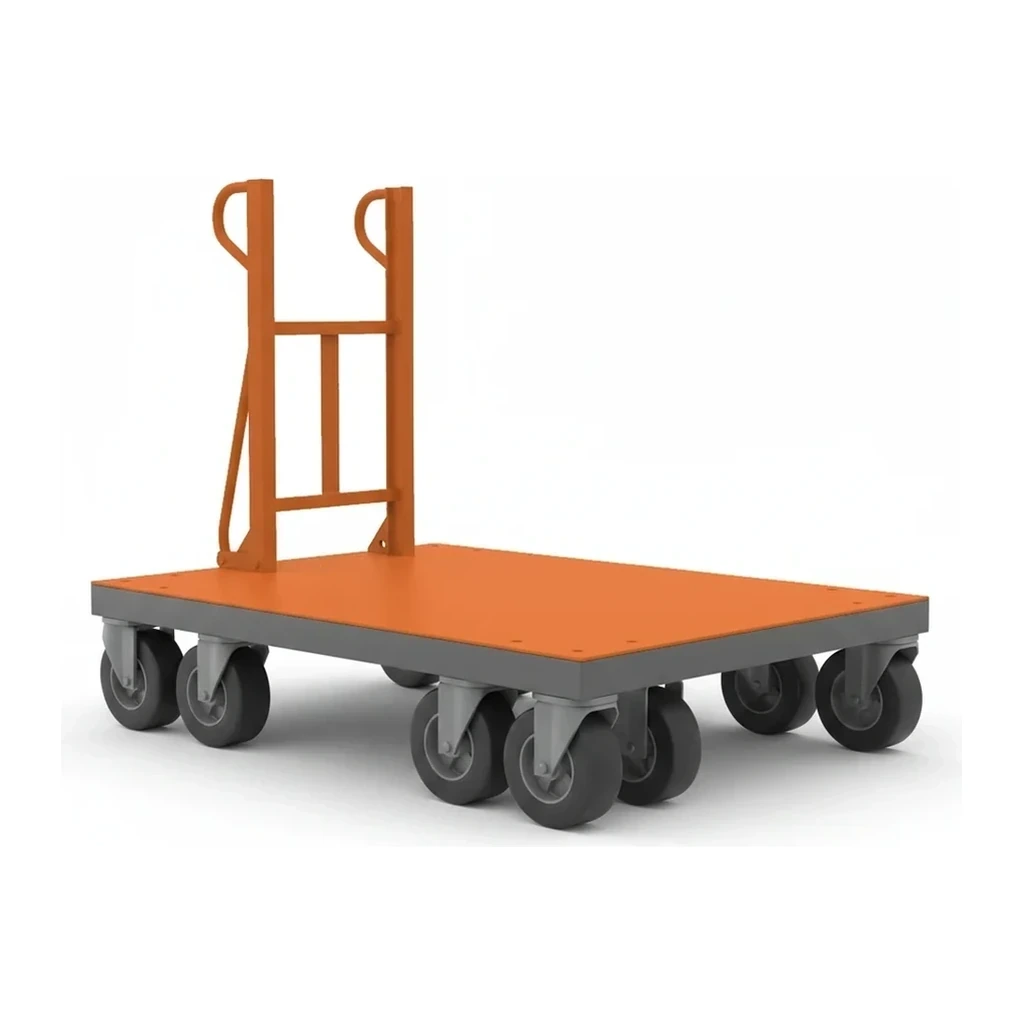
The operator loads materials onto the flat platform deck, then pushes or pulls the cart using a handle or handlebar attached to one end of the frame. The four-wheel configuration provides stability under load, while the low deck height facilitates easy loading and unloading. Most platform carts feature casters or swivel wheels on one or both ends to enable turning and maneuvering in tight spaces. The platform deck distributes weight across the frame and wheels, allowing a single operator to move loads that would be difficult or unsafe to carry manually. Braking, when present, is typically achieved through foot-operated wheel locks that secure the cart in position during loading and unloading operations.
Tipos y variantes
- Standard Platform Truck
- Flat rectangular deck with fixed handle, designed for general-purpose material transport in warehouses and facilities
- Folding Platform Cart
- Features a collapsible handle and sometimes a folding deck for compact storage when not in use
- Panel Cart
- Equipped with vertical side panels or racks to support sheet goods, drywall, plywood, or other flat materials during transport
- Service Cart
- Multi-tiered platform design with shelves or bins for transporting tools, parts, and supplies in maintenance and service applications
- Heavy-Duty Platform Truck
- Reinforced frame and industrial-grade wheels designed for loads exceeding 1,000 lb in manufacturing and industrial environments
Especificaciones clave
| Especificación | Rango típico | Qué significa |
|---|---|---|
| Load Capacity | 227–1,134 kg (500–2,500 lb) | Maximum weight the platform and frame are rated to carry safely |
| Deck Dimensions | 610–1,220 mm × 610–910 mm (24–48 in × 24–36 in) | Platform surface area available for load placement |
| Deck Height | 200–300 mm (8–12 in) | Distance from floor to platform surface, affecting loading ease and stability |
| Wheel Diameter | 100–200 mm (4–8 in) | Larger wheels improve rolling over thresholds and rough surfaces |
| Frame Material | Steel, aluminum, or composite | Determines cart weight, durability, and corrosion resistance |
Cómo la industria lo dimensiona
The industry sizes platform carts primarily by load capacity, measured in pounds or kilograms. Standard classifications include 500–1,000 lb platform trucks for moving boxes, tools, and light stock across finished floors, and 1,000–2,000 lb platform trucks for heavy shop and warehouse loads such as steel stock, machinery parts, and full stacked cases. Deck size and configuration serve as secondary sizing factors, with larger platforms accommodating palletized or bulk materials while smaller carts suit tighter spaces and lighter duty applications.
Aplicaciones
- Warehouse order picking and stock replenishment operations
- Manufacturing floor transport of parts, components, and work-in-process materials
- Retail backroom inventory movement and floor restocking
- Facility maintenance and janitorial equipment transport
- Sheet goods and panel material handling in construction and fabrication
- Hospital and institutional supply distribution
Seguridad y operación
- Loads should be centered and secured on the platform to prevent shifting during movement and maintain stability
- Operators must ensure load capacity is not exceeded, accounting for uneven weight distribution
- Visibility around the load is critical; tall or wide loads may require a second spotter
- Wheel locks or brakes must be engaged whenever the cart is stationary during loading or unloading
- Proper pushing technique and ergonomic posture reduce strain injuries, particularly when starting heavily loaded carts
Normas y certificaciones
- OSHA · 29 CFR 1910.176
- Covers general material handling and storage requirements, including safe use of manual transport devices
- ANSI · MH29.1
- Provides safety requirements for industrial scissors lifts, including mobile platform trucks with lift mechanisms
- Industrial Truck Association (ITA)
- Offers guidance on selection and safe operation of manual material handling equipment
Preguntas frecuentes
What is the difference between a platform cart and a pallet jack?
How is platform cart capacity determined?
What wheel types are common on platform carts?
Can platform carts handle uneven or outdoor surfaces?
Equipos relacionados
Explorar por fabricante
Fuentes
Cada especificación se verifica con los datos publicados por el fabricante, con la fuente enlazada como referencia.
Todos los modelos
56 modelos · Página 2 de 2 · Cada especificación citada a la fuente