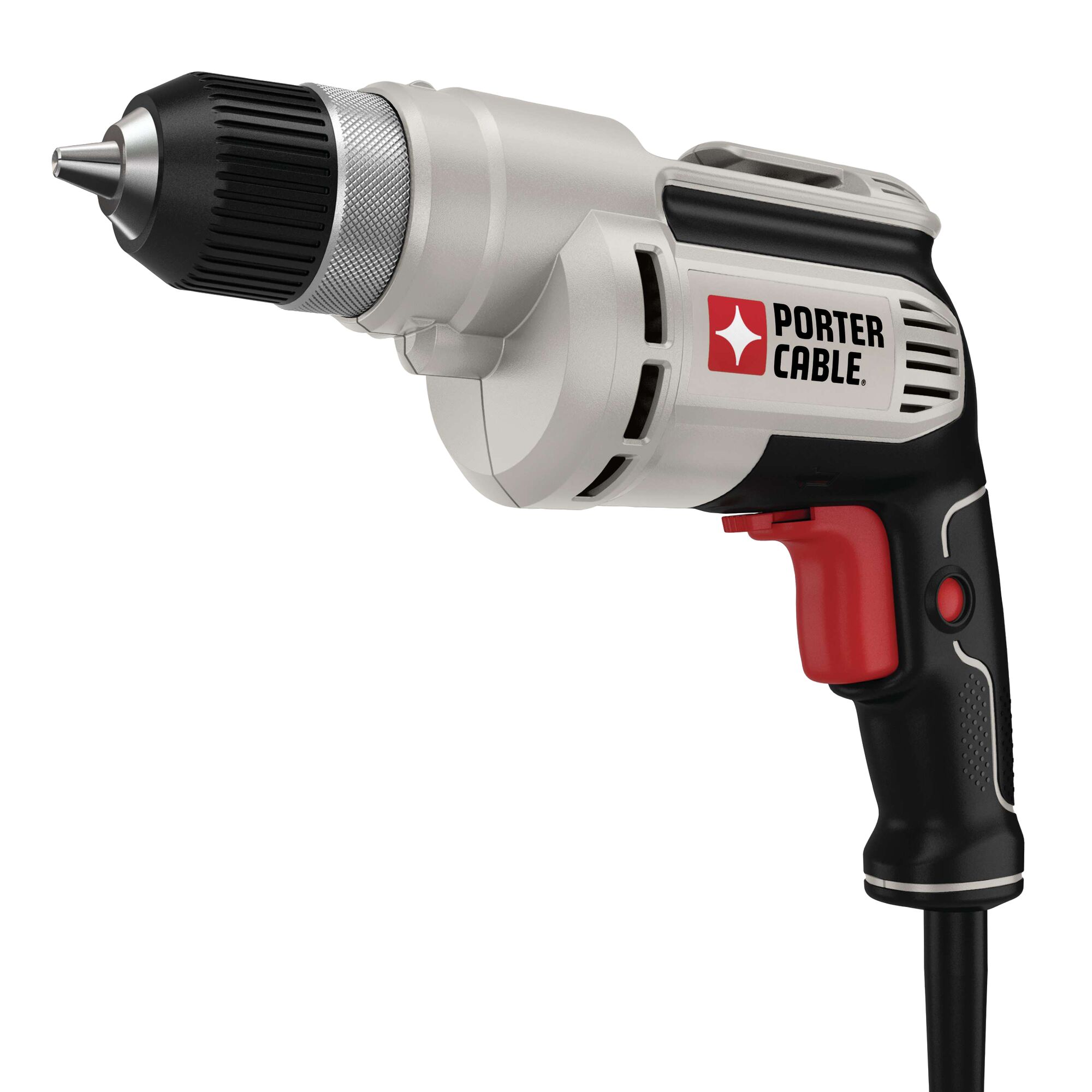

Electric Drill
An electric drill is a motor-driven hand tool that spins a chuck-held bit to bore holes and drive fasteners. It is the most widely used power tool on a construction site, available in corded and cordless versions.
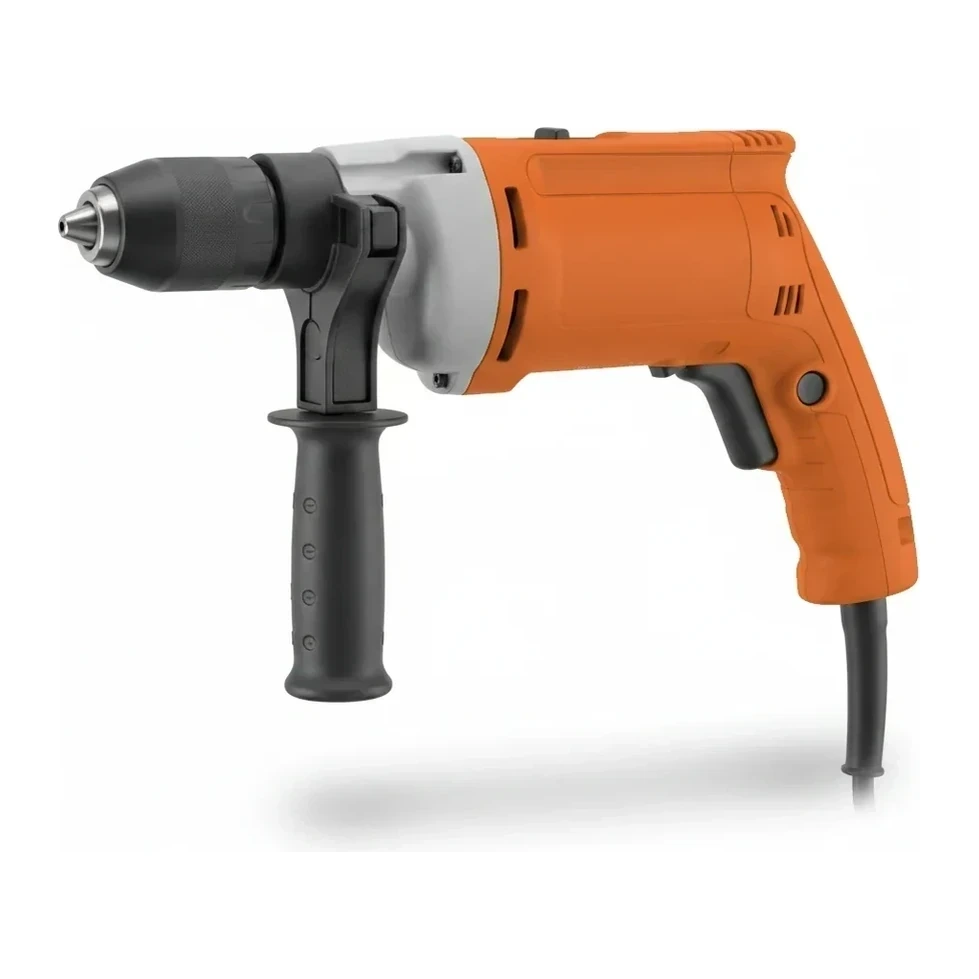
Cómo funciona
An electric motor drives the chuck through a reduction gearbox, and a trigger modulates speed from zero up to roughly 2,300 RPM on models in this class. A keyed or keyless chuck clamps the bit shank, and most drills add a clutch that slips at a set torque to avoid over-driving screws. Hammer-drill variants add a percussive mode for light masonry drilling.
Tipos y variantes
- Drill/drivers
- General-purpose cordless drills with an adjustable clutch for drilling and screwdriving.
- Corded drills
- Mains-powered drills for sustained drilling without battery limits.
- Hammer drills
- Dual-mode drills that add percussion for occasional holes in masonry.
- Right-angle drills
- Compact heads that drill between studs and joists where a standard body cannot fit.
Especificaciones clave
| Especificación | Rango típico | Qué significa |
|---|---|---|
| No-load speed | 18-2,300 RPM | Higher speed suits small bits in wood; lower speed with more torque suits large bits and metal. |
| Weight | 1.8–10.6 lb (0.8–4.8 kg) | Lighter drills reduce fatigue overhead; heavier models generally carry stronger motors. |
| Overall length | 6.8–14.6 in (173–370 mm) | Shorter bodies reach into cabinets, joist bays, and other tight spots. |
Cómo la industria lo dimensiona
The rental industry bands electric drills by chuck diameter. A 3/8 in chuck handles driving screws and pilot holes in wood and light metal. A 1/2 in chuck accepts hole saws, self-feed bits, and paddle mixers and is the everyday jobsite drill. Drills with 3/4 in and larger chucks, usually right-angle, run big augers and self-feed bits punched through joists and studs.
Aplicaciones
- Pilot holes and fastener driving in framing and finish carpentry
- Drilling steel brackets, panels, and equipment during fabrication and repair
- Hardware, hinge, and fixture installation
- Mixing small batches of paint or thinset with a paddle attachment
Seguridad y operación
- A binding bit transfers torque to the wrist; larger drills should be run with the side handle fitted.
- Corded drills used outdoors or in damp locations require GFCI-protected circuits.
- Remove the chuck key before starting, and keep loose clothing clear of the rotating chuck.
Normas y certificaciones
- OSHA · 29 CFR 1926.302(a)
- Electric power-operated tools must be double-insulated or grounded.
- UL · UL 62841
- Safety standard for hand-held motor-operated electric tools.
Preguntas frecuentes
Corded or cordless?
What chuck size is standard?
Can an electric drill bore concrete?
Equipos relacionados
Explorar por fabricante
Fuentes
Cada especificación se verifica con los datos publicados por el fabricante, con la fuente enlazada como referencia.
Todos los modelos
133 modelos · Página 2 de 3 · Cada especificación citada a la fuente