

Cordless Nailer
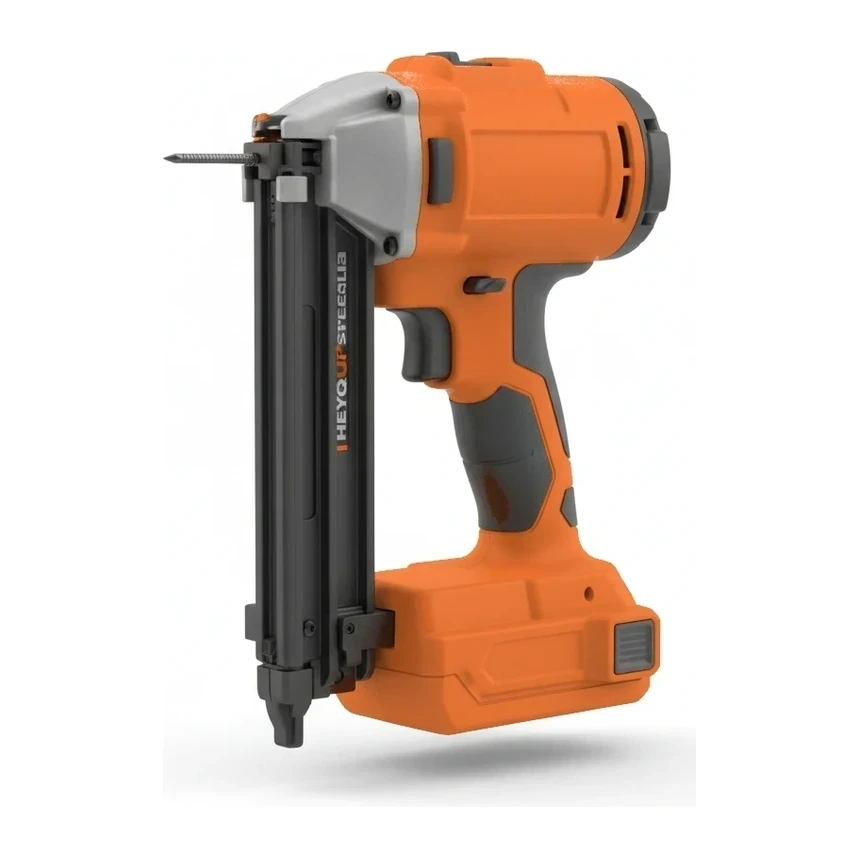
A cordless nailer is a portable fastening tool that drives nails into various materials without requiring a pneumatic air hose or electrical cord. These tools use either rechargeable battery power or fuel cells (gas cartridges) to provide the energy needed for nail placement. Cordless nailers enable work in locations without compressors or power sources and reduce jobsite clutter.
Cómo funciona
Battery-powered cordless nailers use a motor-driven flywheel or piston mechanism to generate the force needed to drive fasteners, drawing energy from lithium-ion battery packs. Gas-powered models (also called fuel-cell nailers) combine a disposable fuel cartridge with a rechargeable battery; the battery generates a spark that ignites a small amount of fuel in a combustion chamber, driving a piston that propels the nail. Both systems use a magazine to hold a strip or coil of collated nails and feed them sequentially into the firing chamber. The operator positions the tool's nose against the work surface and activates the trigger mechanism, which may operate in sequential mode (requiring contact and trigger pull for each fastener) or contact/bump mode (allowing rapid successive firing while the trigger is held).
Tipos y variantes
- Framing Nailer
- Drives large-diameter nails (typically 2" to 3½") for structural wood framing, sheathing, and deck construction
- Finish Nailer
- Places 15- or 16-gauge finish nails for trim, molding, cabinetry, and other applications requiring minimal surface damage
- Brad Nailer
- Fires thin 18-gauge brads for delicate trim, paneling, and finish work where small fastener heads are required
- Roofing Nailer
- Designed for high-volume fastening of shingles and roofing materials with coil-fed nails and wide contact tips
- Pin Nailer
- Drives headless 23-gauge pins for nearly invisible fastening in fine carpentry and furniture applications
- Siding Nailer
- Optimized for attaching siding materials with adjustable depth settings and extended magazines for efficiency
Especificaciones clave
| Especificación | Rango típico | Qué significa |
|---|---|---|
| Fastener Gauge/Diameter | 15-gauge to 21-degree framing | Determines nail thickness and holding strength; lighter gauges for finish work, heavier for structural applications |
| Nail Length Range | ⅝" to 3½" depending on type | Maximum and minimum fastener lengths the tool can accommodate; set by magazine depth and drive mechanism |
| Magazine Capacity | 100-120 nails (strip-fed) | Number of fasteners held before reloading; coil magazines typically hold more than stick/strip types |
| Power Source | 18V-20V Li-ion or fuel cell | Battery voltage or fuel-cell cartridge system; higher voltage generally provides more driving power and runtime |
| Operating Weight | 5-8 lbs with battery | Tool weight affects user fatigue during extended operation; varies by nailer type and power system |
Cómo la industria lo dimensiona
The industry does not classify cordless nailers by size bands. Instead, these tools are selected by trade application and the fastener specifications required for the work. The nail gauge (wire thickness), length, and head style are determined by the construction task, and the nailer is chosen to match those fastener requirements. A framing crew selects framing nailers for structural work, while finish carpenters choose finish or brad nailers based on trim specifications. The distinction between models within a type typically involves power platform compatibility, magazine style (stick, coil, or angled), and brand-specific features rather than dimensional sizing.
Aplicaciones
- Residential and commercial framing for wall studs, joists, and structural assemblies
- Exterior siding installation including fiber cement, wood, and engineered materials
- Roofing applications for shingle, felt, and underlayment attachment
- Interior trim and finish carpentry including baseboards, crown molding, and door casings
- Cabinetry and millwork assembly in shop and field installations
- Deck and fence construction for fastening boards, pickets, and structural components
Seguridad y operación
- Sequential trigger mode is recommended for most applications to prevent accidental discharge; contact/bump mode requires additional operator awareness
- Keep hands and body parts clear of the nailer's discharge path and nose contact area during operation
- Disconnect battery or fuel cell before clearing jams, performing maintenance, or adjusting depth settings
- Wear appropriate eye protection as fasteners may deflect off knots, metal, or hard surfaces
- Maintain secure footing and proper balance, particularly when working on elevated surfaces or ladders with one-handed tool operation
Normas y certificaciones
- ANSI · SNT-101
- Safety requirements for portable, compressed-air-actuated, fastener driving tools; principles applied to cordless models
- OSHA · 1926.302(e)
- Construction industry regulations for powered hand tools including nailers and fastening equipment
- CSA · Z147.1
- Canadian standards for design, manufacture, and safe operation of fastener-driving tools
- UL · UL 62841-2-15
- Electrical safety standard for battery-powered nailers and staple guns addressing electrical components and charging systems
Preguntas frecuentes
What distinguishes gas-powered from battery-powered cordless nailers?
How does fastener collation type affect nailer selection?
What factors determine driving depth consistency?
Why are cordless nailers sometimes referenced by the brand name Paslode?
Equipos relacionados
Explorar por fabricante
Fuentes
Cada especificación se verifica con los datos publicados por el fabricante, con la fuente enlazada como referencia.
Todos los modelos
35 modelos · Cada especificación citada a la fuente