

Rebar Tier
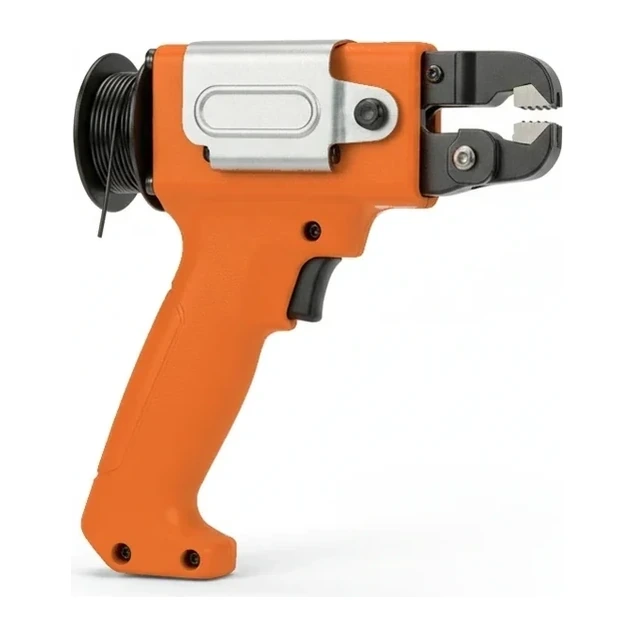
A rebar tier is a battery-powered hand tool designed to automatically tie wire around rebar intersections in concrete reinforcement assemblies. The tool feeds, wraps, twists, and cuts tie wire in a single trigger action, replacing manual tying methods. Rebar tiers are fundamental to concrete construction where reinforcing steel must be secured before pouring.
Cómo funciona
The rebar tier operates by feeding pre-loaded wire from an internal spool or coil through a guide channel around the rebar intersection. When the trigger is activated, a motor-driven mechanism wraps the wire around both bars, twists the wire to a predetermined tension, and cuts it flush in approximately one second. The tool uses either disposable wire spools or reloadable wire coils, with automatic feeding systems that advance the wire for the next tie. Most models incorporate brushless motors for durability and torque sensors to ensure consistent tie tension across thousands of cycles. The tying head is designed to access rebar intersections at various angles, with some models featuring adjustable or swiveling noses to reach confined spaces within dense rebar mats.
Tipos y variantes
- Single-Tie Rebar Tier
- Standard configuration that ties one rebar intersection per trigger pull, suitable for most concrete reinforcement work and general construction applications
- Twin-Tie Rebar Tier
- Dual-wire system that ties two parallel rebar intersections simultaneously, increasing productivity on slab and mat foundation work with regular grid spacing
- Cordless Rebar Tier
- Battery-powered models using lithium-ion battery platforms, providing mobility and eliminating power cords for all site conditions
- Wire Coil Rebar Tier
- Accepts bulk wire coils rather than disposable spools, reducing consumable costs on large-scale projects with high tie counts
Especificaciones clave
| Especificación | Rango típico | Qué significa |
|---|---|---|
| Rebar Capacity Range | #3 to #10 (10mm to 32mm) | The range of rebar diameters the tool can effectively tie, covering most structural applications from light mesh to heavy column steel |
| Tie Wire Gauge | 0.8mm to 1.2mm | Wire diameter compatible with the tool's feed mechanism, selected to provide adequate tensile strength for the rebar size being tied |
| Ties Per Charge | 2,000 to 4,000 ties | Number of tie cycles achievable on a single battery charge, determining work duration between battery swaps on jobsites |
| Tie Time | 0.5 to 1.0 seconds | Duration from trigger activation to completed tie, directly affecting labor productivity compared to manual tying methods |
| Tool Weight | 2.5 to 3.5 kg (5.5 to 7.7 lbs) | Operating weight including battery, impacting operator fatigue during prolonged use on vertical or overhead rebar work |
Cómo la industria lo dimensiona
The rebar tier class is not sized into distinct bands because the equipment serves a single function, tying rebar intersections, and the rebar size range is nearly identical across the available fleet. All models in the category accommodate the standard spectrum of structural rebar from #3 to #10 bar, covering the vast majority of concrete reinforcement applications. Selection is based on feature differentiation such as single versus twin-tie capability, wire feed system type, and battery platform compatibility rather than capacity tiers.
Aplicaciones
- Foundation and slab reinforcement assembly for commercial and residential concrete structures
- Bridge deck rebar installation where large mats require thousands of intersection ties
- Vertical wall and column cage fabrication in concrete formwork
- Precast concrete element production in manufacturing facilities
- Seismic retrofit and structural upgrade projects requiring dense rebar meshes
- Parking structure and elevated deck construction with repetitive grid patterns
Seguridad y operación
- Maintain awareness of pinch points where the tying head meets rebar, as the mechanism operates with sufficient force to cause hand injuries
- Ensure proper battery charging and storage per manufacturer specifications to prevent thermal events with lithium-ion power sources
- Inspect wire feed mechanisms regularly for jams or misfed wire that can cause unexpected tool behavior during trigger activation
- Use appropriate personal protective equipment including gloves and safety glasses, as cut wire ends remain sharp after tying operations
- Avoid operating with damaged or bent wire that may compromise tie integrity or cause feed system failures
Normas y certificaciones
- OSHA · 29 CFR 1926.701
- Concrete and masonry construction standards address requirements for properly securing reinforcing steel before concrete placement
- ACI · ACI 318
- Building Code Requirements for Structural Concrete specifies tie wire standards and rebar positioning tolerances that affect tying practices
- ANSI · ANSI/ASME B30
- Standards for construction equipment safety and operation applicable to powered hand tools in construction environments
- UL
- Electrical safety certification for battery-powered tools ensuring compliance with voltage, insulation, and thermal protection requirements
Preguntas frecuentes
What productivity improvement does a rebar tier provide compared to manual tying methods?
How does wire consumption compare between rebar tiers and manual tying?
Can rebar tiers accommodate epoxy-coated or stainless steel rebar?
What maintenance intervals are typical for rebar tiers in continuous production use?
Equipos relacionados
Explorar por fabricante
Todos los modelos
1 modelos · Cada especificación citada a la fuente