

Reel Mower
A reel mower is a precision cutting machine that uses a rotating horizontal cylinder of helical blades to scissor-cut grass against a fixed bedknife. Reel mowers deliver the lowest, cleanest cuts required for golf course greens, tees, fairways, and high-quality sports turf. The equipment class ranges from walk-behind greens units to multi-gang triplex and fairway configurations.
Cómo funciona
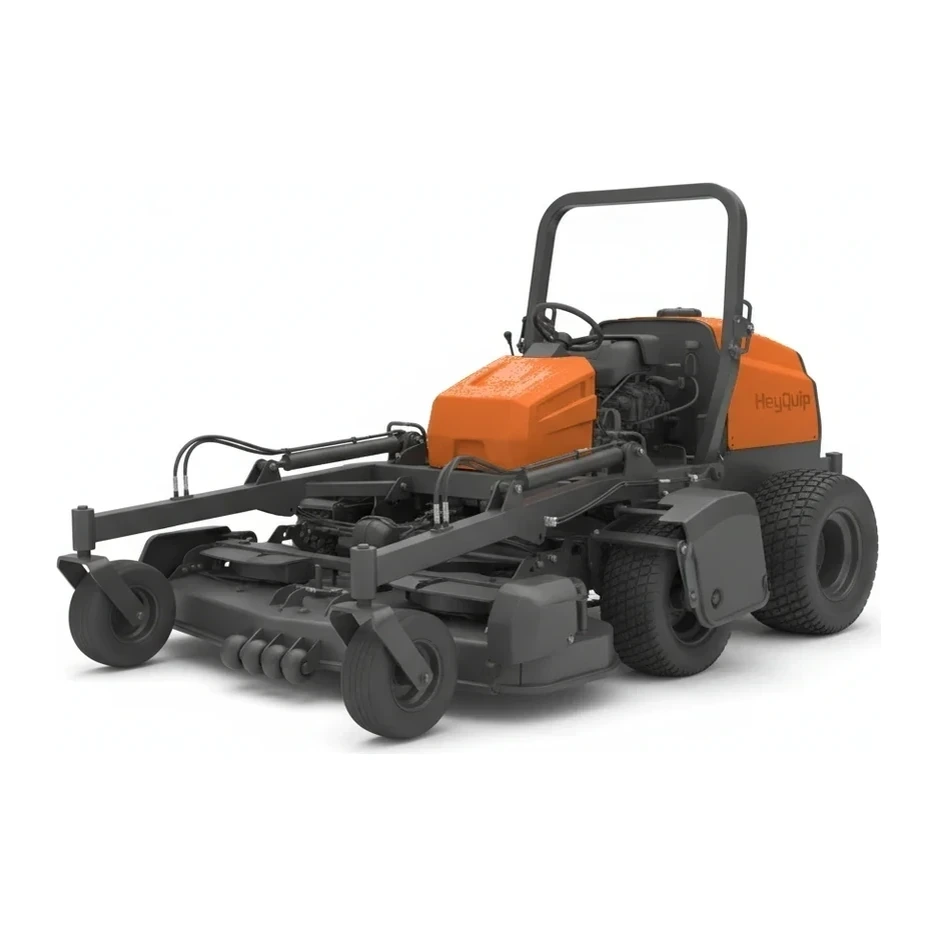
The reel mower operates on a scissor-cutting principle: a cylindrical reel with 5 to 11 helical blades rotates forward, carrying grass blades against a stationary bedknife at the base of the cutting unit. This shearing action produces a clean, precise cut rather than the tearing action of rotary blades. The height of cut is adjusted by raising or lowering the entire cutting unit or bedknife relative to the reel, typically ranging from 0.1 inches for putting greens to 1 inch or more for fairways. Walk-behind models position a single cutting unit in front of the operator, while triplex mowers mount three cutting units on a central traction unit, and fairway mowers may use five to seven units in tandem or wing configurations. Ground-driven reels are powered by the machine's forward motion through a drive train, while powered reels use hydraulic or electric motors for independent control of reel speed and transport speed, optimizing the frequency of clip for cut quality.
Tipos y variantes
- Walk Greens Mower
- Single-reel pedestrian unit for putting greens and tees, typically cutting 18-26 inches wide at heights from 0.100 to 0.250 inches with 8-11 blade reels.
- Triplex Greens Mower
- Three cutting units mounted to a ride-on traction unit, covering greens complexes in a single pass with total cutting width of 5-7 feet.
- Fairway Mower
- Five-, seven-, or nine-gang configuration for wide-area mowing of fairways and roughs, with cutting widths from 8 to 16 feet and higher cut heights.
- Verticutter/Groomer
- Reel mower equipped with vertical blades or grooming reels to thin turf, remove thatch, or stand grass upright before cutting.
- Tournament Mower
- Ultra-precision greens mower with additional features for maintaining championship-level putting surfaces, including fine height-of-cut adjustments and dual-purpose cutting/grooming reels.
Especificaciones clave
| Especificación | Rango típico | Qué significa |
|---|---|---|
| Cutting Width | Walk units: 18-26 in; Triplex: 60-84 in; Fairway: 100-180 in | Total swath covered in a single pass; determines productivity and maneuverability in confined areas. |
| Height of Cut Range | Greens: 0.100-0.500 in; Fairways: 0.375-1.25 in | Adjustable range for different turf types and playing conditions; greens mowers cut lowest for optimal ball roll. |
| Number of Blades | 5-11 blades per reel | More blades provide finer, denser cuts but require more power; 8-11 typical for greens, 5-8 for fairways. |
| Reel Diameter | 4-7 inches | Larger diameters improve cut quality and allow lower cutting heights with proper blade-to-bedknife contact. |
| Power Source | Gas, diesel, electric, or hybrid | Propulsion and reel drive power; electric and hybrid options reduce emissions on sensitive turf areas. |
Cómo la industria lo dimensiona
The industry sizes reel mowers primarily by cutting width measured in inches, which correlates directly to application type. Walk greens mowers span 18-30 inches for precision work on putting surfaces, tees, and collars. Triplex and fairway units are categorized by total cutting width from 30 inches upward, with triplex configurations typically 60-84 inches and fairway units ranging from 100 to 180 inches or more. Application-specific designations, greens mower, fairway mower, rough mower, also serve as sizing categories, reflecting cut height capabilities and turf management role rather than pure dimensional measurement.
Aplicaciones
- Golf course putting greens, requiring cuts from 0.100 to 0.156 inches for consistent ball roll and speed
- Golf course tees, collars, and approaches with intermediate cut heights and precision finish
- Golf course fairways and roughs, covering large acreage with uniform height and finish quality
- Sports fields and stadium turf, including soccer, baseball, and cricket pitches requiring fine playing surfaces
- Lawn bowling greens, croquet courts, and other specialty turf with exacting cut standards
- High-end residential and commercial lawns where appearance and cut quality justify reel mower precision
Seguridad y operación
- Maintain proper clearance from rotating reels and bedknives during operation; blades remain sharp and can cause severe lacerations
- Engage all safety interlocks and presence controls; ensure reels stop when operator dismounts or releases deadman controls
- Perform backlapping, grinding, and bedknife adjustments only with engine off and reels fully stopped to prevent entanglement
- Operate on slopes within manufacturer-specified limits; triplex and fairway units have stability thresholds on inclines
- Inspect cutting units daily for loose blades, damaged reels, and proper bedknife-to-reel contact to prevent component failure during operation
Normas y certificaciones
- ANSI/OPEI B71.4 · B71.4
- Commercial turf care equipment safety standard covering reel mower design, guarding, and operator protection requirements.
- ASME B71.9 · B71.9
- Safety specifications for turf equipment including stability, controls, and protective structures applicable to ride-on reel mowers.
- EPA Emissions Standards · Tier 4
- Engine emission regulations for diesel-powered fairway and large-area reel mowers; tier levels vary by horsepower class.
- OSHA 1910.266 · 1910.212
- General machinery guarding requirements applicable to rotating reel assemblies and power transmission components.
Preguntas frecuentes
What is the difference between reel mowers and rotary mowers?
How is cutting height determined on a reel mower?
What does frequency of clip mean in reel mower operation?
Why do reel mowers require backlapping and bedknife maintenance?
Equipos relacionados
Explorar por fabricante
Fuentes
Cada especificación se verifica con los datos publicados por el fabricante, con la fuente enlazada como referencia.
Todos los modelos
1 modelos · Cada especificación citada a la fuente