

Zero-Turn Mower
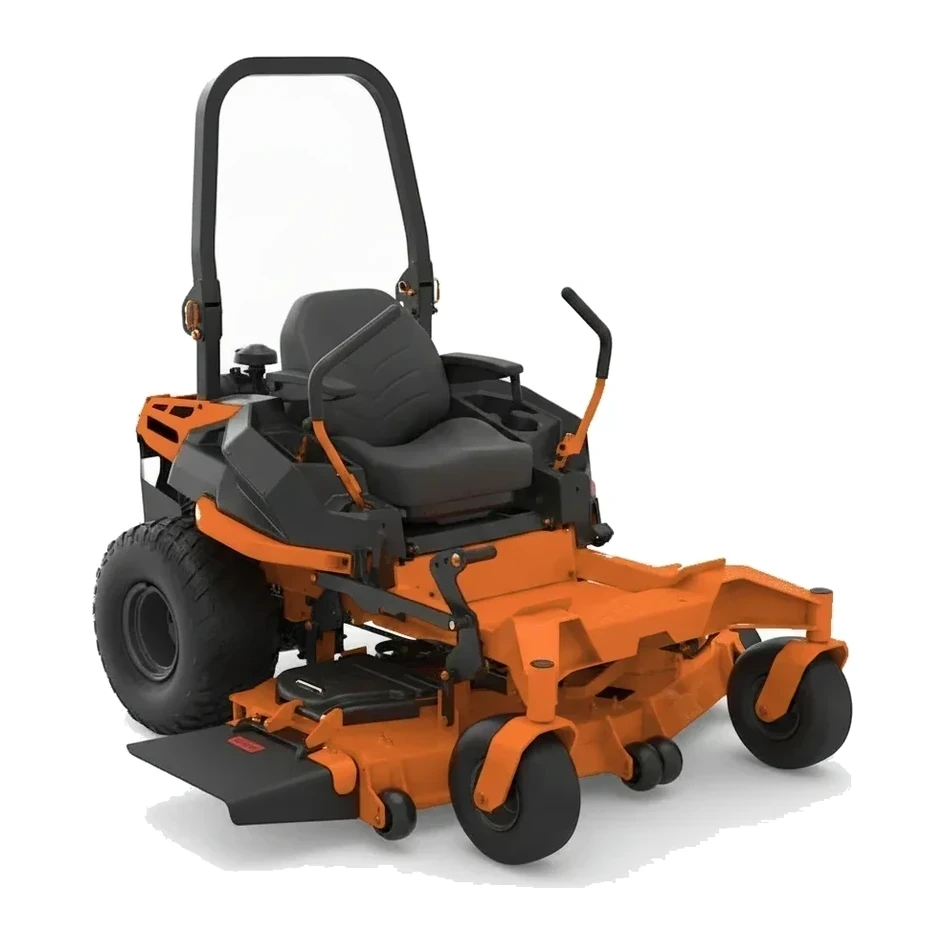
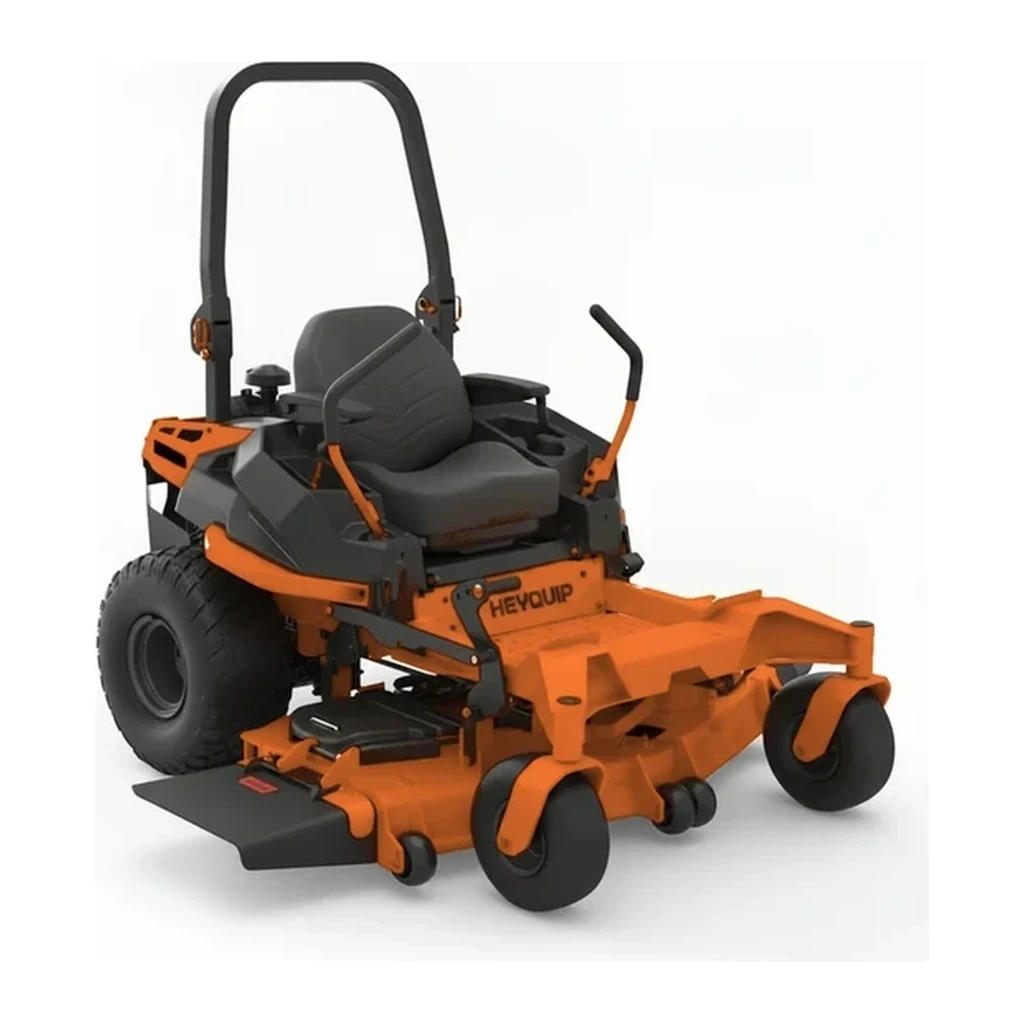
A zero-turn mower is a riding mower equipped with independent rear-wheel drive systems that enable the machine to pivot on its own axis, achieving a zero-degree turning radius. These machines use lap bars or steering levers instead of a traditional steering wheel to control the speed and direction of each rear drive wheel independently. Zero-turn mowers are widely deployed in commercial landscaping and grounds maintenance for their maneuverability and productivity on open turf.
Cat classes
Elija una clase de tamaño: la capacidad y el alcance varían en la gama.
Cómo funciona
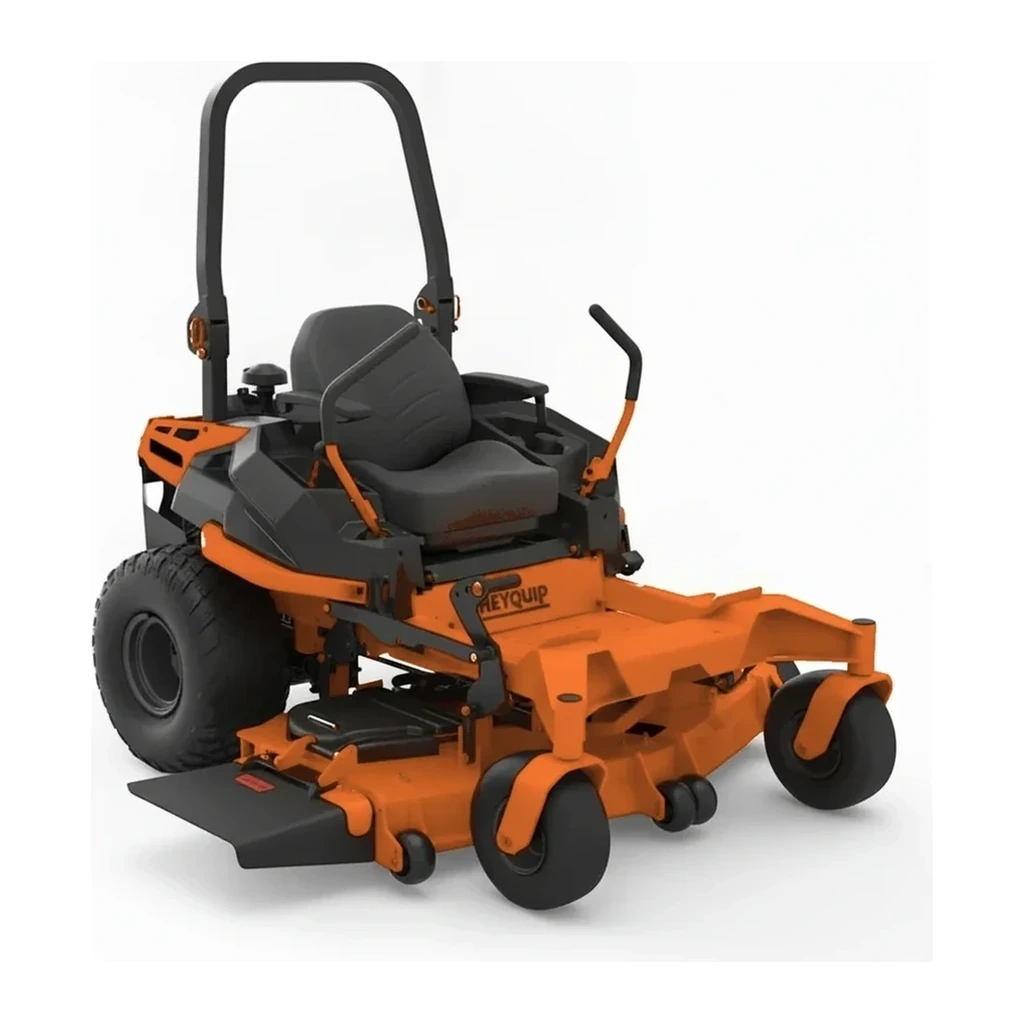
The operator controls two hydraulic wheel motors or hydrostatic transmissions independently using twin lap bars or control levers. Pushing both levers forward drives the mower straight ahead; pulling both back reverses it. Pushing one lever while holding or reversing the other causes the machine to pivot around the stationary or reversing wheel, creating the characteristic zero-radius turn. The cutting deck is typically mounted ahead of the operator and driven by PTO from the engine. Most models use dual hydrostatic transmissions feeding oil to individual wheel motors, though some commercial units employ hydraulic pumps and motors for greater torque and durability. Engine power ranges from small residential units around 17 hp to heavy commercial platforms exceeding 35 hp, with fuel tanks sized from 2 to over 17 gallons to support extended run times on large properties.
Tipos y variantes
- Residential Zero-Turn
- Lighter-duty models with fabricated decks, typically under 25 hp, designed for homeowner and part-time use with narrower cutting widths to navigate residential gates and yards.
- Commercial Zero-Turn
- Heavy-duty platforms built for daily professional use, featuring welded decks, commercial-grade hydrostatic drives, larger engines, and reinforced frames to withstand continuous operation.
- Stand-On Zero-Turn
- Operator stands on a rear platform rather than sitting, reducing overall length for tighter spaces and improving visibility, popular in high-production commercial mowing.
- Diesel Zero-Turn
- Commercial models powered by diesel engines for fuel efficiency and torque on large-acreage applications, common in municipal and institutional fleet use.
- Wide-Area Zero-Turn
- Decks 72 inches and wider, often with multiple-blade configurations, designed for parks, campuses, and acreage where productivity is measured in acres per hour.
Especificaciones clave
| Especificación | Rango típico | Qué significa |
|---|---|---|
| Cutting Width | 48-72 in (commercial models typically 54-61 in) | The width of the mowing deck; primary sizing metric determining productivity and which gates or access points the machine can navigate. |
| Engine Power | 17-35 hp (commercial models typically 23-30 hp) | Gasoline or diesel engine horsepower; determines cutting performance under load, deck size capacity, and ability to handle thick or wet grass. |
| Fuel Capacity | 2-17 gal (commercial models typically 8-12 gal) | Tank size directly affects run time between refueling; larger capacities support all-day commercial operation without interruption. |
| Operating Weight | 560-930 kg (1,230-2,050 lb) | Machine weight affects ground pressure, traction, stability on slopes, and transport requirements; heavier commercial units offer greater durability. |
Cómo la industria lo dimensiona
The industry sizes zero-turn mowers primarily by cutting width measured in inches. Small residential models start around 32-42 inches for navigating standard backyard gates and half-acre properties. The 48-inch class serves residential and light commercial applications on properties up to a few acres. Commercial daily-use models span 54-61 inches, built for eight-hour days on multi-acre sites. Production-width machines at 62-72 inches serve large properties and commercial route work. Wide-area models over 72 inches target institutional grounds, parks, and campuses where productivity is measured in acres per hour. Engine horsepower, fuel capacity, and frame construction further distinguish residential from commercial-grade platforms within each width class.
Aplicaciones
- Commercial lawn maintenance on residential and light commercial properties
- Municipal parks, sports fields, and recreational facility grounds maintenance
- Institutional campuses including schools, hospitals, and corporate office parks
- Golf course rough mowing and perimeter maintenance
- Large estate and acreage mowing where maneuverability around obstacles is required
- Roadside and right-of-way mowing on relatively flat terrain
Seguridad y operación
- Operator presence systems disengage blades and drive when the seat is unoccupied or control levers are released; defeating these systems creates serious hazards
- Slope operation requires caution as zero-turn mowers have higher centers of gravity than traditional tractors; most manufacturers specify maximum operating slopes of 15-20 degrees
- Rearward visibility is limited; backing toward obstacles, slopes, or water features requires deliberate checks to avoid rollovers or immersion
- Rapid control inputs can cause loss of control or turf damage; operators require training to modulate steering inputs smoothly, especially at higher ground speeds
- Blade engagement should occur only with the deck lowered and clear of obstructions; engaging blades while raised or over debris creates ejection hazards
Normas y certificaciones
- ANSI/OPEI B71.4 · B71.4
- Commercial turf care equipment standard covering safety requirements, operator controls, and protective devices for zero-turn mowers.
- SAE J2008 · J2008
- Rated operating load standard for ride-on mowers, establishing performance and stability criteria for commercial grounds equipment.
- OSHA · 29 CFR 1910.266
- General requirements for powered equipment operation including training, maintenance, and workplace safety practices applicable to commercial grounds operations.
- EPA · Tier 4 (off-road engines)
- Emissions standards for small off-road engines; newer commercial zero-turn mowers comply with EPA emission regulations for their engine displacement class.
Preguntas frecuentes
What cutting width is considered standard for commercial landscape maintenance?
How does a zero-turn mower differ from a traditional riding mower in operating principle?
What defines a commercial-grade zero-turn versus a residential model?
Why do fuel capacities vary so widely across zero-turn models?
Comparar modelos populares
Buscar por especificación →Normalizado a las mismas unidades. Un guion significa que el valor no fue publicado.
| Modelo | Potencia del motor | Peso operativo | Capacidad de combustible |
|---|---|---|---|
| Kubota ZD1021-60 | 22 hp | 1,389 lb (630 kg) | - |
| Kubota ZD1011-54 | 19 hp | 1,323 lb (600 kg) | - |
| Kubota ZD1011-48 | 19 hp | 1,296 lb (588 kg) | - |
| Ariens Zenith 60 Kawasaki | 24 hp | 930 lb (422 kg) | 5.1 gal |
| Ariens APEX Limited Edition 60 Kawasaki | 24 hp | 847 lb (384 kg) | 5.1 gal |
| Ariens IKON ONYX 52 Kawasaki | 23 hp | 681 lb (309 kg) | 3.5 gal |
Equipos relacionados
Explorar por fabricante
Fuentes
Cada especificación se verifica con los datos publicados por el fabricante, con la fuente enlazada como referencia.