

Log Splitter
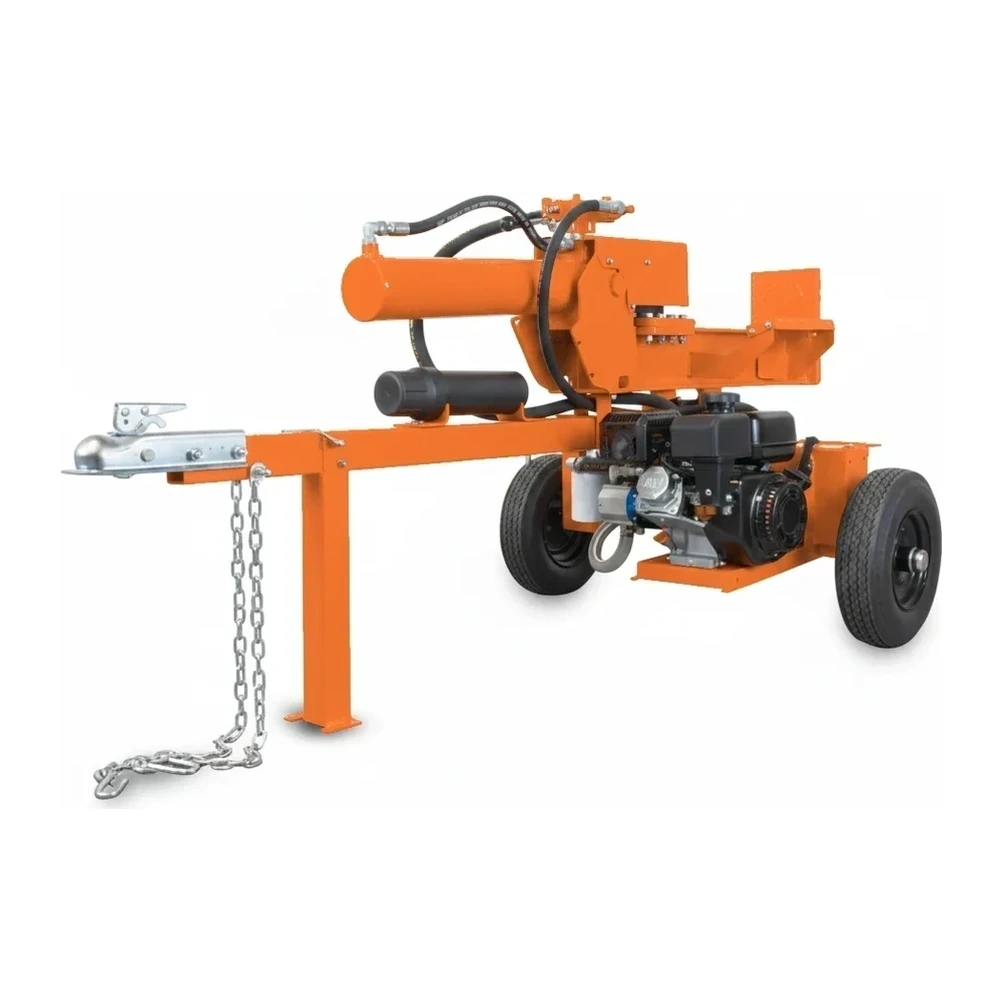
A log splitter is a powered machine that uses hydraulic or kinetic force to drive a wedge through logs, splitting them into firewood or manageable pieces. Available in sizes from under 10 to over 40 tons of splitting force, these machines eliminate the labor and safety hazards of manual splitting with mauls and axes. The equipment is categorized within the Tree and Brush subcategory of Lawn and Landscape equipment.
Cat classes
Elija una clase de tamaño — la capacidad y el alcance varían en la gama.
Cómo funciona
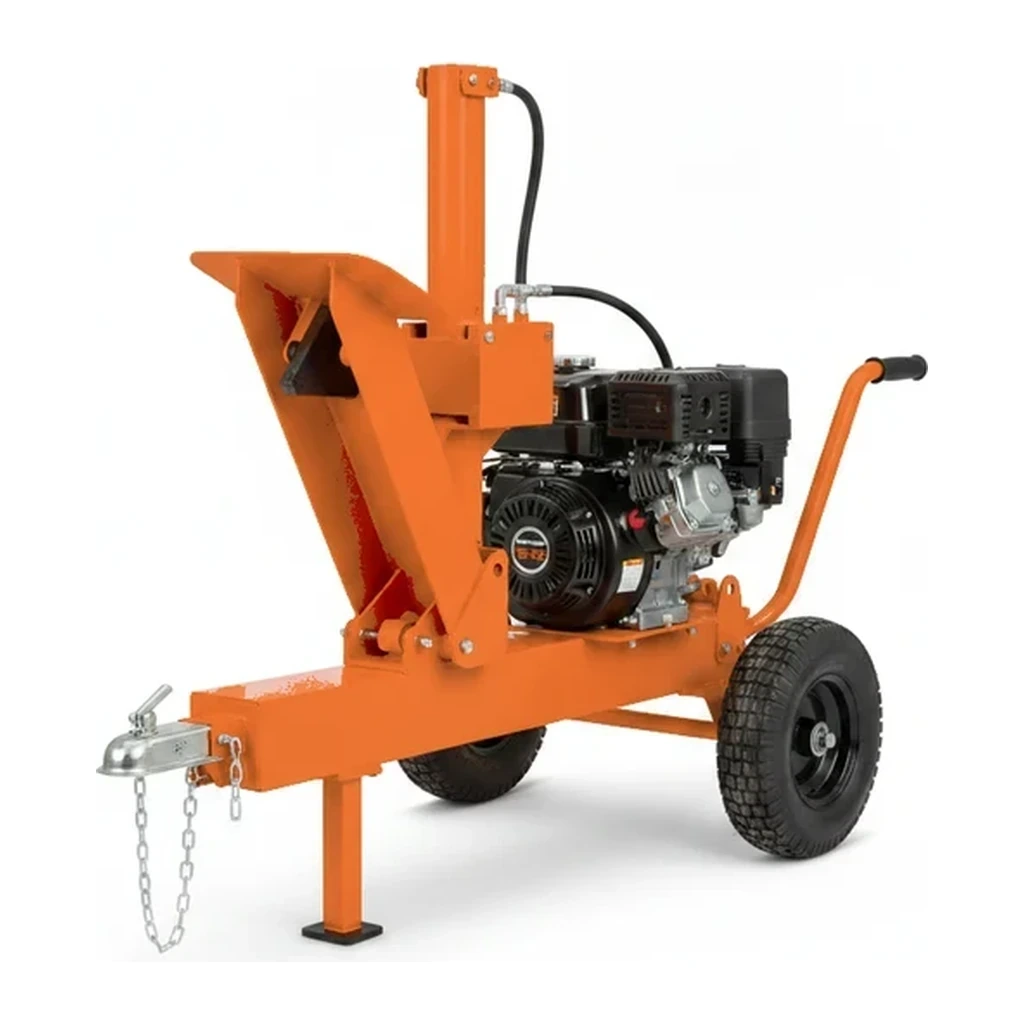
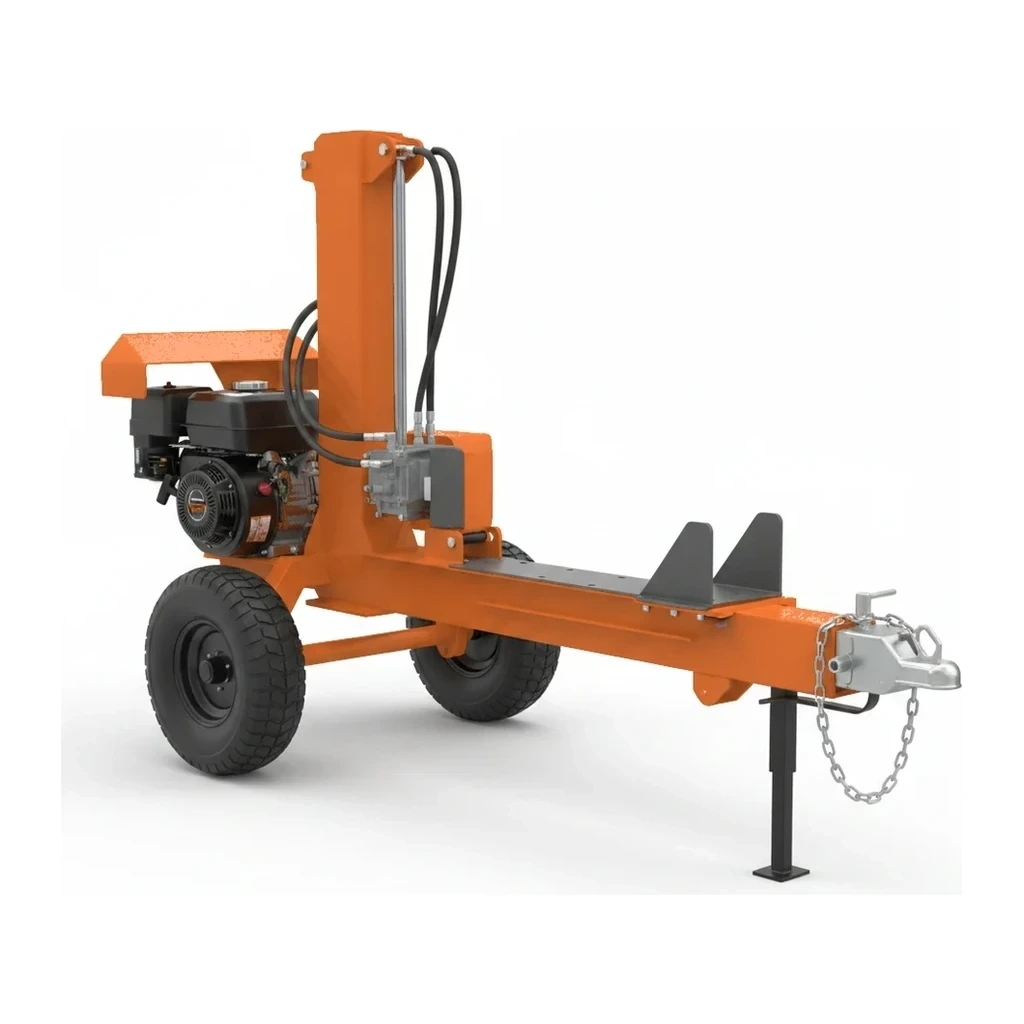
Hydraulic log splitters use a gasoline or electric motor to drive a hydraulic pump, which forces a ram to push the log against a stationary wedge or pull the wedge through the log. The operator positions the round on the beam, engages the control lever or handle, and the ram extends to apply tens of thousands of pounds of force, splitting the wood along the grain. Once split, the ram retracts and the cycle repeats. Kinetic splitters use a flywheel that stores rotational energy; when the operator engages the mechanism, a rack-and-pinion or direct-drive system converts that energy into a high-speed, short-stroke ram movement. Though lower in peak tonnage than hydraulic models, kinetic splitters complete cycles in seconds compared to longer cycles for hydraulic units, making them well-suited to production work with uniform, seasoned wood.
Tipos y variantes
- Horizontal Hydraulic
- The most common configuration; logs rest on a horizontal beam and the ram pushes horizontally, ideal for rounds that can be rolled into place and for splitting into multiple pieces without repositioning.
- Vertical Hydraulic
- The beam and wedge are oriented vertically, eliminating the need to lift heavy rounds; the operator stands the log on the base plate, and the ram descends from above. Many models convert between horizontal and vertical.
- Kinetic (Flywheel)
- Uses stored flywheel energy for rapid cycles; faster than hydraulic but typically lower tonnage, best for seasoned, straight-grained wood and high-volume production.
- Electric
- Powered by 120V or 240V electricity instead of gasoline; quieter, no exhaust fumes, suited to indoor or garage use, typically in the lower tonnage range.
- Towable
- Equipped with a hitch and road-rated wheels for transport between job sites; often mid-to-high tonnage with highway-legal lighting and brakes.
- PTO-Driven
- Mounts to a tractor's three-point hitch and powered by the tractor's power take-off, used in farm and large-property applications where a tractor is already on site.
Especificaciones clave
| Especificación | Rango típico | Qué significa |
|---|---|---|
| Splitting Force (Tons) | 0–40+ tons | The maximum hydraulic or kinetic force applied to the wedge; higher tonnage splits larger diameter, knotty, or green hardwood. |
| Maximum Log Diameter | Varies by model | The largest round the splitter can accommodate on the beam; capability varies with splitting force and frame design. |
| Maximum Log Length | Varies by model | The longest piece that fits between the ram and wedge; standard firewood length is 16–18 in, so machines are sized accordingly. |
| Cycle Time | Varies by design | The time from ram extension to full retraction; kinetic models cycle faster than hydraulic designs but may offer lower peak tonnage. |
| Engine Power | Varies by model | Gasoline engines power most hydraulic models; electric units use lower-power motors for lighter-duty splitting. |
Cómo la industria lo dimensiona
The industry sizes log splitters by splitting force in tons, with distinct performance bands. Units in the 0–10 ton range are electric splitters for pre-split and small rounds, suited to garage or deck use with no fumes. The 10–20 ton range handles seasoned rounds up to about 12 inches, processing one household's firewood for the season. The 20–30 ton class is the industry workhorse, capable of green hardwood up to 24 inches in both horizontal and vertical orientations. Models in the 30–40 ton range tackle big knotty rounds and crotch wood for production firewood without overloading the wedge. Machines rated 40 tons and above serve commercial firewood production, splitting the largest rounds cycle after cycle all day.
Aplicaciones
- Residential firewood processing for woodstoves and fireplaces
- Commercial firewood production and sales operations
- Land clearing and storm cleanup, reducing felled trees to manageable pieces
- Farm and rural property maintenance, processing deadfall and timber
- Municipal yard waste and tree service operations, converting logs to firewood or mulch feedstock
- Construction site clearing where timber must be removed and processed on-site
Seguridad y operación
- Two-hand operation or automatic ram return required; operators must keep hands clear of the wedge and ram path at all times.
- Stable, level footing is essential; slippery bark, mud, or ice can cause loss of control when handling heavy rounds.
- Never reach across the beam or wedge while the ram is in motion; wait for full retraction before repositioning wood.
- Inspect hydraulic hoses, fittings, and cylinders for leaks before operation; high-pressure hydraulic fluid can cause injection injuries.
- Use hearing and eye protection; gasoline engines produce noise and splitting can throw chips or bark fragments.
Normas y certificaciones
- ANSI · OPEI B71.8
- Safety standard for log splitters addressing guarding, controls, labeling, and operator protection; referenced by manufacturers and the rental industry.
- OSHA · 1910.212
- General machinery guarding requirements applicable to commercial and workplace use of log splitters.
Preguntas frecuentes
How is a log splitter sized for the job?
What is the difference between hydraulic and kinetic splitters?
When is vertical orientation preferred over horizontal?
Can electric log splitters handle the same work as gas models?
Equipos relacionados
Explorar por fabricante
Fuentes
Cada especificación se verifica con los datos publicados por el fabricante, con la fuente enlazada como referencia.
Todos los modelos
78 modelos · Página 2 de 2 · Cada especificación citada a la fuente