
Front-Tine Tiller
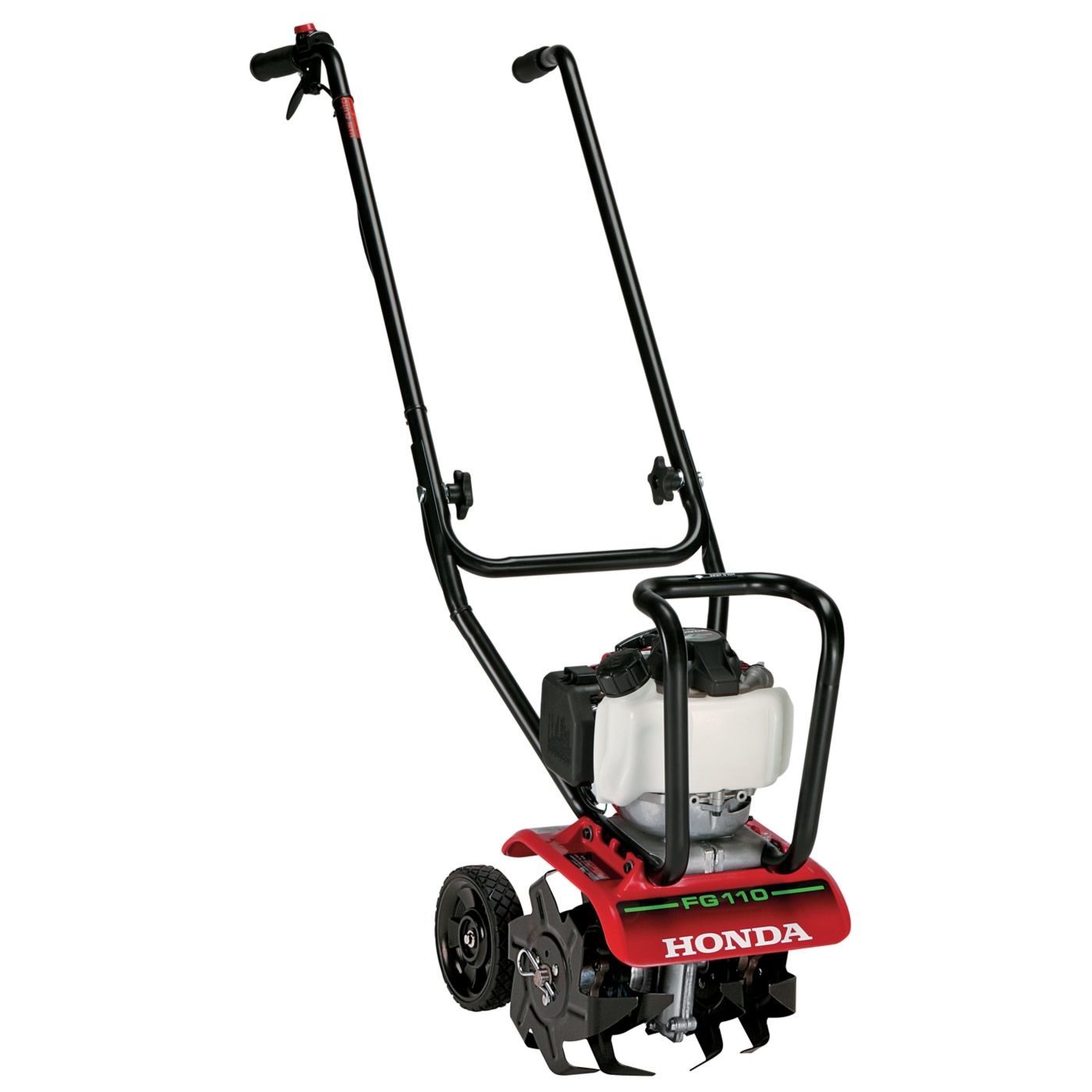
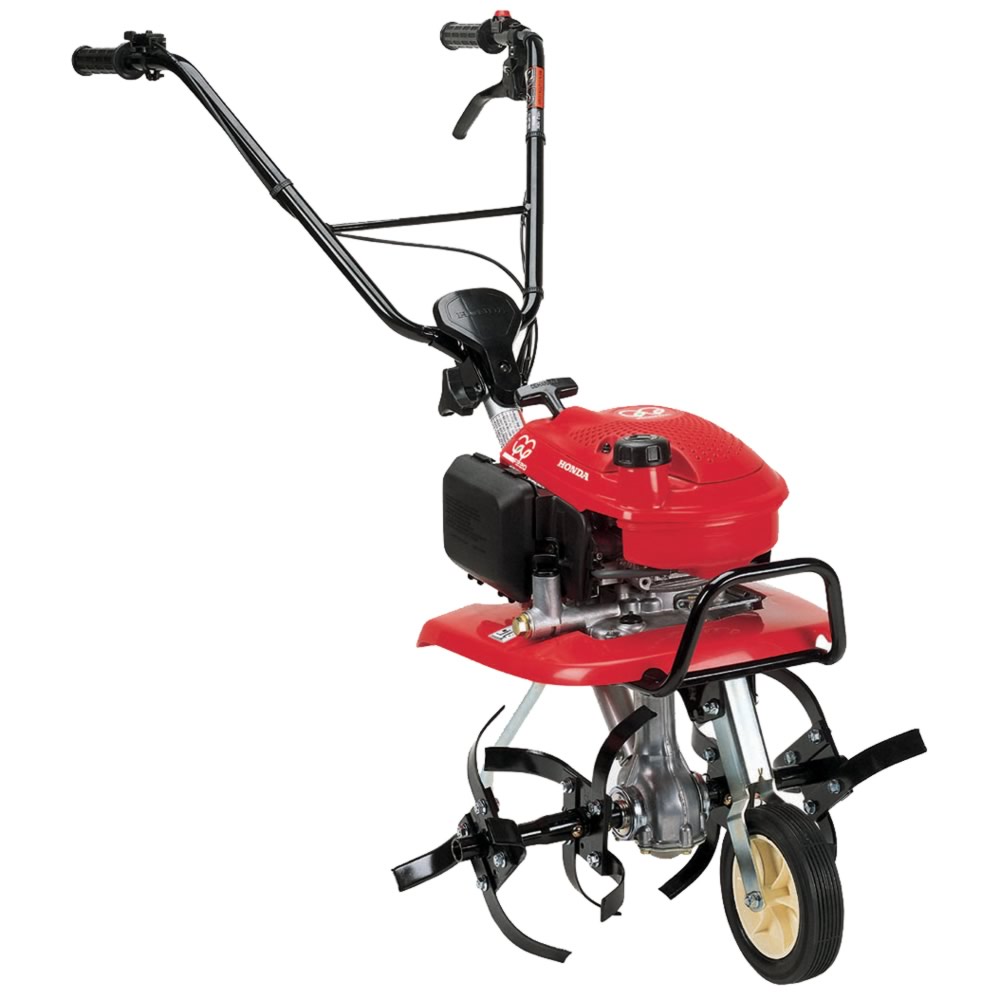
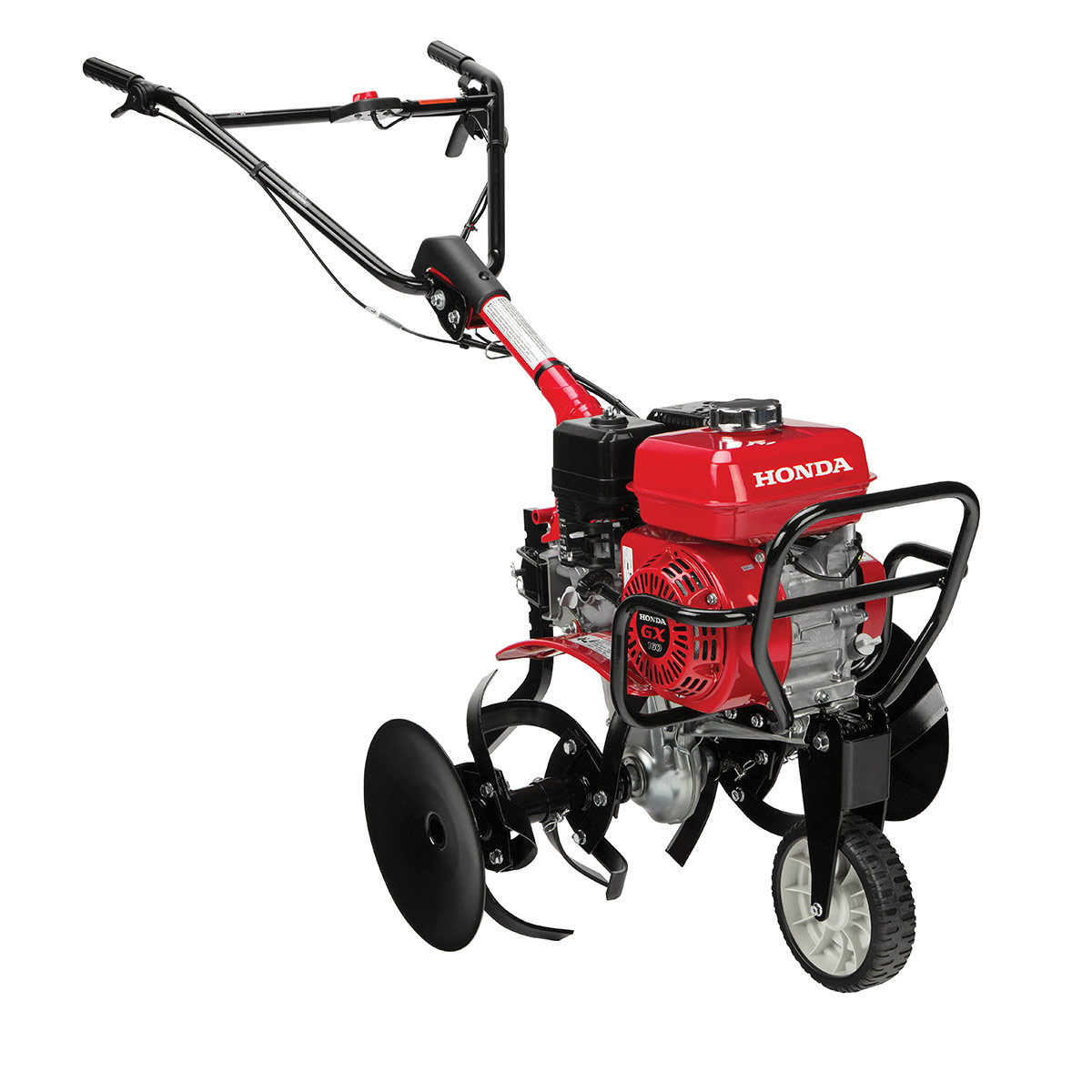
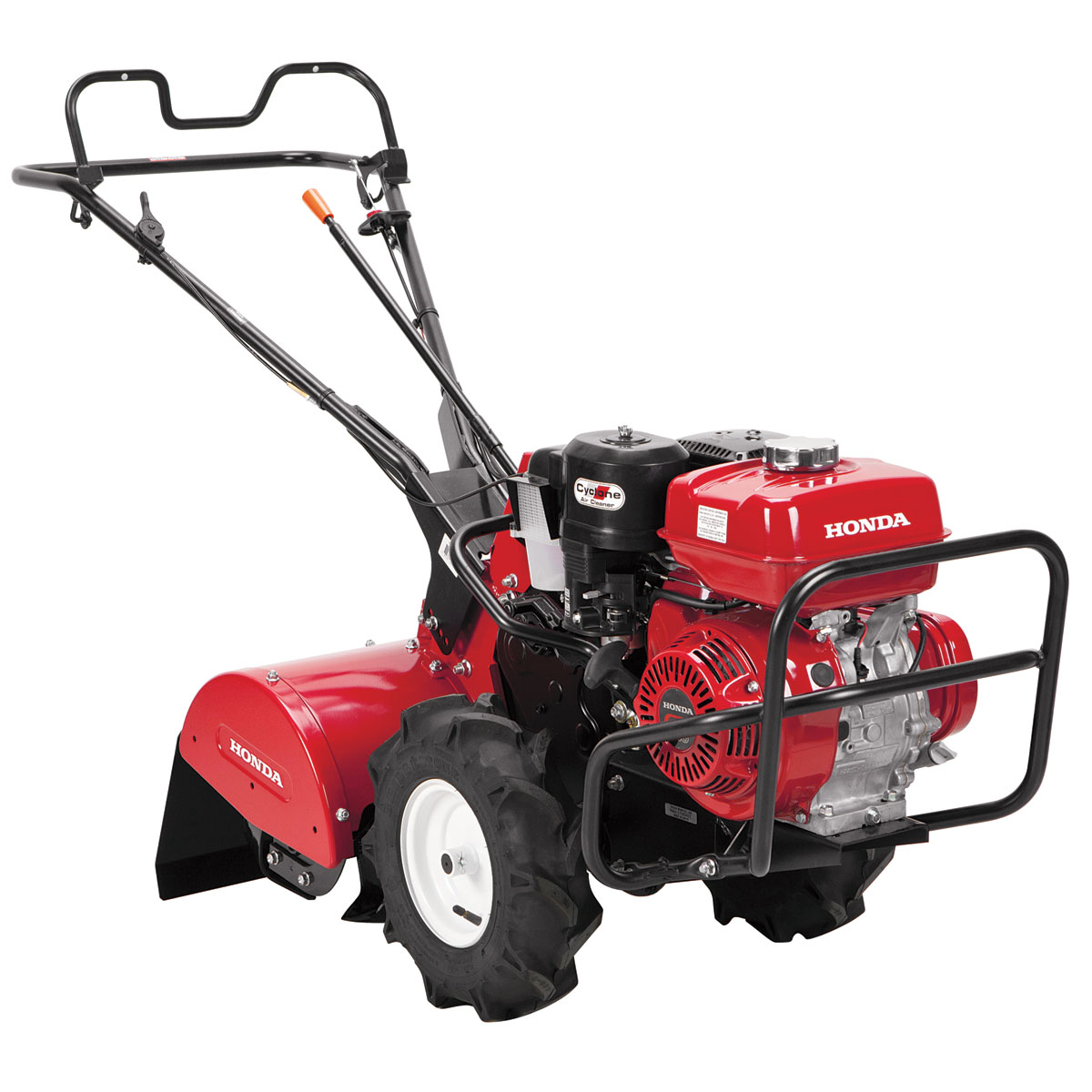
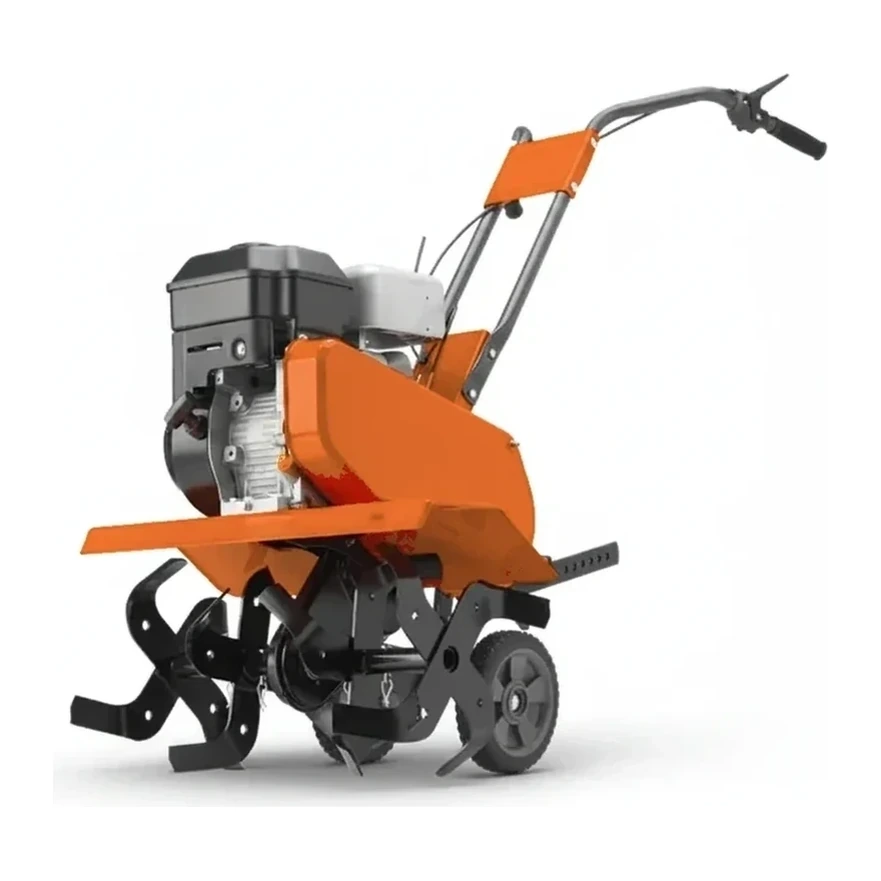
A front-tine tiller is a walk-behind soil cultivation machine with rotating tines mounted ahead of the engine and wheels. The tines pull the machine forward while breaking up and aerating soil to depths typically between 4 and 8 inches. This equipment class is primarily used for maintaining previously worked garden beds and preparing residential to small-scale agricultural planting areas.
Cómo funciona
The engine drives a transmission that rotates the tine assembly at speeds between 3,200 and 6,000 RPM. As the tines contact the soil, they churn and break apart compacted earth while the machine's weight and design allow the tines to pull it forward, requiring the operator to control direction and depth from behind. The forward placement of tines ahead of the wheels means the machine travels over untilled soil, making it best suited for previously broken ground or lighter cultivation tasks. Depth is typically controlled by a drag stake or adjustable skid shoes that limit how deeply the tines penetrate. The operator guides the machine using handlebars mounted to the frame, with throttle and clutch controls positioned for walk-behind operation. Tine configuration ranges from bolo-style blades for cutting through vegetation to slicing tines for fine soil preparation.
Tipos y variantes
- Compact/Mini Tiller
- Lightweight units under 20 kg with narrow working widths (8-12 inches), designed for tight spaces, raised beds, and edging work where maneuverability is essential.
- Standard Garden Tiller
- Mid-weight machines (20-60 kg) with 16-22 inch tilling widths, representing the most common configuration for residential vegetable gardens and flower beds.
- Heavy-Duty Front-Tine
- Larger units approaching 120 kg with widths up to 26 inches and reinforced tine assemblies, built for extended use in larger gardens and small-scale food plots.
- 2-Cycle Engine Models
- Lightweight tillers powered by 2-cycle engines requiring fuel/oil mixture, typically in the compact category and valued for reduced weight and simplified maintenance.
- 4-Cycle Engine Models
- Tillers with 4-stroke engines providing greater torque and fuel efficiency, common in standard and heavy-duty configurations with separate oil and fuel systems.
Especificaciones clave
| Especificación | Rango típico | Qué significa |
|---|---|---|
| Tilling Width | 8-26 inches (industry sized by inches) | The working width of the tine assembly, determining how much ground is cultivated in a single pass. |
| Engine Power | 1.0-1.5 hp | Power output available to drive the tine assembly and overcome soil resistance during cultivation. |
| Operating Weight | 8.7-120 kg (19-265 lbs) | Total machine weight affecting tilling depth, stability, and portability; compact models under 20 kg, heavy-duty models exceed 60 kg. |
| Blade RPM | 3,200-6,000 RPM | Rotational speed of the tine assembly, with higher speeds providing finer soil pulverization and lower speeds offering more torque for harder ground. |
| Fuel Capacity | 0.6-16.9 gal | Onboard fuel storage determining operating duration between refills; compact models hold less than 1 gallon, larger units up to 17 gallons. |
Cómo la industria lo dimensiona
The industry sizes front-tine tillers by tilling width measured in inches. Machines under 18 inches are suited for maintenance of existing garden beds where soil has been previously worked. The 18-26 inch range represents standard front-tine widths for residential vegetable gardens, allowing coverage of typical garden rows in one or two passes. Widths exceeding 26 inches designate wide front-tine models used for larger gardens and food plots where ground is already broken. Engine power (1.0-1.5 hp) and operating weight (under 20 kg for compact, 20-60 kg for standard, approaching 120 kg for heavy-duty) provide secondary classification criteria that correlate with tilling width and application intensity.
Aplicaciones
- Preparing existing vegetable garden beds for seasonal planting by loosening and aerating previously cultivated soil
- Mixing amendments, compost, or fertilizers into topsoil layers in residential and community garden settings
- Breaking up compacted soil in flower beds, borders, and landscape areas to improve drainage and root penetration
- Cultivating between established plant rows for weed control and soil aeration during the growing season
- Preparing small-scale food plots and wildlife planting areas where soil has been worked in previous seasons
- Edging and defining landscape bed boundaries by creating clean soil breaks along borders and pathways
Seguridad y operación
- Tines rotate at high speed and can cause serious injury; maintain clear distance from tine assembly during operation and keep hands and feet away from working area
- Forward-pulling action requires operator to control machine from behind while managing its tendency to advance; maintain firm grip and balanced stance to prevent loss of control
- Inspect soil area for rocks, roots, wire, and buried utilities before tilling, as contact with hard objects can cause tine damage and projectile hazards
- Operate with engine kill switch or tether attached to prevent runaway if operator loses control or falls during operation
- Allow engine and exhaust components to cool before refueling or performing maintenance, and operate only in well-ventilated areas to prevent carbon monoxide exposure
Normas y certificaciones
- ANSI/OPEI B71.9 · B71.9
- Safety specifications for walk-behind outdoor power equipment including tillers, covering guarding, controls, and operator protection requirements.
- EPA · Small Engine Emissions Regulations
- Emissions standards for small spark-ignition engines under 25 hp, applicable to gasoline-powered tiller engines manufactured and operated in the United States.
- OSHA · 1910.266
- General requirements for operation of powered equipment in agricultural and landscaping contexts, including protective equipment and safe work practices.
- ASABE · S390.6
- American Society of Agricultural and Biological Engineers standard for operator controls and displays on agricultural equipment including tillers.
Preguntas frecuentes
What distinguishes front-tine tillers from rear-tine models in the equipment class hierarchy?
How does tilling width affect machine selection for different soil preparation tasks?
Why do front-tine tillers have such a wide operating weight range within a single equipment class?
What soil conditions limit the effective use of front-tine tillers compared to other tillage equipment?
Comparar modelos populares
Buscar por especificación →Normalizado a las mismas unidades. Un guion significa que el valor no fue publicado.
| Modelo | Potencia del motor | Peso operativo | Capacidad de combustible |
|---|---|---|---|
| Honda F220 | - | - | 0.7 gal |
| Honda FRC800 | - | 265 lb (120 kg) | 4.6 gal |
| Multiquip FU162A | - | 19.8 lb (9 kg) | - |
| Multiquip TP-24 | 2 hp | 104 lb (47 kg) | - |
| Multiquip TP-24X | 2 hp | 104 lb (47 kg) | - |
| Multiquip TP-7X | 1 hp | 55.1 lb (25 kg) | - |
Equipos relacionados
Explorar por fabricante
Fuentes
Cada especificación se verifica con los datos publicados por el fabricante, con la fuente enlazada como referencia.
Todos los modelos
26 modelos · Cada especificación citada a la fuente