Rear-Tine Tiller
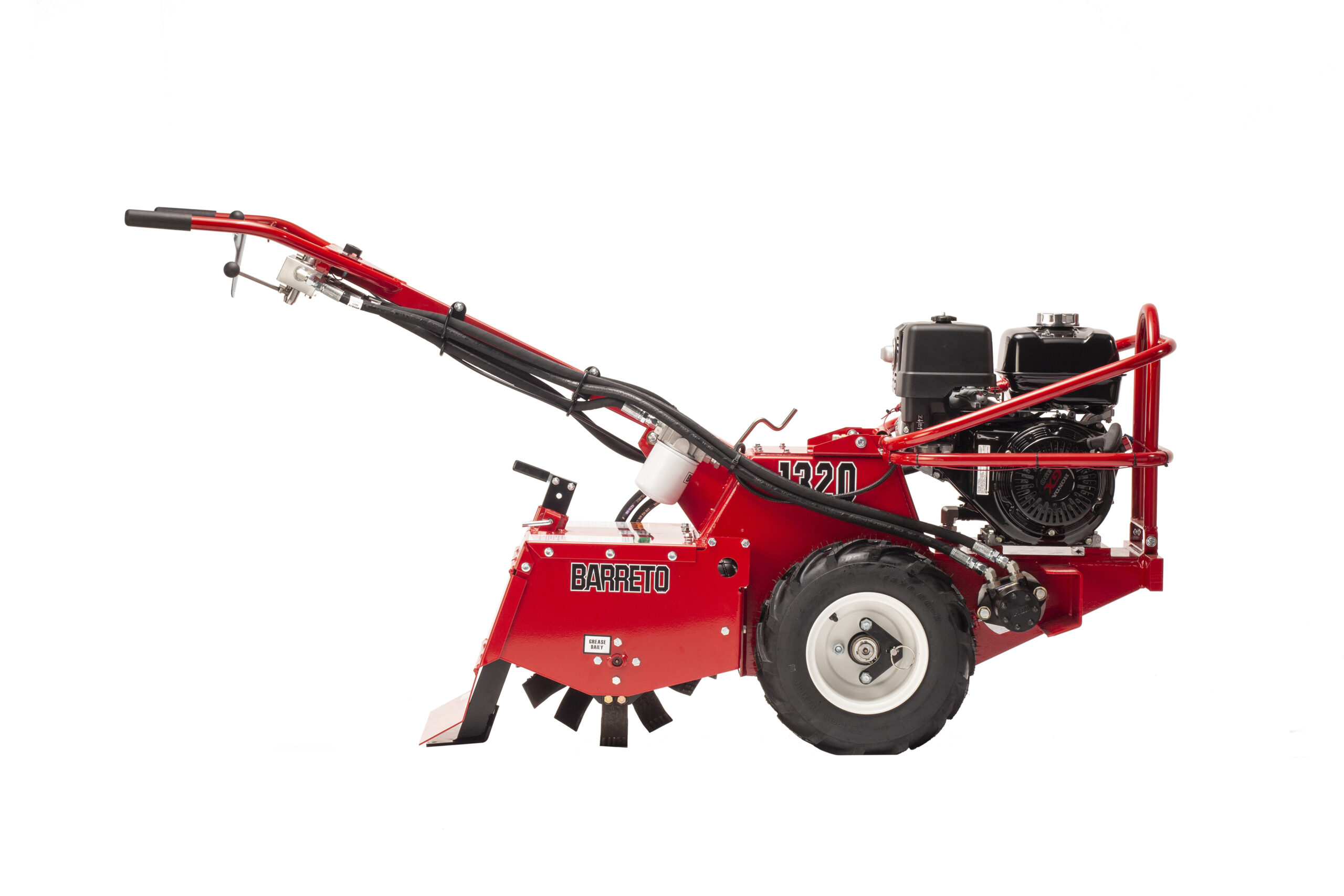
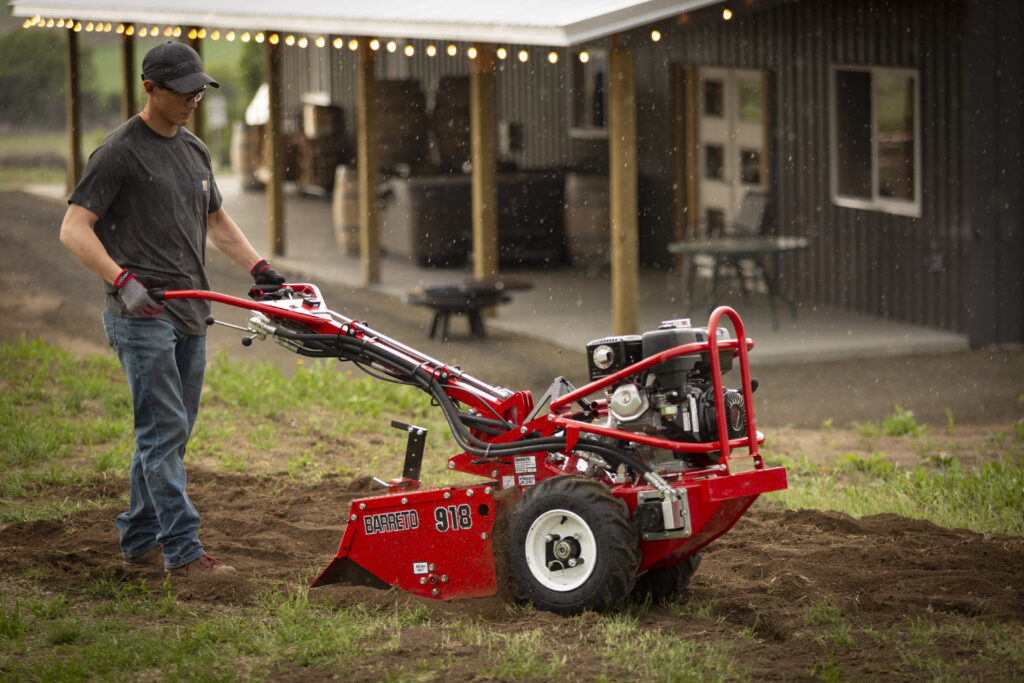
A rear-tine tiller is a self-propelled soil cultivation machine with rotating tines mounted behind the engine and drive wheels. This configuration places the tines behind the operator and allows the wheels to pull the machine forward while the tines work independently, providing superior control and depth in hard or compacted soil. Rear-tine tillers are the industry standard for breaking new ground, removing sod, and preparing large garden beds.
Cómo funciona
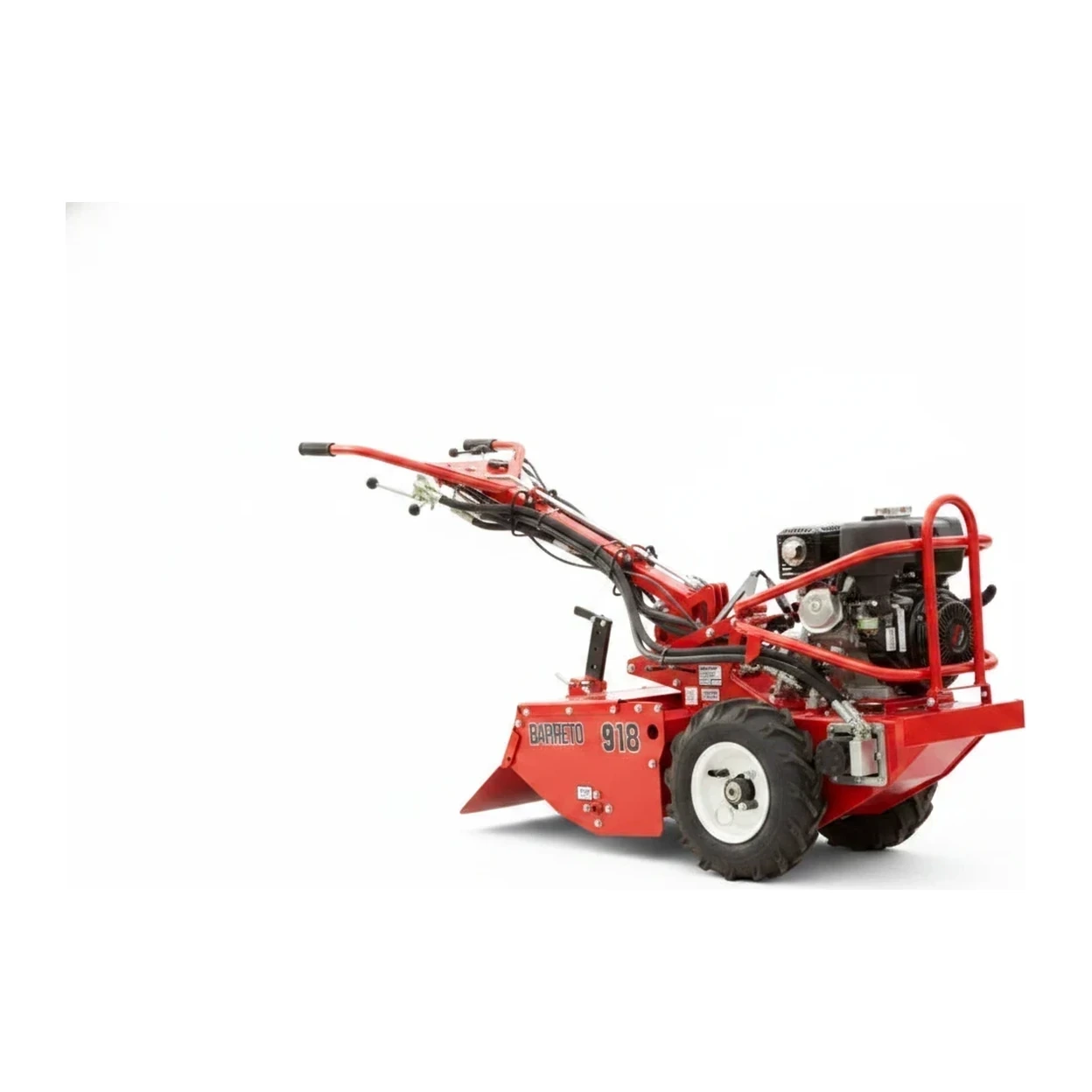
The engine drives both the wheels and the tine shaft through separate transmissions. The wheels propel the machine forward at a controlled speed while the tines rotate at a fixed depth set by the depth stake. In counter-rotating models, the tines spin opposite to the wheel direction, creating an aggressive digging action that breaks through hard soil, sod, and clay. The tines churn soil upward and backward, pulverizing clumps and mixing amendments into the prepared bed. The operator walks behind the machine, controlling speed and direction with handlebar-mounted controls. Adjustable depth stakes or wheels regulate how deep the tines penetrate, typically from 2 to 8 inches. The weight of the engine over the drive wheels provides traction, while the operator steers and moderates forward progress to ensure thorough cultivation without skipping or bouncing.
Tipos y variantes
- Counter-Rotating Rear-Tine
- Tines rotate opposite to wheel direction, providing aggressive digging action ideal for breaking new ground, cutting through sod, and penetrating compacted clay.
- Forward-Rotating Rear-Tine
- Tines rotate in the same direction as the wheels, creating a smoother, less aggressive action suited for cultivating previously worked soil and mixing amendments.
- Dual-Rotation Rear-Tine
- Switchable tine direction allows the operator to select counter-rotating mode for tough soil or forward-rotating mode for finish work and maintenance tilling.
- Compact Rear-Tine
- Smaller frame and narrower tilling width (under 18 inches) designed for small plots, raised beds, and confined garden spaces where maneuverability is critical.
- Heavy-Duty Rear-Tine
- Wide tilling swath (24+ inches), higher horsepower, and reinforced tine assemblies built for large food plots, commercial landscaping, and agricultural applications.
Especificaciones clave
| Especificación | Rango típico | Qué significa |
|---|---|---|
| Tilling Width | 18–24 in (45.7–61.0 cm) | The lateral swath covered in a single pass; wider machines reduce the number of passes required for large areas. |
| Tilling Depth | 2–8 in (5.1–20.3 cm) | Adjustable vertical penetration controlled by depth stake or wheels; deeper tilling breaks hardpan and incorporates amendments. |
| Engine Power | 5-10 hp | Gasoline engine horsepower; higher power enables counter-rotation through dense soil and drives wider tine assemblies. |
| Tine Rotation | Counter-rotating or forward-rotating | Direction of tine spin relative to wheel motion; counter-rotating provides aggressive digging, forward-rotating offers smoother cultivation. |
| Operating Weight | 150–300 lb (68.0–136 kg) | Machine weight provides traction and stability; heavier units maintain depth control in hard soil without manual downward pressure. |
Cómo la industria lo dimensiona
The industry sizes rear-tine tillers primarily by tilling width, measured in inches. Machines under 18 inches are considered compact models suited for small plots and confined spaces. The 18- to 24-inch range represents the industry standard, balancing maneuverability with productivity for typical residential and light commercial applications. Units 24 inches and wider are classified as heavy-duty or large-plot tillers, designed for food plots, farm gardens, and commercial landscaping where wide swaths reduce labor and time. Tilling depth, engine horsepower, and tine rotation type further differentiate models within each width class.
Aplicaciones
- Breaking new ground and converting lawn or pasture into garden beds
- Sod removal preparation by cutting through grass roots and compacted surface layers
- Preparing compacted clay or hardpan soil for planting by pulverizing and aerating
- Mixing compost, peat, lime, and fertilizer into existing garden beds
- Creating food plots and wildlife planting areas in agricultural and recreational land management
- Commercial landscape bed preparation and soil amendment incorporation before installation
Seguridad y operación
- Maintain a secure grip on handlebars and keep bystanders at least 10 feet away from the tilling area to prevent injury from thrown debris.
- Inspect the area for underground utilities, irrigation lines, and buried obstacles before tilling; contact local utility locator services as required.
- Shut off the engine and wait for tines to stop completely before adjusting depth, clearing debris, or performing any maintenance.
- Wear steel-toed boots, eye protection, hearing protection, and long pants to guard against flying rocks, soil, and equipment noise.
- Operate on stable, relatively level ground to prevent loss of control; avoid tilling on steep slopes where the machine may tip or run away.
Normas y certificaciones
- ANSI · ANSI/OPEI B71.11
- Outdoor power equipment safety standard covering walk-behind tillers, including guarding, controls, and operator presence requirements.
- OSHA · 29 CFR 1910.266
- General workplace safety requirements applicable to commercial landscaping and agricultural operations using powered tillage equipment.
- EPA · EPA Tier Emissions
- Emissions standards for small off-road engines; compliant engines reduce hydrocarbon and NOx output from gasoline-powered tillers.
- SAE · SAE J1116
- Categories and definitions for soil tillage equipment, providing industry-standard terminology and classification for tillage machinery.
Preguntas frecuentes
What distinguishes a rear-tine tiller from a front-tine model?
When is counter-rotating tine action preferred over forward-rotating?
How is tilling width selected for a given application?
What maintenance intervals apply to rear-tine tillers in commercial use?
Equipos relacionados
Explorar por fabricante
Fuentes
Cada especificación se verifica con los datos publicados por el fabricante, con la fuente enlazada como referencia.
Todos los modelos
2 modelos · Cada especificación citada a la fuente