

Utility Cart
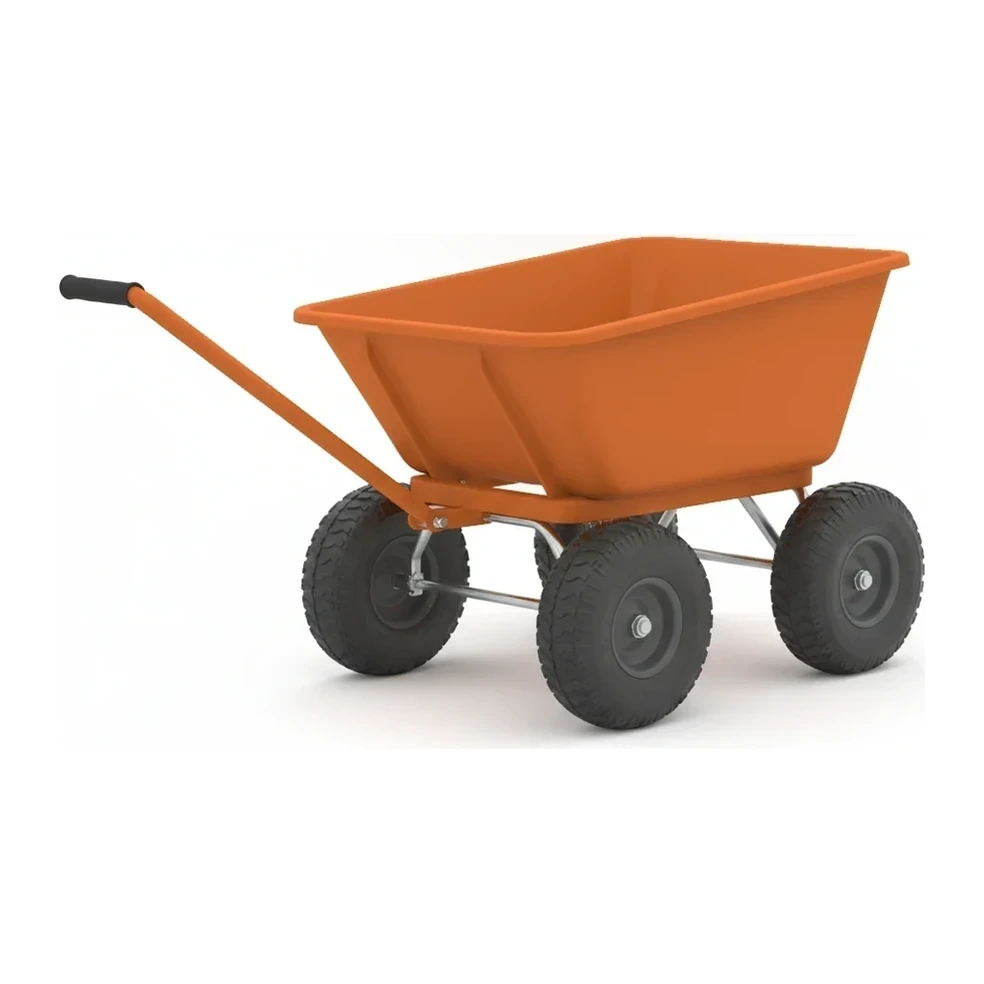
A utility cart is a wheeled material transport device used in landscaping and grounds maintenance to move soil, mulch, plants, tools, and debris across turf and jobsites. These carts range from small hand-pulled models to larger tow-behind units that attach to zero-turn mowers, lawn tractors, or ATVs. The equipment class serves as a fundamental material handling solution where wheelbarrows prove insufficient and motorized vehicles cannot access or would damage sensitive surfaces.
Cómo funciona
Utility carts feature a bin or bed mounted on an axle with pneumatic or solid wheels designed to distribute weight and minimize turf damage. Hand-pulled models use a single handle or tow bar, while tow-behind carts connect via a hitch pin to the drawbar of a mower or tractor. Most designs incorporate a dump mechanism, either a tilt bed released by a latch or a pivoting front panel, allowing the operator to unload material by gravity rather than manual shoveling. Load capacity is distributed across the axle and wheel base, with larger models using dual-wheel configurations for stability on uneven terrain. The cart bed is typically constructed from polyethylene, steel, or mesh, chosen for durability and ease of cleaning after hauling wet or sticky materials.
Tipos y variantes
- Hand-Pulled Yard Cart
- Small-capacity cart with single handle or tow bar for manual transport of bags, tools, and plants around residential properties and garden centers.
- Tow-Behind Dump Cart
- Mid-size cart with hitch attachment for zero-turn mowers and lawn tractors, featuring dump mechanism for efficient unloading of mulch and soil.
- Large Dump Cart
- High-capacity tow-behind unit designed for acreage work, bulk material transport, and commercial landscaping operations requiring frequent dumping.
- Mesh-Bed Cart
- Utility cart with open mesh or perforated bed to shed grass clippings, leaves, and debris while allowing drainage of wet materials.
- Steel Flatbed Cart
- Heavy-duty cart with flat steel bed for transporting equipment, pavers, and construction materials where dump functionality is not required.
Especificaciones clave
| Especificación | Rango típico | Qué significa |
|---|---|---|
| Load Capacity | 249 kg (550 lb) | Maximum weight the cart can safely transport, determining suitability for bulk materials versus light loads. |
| Bed Volume | 10-20+ cu ft | Interior capacity of the cart bed, the primary sizing metric used to classify models by material-hauling capability. |
| Wheel Configuration | Dual-wheel or single-axle | Number and arrangement of wheels affecting stability, turf protection, and ability to traverse uneven ground. |
| Dump Mechanism | Tilt bed or drop gate | Method of unloading material without manual shoveling, critical for efficiency in repetitive material placement. |
Cómo la industria lo dimensiona
The industry sizes utility carts by cubic feet of bed volume, which directly correlates to material-hauling capacity for landscape applications. Models under 10 cu ft function as hand-pulled yard carts for residential tasks involving bags, tools, and plants. The 10-20 cu ft range represents tow-behind carts matched to zero-turn mowers and lawn tractors, capable of moving mulch and soil by the cubic yard. Carts exceeding 20 cu ft are classified as large dump carts for acreage work and bulk material transport, where dump mechanisms eliminate manual unloading. Load capacity in kilograms provides a secondary specification, though bed volume remains the primary industry classifier.
Aplicaciones
- Mulch and topsoil distribution across residential and commercial landscape beds
- Debris and leaf collection during grounds maintenance and seasonal cleanup
- Plant and container transport in nursery operations and garden centers
- Tool and equipment staging for landscaping crews working across large properties
- Gravel and aggregate placement for pathway construction and drainage projects
- Turf removal and sod installation material handling on golf courses and athletic fields
Seguridad y operación
- Verify load does not exceed rated capacity to prevent tipping, axle failure, or loss of control on slopes
- Inspect hitch connection and safety pin before towing to ensure secure attachment to mower or tractor
- Distribute weight evenly in bed and avoid top-heavy loads that raise the center of gravity
- Reduce speed when towing loaded carts on uneven terrain, slopes, or when making turns
- Engage dump latch fully before loading and ensure clear zone behind cart when releasing dump mechanism
Normas y certificaciones
- ANSI · ANSI B71 series
- Covers outdoor power equipment including tow-behind attachments and operator safety considerations for lawn and garden machinery.
- ASABE · ASABE S365.6
- Establishes safety standards for towed agricultural and turf equipment, addressing hitch design and load distribution.
- ASTM · ASTM F1166
- Standard specification for human-powered lawn and garden equipment, applicable to hand-pulled utility cart designs and materials.
Preguntas frecuentes
How is bed volume in cubic feet related to actual material capacity?
What distinguishes a yard cart from a garden cart in industry terminology?
Can utility carts be towed behind ATVs and UTVs?
What wheel type provides the best turf protection?
Equipos relacionados
Explorar por fabricante
Fuentes
Cada especificación se verifica con los datos publicados por el fabricante, con la fuente enlazada como referencia.
Todos los modelos
6 modelos · Cada especificación citada a la fuente