

Landscape Sprayer
A landscape sprayer is a specialized applicator designed to distribute liquid herbicides, pesticides, fertilizers, and other treatment solutions onto turf, ornamental plants, and landscaped areas. These machines use pressurized tanks and adjustable nozzles to deliver precise, controlled application of lawn and landscape treatment chemicals. The equipment ranges from small backpack units for spot treatment to large tow-behind and truck-mounted systems for commercial application routes.
Cómo funciona
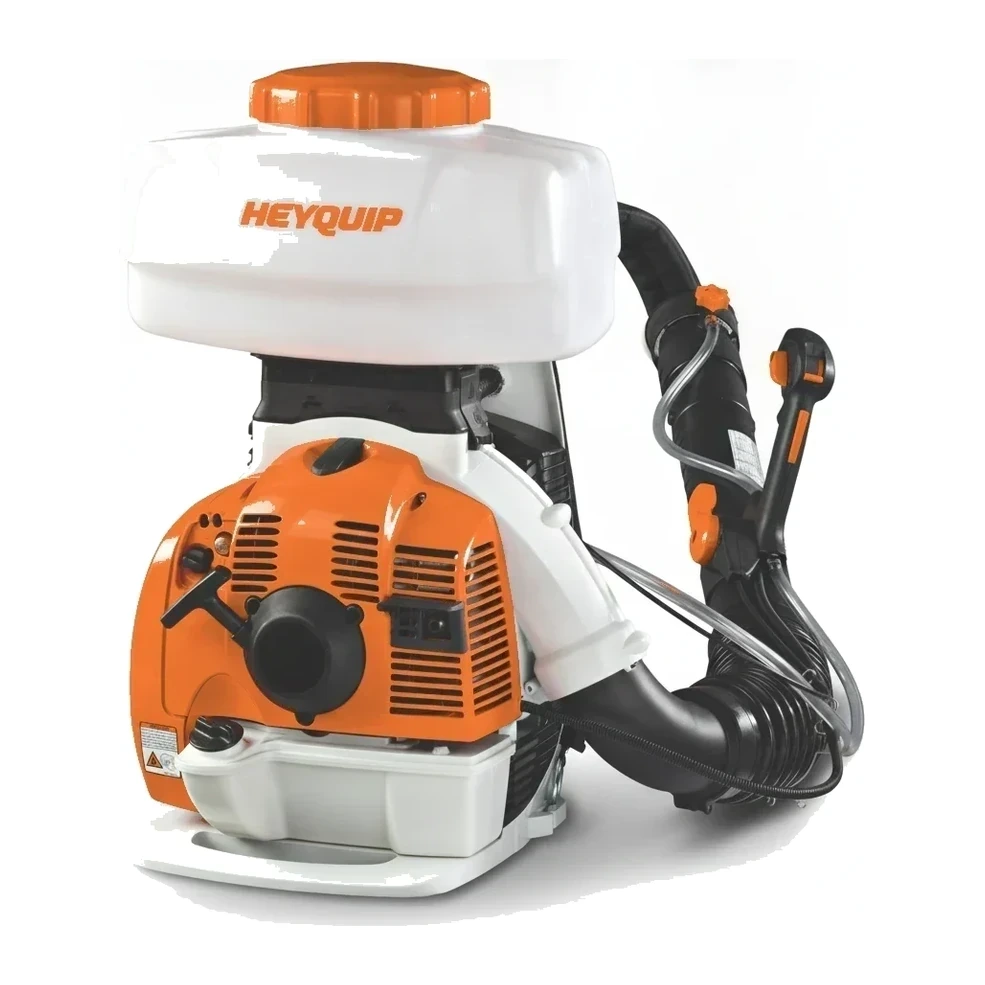
Landscape sprayers operate by pressurizing a liquid solution stored in an onboard tank, then delivering it through a hose and nozzle assembly. Pressure is generated either by a manual pump, battery-powered diaphragm pump, or gasoline engine-driven pump, depending on the unit size and design. The operator controls flow rate and spray pattern through adjustable nozzles and valves, ensuring even coverage while minimizing drift and waste. Backpack and handheld models rely on shoulder straps and a hand-operated wand for mobility and precision. Wheeled push models add larger tanks and pneumatic tires for easier transport across properties. Tow-behind units attach to zero-turn mowers or utility vehicles and feature boom arms or manifold systems for wide-area coverage. Commercial truck-mounted systems integrate high-capacity tanks, powered reels, and spray guns for professional applicator routes.
Tipos y variantes
- Backpack Sprayer
- Portable unit worn on the operator's back, typically 1-5 gallons, with hand pump or battery-powered pressurization for spot treatment and detail work.
- Wheeled Push Sprayer
- Self-contained cart with 5-25 gallon tank, pneumatic tires, and spray wand or small boom for treating individual properties and residential lawns.
- Tow-Behind Sprayer
- Trailer-style unit with 25-100+ gallon capacity, towed behind a mower or utility vehicle, often equipped with boom arms for wide swath coverage of acreage and pastures.
- Skid-Mounted Sprayer
- Commercial-grade system designed for truck bed or trailer mounting, featuring 100+ gallon tanks, powered reels, and high-volume pumps for route-based application work.
- Handheld Sprayer
- Compact 1-2 gallon pump or trigger-style unit for small-scale spot spraying, trim work, and hard-to-reach areas.
Especificaciones clave
| Especificación | Rango típico | Qué significa |
|---|---|---|
| Tank Capacity | 1-35 gal | Primary sizing metric determining coverage area per fill and suitability for job scale, from spot work to acreage. |
| Pump Type | Manual, battery, or engine-driven | Pressurization method affects operational duration, flow rate consistency, and unit portability. |
| Operating Pressure | 20-90 PSI | Working pressure range influences spray pattern, droplet size, and effective coverage rate. |
| Nozzle Configuration | Adjustable cone, fan, or boom-mounted | Determines spray width, pattern uniformity, and chemical delivery precision for various applications. |
| Hose Length | 4–300 ft (1.2–91.4 m) | Reach from tank to application point; longer hoses enable coverage without frequent repositioning of the unit. |
Cómo la industria lo dimensiona
The landscape sprayer industry sizes equipment primarily by tank capacity measured in gallons. Backpack and handheld units range from 1 to 5 gallons for spot spraying weeds, beds, and fence lines. Wheeled or push sprayers from 5 to 25 gallons handle full lawns or single properties at a time. Tow-behind models from 25 to 100 gallons serve acreage, pastures, and large turf applications behind zero-turn mowers or utility vehicles. Skid-mounted or truck-mounted systems above 100 gallons support commercial application routes and high-volume site work. Selection depends on treatment area size, frequency of refill access, and whether the operator works on foot or from a vehicle.
Aplicaciones
- Broadleaf weed control and herbicide application on residential and commercial turf
- Fertilizer and nutrient solution delivery to lawns, athletic fields, and golf courses
- Pesticide and insecticide treatment for ornamental beds, shrubs, and landscape plantings
- Pre-emergent and post-emergent weed management along fence lines, curbs, and hardscapes
- Pasture and acreage management for invasive species control and forage improvement
- Moss, algae, and fungicide applications on turf, walkways, and exterior surfaces
Seguridad y operación
- Chemical handlers must wear appropriate personal protective equipment including gloves, eye protection, and respirators as specified by product labels and safety data sheets.
- Operators should verify proper nozzle selection and pressure settings to minimize drift and ensure target application, especially near sensitive plantings and water sources.
- Tanks and lines require thorough cleaning between different chemical types to prevent cross-contamination and unintended plant damage.
- Equipment must be inspected for leaks, worn seals, and hose integrity before each use to prevent operator exposure and environmental release.
- Applicators should follow all federal, state, and local pesticide regulations, including licensing requirements and restricted entry intervals for treated areas.
Normas y certificaciones
- EPA · FIFRA (Federal Insecticide, Fungicide, and Rodenticide Act)
- Regulates the registration, distribution, sale, and use of pesticides; establishes labeling and application requirements for landscape chemical use.
- ASABE · S572.3
- Defines spray nozzle classification by droplet size, pattern, and flow rate for agricultural and turf application equipment.
- OSHA · 29 CFR 1910.1200 (Hazard Communication)
- Requires proper labeling, safety data sheets, and training for workers handling hazardous chemicals including pesticides and herbicides.
- State Departments of Agriculture
- Administer pesticide applicator licensing, certification, and continuing education programs; requirements vary by jurisdiction and application type.
Preguntas frecuentes
How is landscape sprayer capacity matched to job requirements?
What pressure range is typical for landscape spraying applications?
What distinguishes a landscape sprayer from an agricultural sprayer?
How are landscape sprayers powered and pressurized?
Comparar modelos populares
Buscar por especificación →Normalizado a las mismas unidades. Un guion significa que el valor no fue publicado.
| Modelo | Potencia del motor | Peso operativo | Capacidad de combustible |
|---|---|---|---|
| Stihl SG 11 | - | 0 lb (0 kg) | - |
| Stihl SG 31 | - | - | - |
Equipos relacionados
Explorar por fabricante
Fuentes
Cada especificación se verifica con los datos publicados por el fabricante, con la fuente enlazada como referencia.
Todos los modelos
15 modelos · Cada especificación citada a la fuente