

Portable Generator
A portable generator is an engine-driven power source built to be moved to the work—carried, wheeled, or loaded in a truck—and to feed tools, lighting, and equipment through onboard receptacles. The class centers on gasoline and small diesel units in the low-kilowatt range, the workhorse power source for crews operating away from grid service.
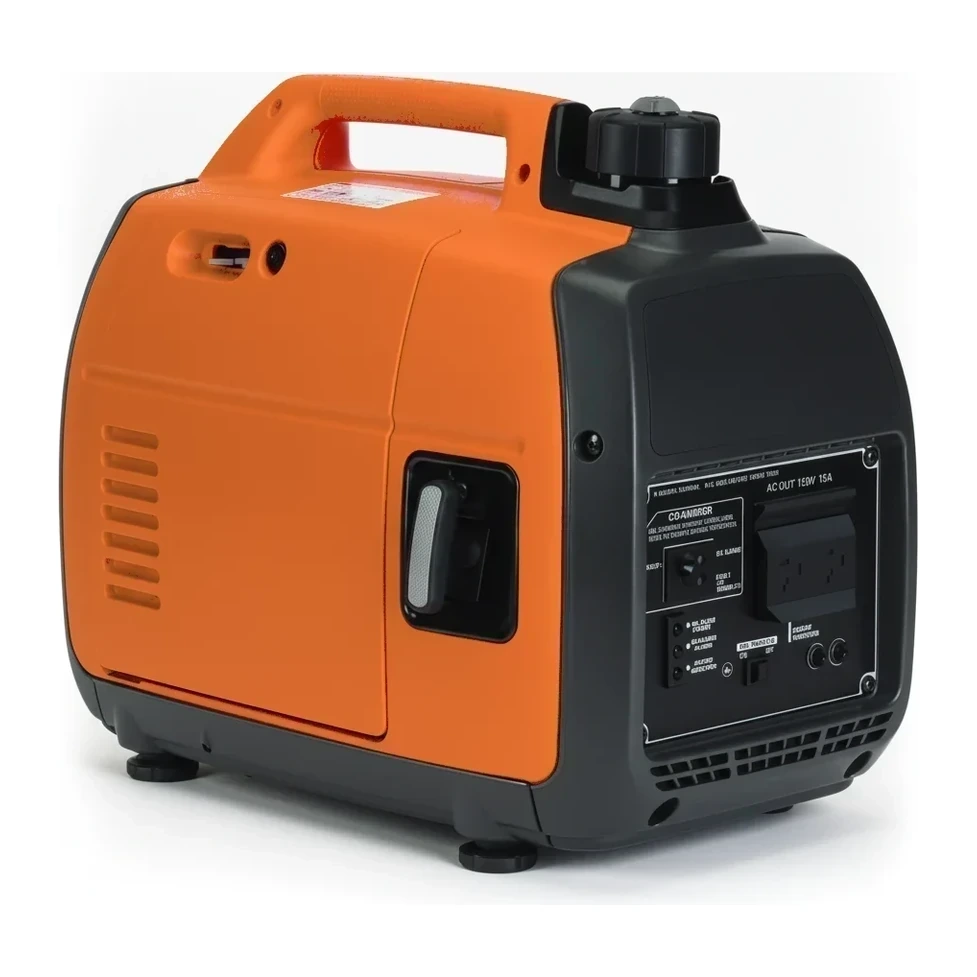
Cat classes
Elija una clase de tamaño — la capacidad y el alcance varían en la gama.
Cómo funciona
An engine drives an alternator at governed speed to hold 60 Hz output, with a voltage regulator maintaining output at nominal receptacle voltages. Loads plug directly into the panel: duplex receptacles for cords and tools, and twist-lock outlets for higher-current connections on larger units. Output is quoted as running (rated) watts and a higher surge figure for motor starting. Conventional units hold full governed speed whenever running; the class's larger wheeled members trade the refinement of inverter units for simpler construction and higher output per dollar.
Tipos y variantes
- Recoil-start frame units
- Open-frame gasoline generators at the small end, hand-carried or two-person lifted, serving hand tools and lighting.
- Wheeled jobsite units
- Mid-size frame generators with wheel kits and lifting bails, the standard crew power source in the 3–7 kW class.
- Electric-start units
- Larger portables with battery start and often twist-lock receptacle panels for feeding subpanels or trailers.
- Small mobile diesel units
- Compact diesel-powered generators bridging toward the towable class, favored where diesel fuel is already on site.
Especificaciones clave
| Especificación | Rango típico | Qué significa |
|---|---|---|
| Power output | 5.0–560.0 kVA | Running watts govern what operates simultaneously; the surge rating must cover the largest motor start. |
| Fuel capacity | 3.2–385.0 gal | Tank size against load level sets refueling intervals during a shift. |
| Fuel consumption | 0.7–33.1 gal/hr | Consumption scales with load; planning fuel for a shift means estimating average load, not nameplate output. |
| Engine power | 5.7–2220.0 hp | Engine horsepower drives alternator output and determines the unit's continuous rating. |
Cómo la industria lo dimensiona
The portable class is sized in kilowatts. Cataloged portable units group into bands: up to 3 kW, 3–7 kW, 7–12 kW, and 12+ kW. Selection sums the running watts of everything operating at once, adds the largest starting surge, and lands on the smallest unit that covers the total—oversizing wastes fuel and buys unnecessary weight.
Aplicaciones
- Tool and cord power for crews on unpowered sites
- Temporary lighting and small-equipment power
- Backup power for homes, farms, and small commercial spaces
- Powering pumps and heaters on service and maintenance work
- Event and vendor power at the small end of the class
- Supplementing site power at locations distant from the main generator
Seguridad y operación
- Operate outdoors only, away from doors, windows, and vents—CPSC guidance is at least 20 feet from occupied structures; portable generators account for the majority of carbon monoxide deaths tied to consumer products.
- Models with CO-sensing shutdown (built to UL 2201 or equivalent) add a critical layer of protection; the sensor must never be bypassed.
- Never backfeed a building through a receptacle; connection to premises wiring requires a transfer switch or listed interlock.
- Use GFCI protection for cord-connected tools, and elevate connections out of standing water.
- Shut down and cool before refueling; gasoline spilled on a hot muffler is a fire cause on small generators.
Normas y certificaciones
- UL · UL 2201
- Standard for carbon-monoxide-mitigating portable generators.
- NFPA · NFPA 70 (NEC), Articles 445 and 702
- Generator installation and optional standby connection requirements, including transfer equipment.
Preguntas frecuentes
What is the difference between running watts and surge watts?
How does a portable generator differ from an inverter generator?
Can a portable generator power a building during an outage?
Why does the class data show units far larger than hand-portable sizes?
Comparar modelos populares
Buscar por especificación →Normalizado a las mismas unidades. Un guion significa que el valor no fue publicado.
| Modelo | Potencia de salida | Capacidad de combustible |
|---|---|---|
| Allmand Maxi-Power 25 | 25.0 kVA | 52.0 gal |
| Multiquip DA7000SSA3 | 15.6 kVA | 6.6 gal |
| Multiquip DAC7000SSA3 | 6 kW | 28.0 gal |
| Multiquip DCA10SPXU4C | 10 kW | 28.0 gal |
| Multiquip DCA15SPXU4F | 14 kW | 28.0 gal |
| Wacker Neuson G25 | 25.0 kVA | 62.6 gal |
Equipos relacionados
Explorar por fabricante
Fuentes
Cada especificación se verifica con los datos publicados por el fabricante, con la fuente enlazada como referencia.
Todos los modelos
269 modelos · Página 6 de 6 · Cada especificación citada a la fuente