

Multi-Process Welder
A multi-process welder is a single power source that performs several arc processes, typically MIG, flux-cored, stick, and TIG, by reshaping its output characteristics to each. One machine replaces a rack of single-process units, which is why the format dominates fabrication shops, training facilities, and field crews with varied work.
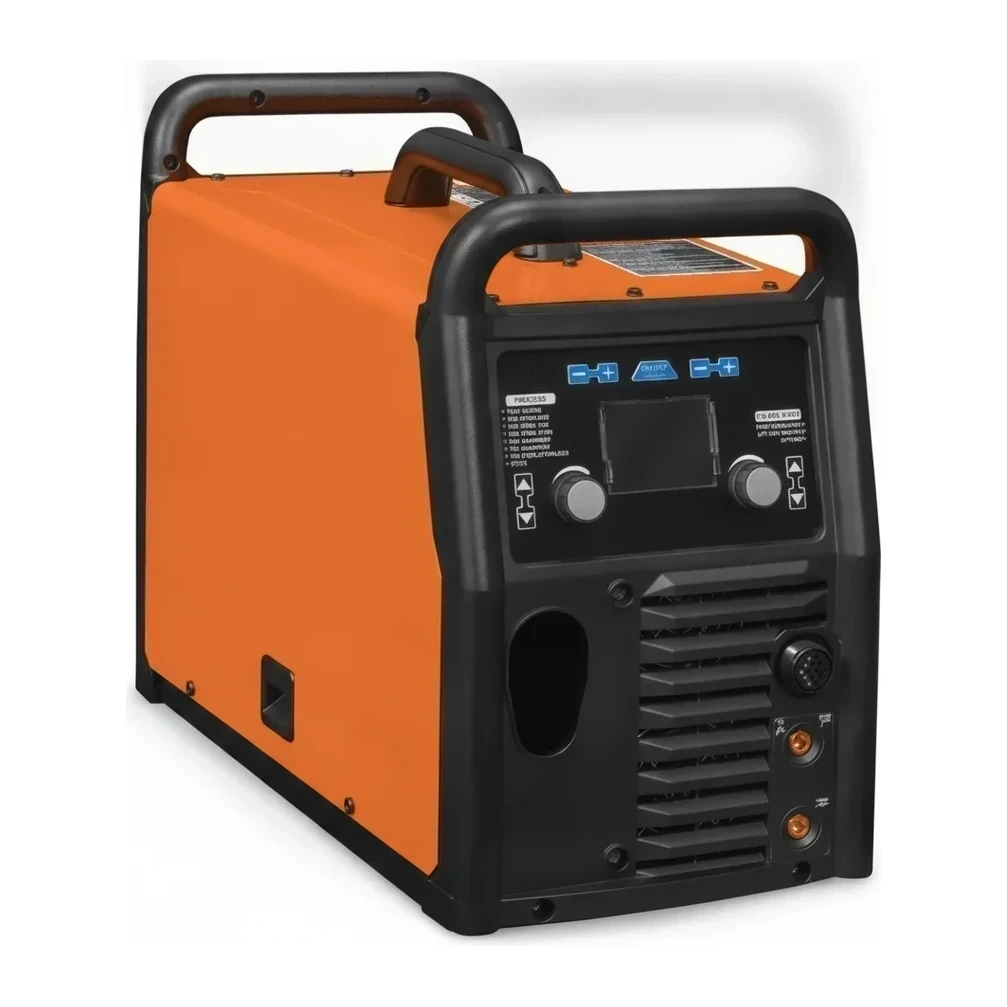
Cómo funciona
Modern multi-process machines are inverter-based: incoming power is converted to high frequency and precisely re-synthesized into the voltage-amperage characteristic each process needs: constant voltage for wire processes, constant current for stick and TIG. The operator selects the process and parameters; the machine reconfigures electronically. Output capability scales with input power. Smaller units run on ordinary single-phase circuits, while high-amperage machines draw three-phase supply; duty cycle, the share of a ten-minute window a machine can weld at a given amperage, is the honest measure of sustained capability.
Tipos y variantes
- Portable inverter multi-process units
- Compact machines at the lower-amperage end, carried to the work and run from ordinary receptacles.
- Shop multi-process machines
- Cart- or bench-mounted units in the middle amperage classes, the general-purpose fabrication workhorse.
- Industrial high-amperage machines
- Three-phase-fed units in the upper classes for heavy plate, structural work, and production duty cycles.
- Multi-operator and system units
- Machines built into welding systems, feeders, coolers, and multiple arcs, for production and heavy fabrication.
Especificaciones clave
| Especificación | Rango típico | Qué significa |
|---|---|---|
| Output amperage | Cataloged size classes run from under 200 A through 500 A and up | Amperage class sets electrode and wire sizes, material thickness range, and which processes run at production rates. |
| Process capability | MIG, flux-cored, stick, and TIG on most models | The defining feature: one power source reconfiguring to the process the joint requires. |
| Input power | Single-phase circuits on smaller units; three-phase supply on high-amperage machines, model dependent | Input requirements decide where a machine can operate and what site power must be provisioned. |
| Duty cycle | Rated as percent at a stated amperage, model dependent | The sustained-output measure: a machine's rated amperage matters only at the duty cycle it can hold there. |
Cómo la industria lo dimensiona
Multi-process welders are sized by output amperage against material and process: cataloged classes run from up-to-200 A machines for light-to-medium work on standard power, through 200-300 A and 300-500 A classes for heavier fabrication, to 500 A-and-up machines for heavy plate and production duty. Selection weighs duty cycle at working amperage and the input power available: the step into the upper classes usually means providing three-phase supply.
Aplicaciones
- Fabrication shops running mixed MIG, TIG, and stick work
- Structural steel fitting and welding
- Maintenance and repair across plants and fleets
- Training facilities teaching multiple processes on one platform
- Field crews whose work spans processes and materials
- Production welding on heavy plate in the upper amperage classes
Seguridad y operación
- Arc work requires shade-rated eye protection, covering PPE, and screens protecting nearby workers from arc flash.
- Fume control, ventilation or extraction at the arc, is required, with special attention on coated, galvanized, and stainless work.
- Verify input circuit rating and plug configuration match the machine; high-amperage units on undersized circuits trip and overheat wiring.
- In damp conditions, keep the machine dry, inspect lead insulation, and position the work clamp near the weld.
Normas y certificaciones
- ANSI · ANSI Z49.1
- Safety in welding, cutting, and allied processes: the governing safety standard for arc welding.
- IEC/UL · IEC 60974-1 / UL 60974-1
- Safety requirements for arc welding power sources.
- OSHA · 29 CFR 1910.254 / 1926.351
- Arc welding equipment and construction arc-welding requirements.
Preguntas frecuentes
Does a multi-process welder compromise any single process?
What size multi-process welder handles structural work?
What input power does a multi-process welder need?
What does duty cycle mean on a welder?
Comparar modelos populares
Buscar por especificación →Normalizado a las mismas unidades. Un guion significa que el valor no fue publicado.
| Modelo | Potencia de salida | Capacidad de combustible |
|---|---|---|
| Milwaukee 8559 | - | - |
| Milwaukee 8586 | - | - |
| Milwaukee 8552 | - | - |
| Milwaukee 8553 | - | - |
| Milwaukee 8556 | - | - |
| Milwaukee 2851 | - | - |
Equipos relacionados
Explorar por fabricante
Fuentes
Cada especificación se verifica con los datos publicados por el fabricante, con la fuente enlazada como referencia.
Todos los modelos
200 modelos · Página 5 de 5 · Cada especificación citada a la fuente