
Portable Concrete Mixer
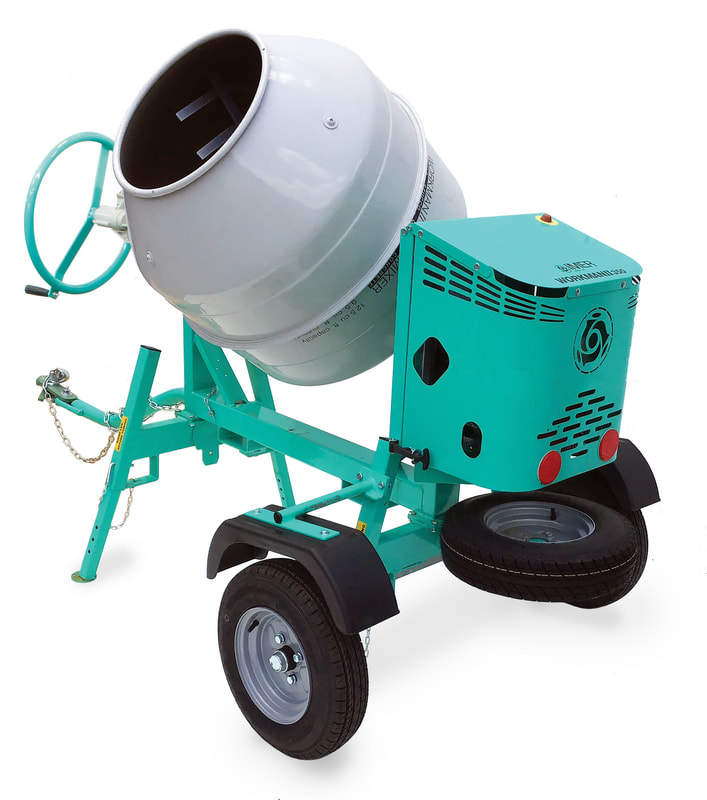
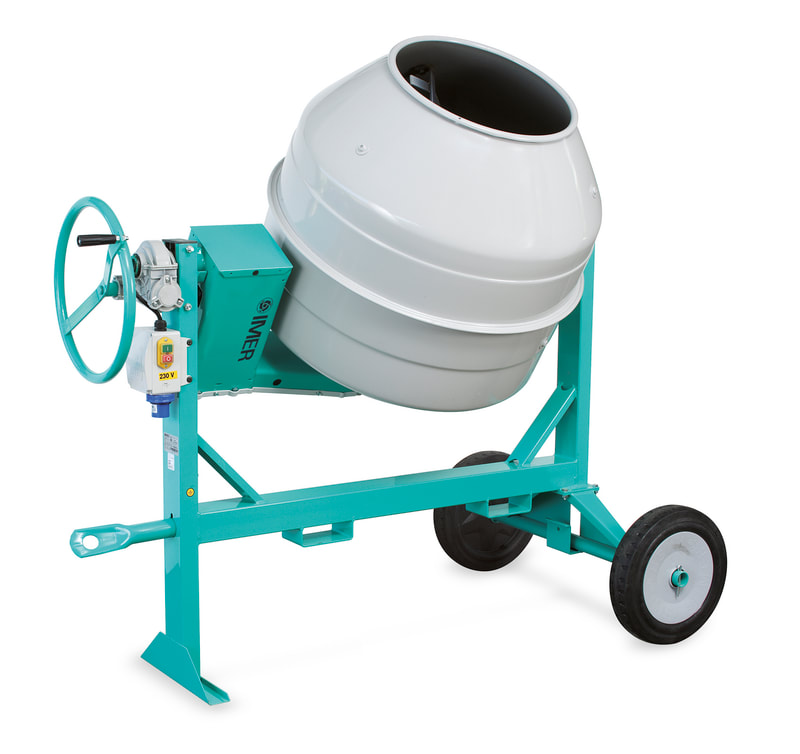
A portable concrete mixer is a motorized drum-type machine used to combine cement, aggregate, sand, and water into workable concrete or mortar on a job site. These units range from compact wheelbarrow-mounted models handling single-bag batches to towable multi-bag mixers that supply continuous production for medium-scale pours. The equipment class spans hand-portable, electric, and gas-powered configurations designed for flexibility where ready-mix trucks cannot operate or batch volumes are small.
Cat classes
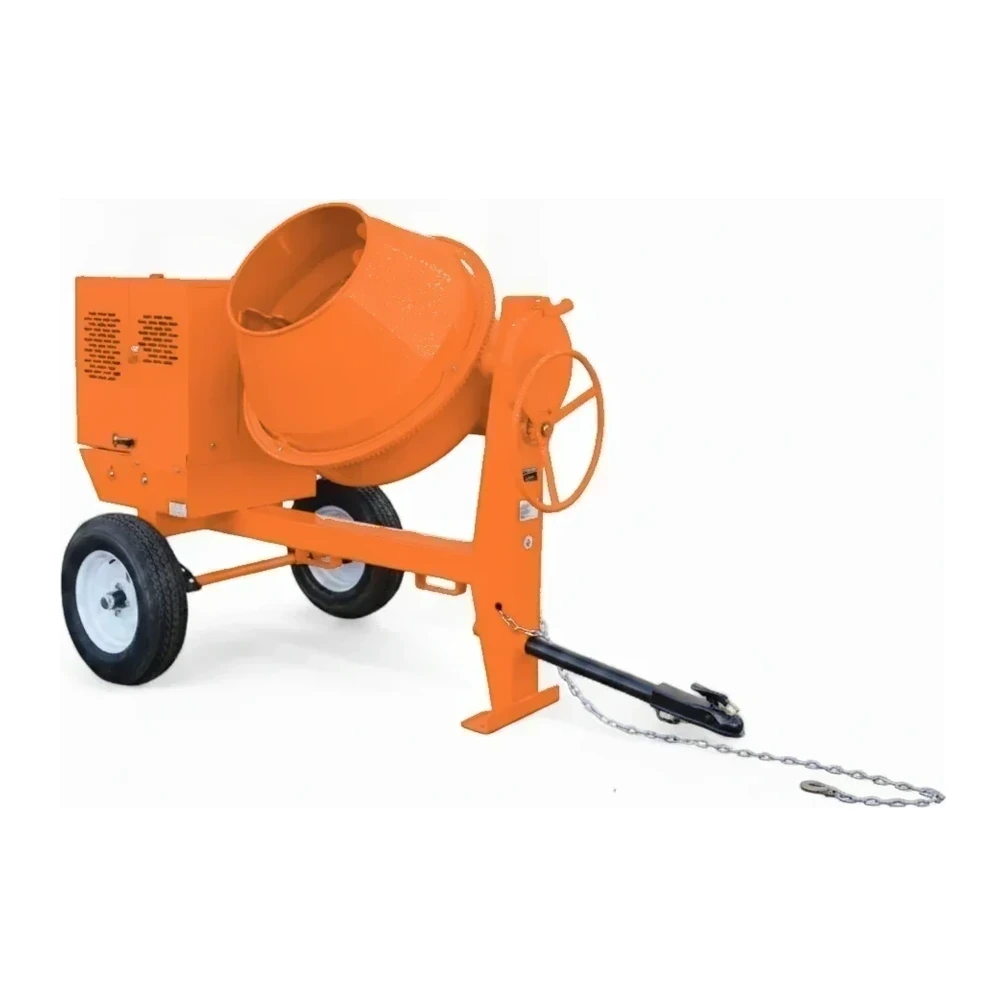
Choisissez une classe de taille — la capacité et la portée varient selon la gamme.
Fonctionnement
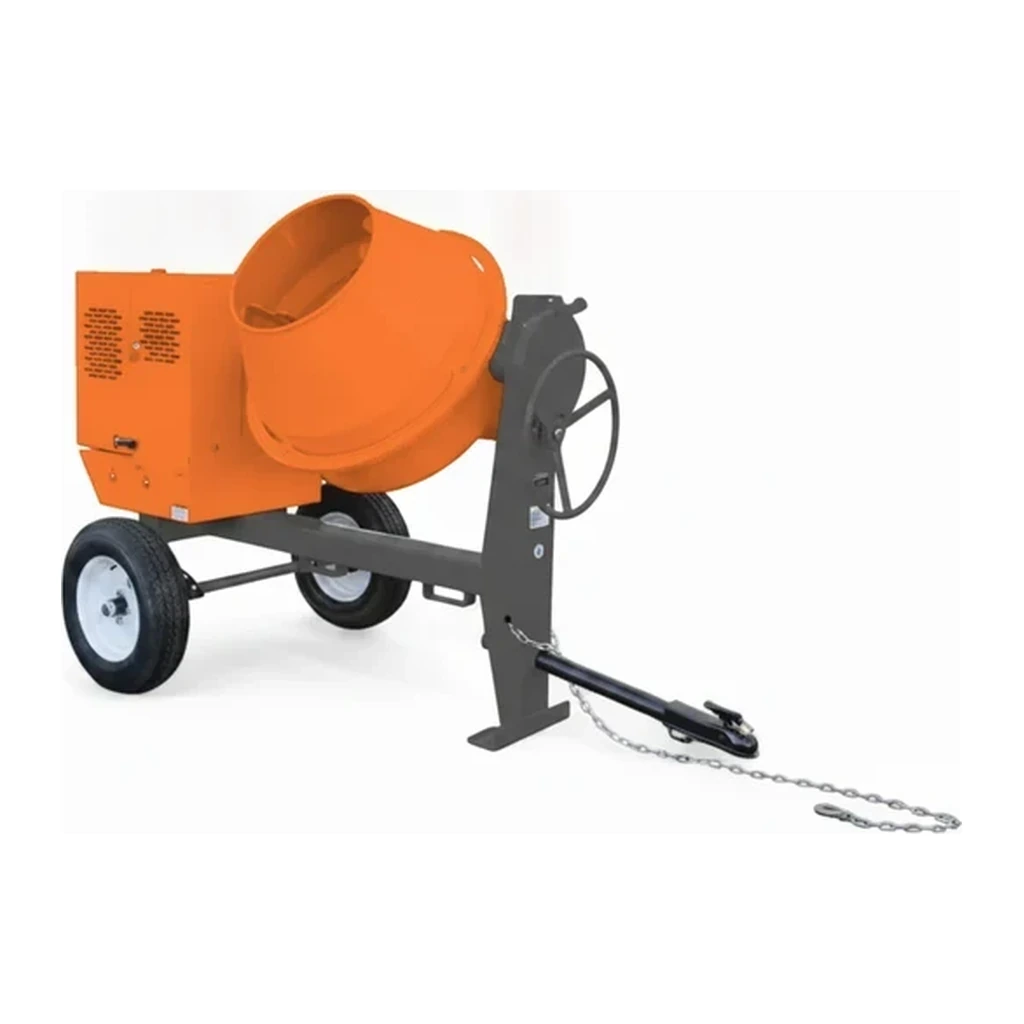
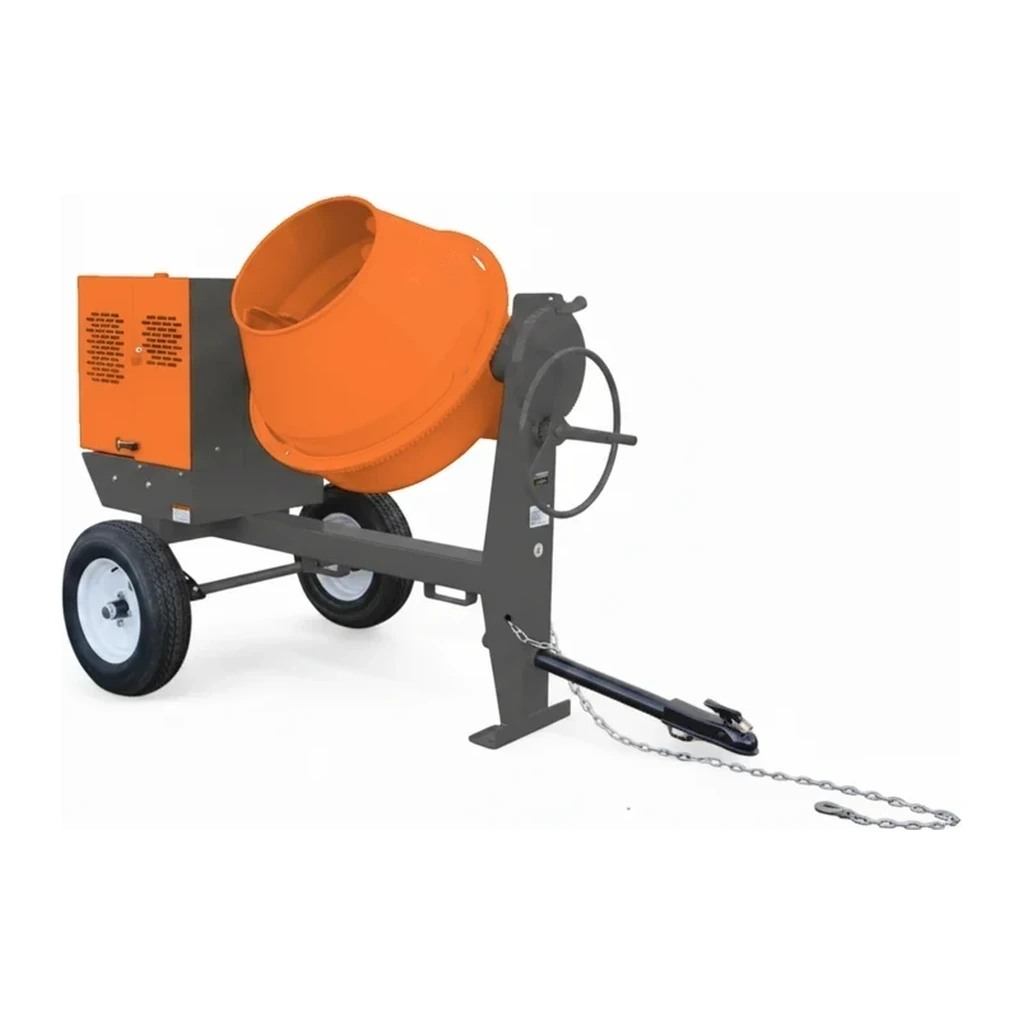
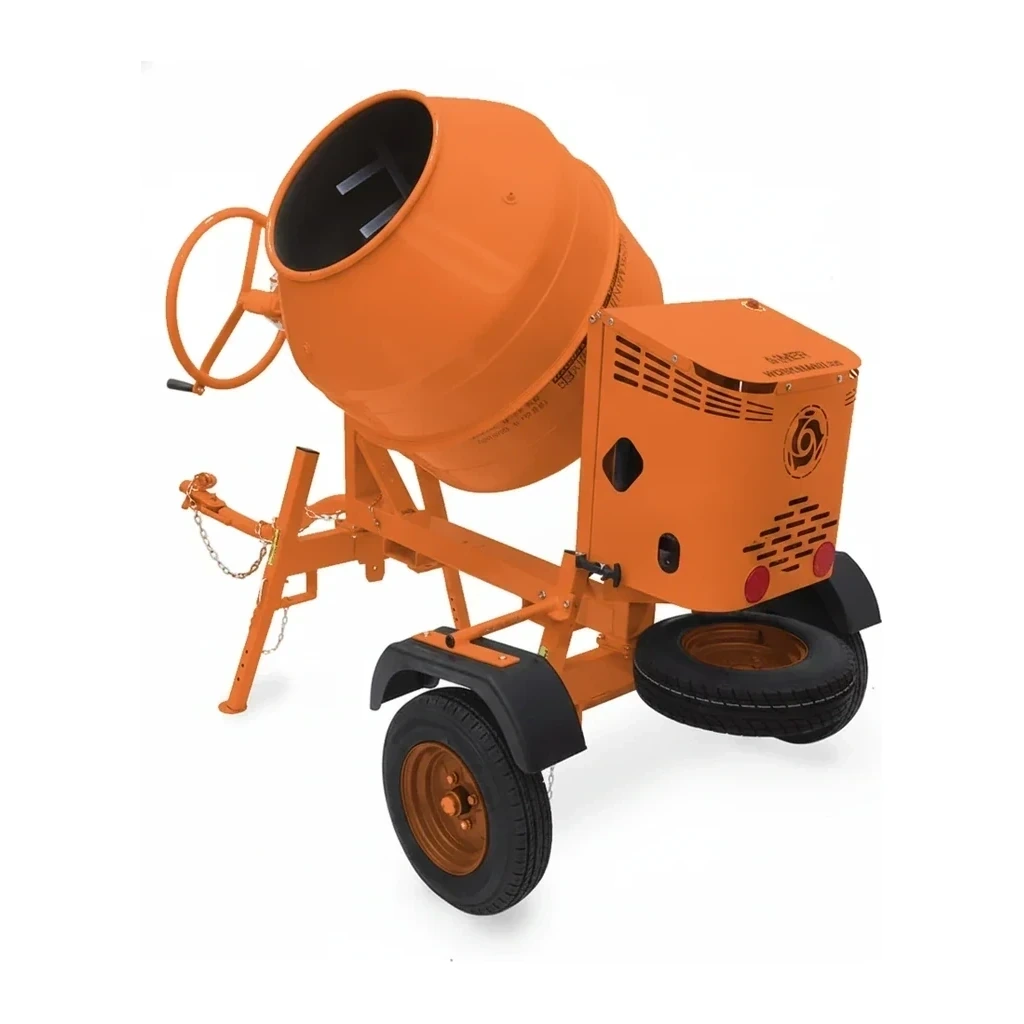
The mixer drum rotates on an inclined axis, driven by an electric or gasoline engine through a belt or gear reduction system. Dry materials and water are loaded through the drum opening; internal fins lift and tumble the ingredients as the drum spins, achieving a homogeneous mix. When mixing is complete, the operator tilts or rotates the drum forward using a hand wheel or lever to pour the mixed concrete into a wheelbarrow, forms, or directly into place. Smaller models mount the drum on a wheelbarrow-style frame for manual positioning, while mid-size units use a wheeled chassis with a towing hitch. Larger towable mixers incorporate adjustable drum speed, hydraulic tilt mechanisms, and sometimes water tanks for self-sufficient operation across extended pours.
Types et variantes
- Wheelbarrow Mixer
- Compact single-axle frame with handles and pneumatic tire, typically under 9 cu ft, designed for manual positioning and one-person operation on residential and light commercial work.
- Towable Mixer
- Heavy-duty 9+ cu ft capacity mounted on a dual-axle trailer chassis with road hitch, enabling transport behind a vehicle and continuous batch production at remote sites.
- Electric Drum Mixer
- Plug-in motor drive for indoor or noise-sensitive environments, requiring 115V or 230V power supply and offering quieter, emission-free operation.
- Gas-Powered Drum Mixer
- Engine-driven models for outdoor sites without electrical access, using gasoline or diesel engines, common for field and road work.
- Mortar Mixer
- Paddle or drum configuration optimized for mortar and stucco rather than coarse aggregate concrete, often with vertical or horizontal drum orientations and lower-torque drives.
Spécifications clés
| Spécification | Plage typique | Signification |
|---|---|---|
| Drum Capacity | Sized by cubic feet | The batch volume the drum holds; the primary specification determining how much concrete can be mixed per cycle. |
| Engine Power | 5.5–1600 hp | Motor or engine horsepower required to turn a loaded drum; larger capacities and stiffer mixes demand higher power. |
| Operating Weight | 312–48,502 lb (142–22,000 kg) | Total machine weight affecting portability, stability during mixing, and whether the unit can be hand-moved or requires towing. |
| Drum Speed | 20–30 rpm | Rotational speed of the mixing drum; optimal speed ensures thorough blending without segregating aggregate or slinging material. |
| Frame Configuration | Wheelbarrow or towable chassis | Mobility design: wheelbarrow frames for manual transport, towable frames with hitch and axles for vehicle towing. |
Comment l'industrie le dimensionne
The rental industry sizes portable concrete mixers by drum capacity measured in cubic feet. Units under 5 cu ft handle one-bag batches for post holes, small footings, and patch work that can be wheeled to the spot. Models in the 5–9 cu ft range represent the everyday contractor mixer for steps, pads, and small slabs poured a wheelbarrow at a time. Mixers of 9 cu ft and above produce multi-bag batches that keep a finishing crew or a masonry wall supplied without a ready-mix truck. Capacity determines batch volume, cycle frequency, and whether the machine is hand-portable or requires vehicle towing.
Applications
- Residential foundation footings, post holes, and slab repairs requiring small, intermittent batches mixed on-site
- Masonry and block-laying operations where mortar and grout are mixed continuously throughout the workday
- Sidewalk, curb, and driveway pours on projects too small or remote for ready-mix concrete truck access
- Utility and infrastructure work including manhole installation, pole setting, and pipe bedding in confined or off-road locations
- Landscape construction for patios, retaining walls, and decorative concrete elements requiring custom color or aggregate blends
- Agricultural and farm maintenance including barn floors, equipment pads, and feeding-area paving
Sécurité et opération
- Ensure the drum is fully stopped before reaching into the opening to scrape sides or remove material, as rotating fins and drums present crush and entanglement hazards
- Position the mixer on stable, level ground and engage wheel brakes or chocks to prevent rolling during loading, mixing, and discharge
- Wear eye protection and gloves when handling cement and aggregates; wet concrete is caustic and prolonged skin contact causes chemical burns
- Maintain proper belt guards, drum covers, and engine shielding to prevent contact with rotating components and hot exhaust surfaces
- Disconnect power or shut off the engine and allow the drum to stop completely before performing maintenance, cleaning, or adjusting the tilt mechanism
Normes et certifications
- OSHA · 29 CFR 1926.602
- Regulations for material handling equipment on construction sites, including guarding of rotating drums and moving parts on concrete mixers.
- ANSI · ANSI A10.9
- Safety requirements for concrete and masonry work, covering safe operation, maintenance, and guarding of portable concrete mixers.
Questions fréquentes
How is drum capacity in cubic feet related to actual concrete output?
What distinguishes a concrete mixer from a mortar mixer in this class?
When does a project warrant a towable mixer instead of a wheelbarrow model?
Can portable concrete mixers handle fiber-reinforced or specialty mixes?
Comparer les modèles populaires
Chercher par spécification →Normalisé aux mêmes unités. Un tiret signifie que la valeur n'a pas été publiée.
| Modèle | Puissance moteur | Poids en service |
|---|---|---|
| Multiquip CDM1H | - | - |
| Multiquip JTNSW20HTCSL | 21 hp | 617 lb (280 kg) |
| Multiquip PRO12 Series | 12 hp | 1,581 lb (717 kg) |
| Multiquip CX600 | - | - |
| Multiquip XM2650 | - | 313 lb (142 kg) |
| Multiquip MT85HS | - | - |
Équipements connexes
Parcourir par fabricant
Sources
Chaque spécification est vérifiée par rapport aux données publiées par le fabricant, avec la source liée pour référence.
Tous les modèles
163 modèles · Page 4 sur 4 · Chaque spécification citée à la source