

Crack Chaser Saw
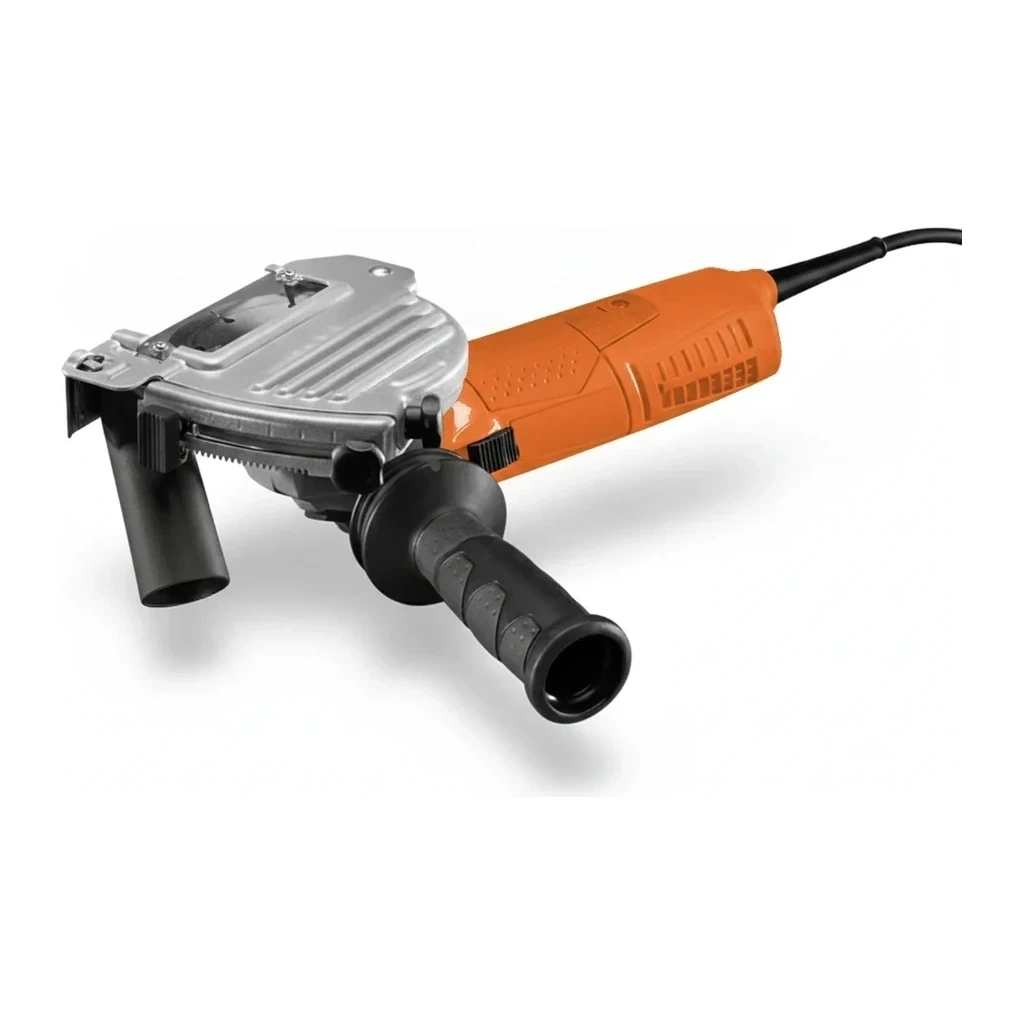
A crack chaser saw is a specialized concrete saw designed to widen and clean existing cracks, joints, and control lines in concrete surfaces to prepare them for sealant application. The equipment creates uniform, clean-edged channels by removing deteriorated material along the crack path. Also known as joint cleaning saws or router saws, these tools are essential for concrete maintenance and repair operations.
Fonctionnement
The crack chaser saw uses a diamond blade mounted on a wheeled frame that guides the blade along the crack or joint. The operator positions the saw over the existing crack and engages the blade to cut a uniform channel, typically widening the crack to a consistent depth and width. The blade rotates at high speed while the guide wheels follow the contour of the crack, allowing precise tracking even on irregular surfaces. Most crack chaser saws feature adjustable cutting depth and incorporate dust collection or water suppression systems to manage debris. The design allows the operator to work standing upright while maintaining control, with the frame providing stability and accurate blade placement relative to the existing crack line.
Types et variantes
- Walk-Behind Crack Chaser
- Standard wheeled frame design with handlebar controls for guiding the blade along cracks while standing
- Wet-Cutting Crack Chaser
- Equipped with water delivery system to suppress dust and cool the blade during cutting operations
- Dry-Cutting Crack Chaser
- Uses vacuum dust collection system for indoor or water-restricted applications
- Gas-Powered Crack Chaser
- Gasoline engine provides power for outdoor use where electrical supply is unavailable
- Electric Crack Chaser
- Corded electric motor for indoor applications or areas requiring zero-emission operation
Spécifications clés
| Spécification | Plage typique | Signification |
|---|---|---|
| Blade Diameter | 4–7 in (10.2–17.8 cm) | Determines maximum cutting depth; smaller blades for shallow joint preparation, larger for deeper channels |
| Cutting Depth | Up to 1.5-2.5 in | Maximum depth of channel the saw can create; adjustable to match joint repair requirements |
| Blade Thickness | 0.1–0.2 in (3.2–6.3 mm) | Defines the width of the cut channel; selected based on crack size and sealant specification |
| Power Source | Gas or Electric | Engine type determines operating environment suitability and emission profile |
Comment l'industrie le dimensionne
The crack chaser saw class is not sized by machine dimensions, as the equipment itself comes in one standard configuration. Instead, the blade thickness determines the joint width produced, with operators selecting blades ranging from 1/8 inch to 1/4 inch or more depending on the crack repair specification. The blade diameter may vary between models but serves only to establish cutting depth capacity rather than define equipment size categories. Industry specification focuses on blade characteristics and power source rather than machine sizing.
Applications
- Widening and cleaning control joints in concrete slabs for re-sealing
- Preparing random cracks in pavements and floors for elastomeric sealant application
- Removing deteriorated joint sealant and cleaning joint faces before replacement
- Creating uniform channels in warehouse floors and industrial concrete surfaces for maintenance
- Preparing expansion joints in parking structures and concrete roadways for repair
- Cleaning and widening joints in airport aprons and taxiways during maintenance cycles
Sécurité et opération
- Diamond blade guards must be properly adjusted and maintained to contain debris and prevent contact
- Dust suppression or collection systems should be operational to minimize silica exposure during dry cutting
- Operators should maintain stable footing and control while guiding the saw along irregular crack paths
- Eye and respiratory protection required even with dust collection due to fine concrete particles
- Blade inspection before operation is essential to identify cracks or damage that could cause blade failure
Normes et certifications
- OSHA · 29 CFR 1926.1153
- Respirable crystalline silica standard governs dust control requirements during concrete cutting
- ANSI · B7.1
- Safety requirements for the use, care, and protection of abrasive wheels and cutting blades
- NIOSH
- Provides guidance on silica exposure control and engineering controls for concrete cutting equipment
- ACI · 224.1R
- American Concrete Institute guidelines for causes, evaluation, and repair of cracks in concrete structures
Questions fréquentes
What distinguishes a crack chaser saw from a standard walk-behind concrete saw?
Why does the industry classify crack chasers by blade rather than machine size?
What is the difference between crack chasing and joint routing?
Can crack chaser saws cut new joints in uncracked concrete?
Équipements connexes
Parcourir par fabricant
Sources
Chaque spécification est vérifiée par rapport aux données publiées par le fabricant, avec la source liée pour référence.
Tous les modèles
3 modèles · Chaque spécification citée à la source