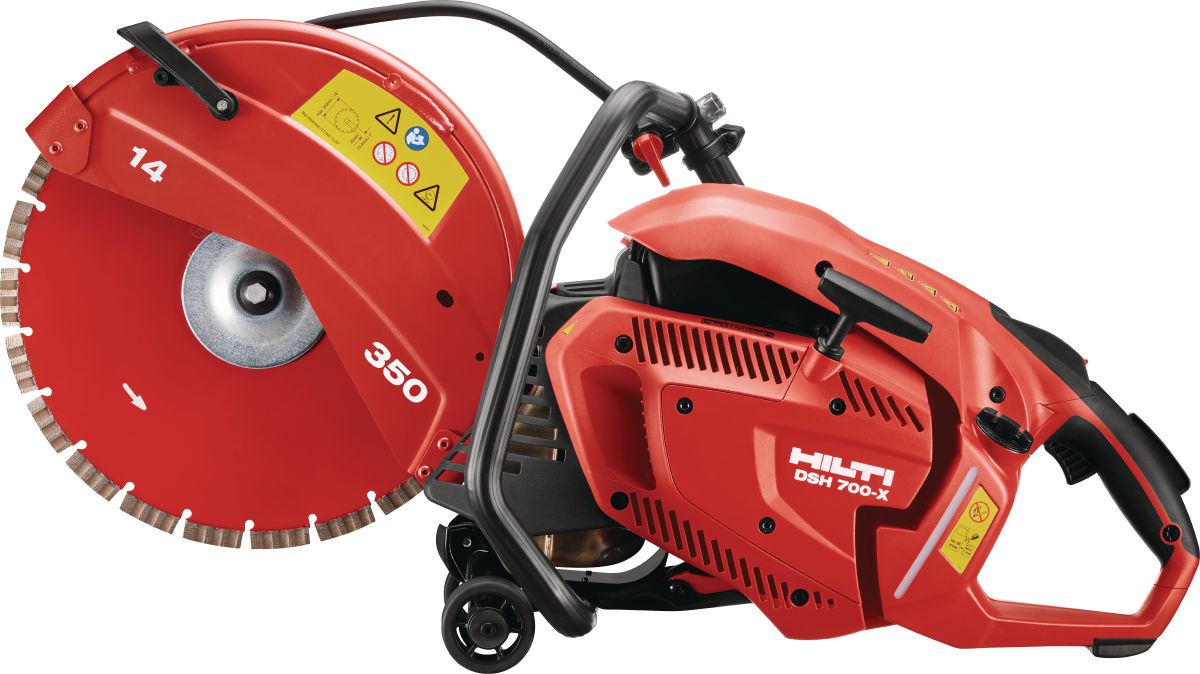

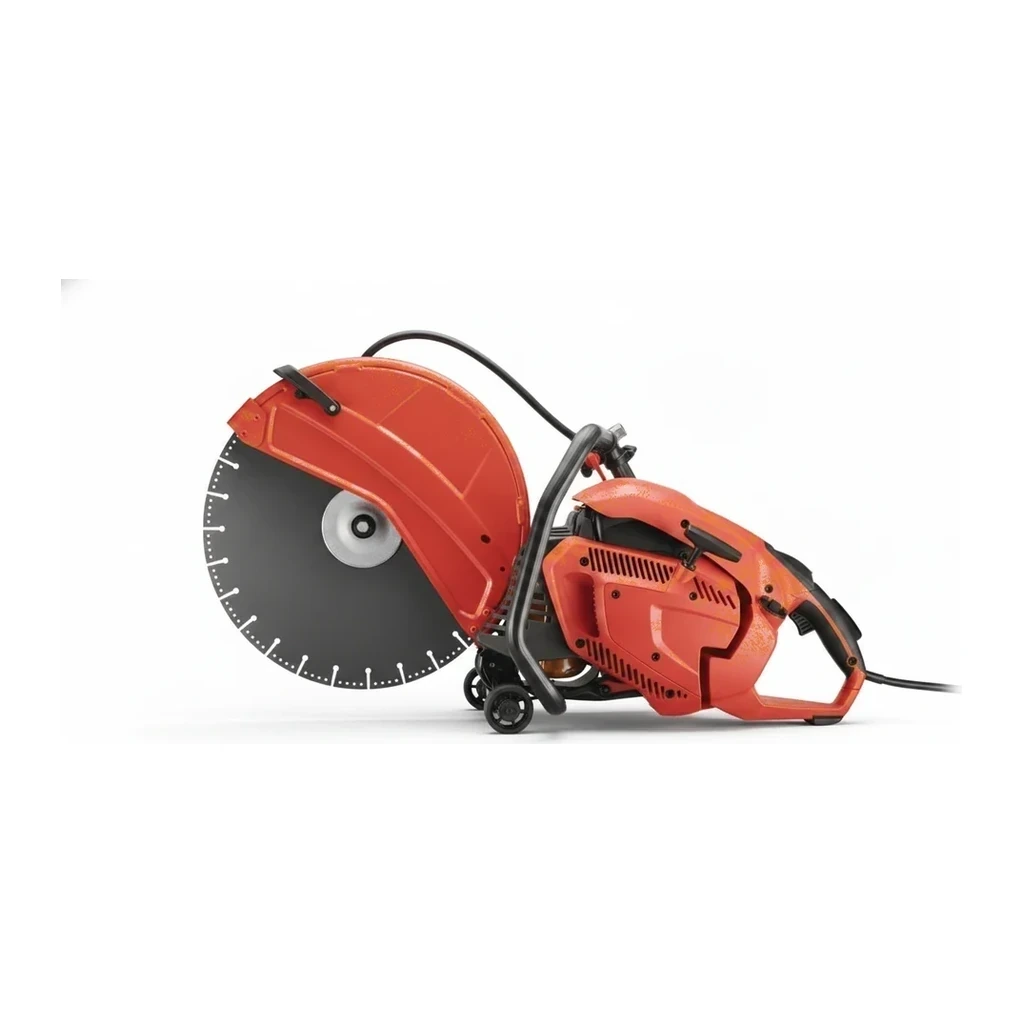
13-15 in Hand-Held Cut-Off Saw
The 13-15 in hand-held cut-off saw, built around the 14 in blade, is the industry-standard size and what most contractors mean by "a cut-off saw." This size delivers approximately 5 in of cutting depth in concrete and asphalt, making it the workhorse for the majority of concrete cutting tasks on job sites. It sits at the top of the hand-held cut-off saw ladder, representing the largest blade diameter in this class.
Cat classes
Choisissez une classe de taille : la capacité et la portée varient selon la gamme.
Spécifications clés
| Spécification | Plage typique | Signification |
|---|---|---|
| Blade diameter | 14 in (35.6 cm) | The standard size; defines maximum cutting depth and is universally recognized across the industry |
| Maximum cutting depth | ~5 in | Depth achievable in concrete and asphalt; sufficient for most slab, curb, and utility work |
| Power source | Gasoline 2-stroke | Most common configuration for portability and power delivery without electrical constraints |
Comment choisir
The 13-15 in size is appropriate when cutting depth requirements approach or reach 5 in, or when the job calls for the standard industry cut-off saw without qualification. This is the default choice for general concrete and asphalt cutting on most commercial and residential sites. The Up to 13 in Hand-Held Cut-Off Saw is the better choice only when lighter weight or more confined working conditions are priorities and cutting depth of 4 in or less is sufficient; the smaller size offers easier handling in tight spaces or overhead applications. No larger hand-held size exists in this class: jobs requiring deeper cuts must move to walk-behind or larger concrete saw equipment.
Ce que cette taille peut gérer
- Cutting control joints and expansion joints in concrete slabs up to 5 in thick
- Curb and gutter removal or modification in street and parking lot work
- Asphalt patching and utility trench cuts in roadways
- Pipe penetrations and openings through concrete walls and floors
- Partition wall cuts and doorway openings in masonry construction
- Concrete pier and footing adjustments in foundation work
Sécurité et opération
- Blade guard adjustment and proper two-handed grip are critical; kickback risk increases with blade bind
- Water attachment for wet cutting controls silica dust; required in many jurisdictions for concrete work
- Hearing protection, eye protection, and respiratory protection (even with wet cutting) are standard PPE
- Operators must maintain stable footing and avoid cutting above shoulder height where control is compromised
Transport et logistique
- Typically transported in service trucks, vans, or pickup beds as part of a concrete crew's toolkit
- Weight and size allow one-person carry to the cut location; no trailer or lifting equipment required
- Often stored alongside blades, fuel cans, and water supply in mobile gang boxes
Alimentation
- Gasoline-powered models use 2-stroke engines requiring mixed fuel (gasoline and 2-stroke oil)
- Fuel tank capacity typically allows several hours of intermittent cutting before refueling
- Some models available in battery-electric or corded electric configurations for indoor or emissions-sensitive environments
Questions fréquentes
What is the actual cutting depth with a 14 in blade?
Can this size replace a walk-behind saw for most jobs?
Is the 14 in size suitable for cutting rebar-reinforced concrete?
Comparer les modèles populaires
Chercher par spécification →Normalisé aux mêmes unités. Un tiret signifie que la valeur n'a pas été publiée.
| Modèle | Puissance moteur | Poids en service |
|---|---|---|
| Hilti DSH 700-X | 6 hp | 26.5 lb (12 kg) |
| Husqvarna K3600 MKII | - | 17.6 lb (8 kg) |
| Husqvarna TS355 | 3 hp | 50.7 lb (23 kg) |
Équipements connexes
Parcourir par fabricant
Sources
Chaque spécification est vérifiée par rapport aux données publiées par le fabricant, avec la source liée pour référence.
13-15 in Hand-Held Cut-Off Saw
5 modèles · Chaque spécification citée à la source