

Crawler Cranes
Fonctionnement
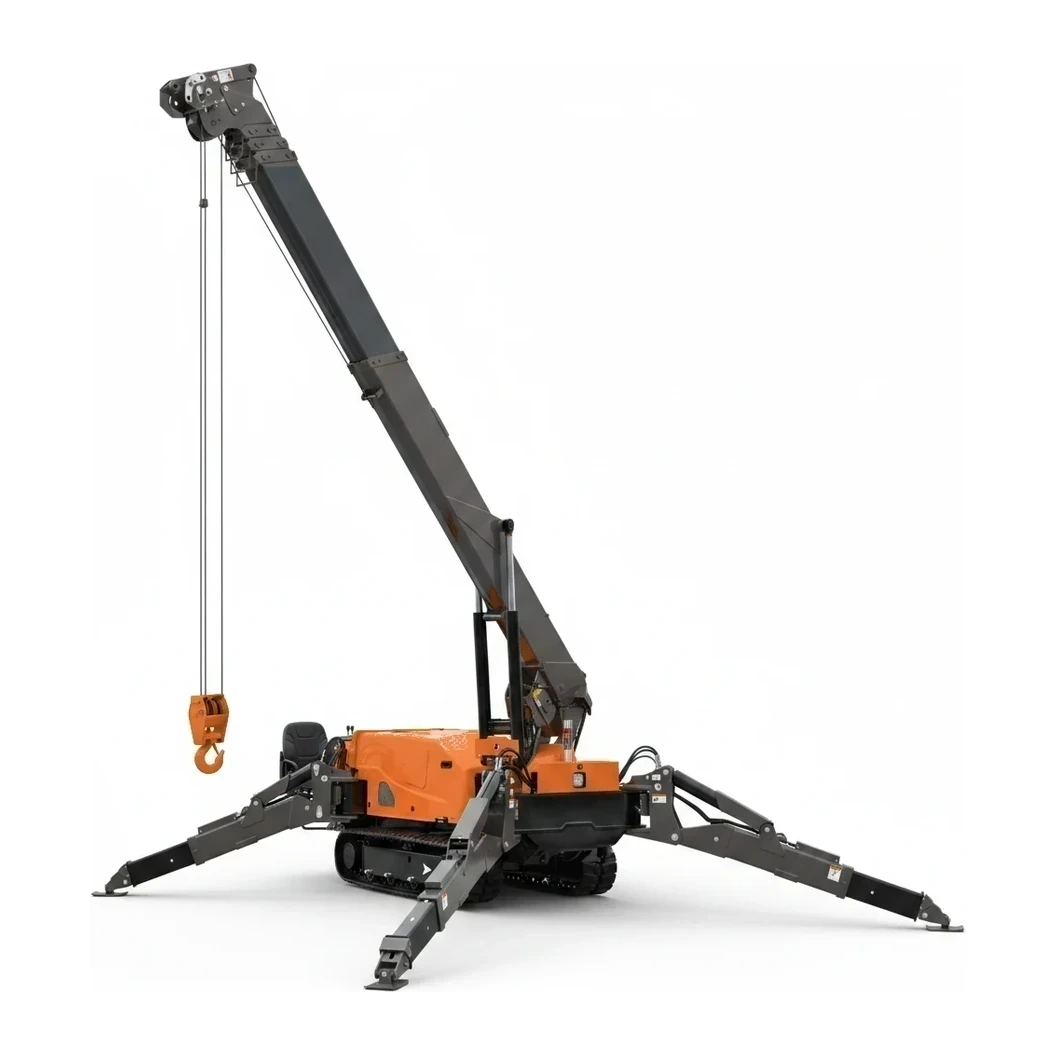
Crawler cranes operate by using hydraulically-powered tracks to move into position and a rotating superstructure that carries the boom and lifting machinery. The tracked undercarriage provides a stable platform with low ground pressure, allowing operation on undeveloped sites, muddy conditions, or areas with limited bearing capacity. Once positioned, outriggers or the wide track stance itself provides stability during lifting operations. The operator controls boom extension, rotation, and hoisting from a cab mounted on the superstructure, with load charts determining safe lifting capacities based on boom configuration, radius, and ground conditions.
Types et variantes
- Telescopic Crawler Crane
- Features a hydraulically extending telescopic boom mounted on tracked undercarriage, combining the mobility advantages of crawlers with the quick setup and variable reach of telescopic booms for versatile lifting applications
Normes et certifications
- ASME · B30.5
- Safety standard for mobile and locomotive cranes, including crawler-mounted models
- ISO · 4305
- International standard for mobile cranes, covering design, testing, and safe operation
- OSHA · 1926 Subpart CC
- Regulations governing crane operation in construction, including operator certification and safety requirements
Questions fréquentes
What distinguishes crawler cranes from other mobile crane types?
Crawler cranes use continuous tracked undercarriages instead of wheels or outriggers as the primary means of both mobility and stability. This design provides superior weight distribution, lower ground pressure, and the ability to operate on soft, uneven, or unprepared surfaces where wheeled cranes cannot travel or maintain stability.
How is crawler crane capacity typically specified?
Capacity is specified by maximum lifting weight at minimum radius, with detailed load charts showing how capacity decreases as boom length increases and lift radius extends. Ratings depend on boom configuration (length and angle), track extension width, counterweight installed, and whether the crane is operating on rubber pads or directly on tracks.
What are common applications for crawler cranes in construction?
Crawler cranes are commonly deployed for heavy infrastructure projects including bridge construction, foundation work, pile driving support, power plant assembly, refinery maintenance, and large-scale building construction. Their ability to travel under load and operate on rough terrain makes them particularly valuable for projects lacking improved access roads or firm ground conditions.
What ground preparation is typically required for crawler crane operation?
While crawler cranes can operate on softer ground than wheeled cranes due to lower ground pressure, proper assessment of soil bearing capacity remains essential. Depending on conditions and lift requirements, ground preparation may range from minimal grading to installation of timber mats, steel plates, or engineered crane pads to distribute loads and prevent settlement during critical lifts.