

Up to 50 ft Long-Reach Excavator
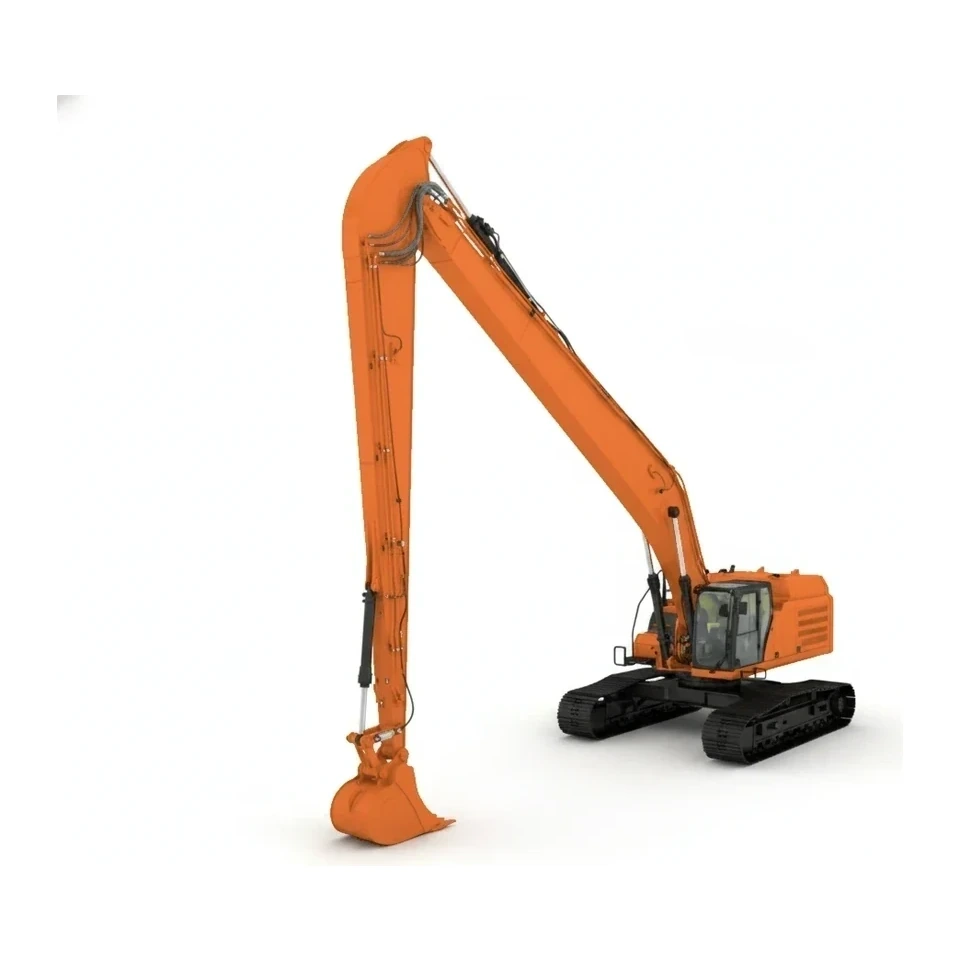
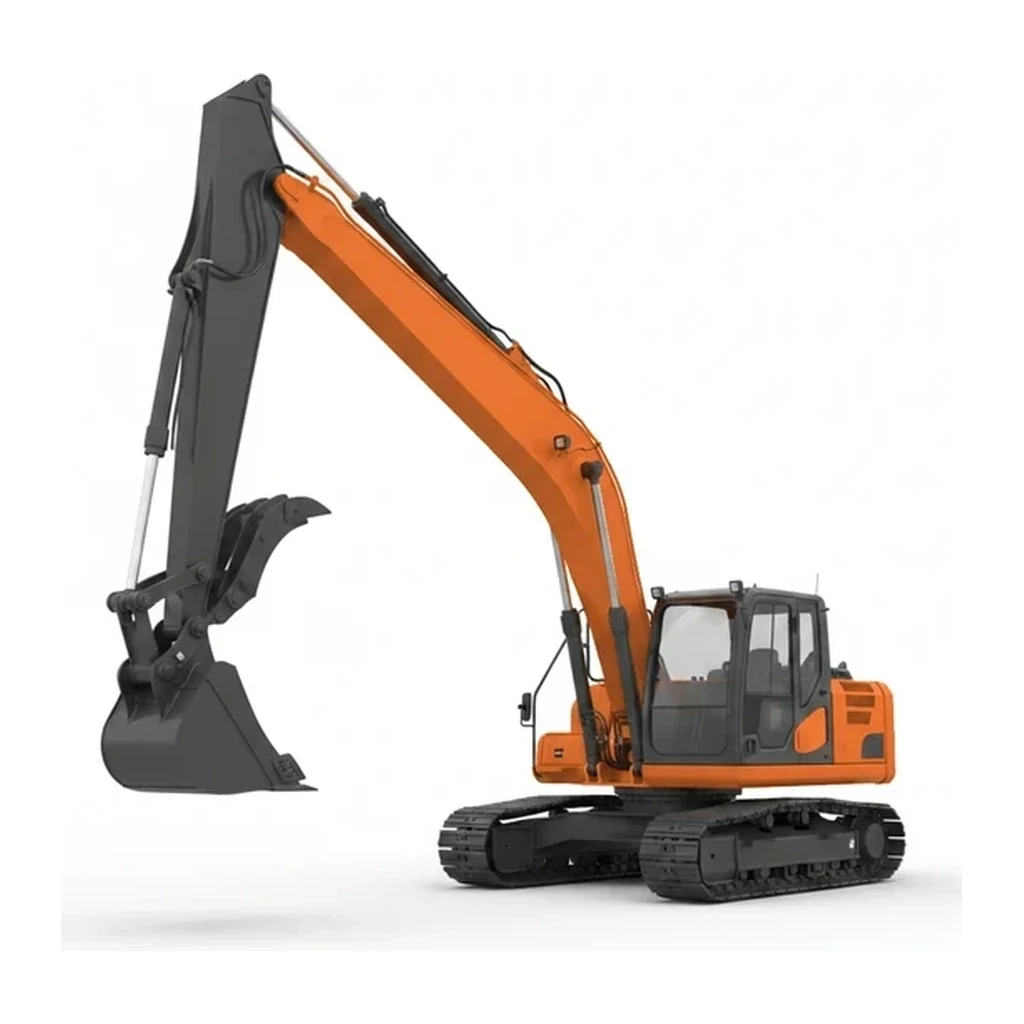
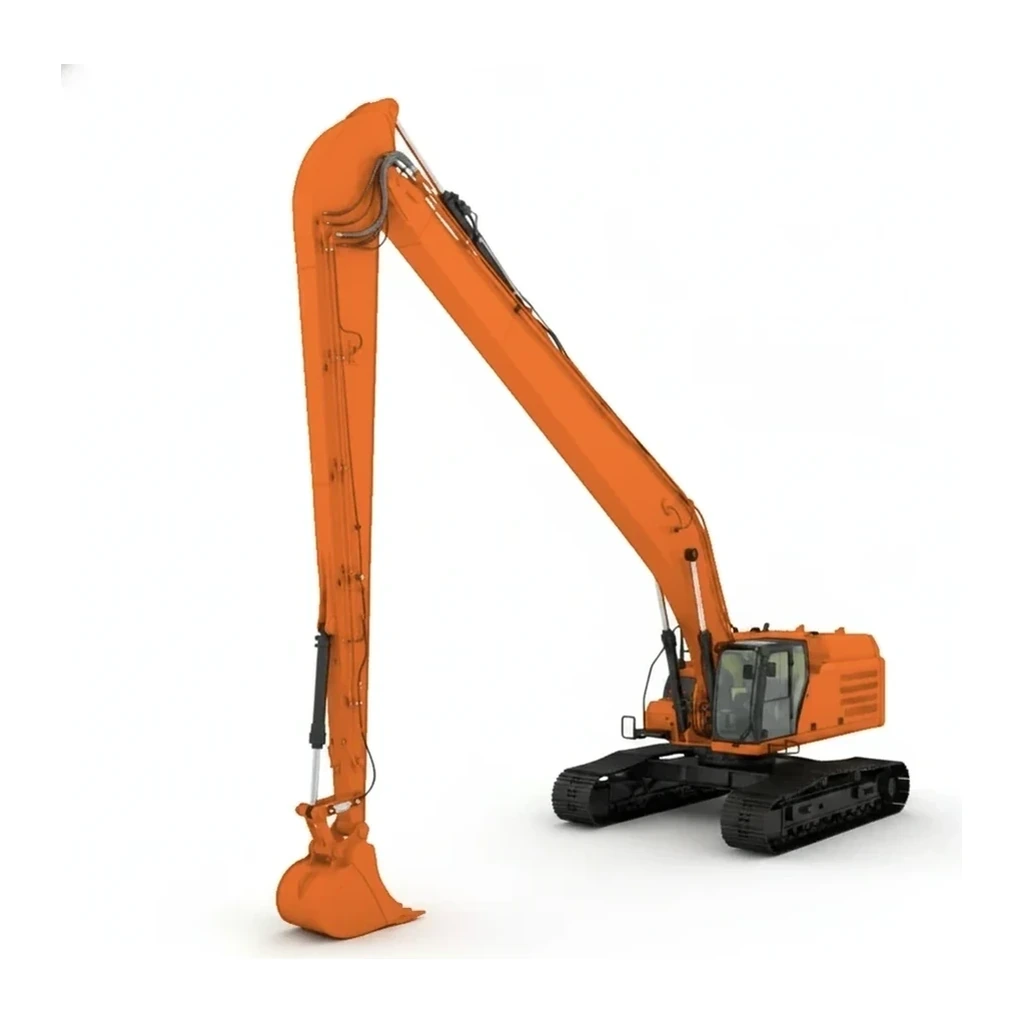
Up to 50 ft long-reach excavators extend digging capability up to 43.4 ft horizontally and 33.3 ft deep, enabling operators to clean ditches, ponds, and retention basins from stable ground on the bank. This is the smallest rung on the long-reach excavator ladder, representing machines with operating weights from 9,280 to 42,548 kg. These excavators sacrifice some digging force in exchange for extended reach compared to standard excavators.
Cat classes
Choisissez une classe de taille : la capacité et la portée varient selon la gamme.
Spécifications clés
| Spécification | Plage typique | Signification |
|---|---|---|
| Max reach | 33.5–43.4 ft (10.2–13.2 m) | Horizontal distance from the center of rotation to the bucket cutting edge at maximum extension. |
| Max dig depth | 20–33.3 ft (6.1–10.1 m) | Maximum vertical depth below ground level the bucket can reach, critical for pond and canal work. |
| Operating weight | 20,459–93,802 lb (9,280–42,548 kg) | Machine weight with standard boom, fuel, and operator; determines ground pressure and transport requirements. |
| Engine power | 68-339 hp | Diesel engine output; higher power supports larger booms and faster cycle times in dense material. |
Comment choisir
This size class suits applications where the work is within 43 ft of solid ground and depths stay under 34 ft: typical drainage ditch cleaning, small pond de-silting, and retention basin maintenance from perimeter access. When maximum reach must exceed 50 ft or dig depth approaches 40 ft or more, the 50-65 ft Long-Reach Excavator becomes necessary. Projects with continuous access along the feature's edge favor this smaller class for lower transport costs and faster repositioning between work zones.
Ce que cette taille peut gérer
- De-silting stormwater retention ponds from perimeter berms
- Cleaning irrigation canals and farm drainage ditches from levee access
- Excavating wetland edges and shoreline restoration without entering soft substrate
- Shaping stream banks and clearing debris from creek channels during low flow
- Demolition reach work in urban settings where ground support is adequate
- Slope grading and erosion control on steep embankments from roadway elevation
Sécurité et opération
- Extended boom geometry shifts the center of gravity; operators must monitor stability indicators and avoid side-loading the bucket
- Ground-bearing pressure increases significantly when the boom is fully extended and loaded; geotechnical assessment of working surface critical
- Overhead power line clearance becomes a hazard when boom elevates; spotter or exclusion zones required near utilities
- Visibility to the bucket tip is reduced at maximum reach; cameras or ground guides often necessary for precision work
Transport et logistique
- Machines in the 9,280-20,000 kg range typically move on tandem-axle tag trailers or standard lowboys
- Units above 30,000 kg operating weight require tri-axle or heavier lowboy trailers and oversize permits in most jurisdictions
- Extended boom assemblies often transport separately and reconnect on site to stay within width and length regulations
Alimentation
- Diesel fuel exclusively; engines from 68 to 339 hp consume approximately 3-12 gallons per operating hour depending on load
- On-site bulk diesel storage or daily refueling from service trucks typical for multi-day projects
- Cold-weather operations may require block heaters or auxiliary starting systems for reliable morning starts
Questions fréquentes
What differentiates a long-reach excavator from a standard excavator?
How does reach vary within the up to 50 ft class?
Can this size class work in soft or saturated ground?
Comparer les modèles populaires
Chercher par spécification →Normalisé aux mêmes unités. Un tiret signifie que la valeur n'a pas été publiée.
| Modèle | Poids en service | Profondeur d’excavation max | Portée max | Puissance moteur |
|---|---|---|---|---|
| Hitachi ZX130-7 SLF | 33,951 lb (15,400 kg) | 33.3 ft (10.1 m) | 43.1 ft (13.1 m) | 99 hp |
| Hitachi ZX250/300/350-7 SLF | 87,083 lb (39,500 kg) | 29.1 ft (8.9 m) | - | 282 hp |
| Hitachi ZX390TC-7 Demolition | 86,421 lb (39,200 kg) | 24.2 ft (7.4 m) | 36.4 ft (11.1 m) | 282 hp |
| Hitachi ZX95US-7 SLF | 20,988 lb (9,520 kg) | 23 ft (7.0 m) | 33.5 ft (10.2 m) | 68 hp |
| Volvo EC300 Straight Boom | - | 20 ft (6.1 m) | 38 ft (11.6 m) | 253 hp |
| Volvo EC400 Straight Boom | - | 20 ft (6.1 m) | 39 ft (11.9 m) | 339 hp |
Équipements connexes
Parcourir par fabricant
Sources
Chaque spécification est vérifiée par rapport aux données publiées par le fabricant, avec la source liée pour référence.
Up to 50 ft Long-Reach Excavator
6 modèles · Chaque spécification citée à la source