

Mini Excavator
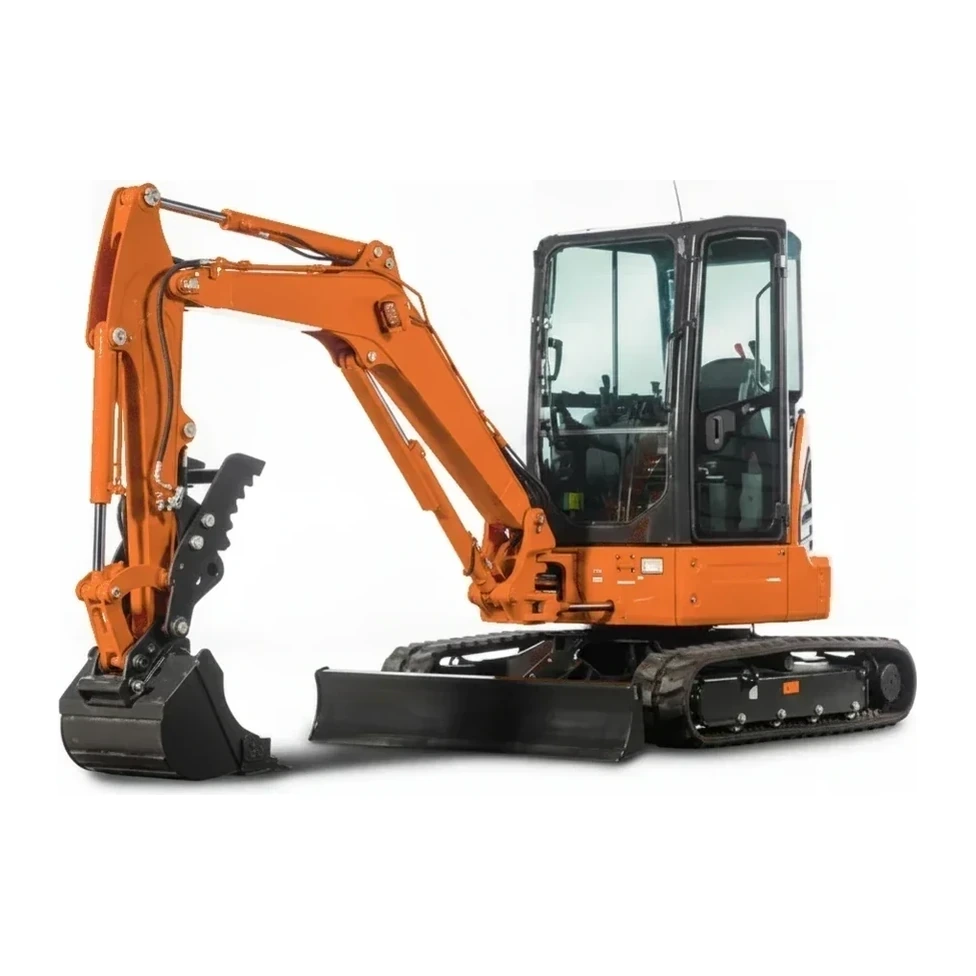
A mini excavator (compact excavator) is a tracked digging machine at the small end of the excavator range, defined by low operating weight and a footprint that fits residential lots, fenced yards and interior demolition. It performs the same trenching, digging and lifting work as larger excavators at a scale that moves on light trailers and works beside existing structures.
Cat classes
Choisissez une classe de taille — la capacité et la portée varient selon la gamme.
Fonctionnement
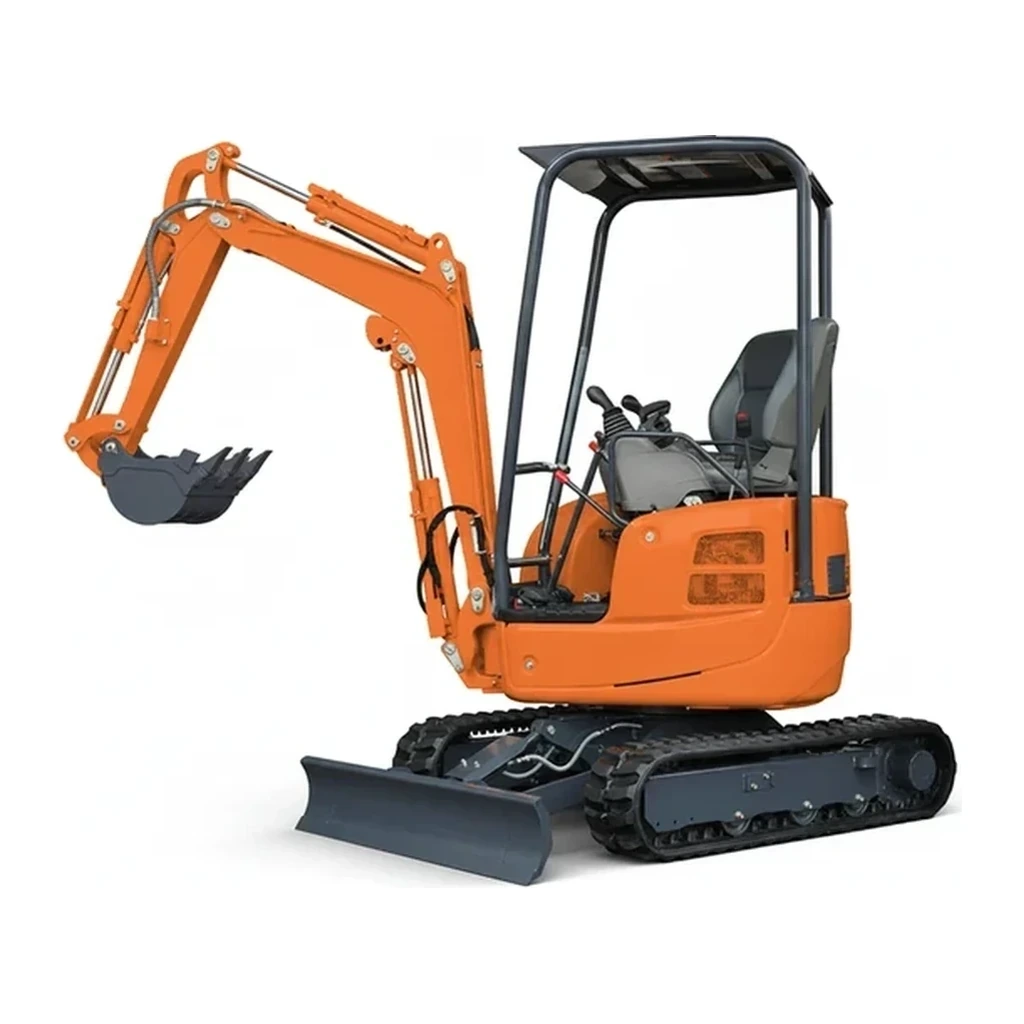
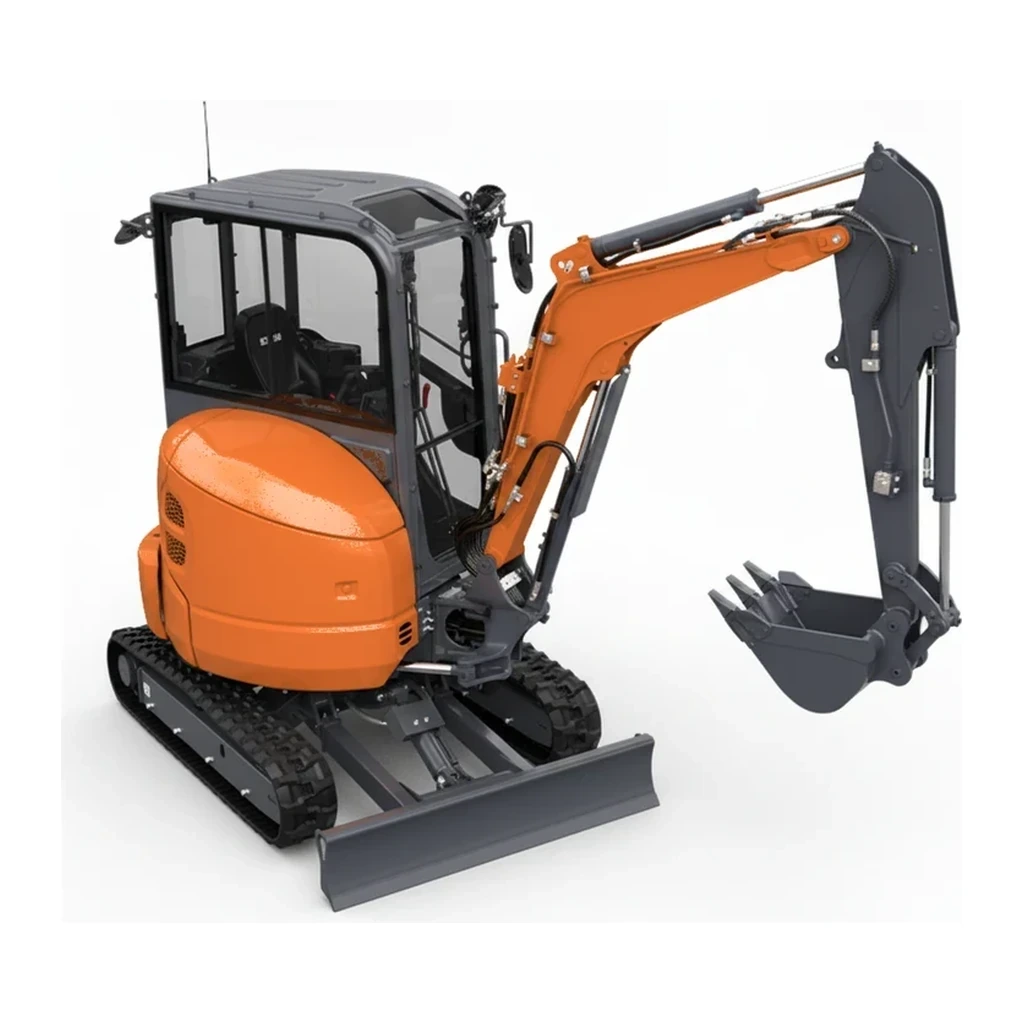
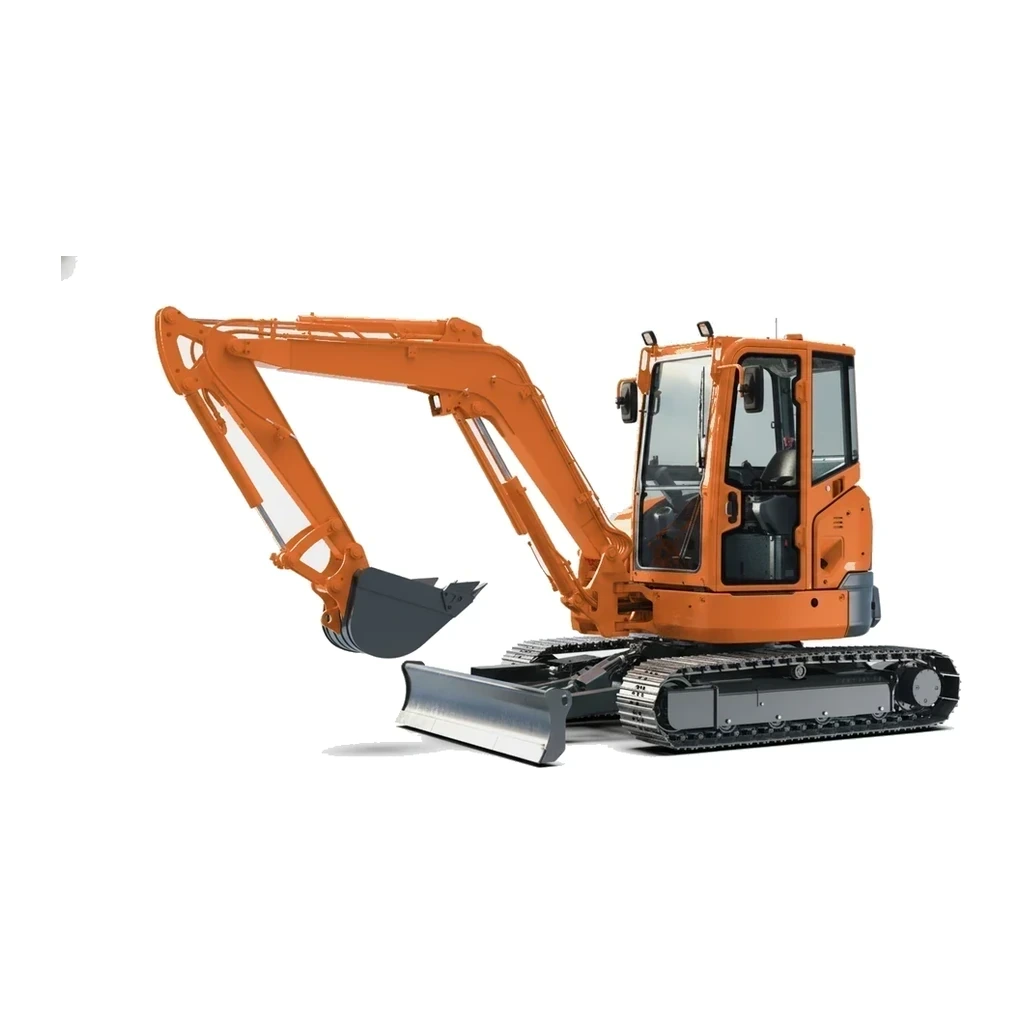
A small diesel engine drives hydraulic pumps that power the boom, stick and bucket cylinders, the swing motor and two independent track motors. Most models add features specific to compact work: a boom that swings offset from the house for digging flush against walls, a backfill blade that doubles as a stabilizer, and rubber tracks that protect finished surfaces. Control is via pilot-operated or electro-hydraulic joysticks in an ISO or SAE pattern. Auxiliary hydraulic circuits feed attachments such as breakers, augers and thumbs, which is why the class functions as a small tool carrier as much as a digging machine.
Types et variantes
- Conventional tail swing
- The house overhangs the tracks when slewing; more counterweight and stability for the weight, but needs clearance behind the machine.
- Zero tail swing (ZTS)
- The house stays inside the track width through a full rotation, the standard choice for work against walls and in traffic lanes.
- Reduced / minimal tail swing
- A compromise layout with a few inches of overhang, keeping most of the ZTS access benefit with a simpler counterweight.
- Micro excavator with retractable undercarriage
- The smallest units below 4,000 lb; tracks hydraulically narrow to pass standard doorways and garden gates, then re-extend to dig.
- Cab versus canopy
- Enclosed climate-controlled cabs on the larger bands; open ROPS/TOPS canopies dominate the lightest machines.
Spécifications clés
| Spécification | Plage typique | Signification |
|---|---|---|
| Operating weight | 844–23,170 kg (1,860–51,080 lb) | The primary sizing dimension; practical work categories cluster around sub-4,000 lb micro machines, 4,000–8,000 lb towable models, and 8,000–13,500 lb dig-capacity units. |
| Maximum dig depth | 2.2–23.3 ft (0.7–7.1 m) | Scales with weight band; the deepest figures belong to the largest machines and long-arm options, while micro units dig only a few feet. |
| Engine power | 14.9–418.0 kW (20–560 hp) | Compact machines run small diesels; power correlates to weight class and hydraulic flow demands for attachments and multi-function work. |
Comment l'industrie le dimensionne
The industry sizes mini excavators by operating weight, most often quoted in metric tonnes or pounds. Practical work categories reflect what fits through a 36 in gate and works inside a fenced backyard or basement (up to 4,000 lb), what tows on a standard equipment trailer behind a 3/4-ton pickup and handles footings and utility trenching to about 8 ft (4,000–8,000 lb), and what digs past 10 ft with a full-size bucket while still trailering legally (8,000–13,500 lb). Machines at the top of the range overlap with what some manufacturers call midi excavators.
Applications
- Trenching for water, sewer, drainage, gas and electrical services
- Foundation and footing excavation for additions, garages and small builds
- Landscaping, grading and pool excavation on residential lots
- Utility work in backyards, fenced areas and interior or under-roof spaces
- Stump removal, site cleanup and light demolition with breaker or thumb attachments
- Cemetery, golf course and municipal maintenance work on finished ground
Sécurité et opération
- Respect the load chart when lifting over the side—compact machines tip far more readily over the tracks' side than over the blade end.
- Use the backfill blade as a stabilizer oriented toward the dig, and keep travel with a loaded bucket low and slow on slopes.
- Call 811 and confirm utility locates before any dig; compact machines do a large share of urban service-line work where strikes are most common.
- Maintain seat-belt use under the ROPS/TOPS structure—rollovers on unconsolidated fill and trench edges are the class's characteristic incident.
- Keep bystanders outside the swing radius; ZTS geometry removes the tail hazard but not the bucket and boom arc.
Normes et certifications
- OSHA · 29 CFR 1926 Subpart P
- Trenching and excavation rules, including protective systems for the trenches mini excavators most commonly dig.
- ISO · ISO 10567
- Rated lift capacity determination for hydraulic excavators, the basis of over-side lift charts.
- EPA · Tier 4 Final (40 CFR Part 1039)
- Nonroad diesel emissions rules that current compact excavator engines are certified to.
Questions fréquentes
What counts as a mini excavator versus a standard excavator?
What is zero tail swing and why does it matter?
How deep can machines in this class dig?
Do mini excavators run attachments?
Comparer les modèles populaires
Chercher par spécification →Normalisé aux mêmes unités. Un tiret signifie que la valeur n'a pas été publiée.
| Modèle | Poids en service | Profondeur d’excavation max | Portée max | Puissance moteur |
|---|---|---|---|---|
| JCB 8008 CTS | 2,094 lb (950 kg) | 5.5 ft (1.7 m) | 10.2 ft (3.1 m) | 12 hp |
| JCB 19C-1 | 4,193 lb (1,902 kg) | 8.5 ft (2.6 m) | 12.8 ft (3.9 m) | 9 hp |
| Kubota KX057-5 | 12,200 lb (5,534 kg) | 12 ft (3.7 m) | - | 48 hp |
| Kubota U55-5 | 12,247 lb (5,555 kg) | 11 ft (3.4 m) | - | 48 hp |
| Kubota U27-4 | 5,688 lb (2,580 kg) | 9.4 ft (2.9 m) | - | 20 hp |
| Takeuchi TB216 | 3,902 lb (1,770 kg) | 7 ft (2.1 m) | 13.4 ft (4.1 m) | 15 hp |
Équipements connexes
Parcourir par fabricant
Sources
Chaque spécification est vérifiée par rapport aux données publiées par le fabricant, avec la source liée pour référence.
Tous les modèles
717 modèles · Page 6 sur 15 · Chaque spécification citée à la source