
Wheel Loader
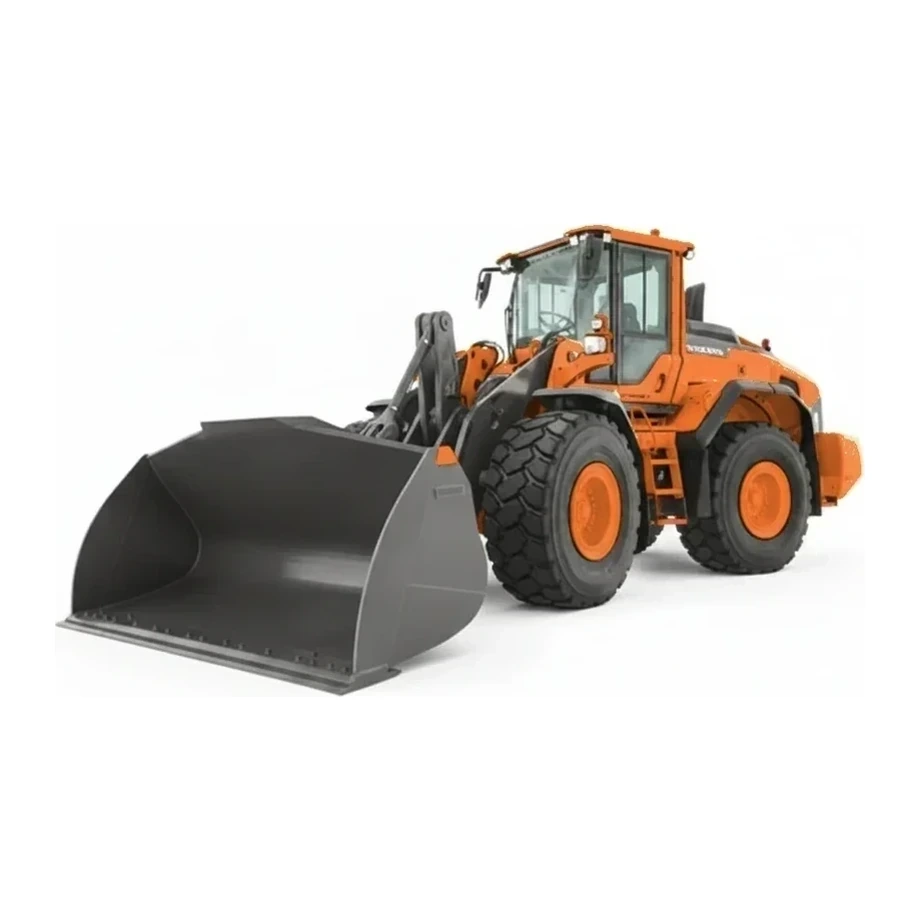
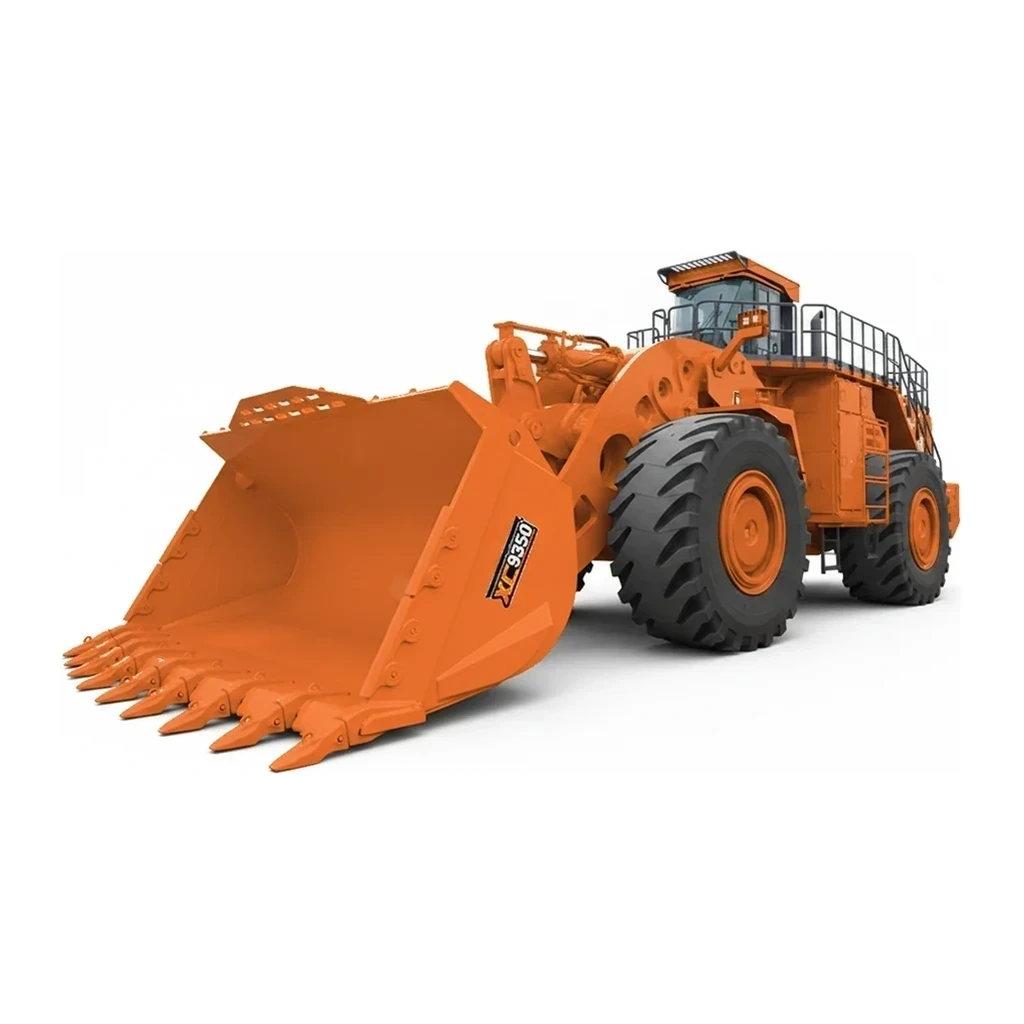
A wheel loader is an articulated, four-wheel-drive machine carrying a wide bucket on high-lift arms, built to scoop, carry and load bulk material. It is the primary loading tool of aggregate, earthmoving and material-yard operations, spanning compact utility machines to production loaders that fill highway and off-road trucks in a few passes.
Cat classes
Choisissez une classe de taille — la capacité et la portée varient selon la gamme.
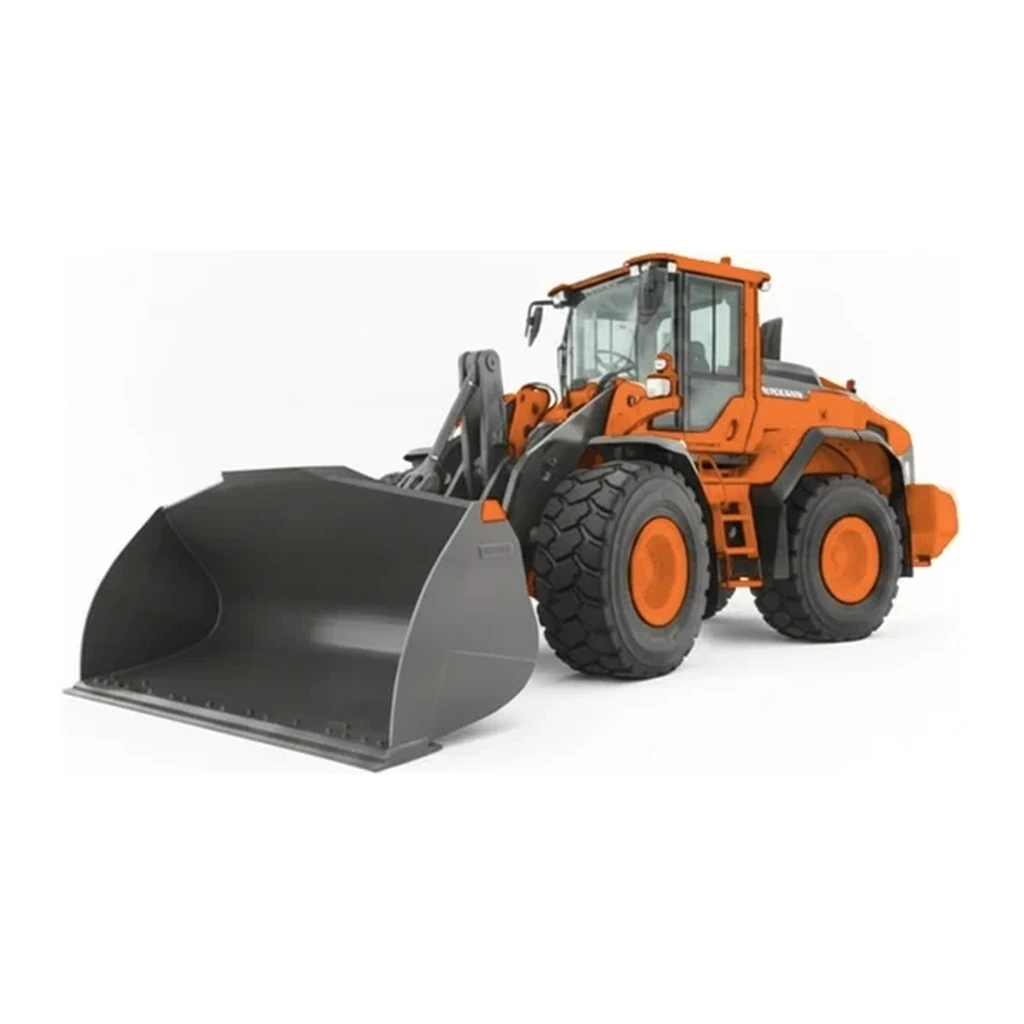
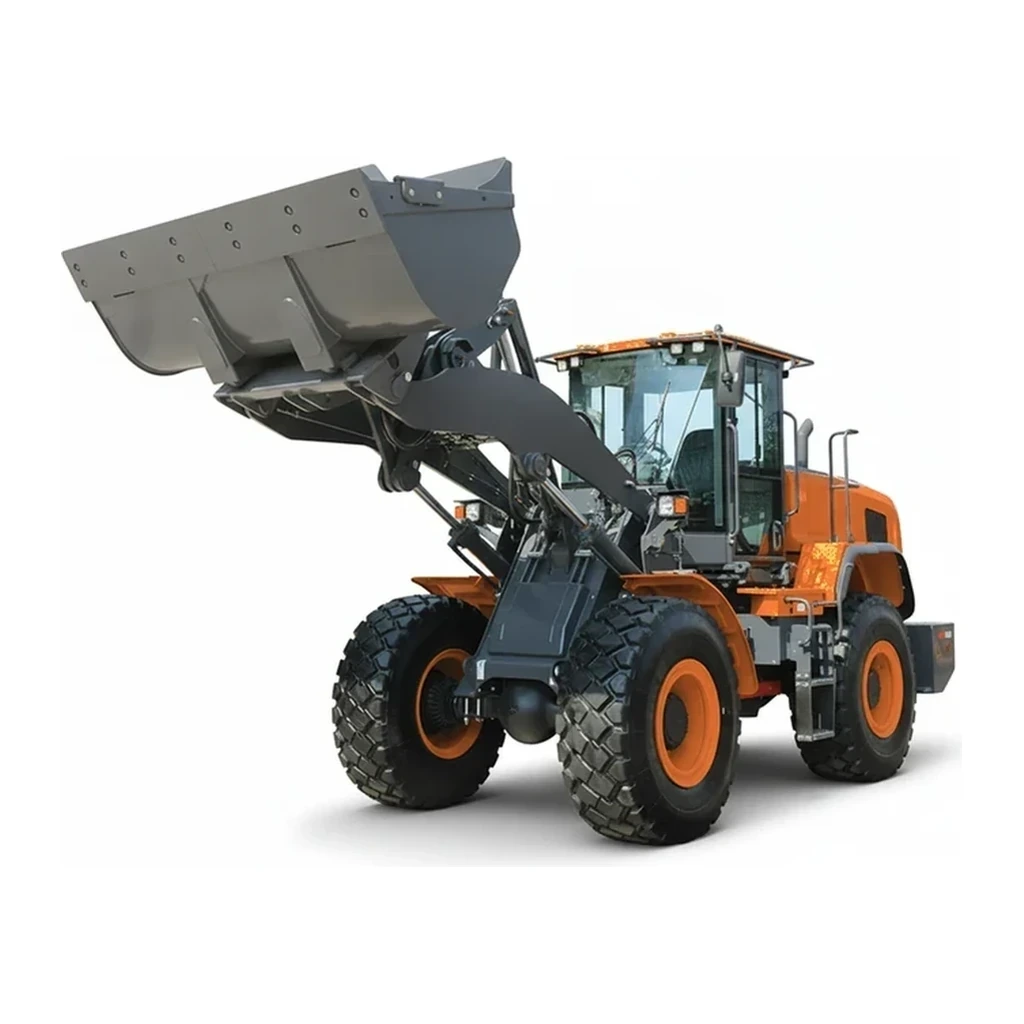
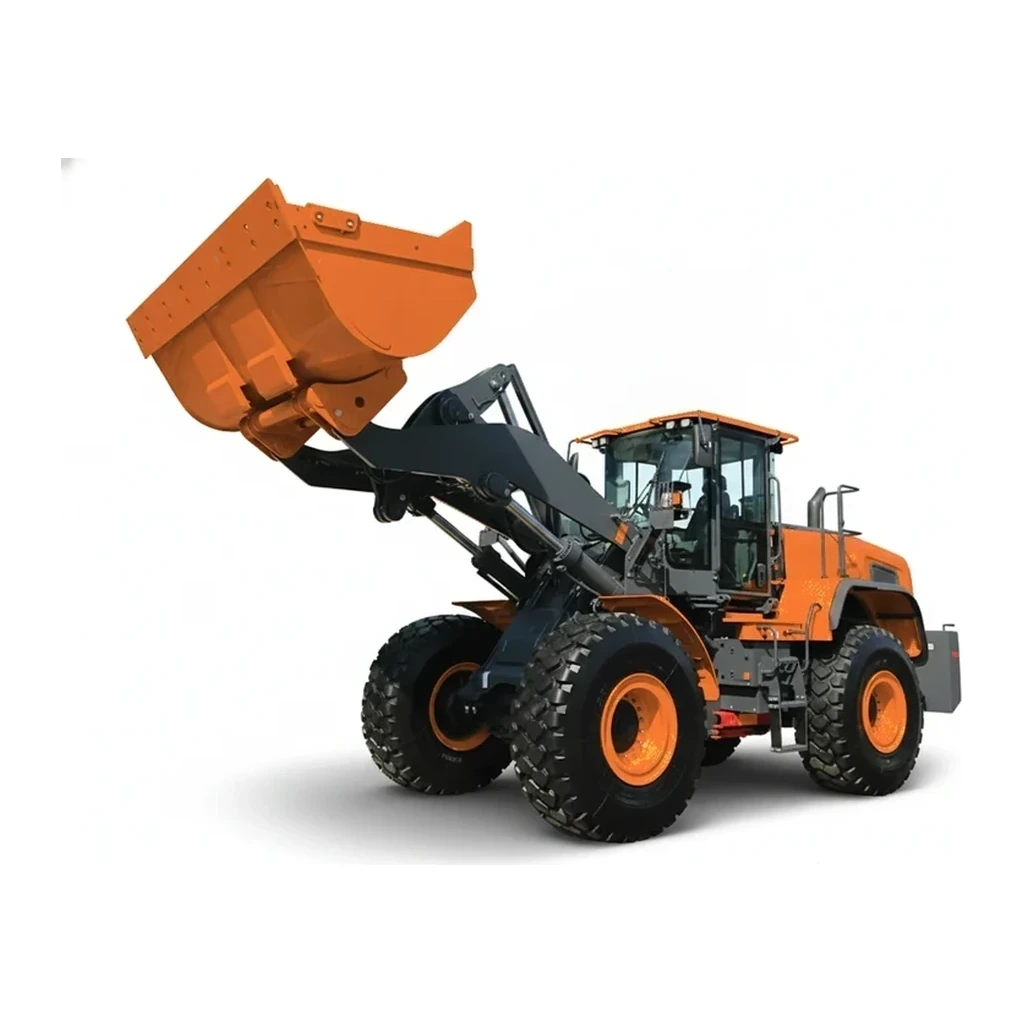
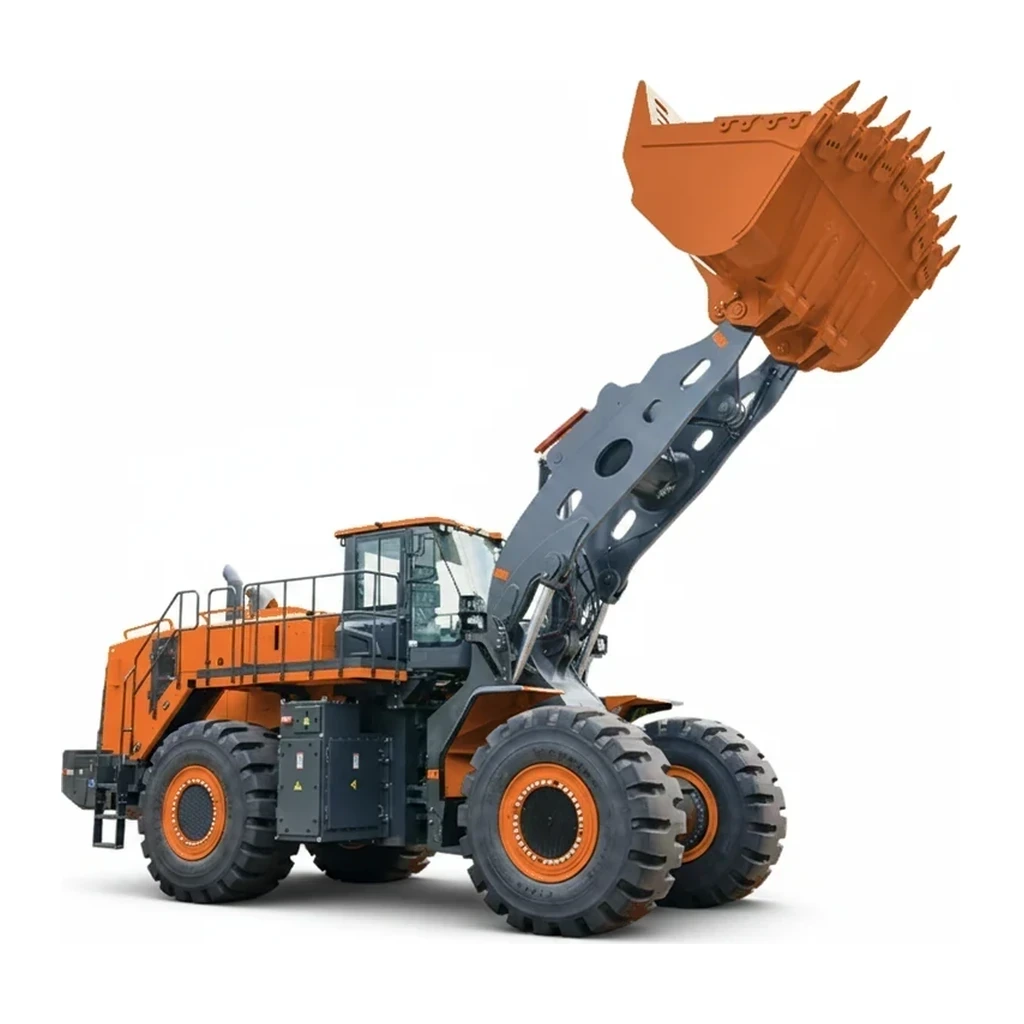
Fonctionnement
The machine is hinged at its center: front and rear frames pivot on an articulation joint, steered by hydraulic cylinders, so the bucket tracks precisely where the front wheels point. A diesel engine (with battery-electric models now entering the class) drives the wheels through a torque-converter powershift or hydrostatic drive, and a separate hydraulic circuit works the lift arms and bucket tilt. The working cycle is the V-pattern: charge the pile with the bucket flat, crowd and lift to fill, reverse, swing through the V and dump into the truck or hopper. Z-bar linkages maximize breakout force for pile work, while parallel-lift linkages hold forks level for pallet and tool-carrier duty.
Types et variantes
- Compact wheel loaders
- The 2,800-13,200 lb bands — yard, landscape and utility machines that trade capacity for access and surface friendliness.
- Mid-size utility loaders
- The general construction workhorses of the 13,200-39,500 lb bands, balancing bucket size against mobility.
- Production loaders
- The 39,500-124,000 lb band — quarry and heavy-earthmoving machines with catalog buckets to 4.5 m³.
- Tool-carrier configurations
- Parallel lift and quick couplers for forks, brooms and jibs alongside bucket duty.
- Battery-electric models
- An emerging segment in the class; catalog records show system voltages from 48 to 600 V.
Spécifications clés
| Spécification | Plage typique | Signification |
|---|---|---|
| Operating weight | 2,800–124,000 lb (1,270–56,245 kg) | The catalog bands the class at 2,800-6,600, 6,600-13,200, 13,200-22,000, 22,000-39,500 and 39,500-124,000 lb. |
| Engine power | 25-345 hp | From catalog records of 18.6-257 kW, scaling with frame size and bucket. |
| Bucket capacity | 1.9-4.5 m³ | Catalog records for the mid and production frames; compact machines run proportionally smaller buckets. |
| Lift capacity | 6,800–32,700 lb (3,084–14,832 kg) | From records of 6,755-32,710 lb across the class's main frames. |
| Fuel tank capacity | 189-331 L | Shift-length endurance for mid-size and production machines. |
Comment l'industrie le dimensionne
Wheel loaders are sized by operating weight and bucket capacity together — the industry quotes both, since the pairing determines how many passes fill a given truck. The catalog's five weight bands run from 2,800 lb compacts to 124,000 lb production machines; as a working rule, loader size is chosen so a truck is filled in three to five passes, with tire size, dump clearance and site width as the binding constraints after that.
Applications
- Loading trucks, hoppers and crushers in aggregate and quarry operations
- Stockpile building, rehandling and load-and-carry earthmoving
- General construction loading and backfilling
- Material-yard, waste-transfer and recycling handling with solid tires and guarding
- Snow clearing with pushers and blades on the mid-size frames
- Agricultural and bulk-commodity handling with light-material buckets
Sécurité et opération
- Carry the bucket low; a raised loaded bucket lifts the machine's center of gravity and blinds the travel path.
- Never allow personnel under a raised bucket or within the articulation hinge area — install the frame lock before service.
- Load trucks over the side or rear, never over the cab, and wait for the truck driver's position to be confirmed.
- Match travel speed to grade with load-and-carry work — a loaded loader descending a haul-road grade is a documented runaway risk.
- Maintain berms and edge protection when tipping over stockpile and hopper edges.
Normes et certifications
- ISO · ISO 14397-1
- Rated operating capacity and breakout force determination for loaders.
- ISO · ISO 3471
- Roll-over protective structure requirements for earthmoving machinery.
- OSHA · 29 CFR 1926.602
- Material handling equipment provisions for construction operations.
- EPA · Tier 4 Final (40 CFR Part 1039)
- Emissions certification for nonroad diesel engines across current models.
Questions fréquentes
How is a wheel loader sized for a job?
What is the articulation joint and why does it matter?
What separates a compact wheel loader from a skid steer?
Are electric wheel loaders available?
Comparer les modèles populaires
Chercher par spécification →Normalisé aux mêmes unités. Un tiret signifie que la valeur n'a pas été publiée.
| Modèle | Poids en service | Profondeur d’excavation max | Portée max | Puissance moteur |
|---|---|---|---|---|
| Case 1021G | 56,366 lb (25,567 kg) | - | - | 270 hp |
| Case 1121G | 61,650 lb (27,964 kg) | - | - | 293 hp |
| Case 621G | 28,160 lb (12,773 kg) | - | - | 172 hp |
| Case 821G | 40,058 lb (18,170 kg) | - | - | 206 hp |
| Case 921G | 45,069 lb (20,443 kg) | - | - | 224 hp |
| JCB 4CX | 17,527 lb (7,950 kg) | 15.3 ft (4.7 m) | - | 100 hp |
Équipements connexes
Parcourir par fabricant
Sources
Chaque spécification est vérifiée par rapport aux données publiées par le fabricant, avec la source liée pour référence.
Tous les modèles
237 modèles · Page 4 sur 5 · Chaque spécification citée à la source